-
Card Total:
150 cards
25 tokens
1 overtime token
11 bonus sheet cards
5 bonus sheet tokens
Numbers by Card Type:
7 Planeswalkers
8 Enchantments
14 Artifacts
21 Sorceries
23 Creatures
41 Instants
36 Lands
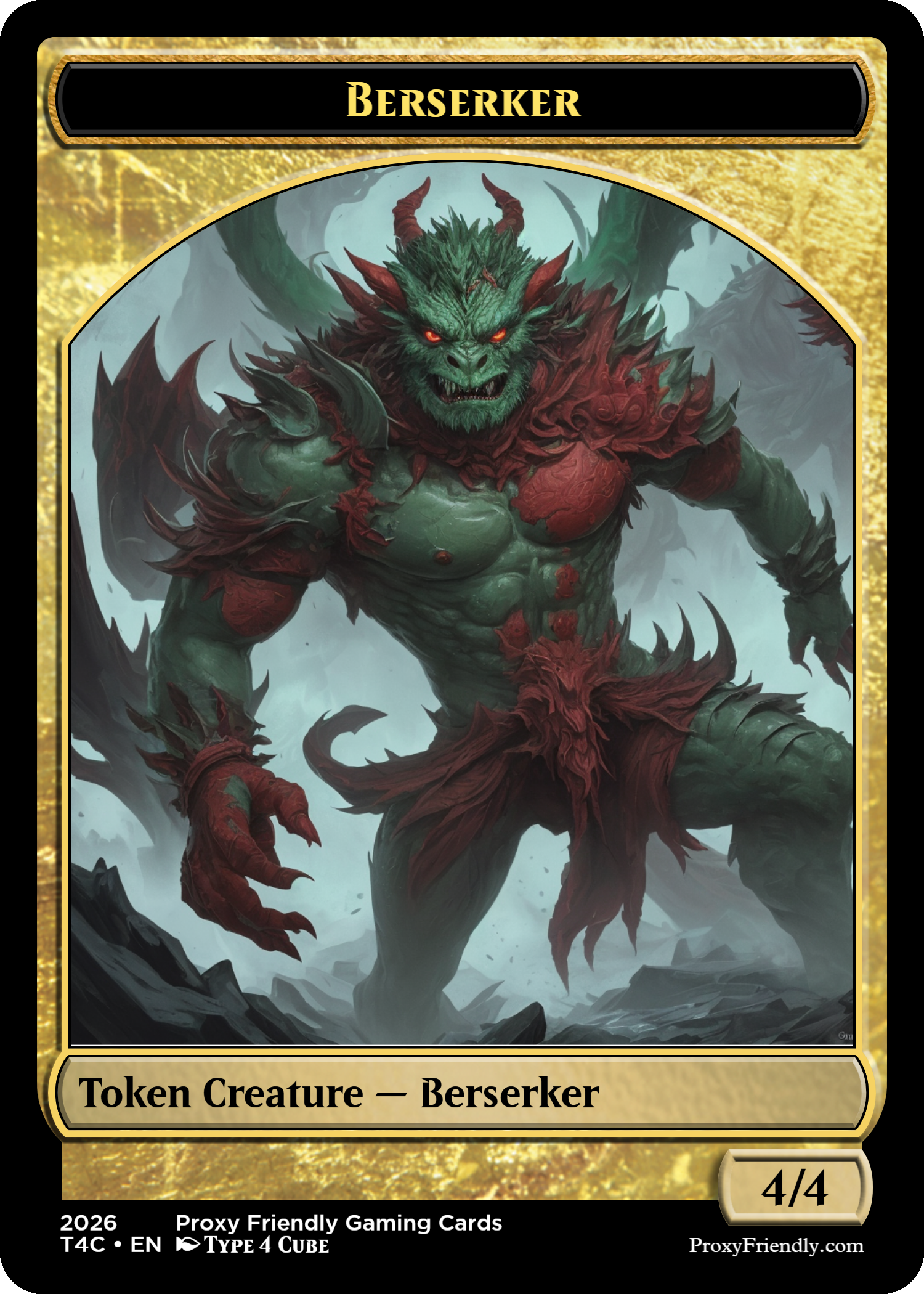
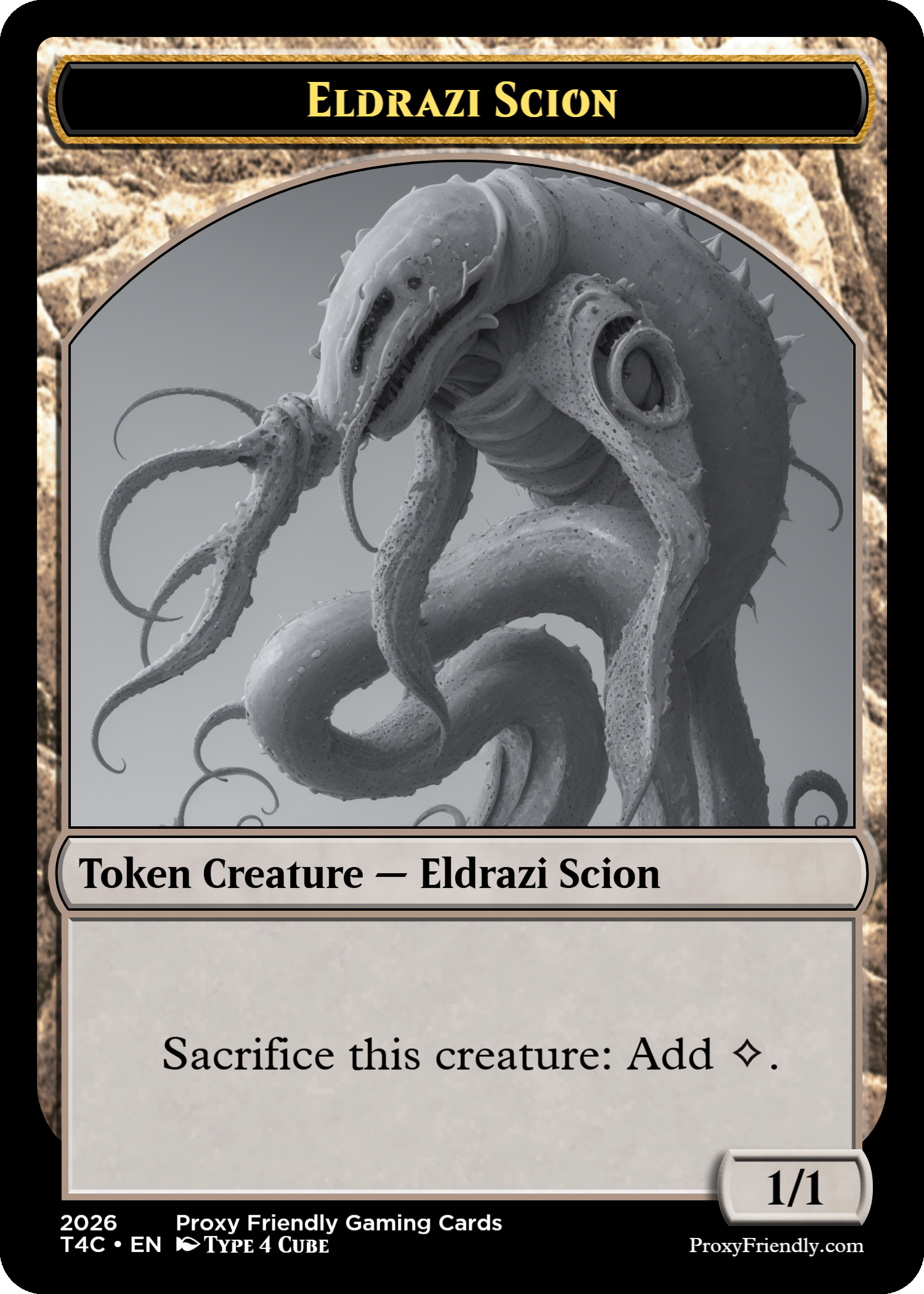
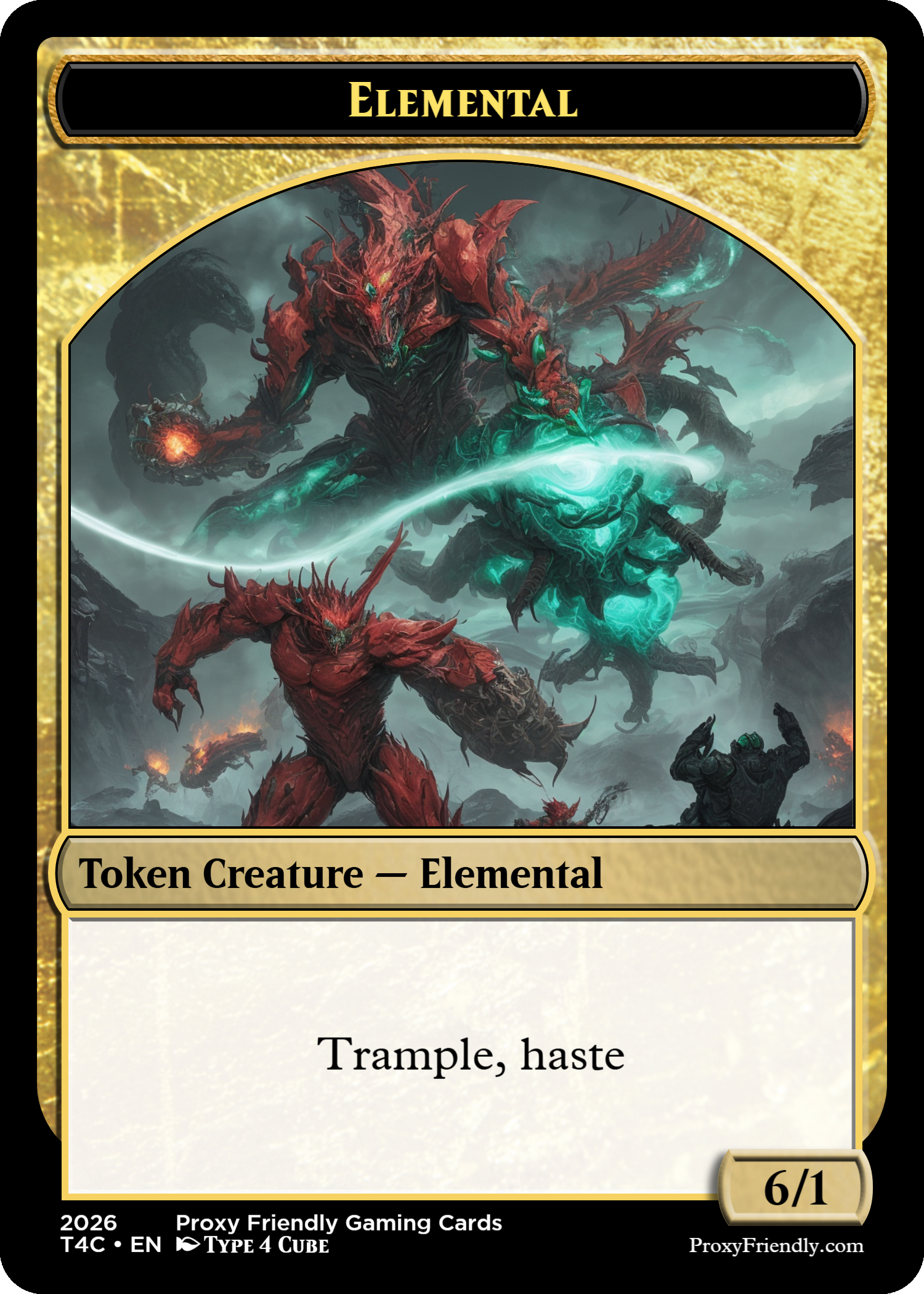
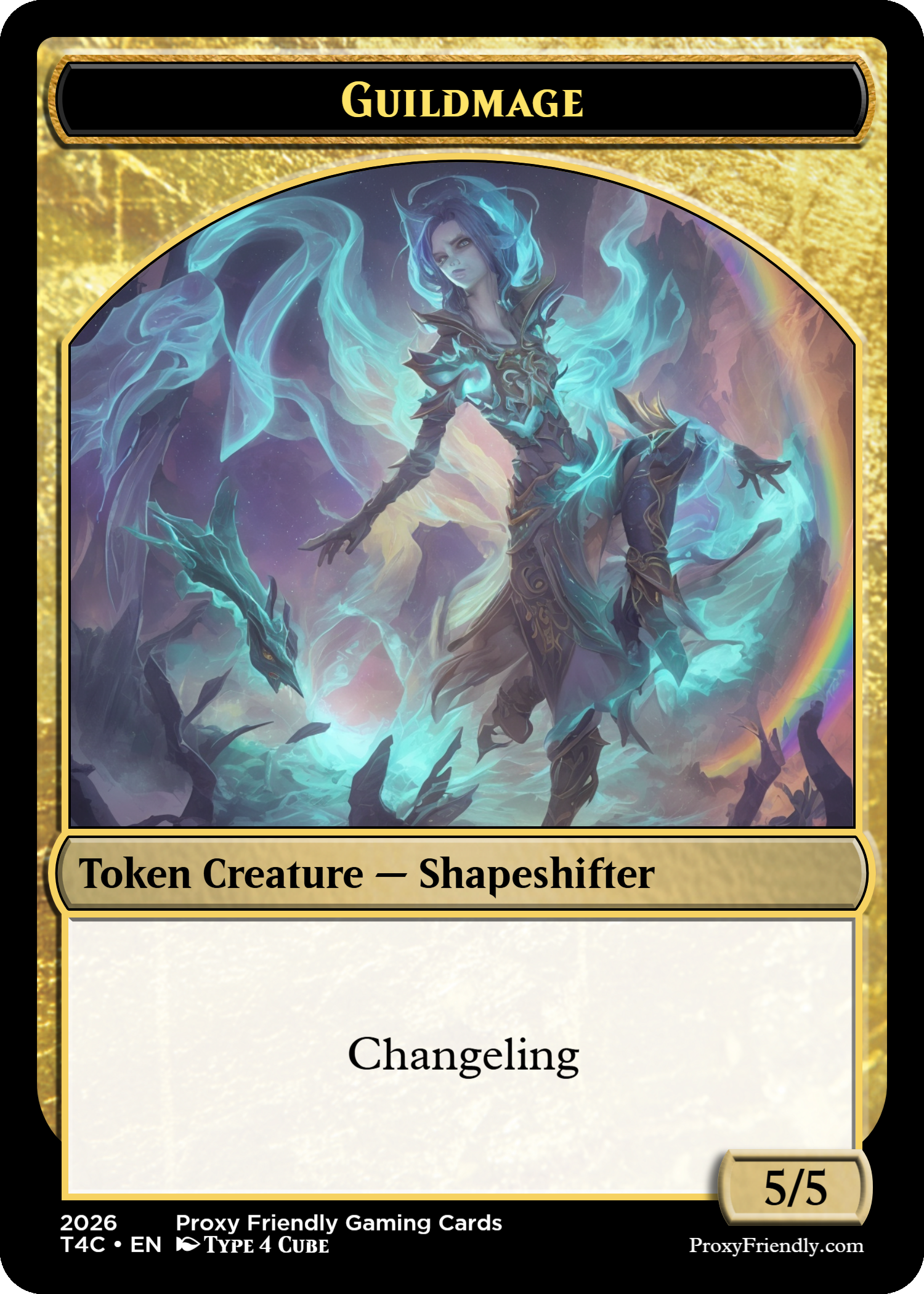
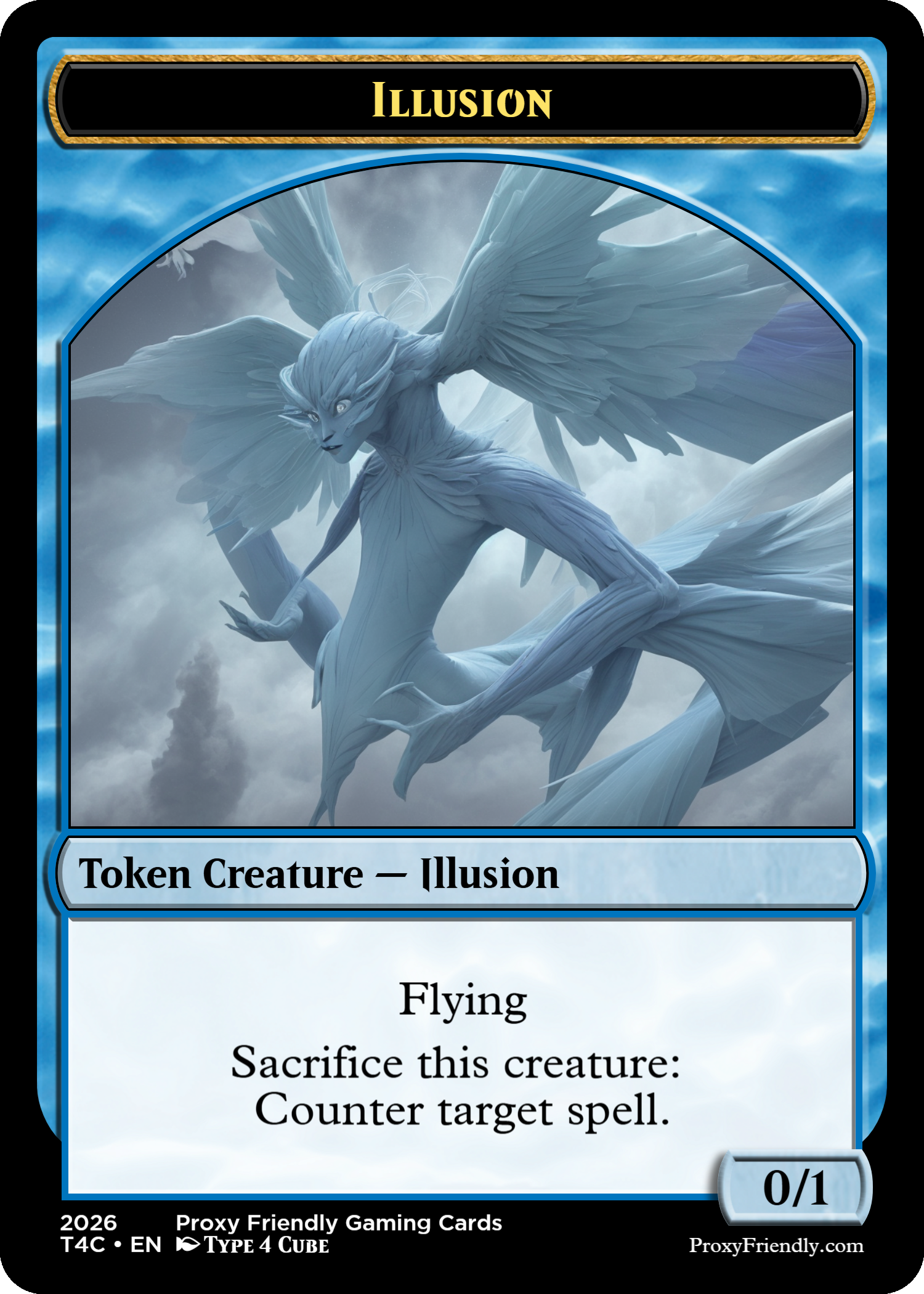
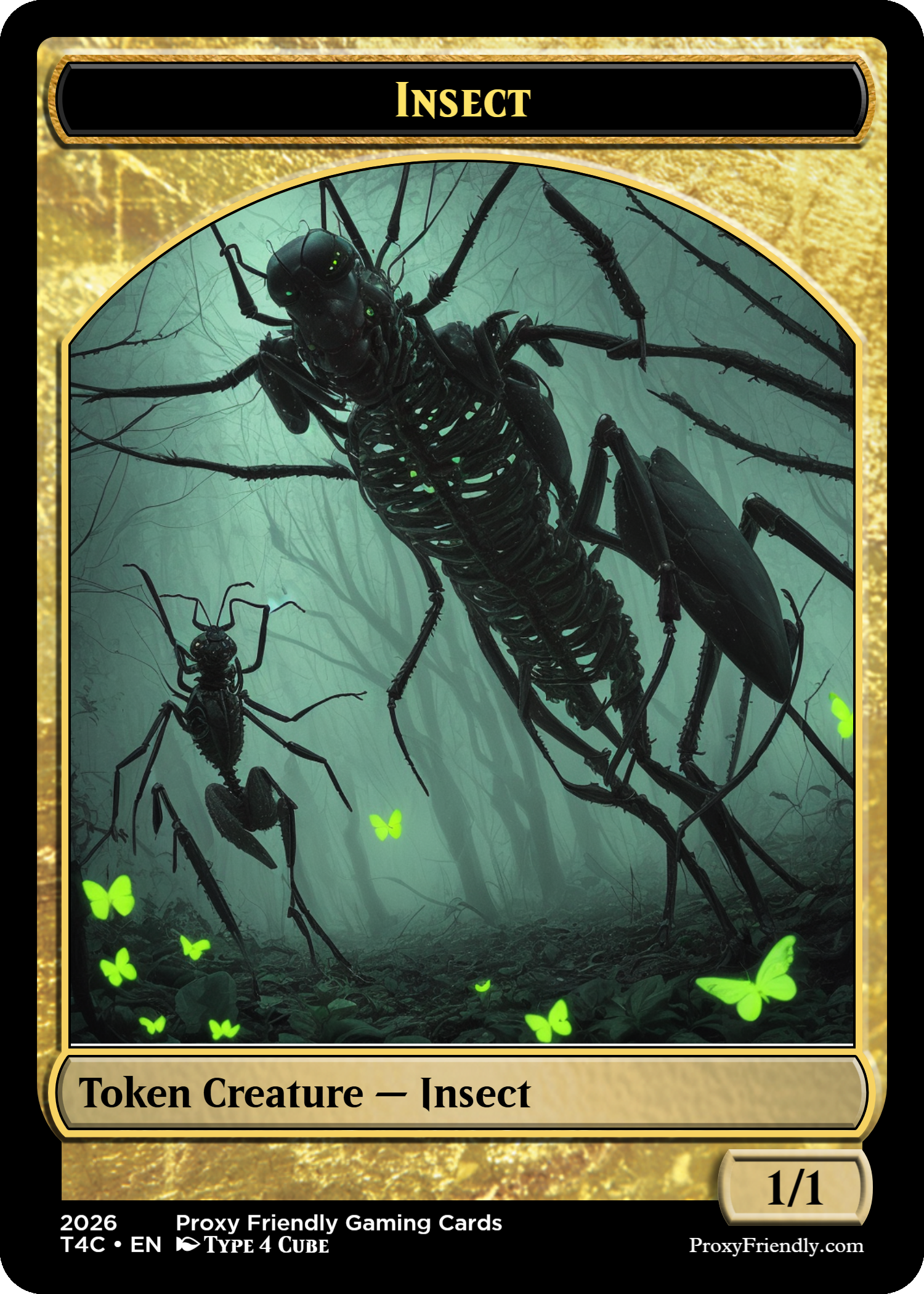
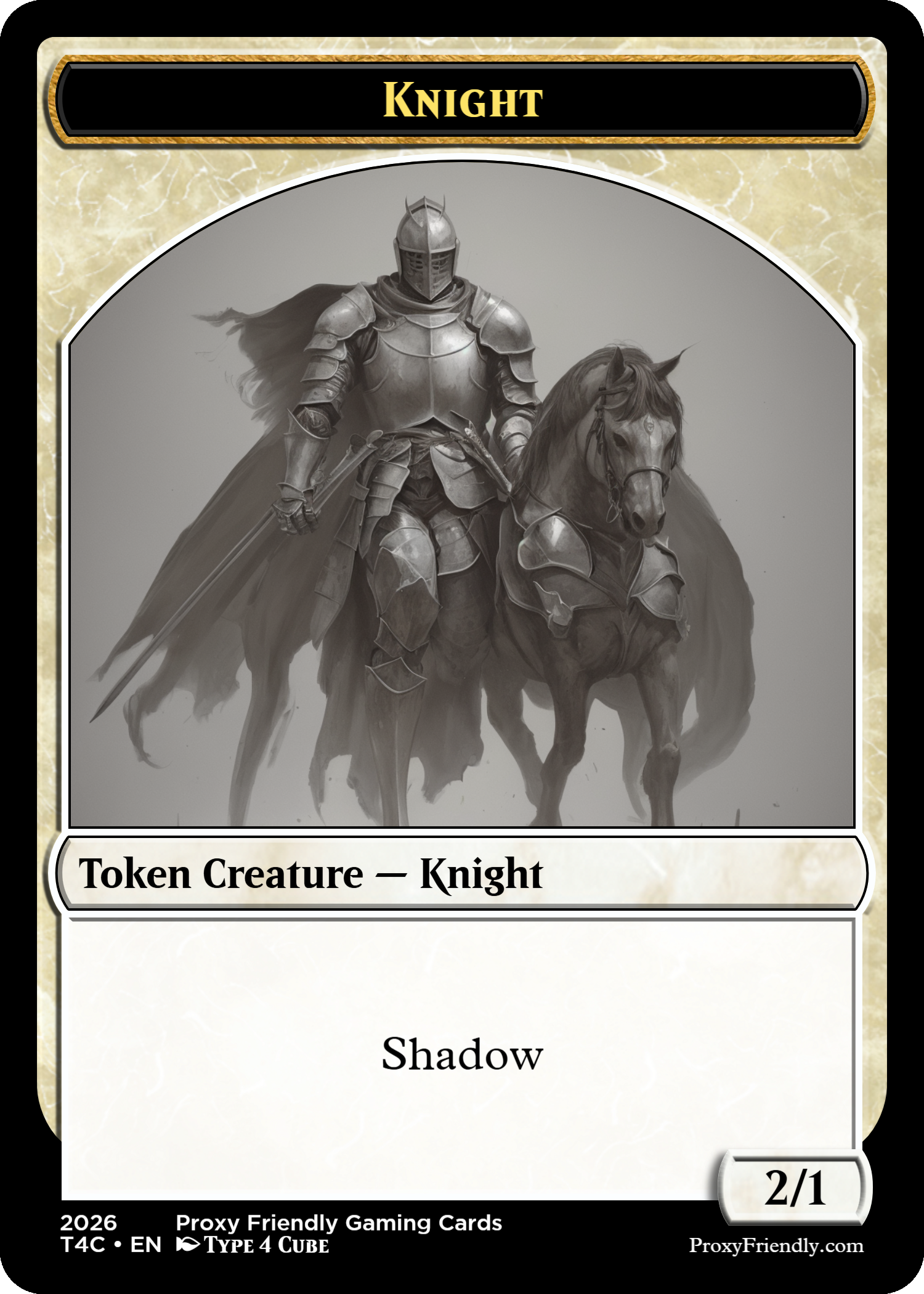
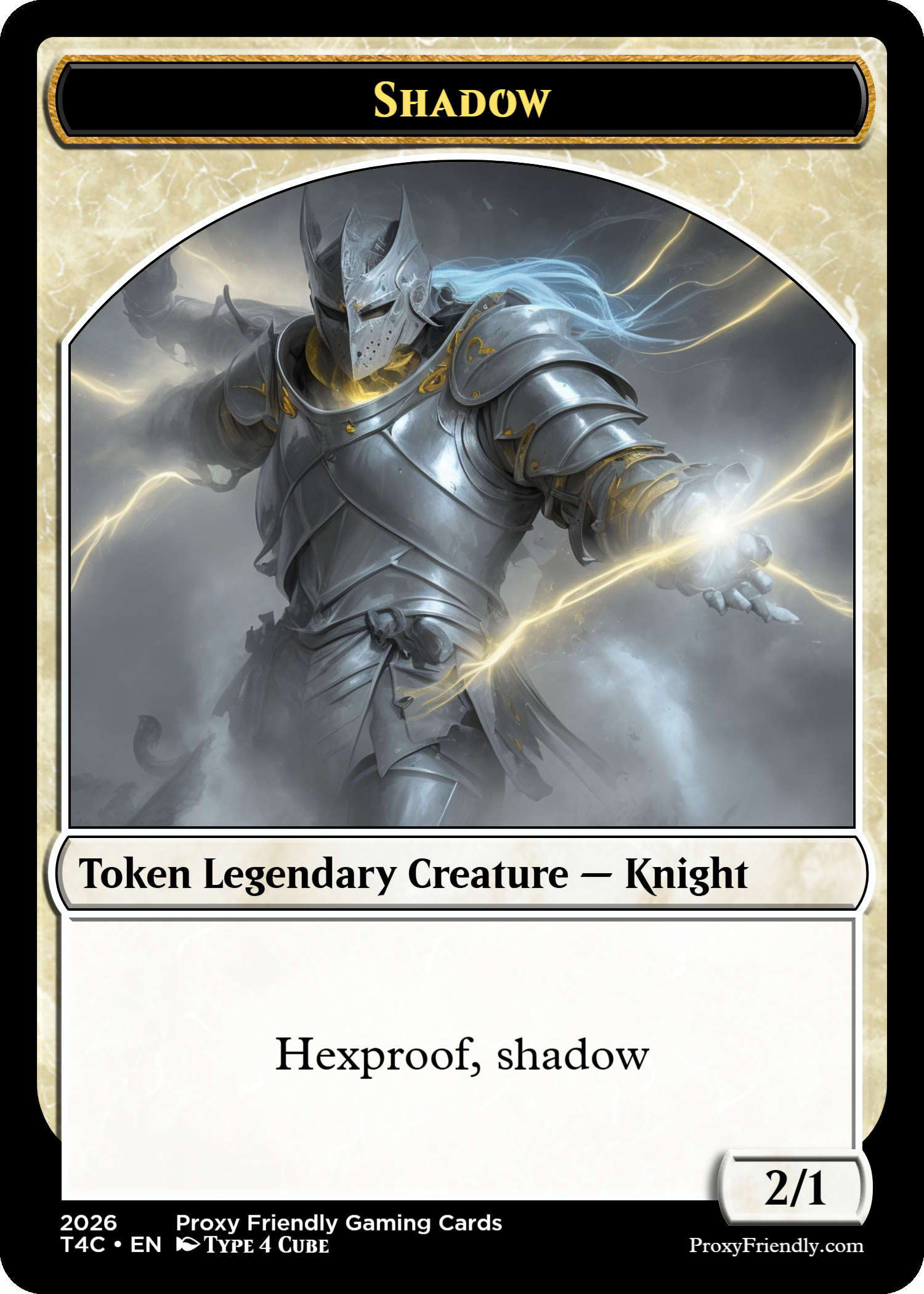
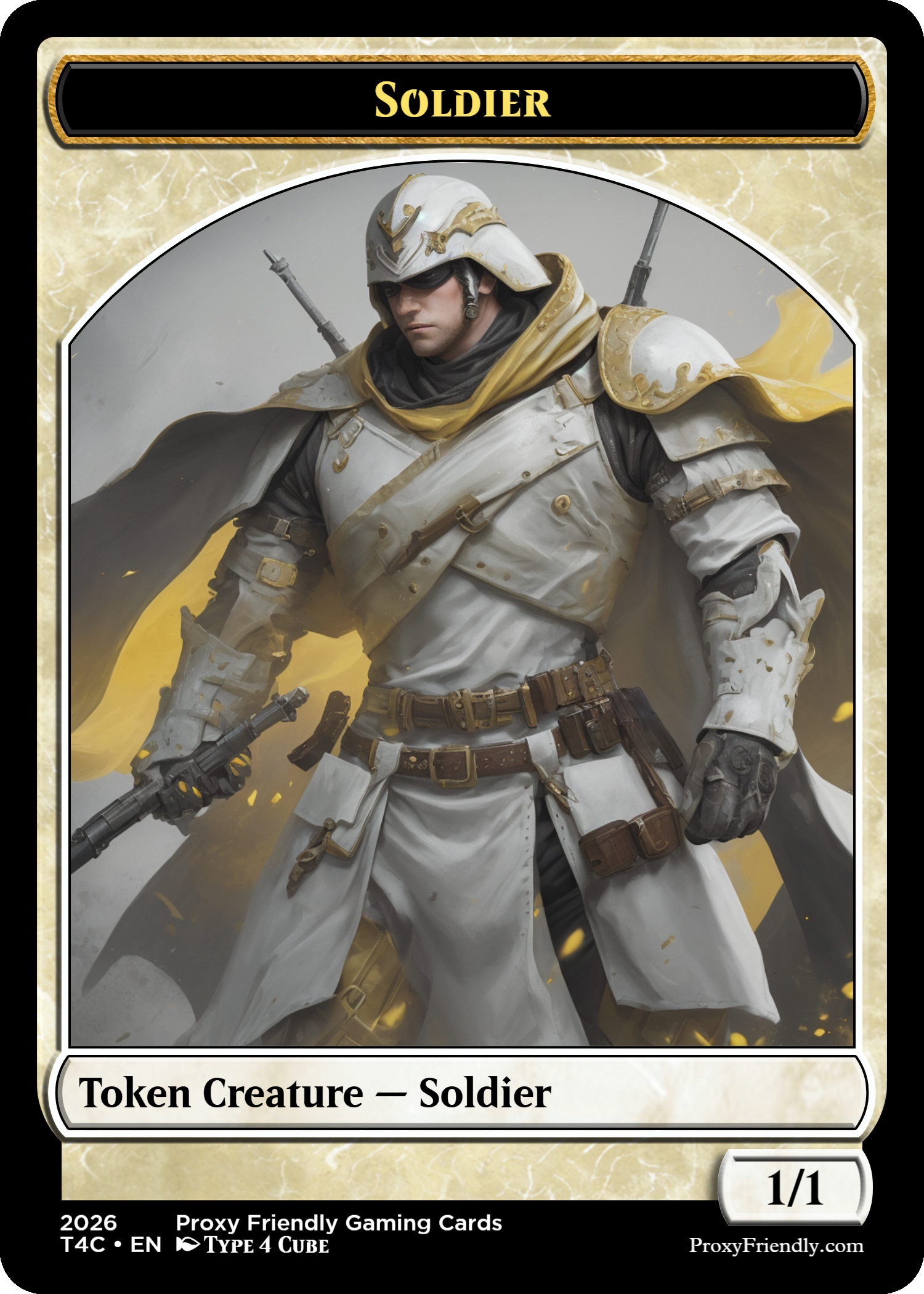
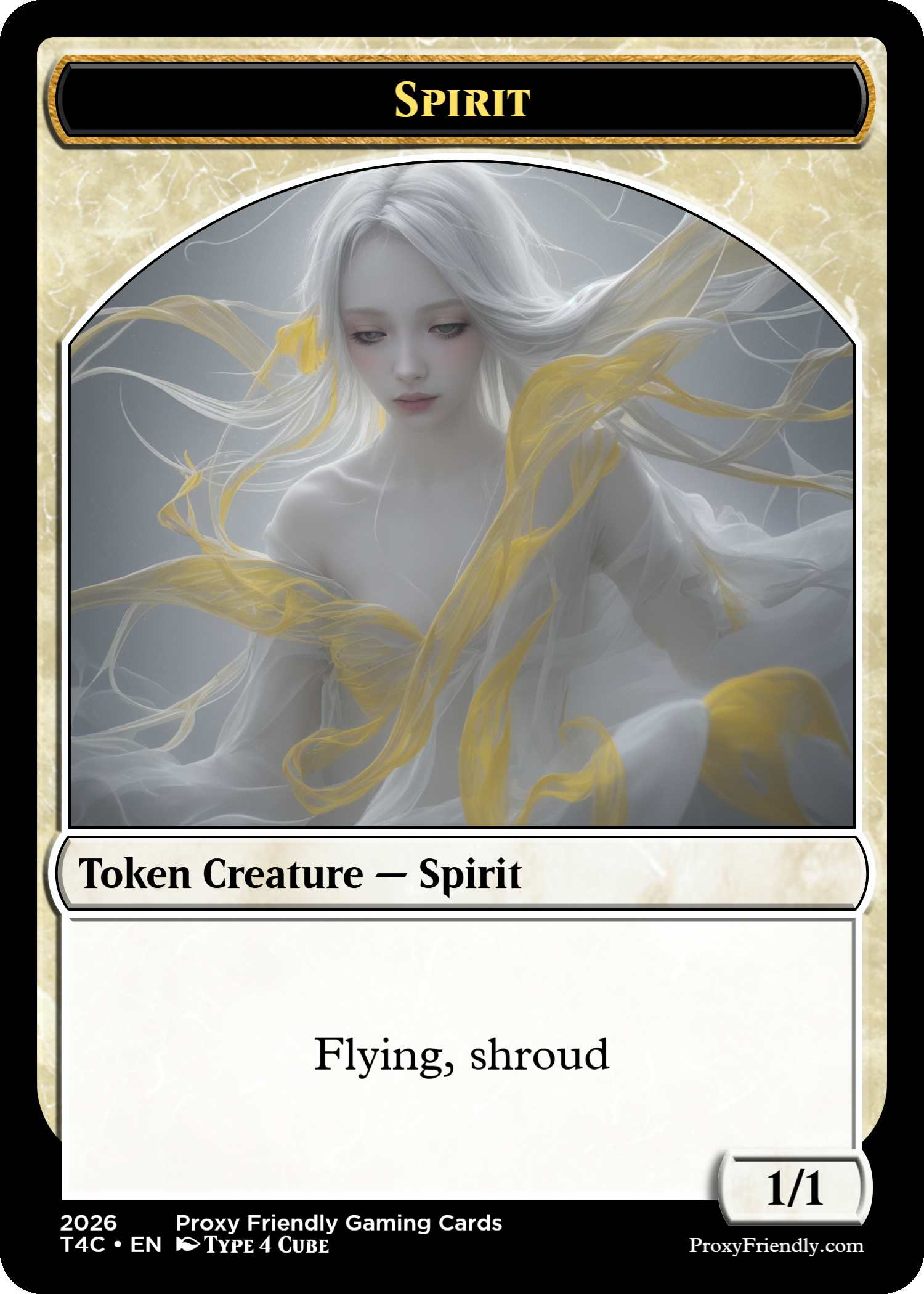
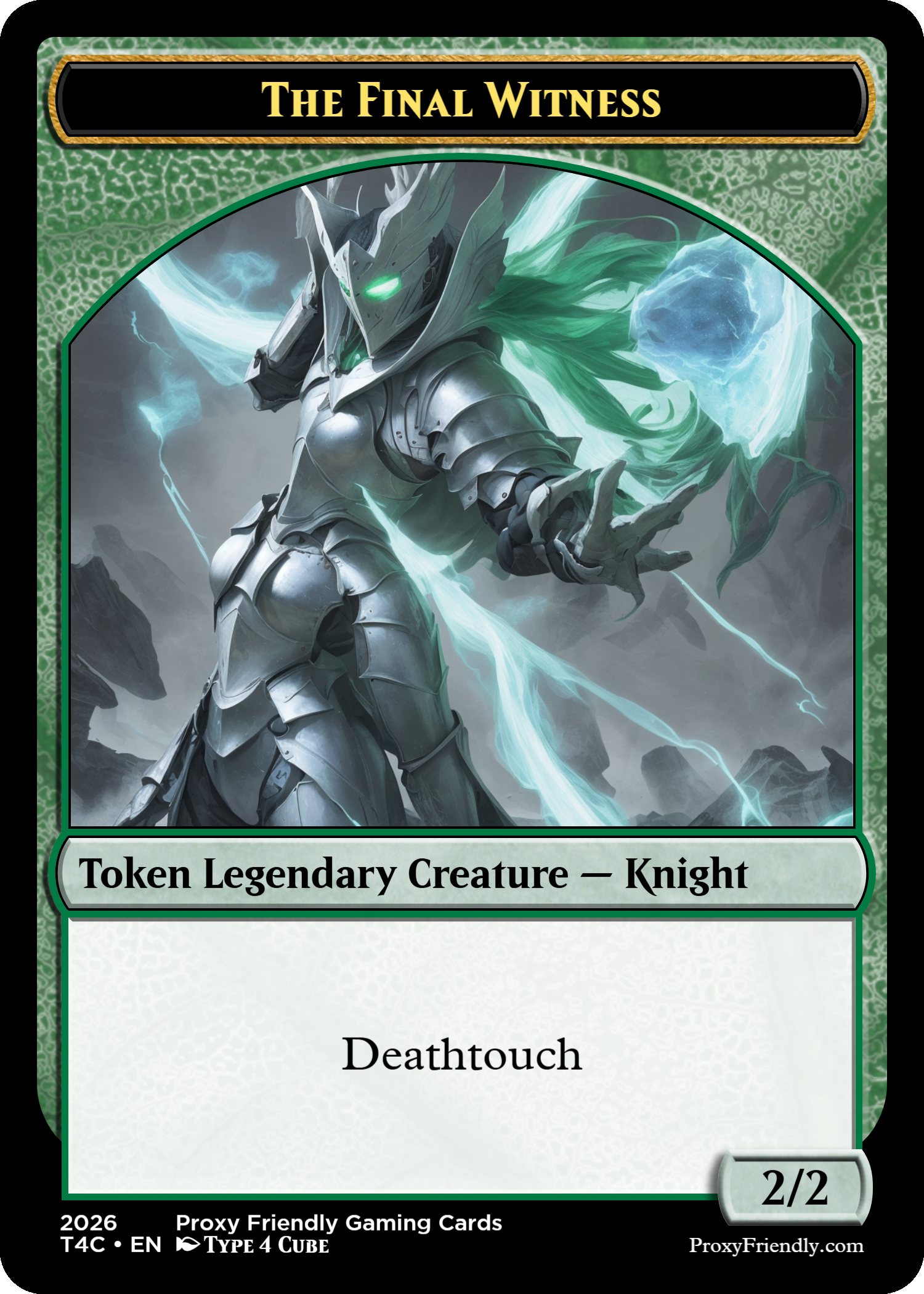
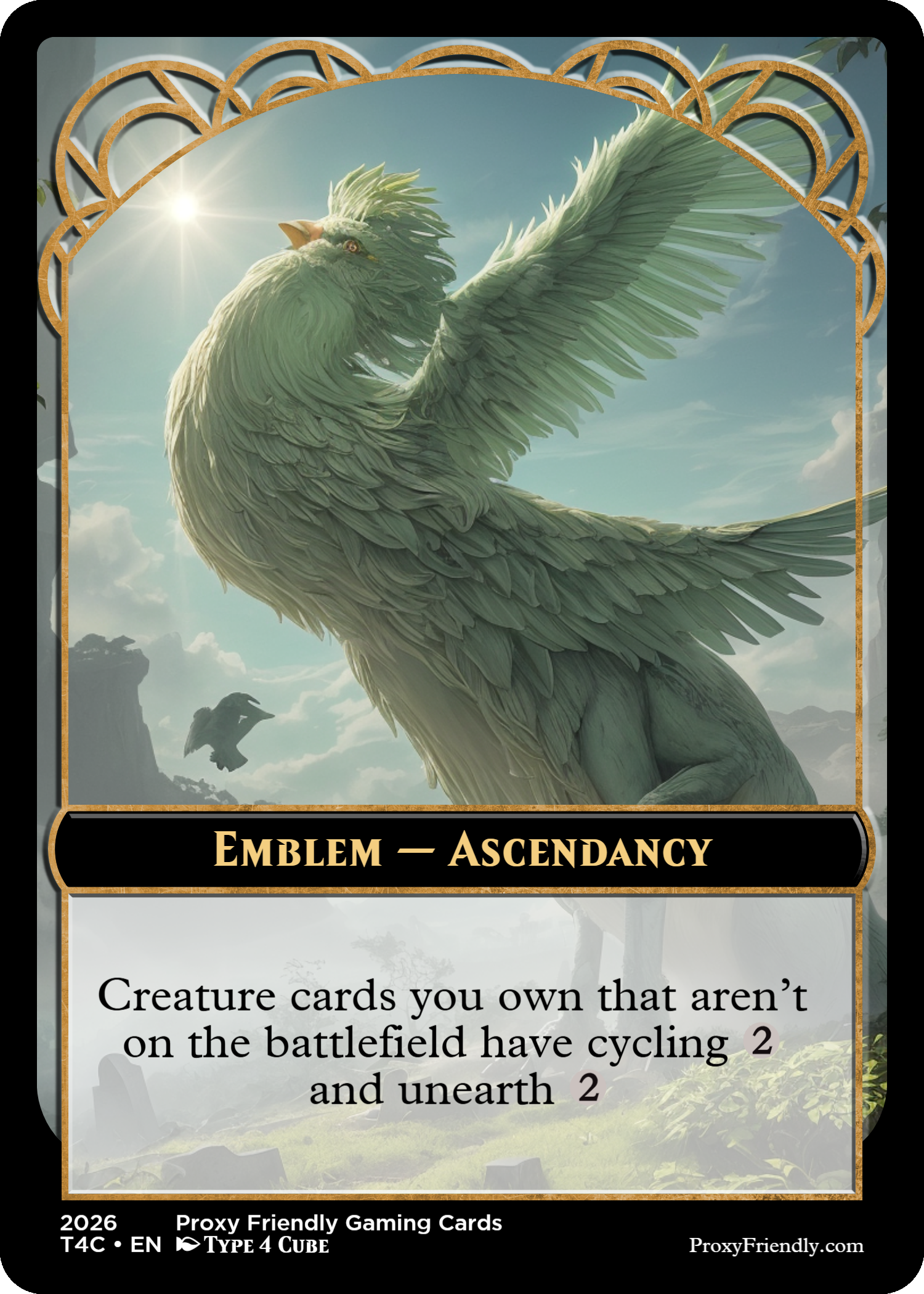
26 Tokens
Bonus Sheet:
11 Encounters
5 Tokens
Art Design:
The Boneyard Project has signed on to redesign this set and future expansions as early as 2027. We are excited for this collaboration. Visit their Etsy store and support their talent!
As for now, we’ve utilized AI to launch this cube sooner than later so we can all grow with it as a community!
If you like what we’ve done with the AI launch model, be sure to buy your copy before 2027. We will be phasing out this beta art design once Boneyard takes over!
Unique Mechanics:
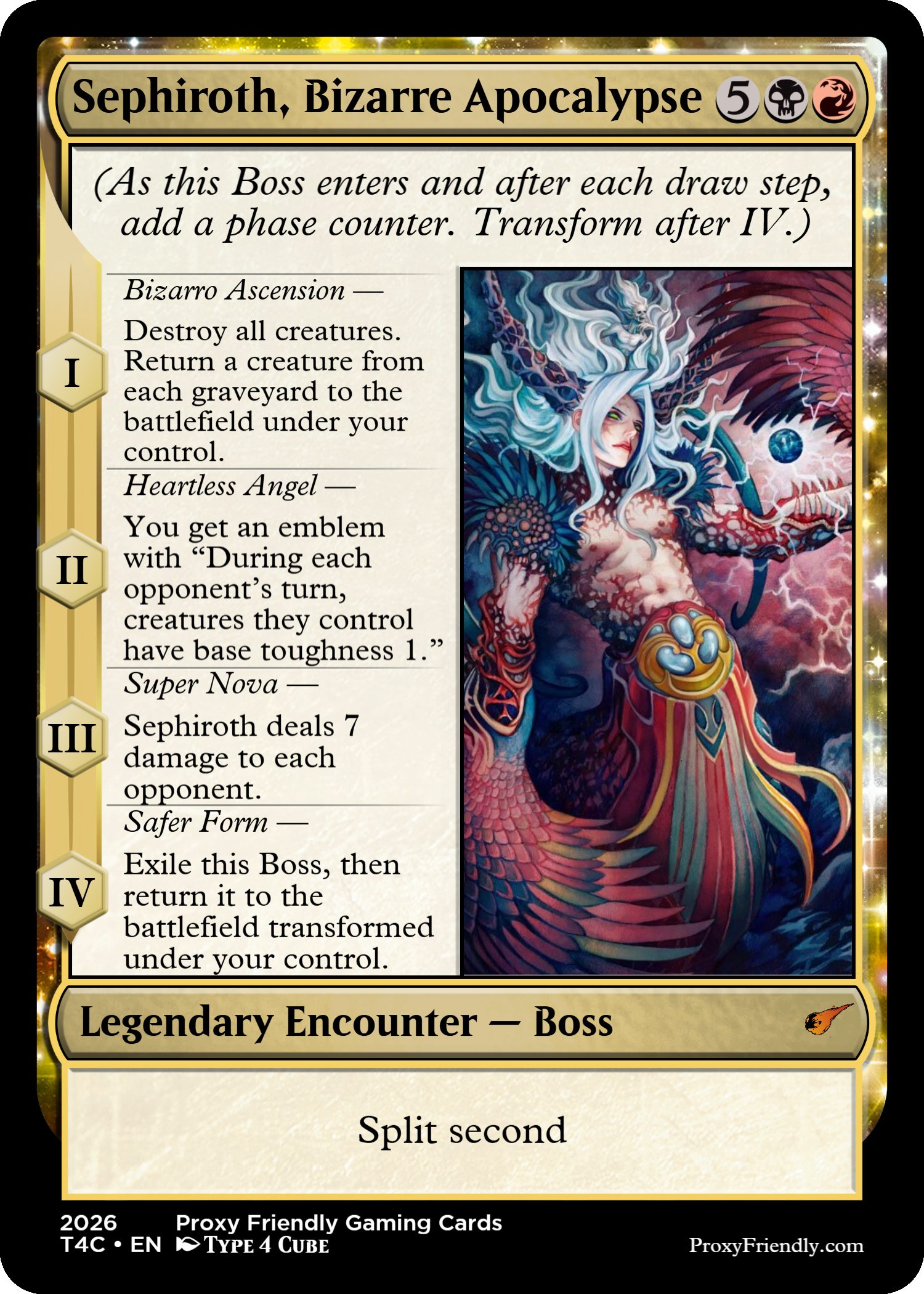
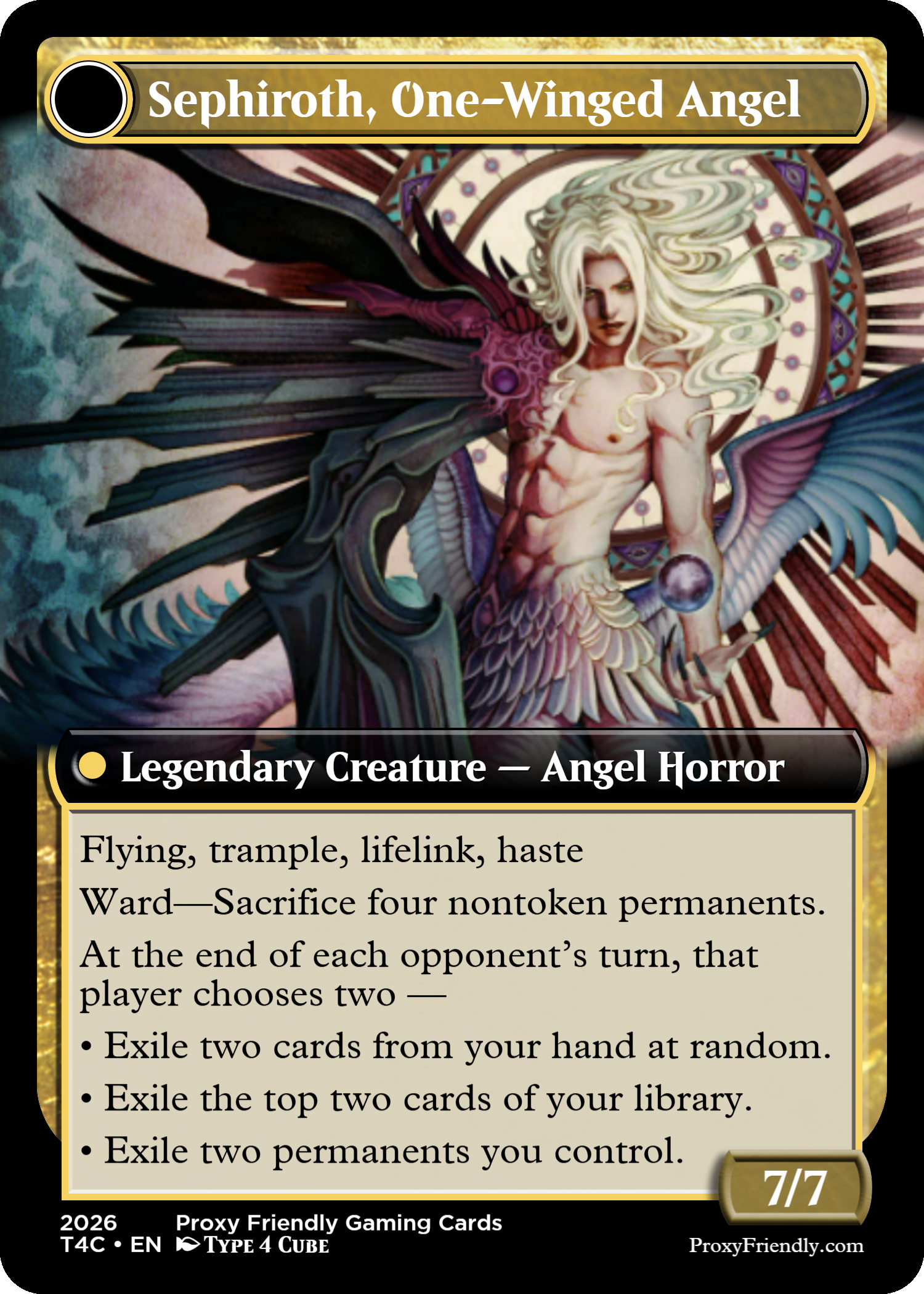
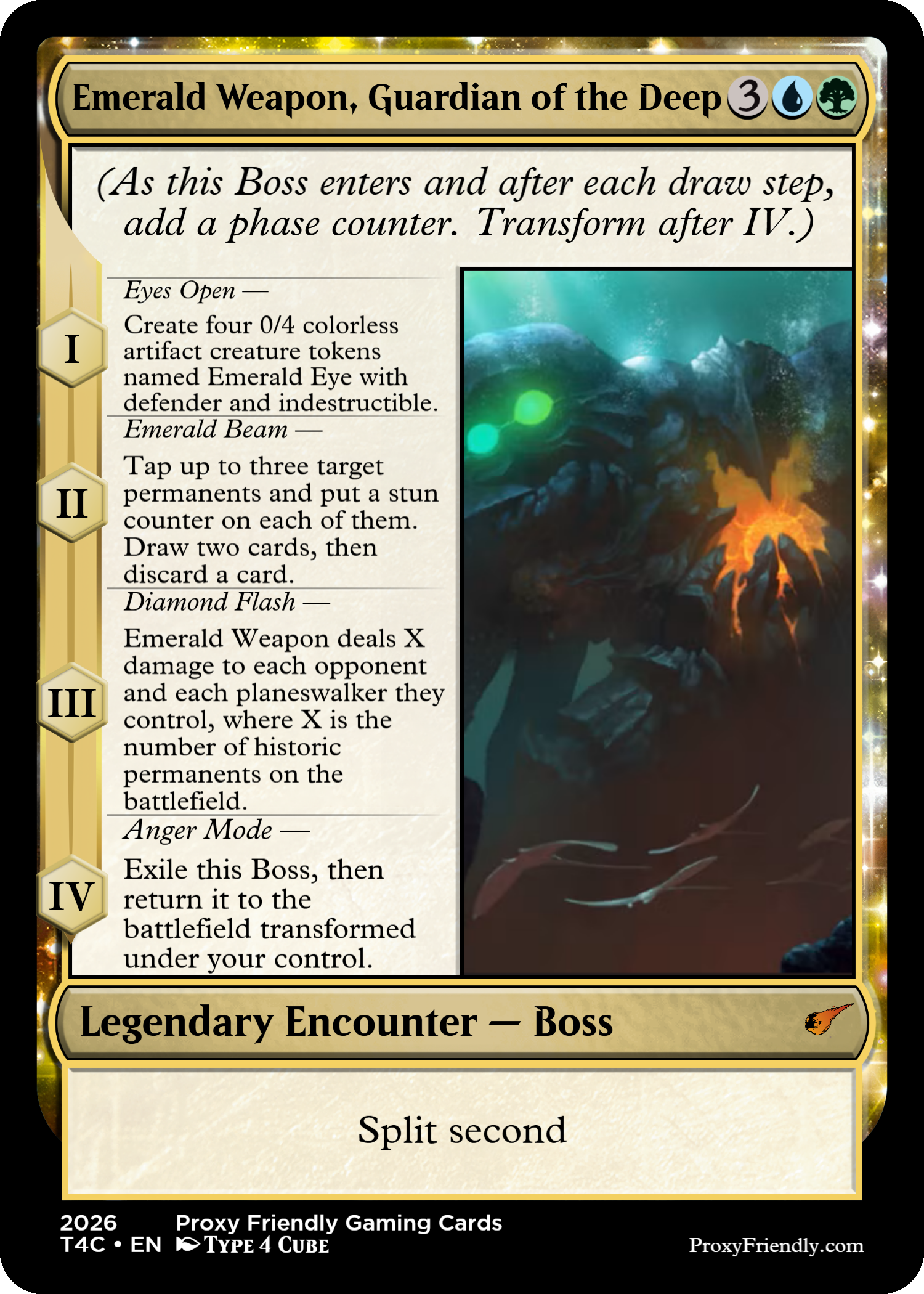
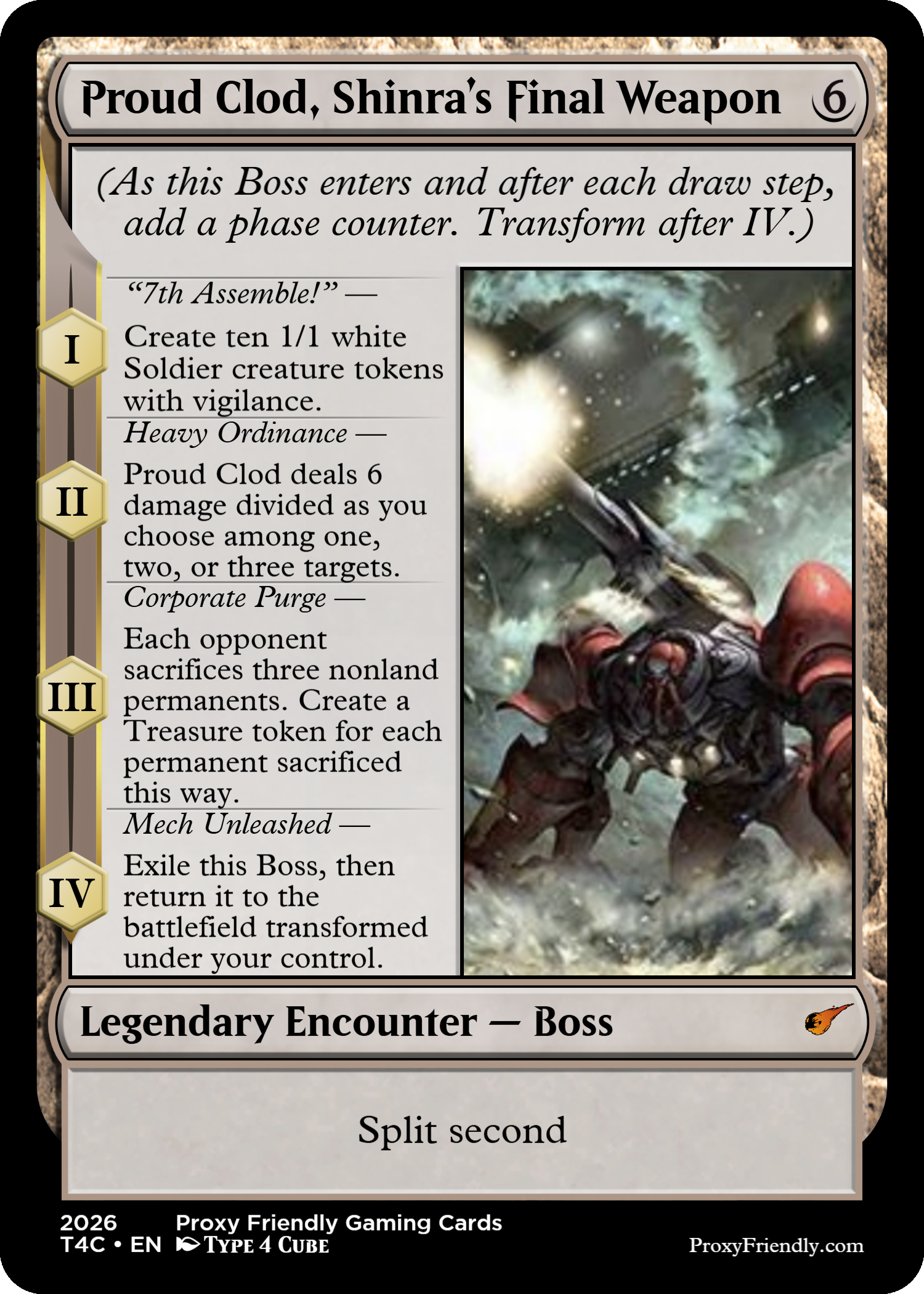
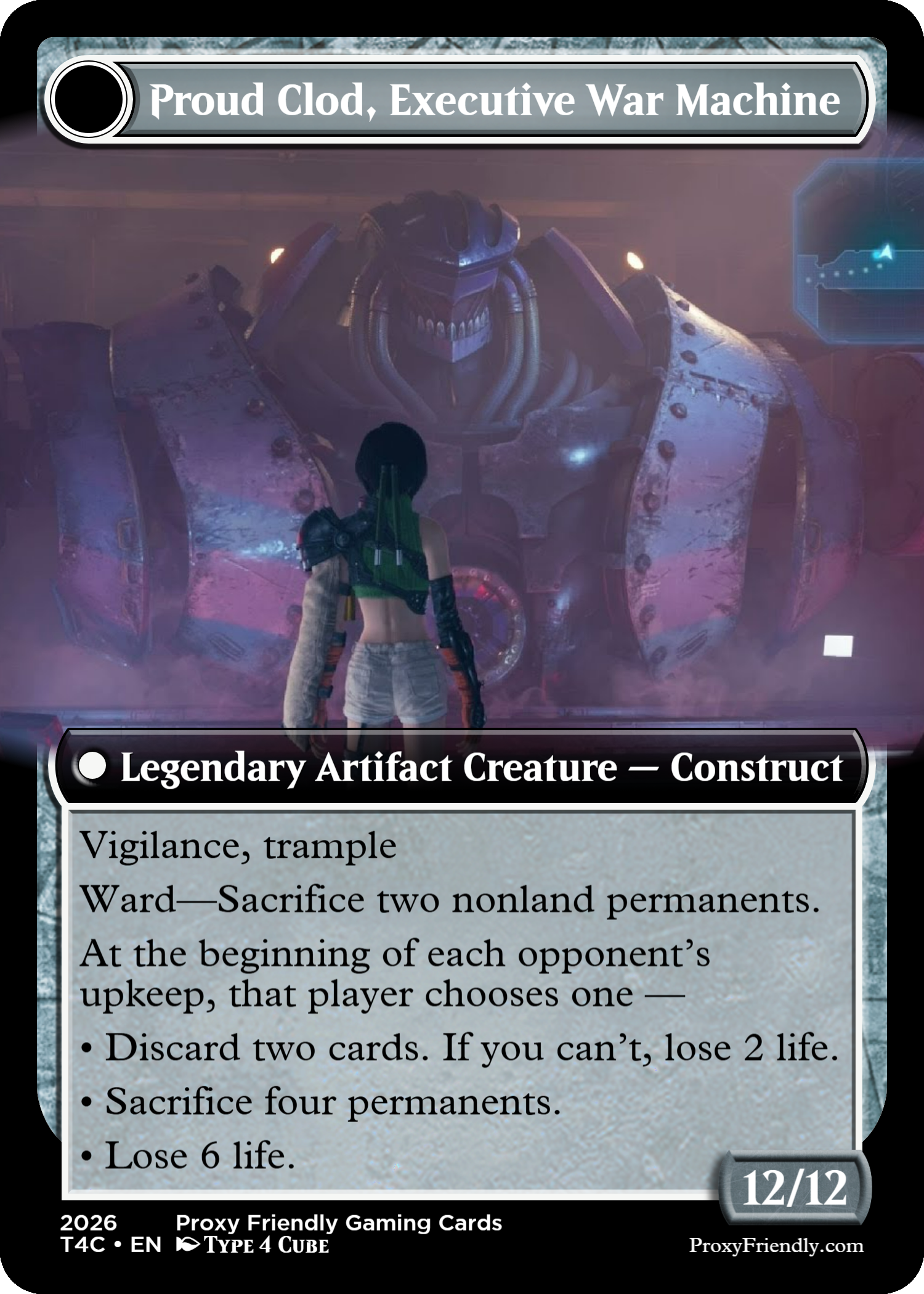
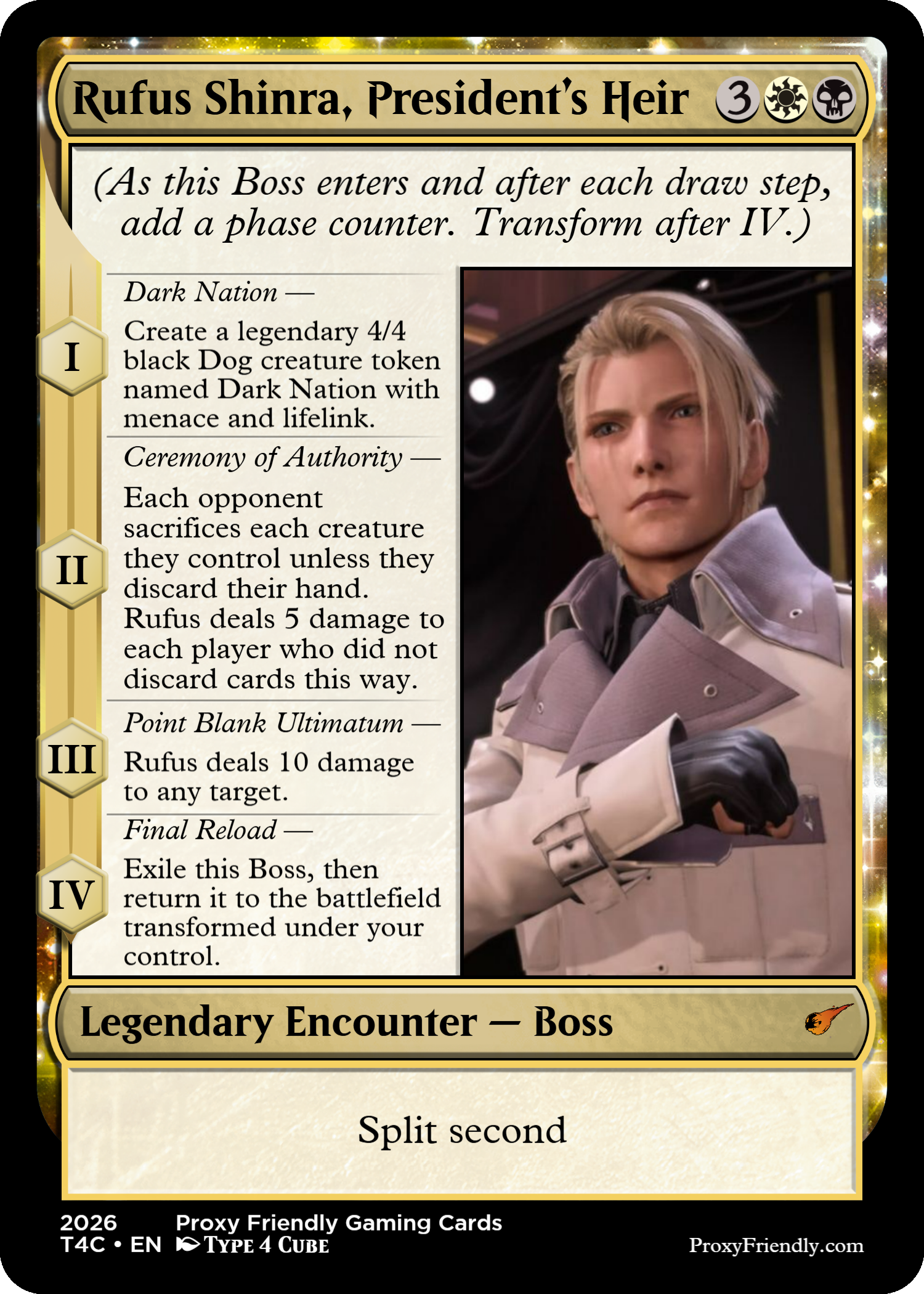
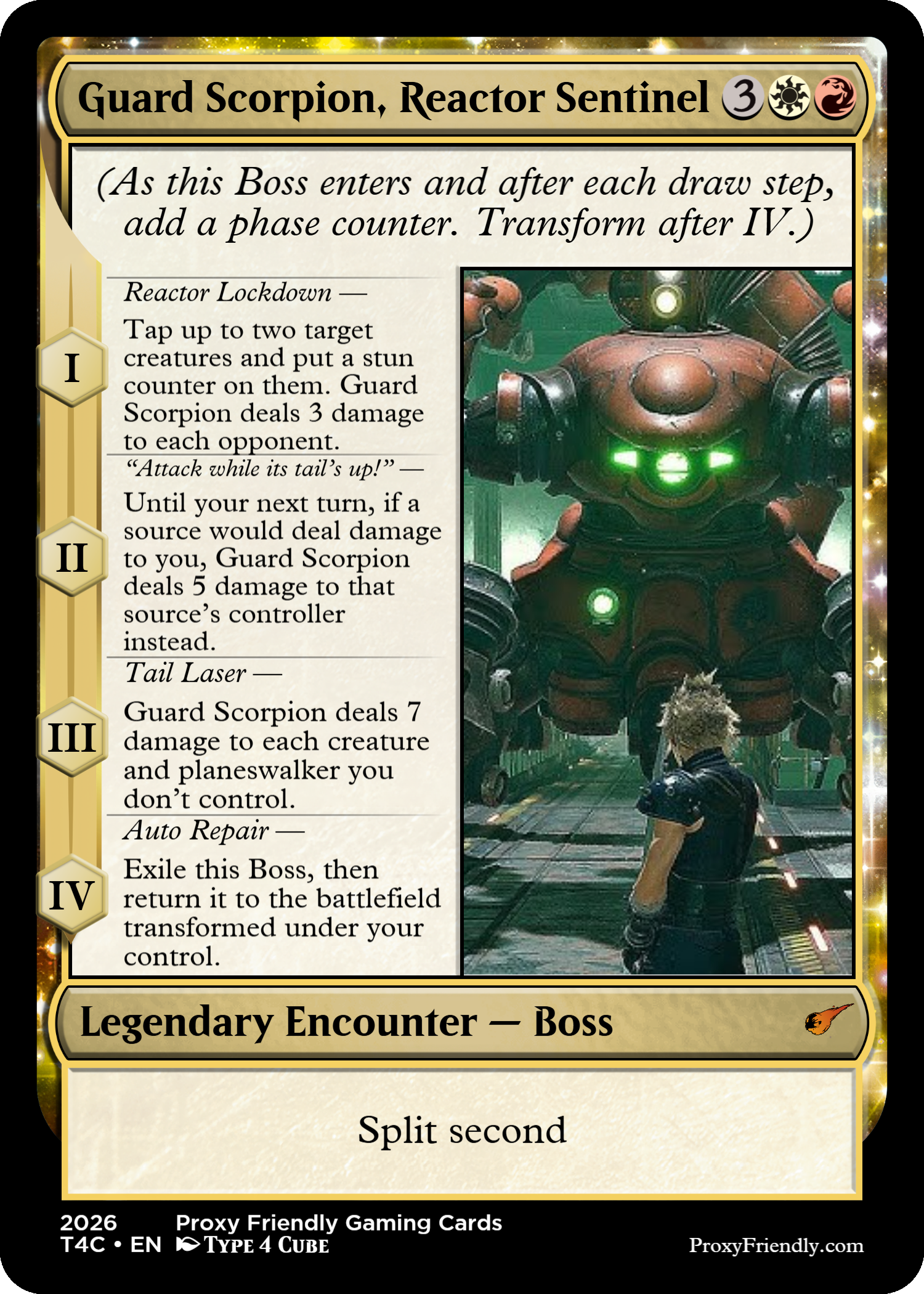
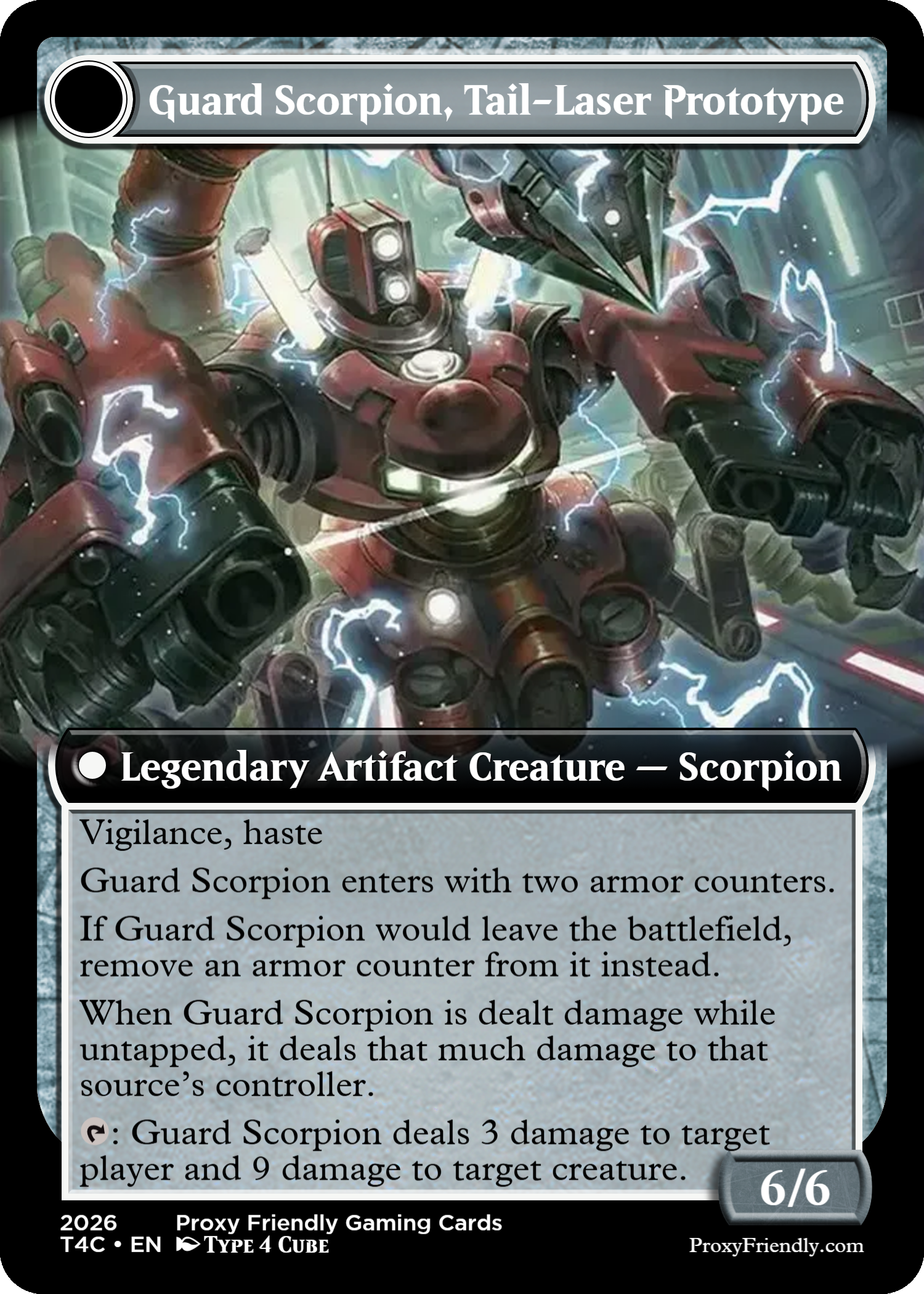
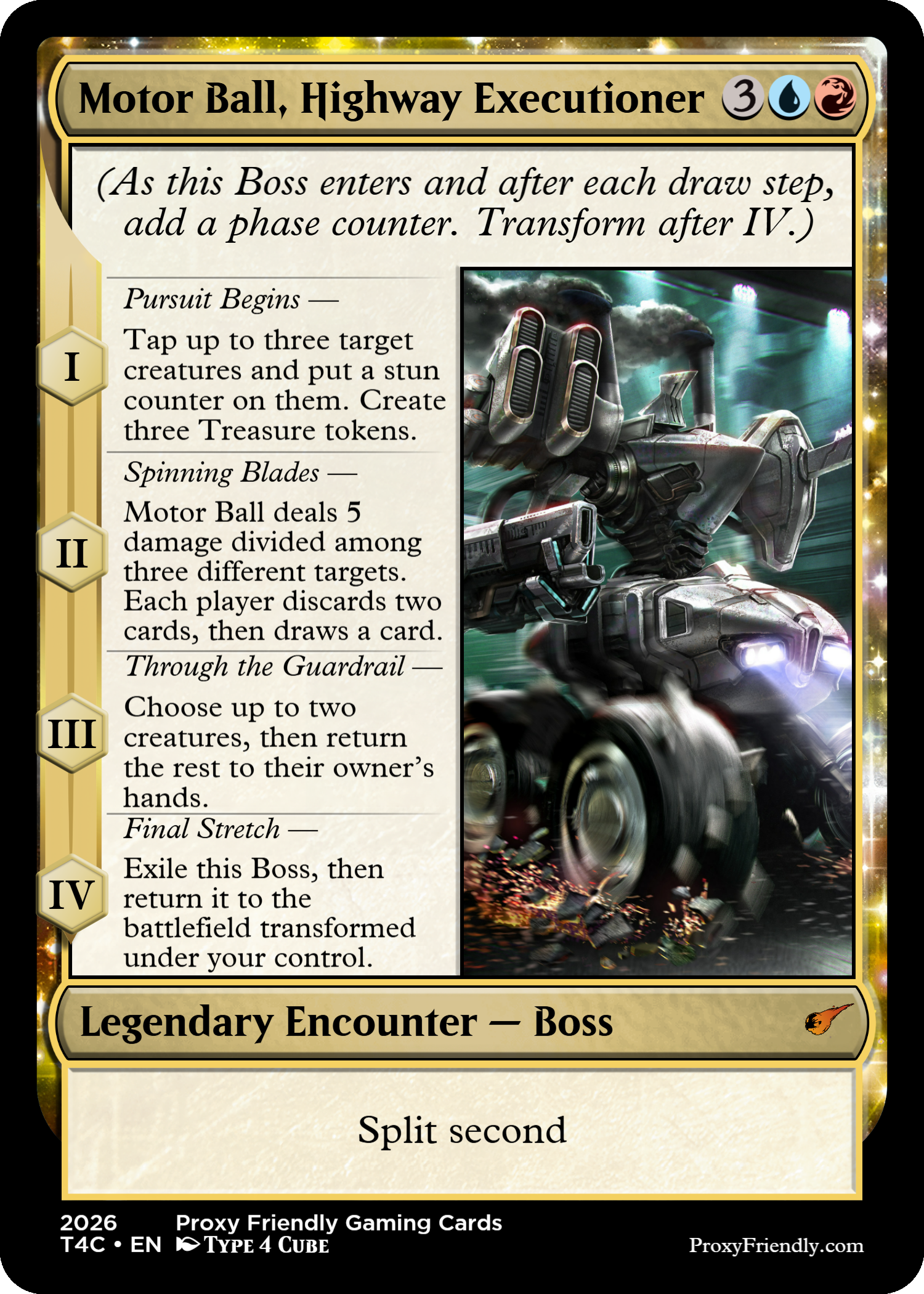
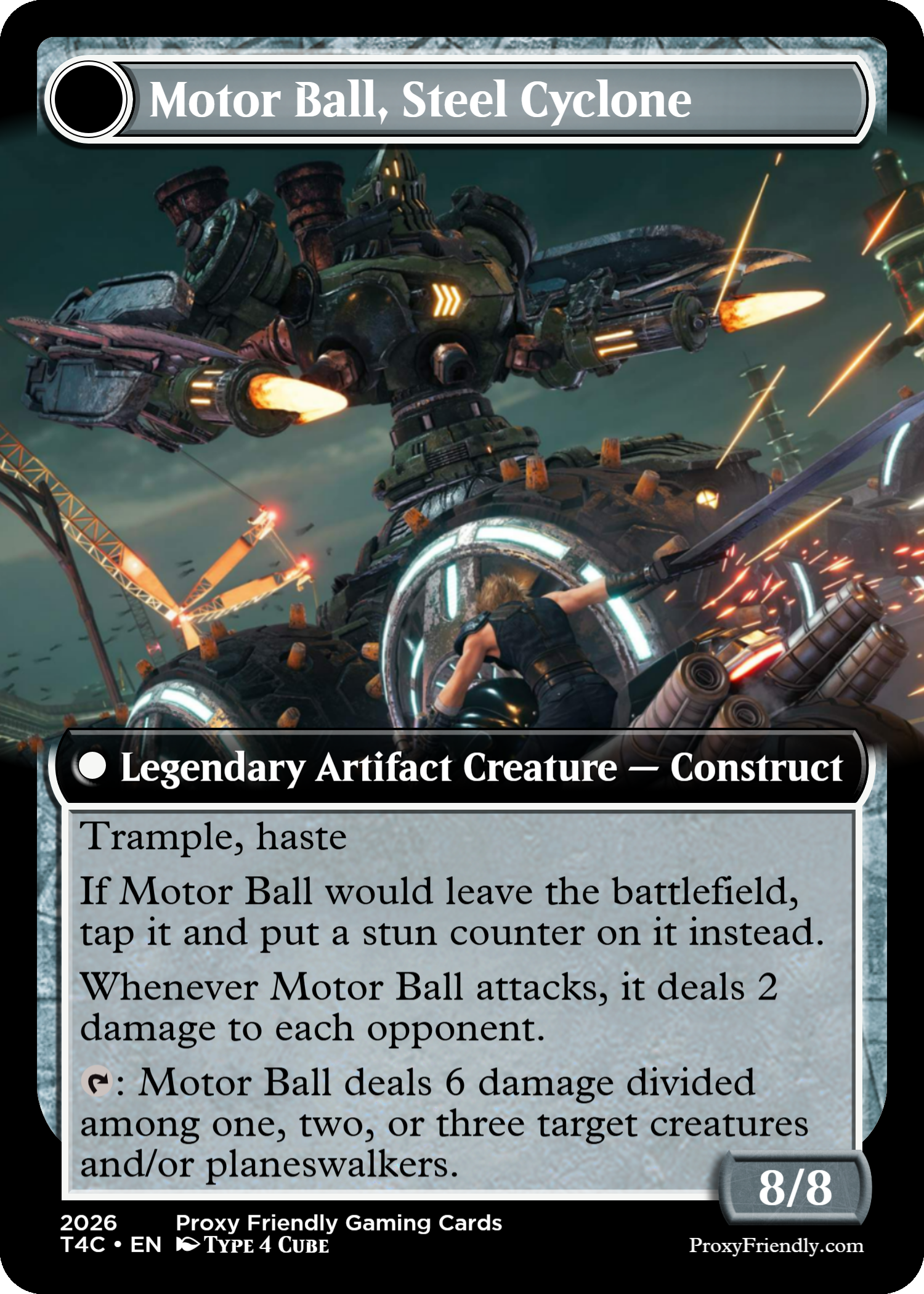
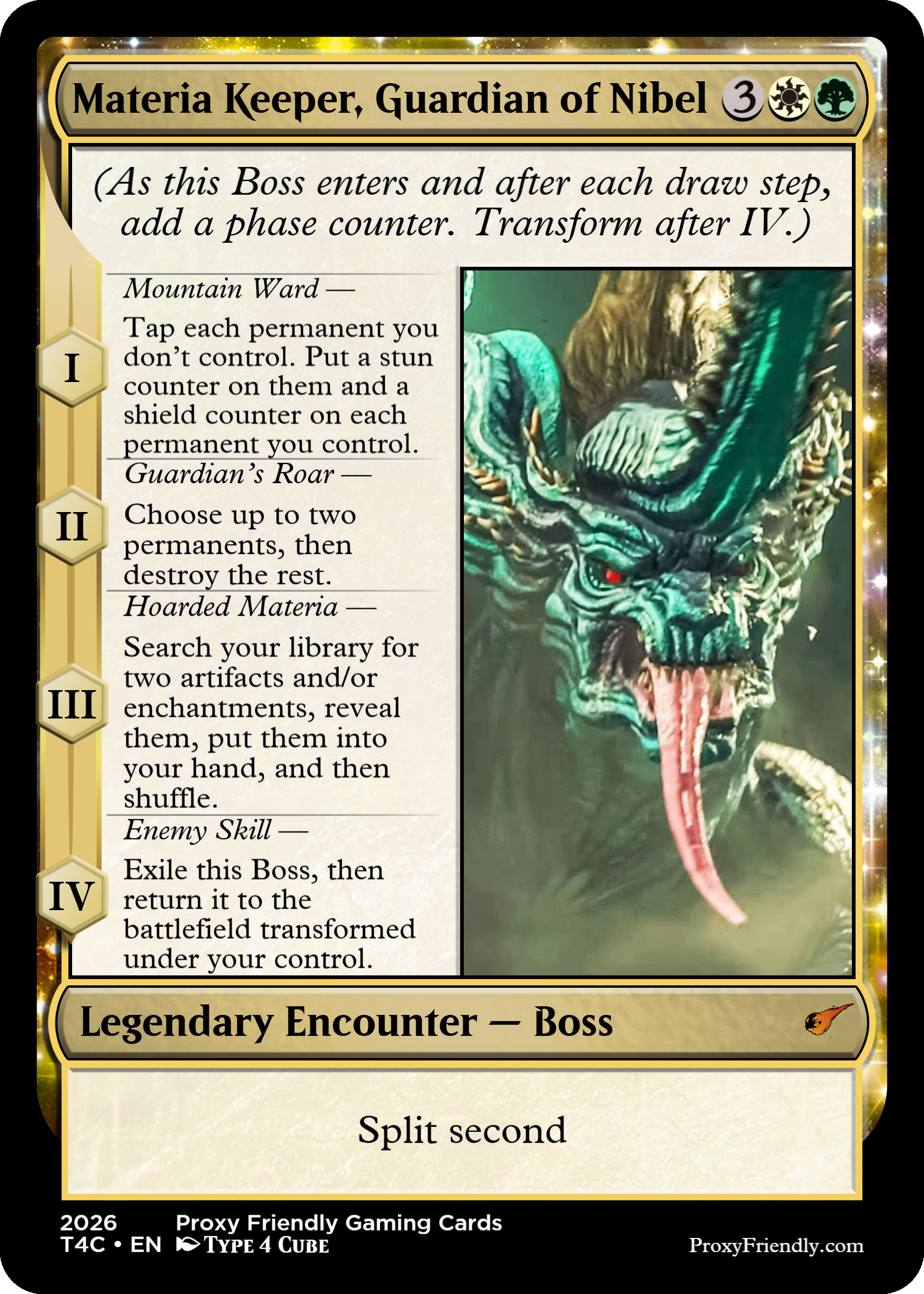
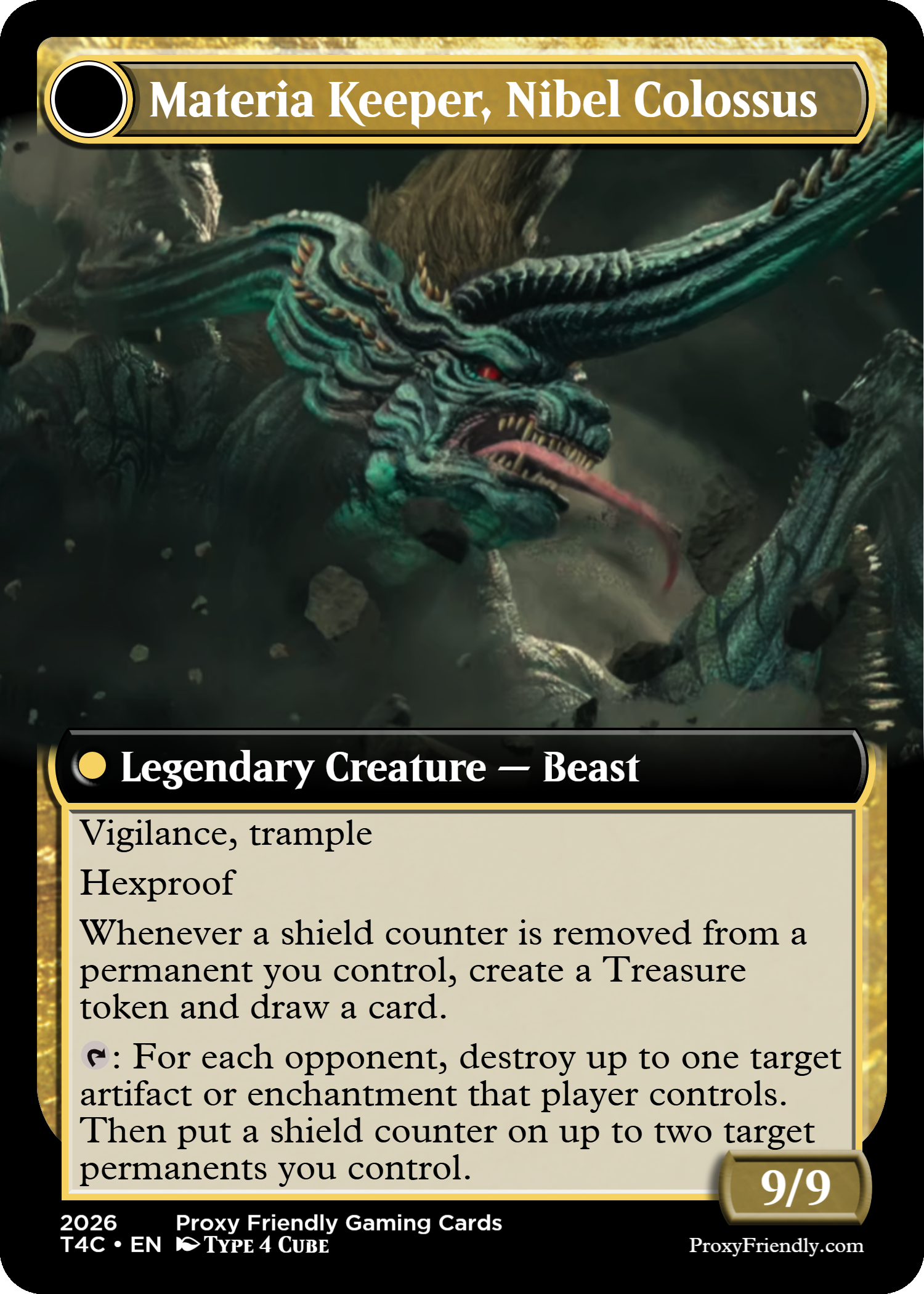
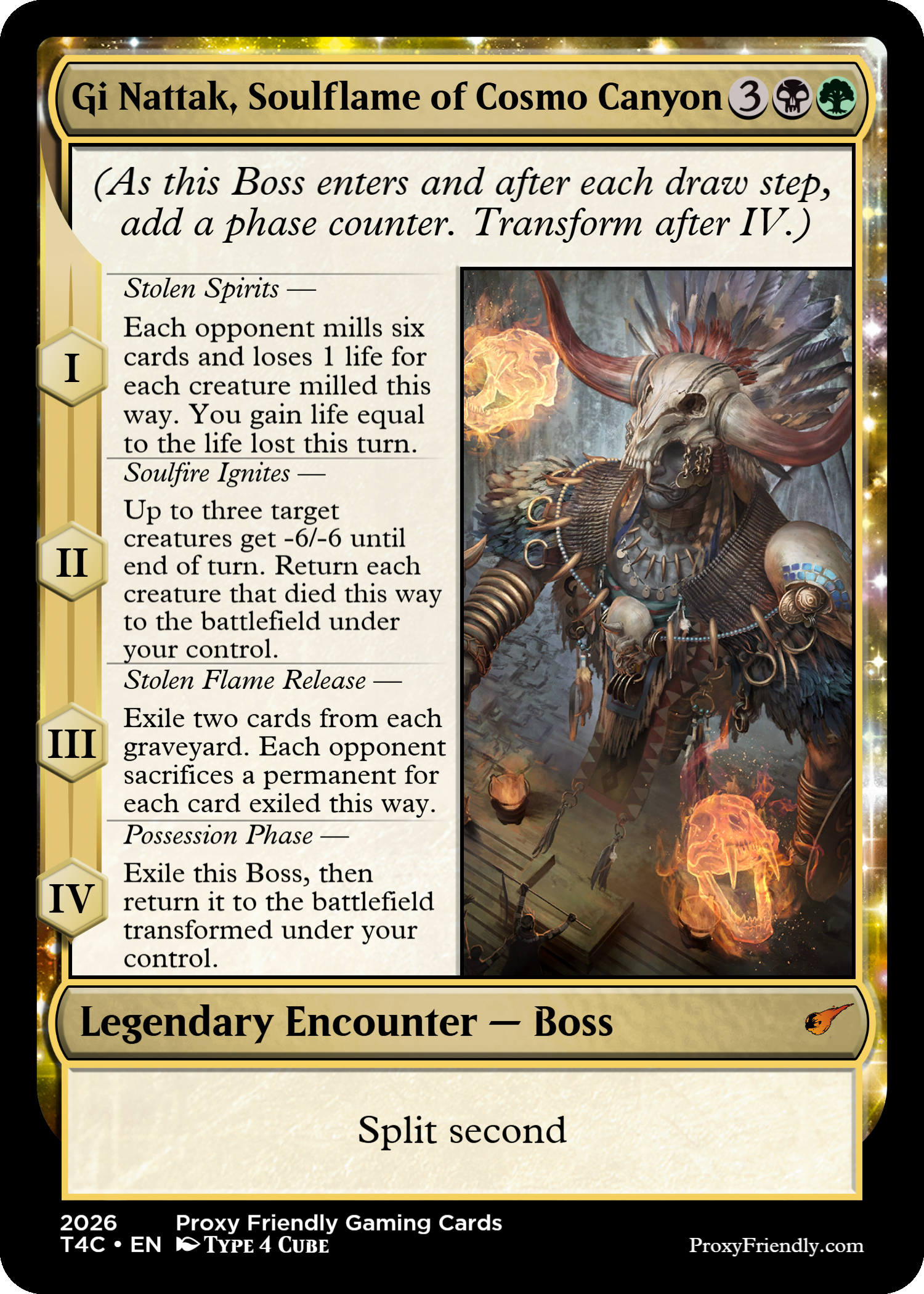
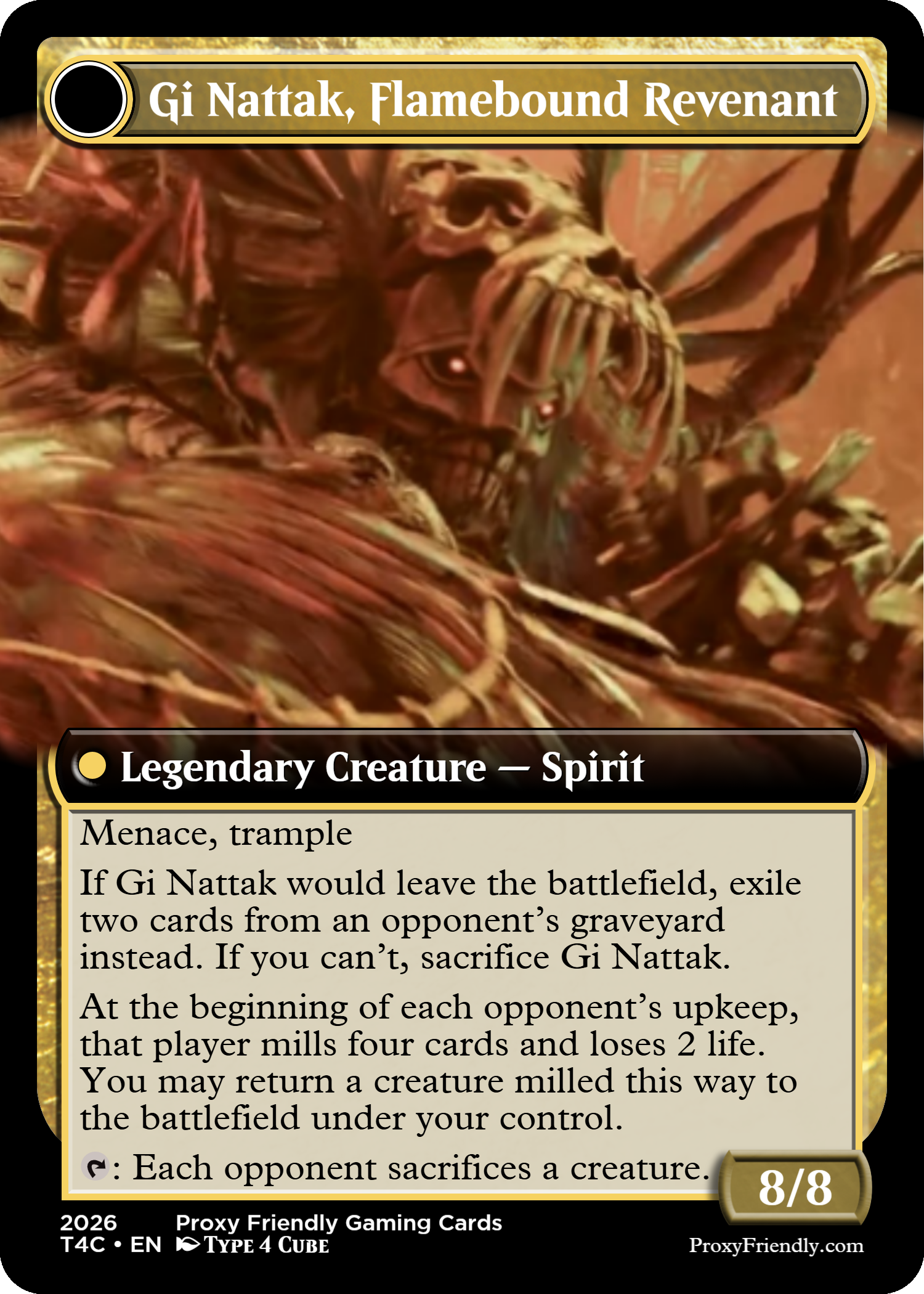
Encounters: Inspired by Saga Enchantments, these noncreature spells act like emblems (not permanents) and depict famous canon events from across various lore. Once an encounter receives its final “Phase” counter, it exiles and then transforms into its “final phase." Each front is given split second in order to almost guarantee the encounter can’t be skipped, just like a canon event. These cards also have a unique set symbol and are considered part of the corresponding set release’s bonus sheet. The Custom Set encounters have FF7’s "Meteor” to pay respects to this Universe Beyond-themed mini-set bonus sheet. Each new expansion will have its own Universe Beyond mini-set bonus sheet with its own unique set symbol.
NOTE: These Universe Beyond mini set bonus sheets are NOT for sale. These cards are only accessible by earning them while competing in one of our Cube or Mini Qualifier events.
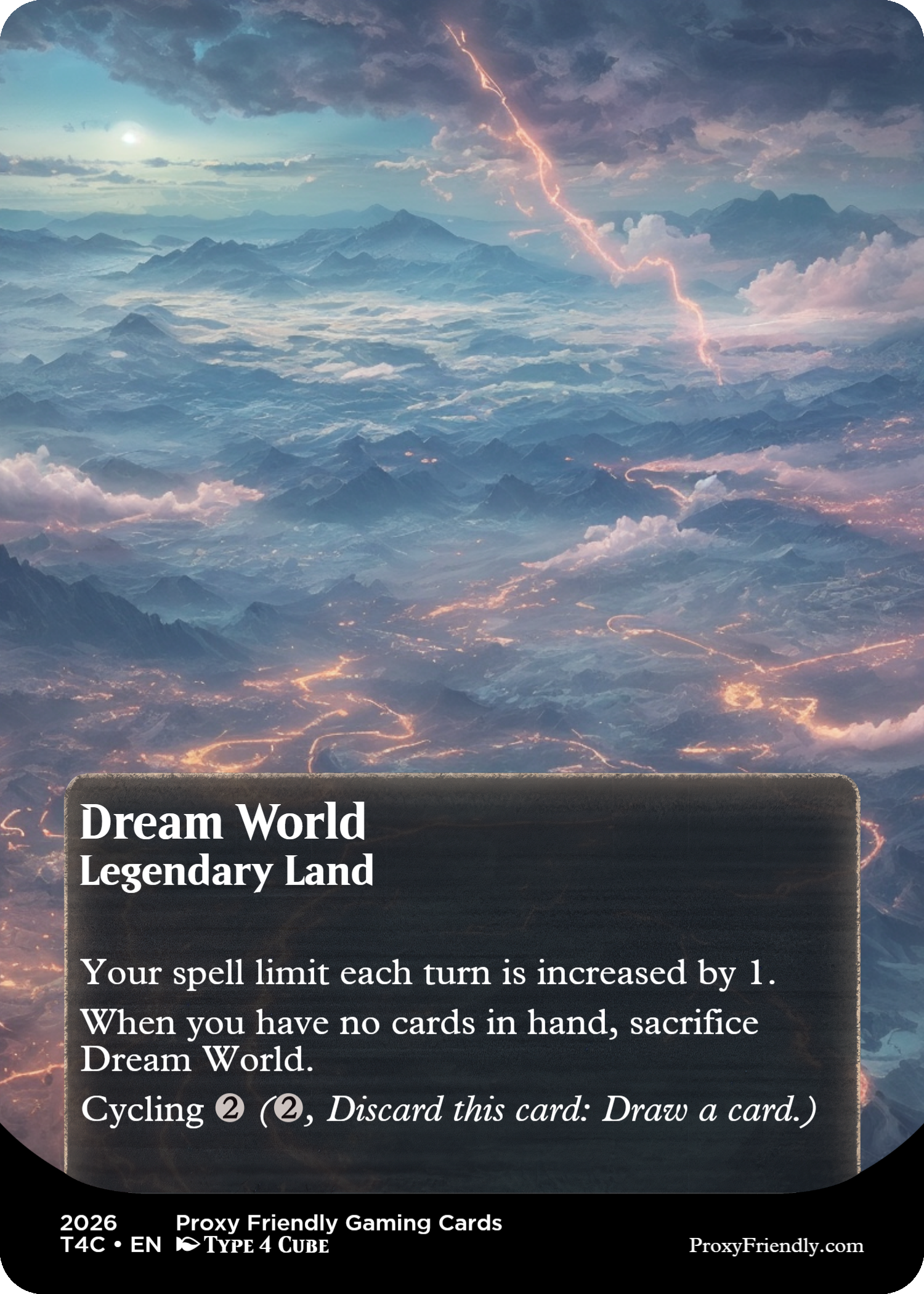
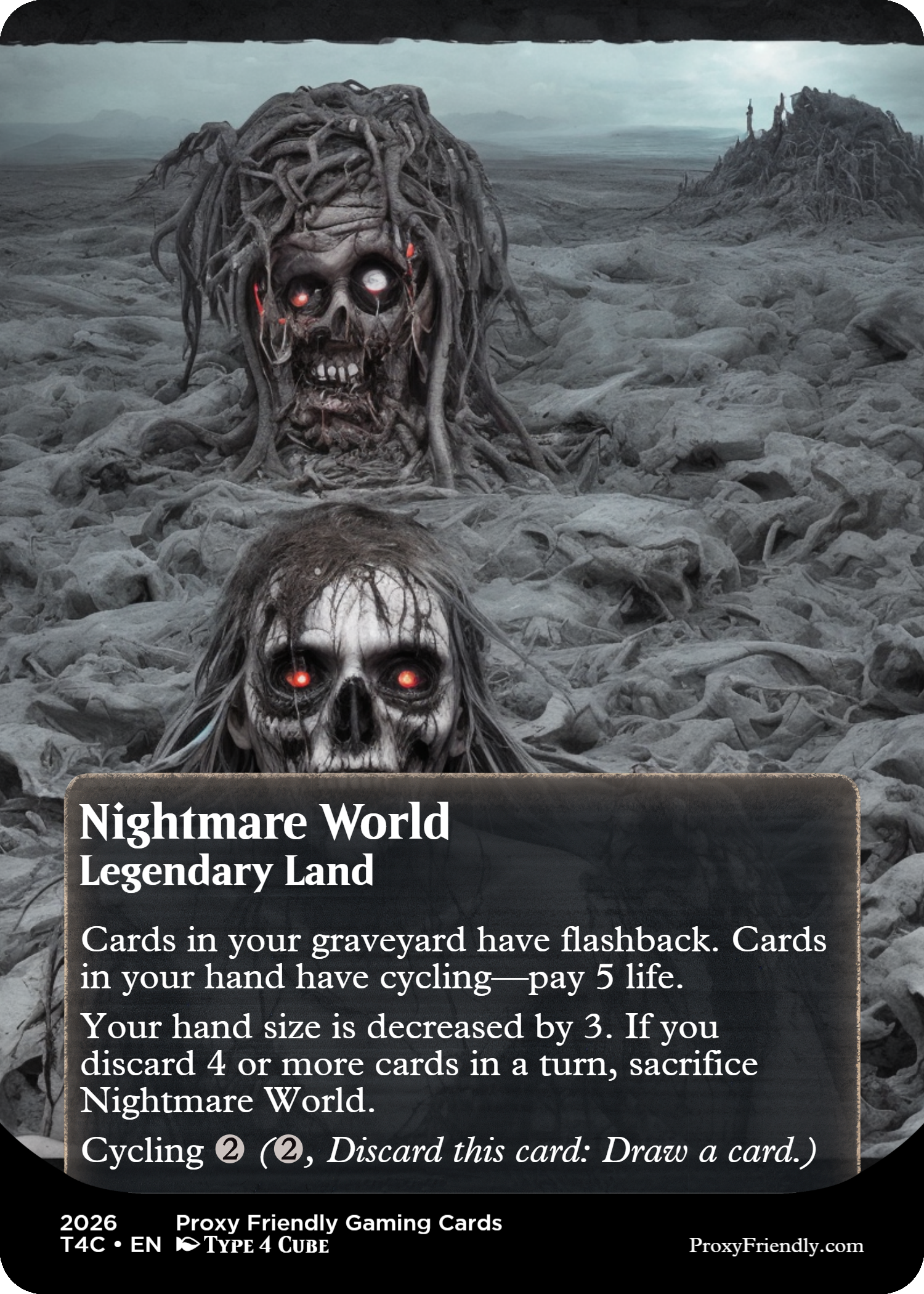
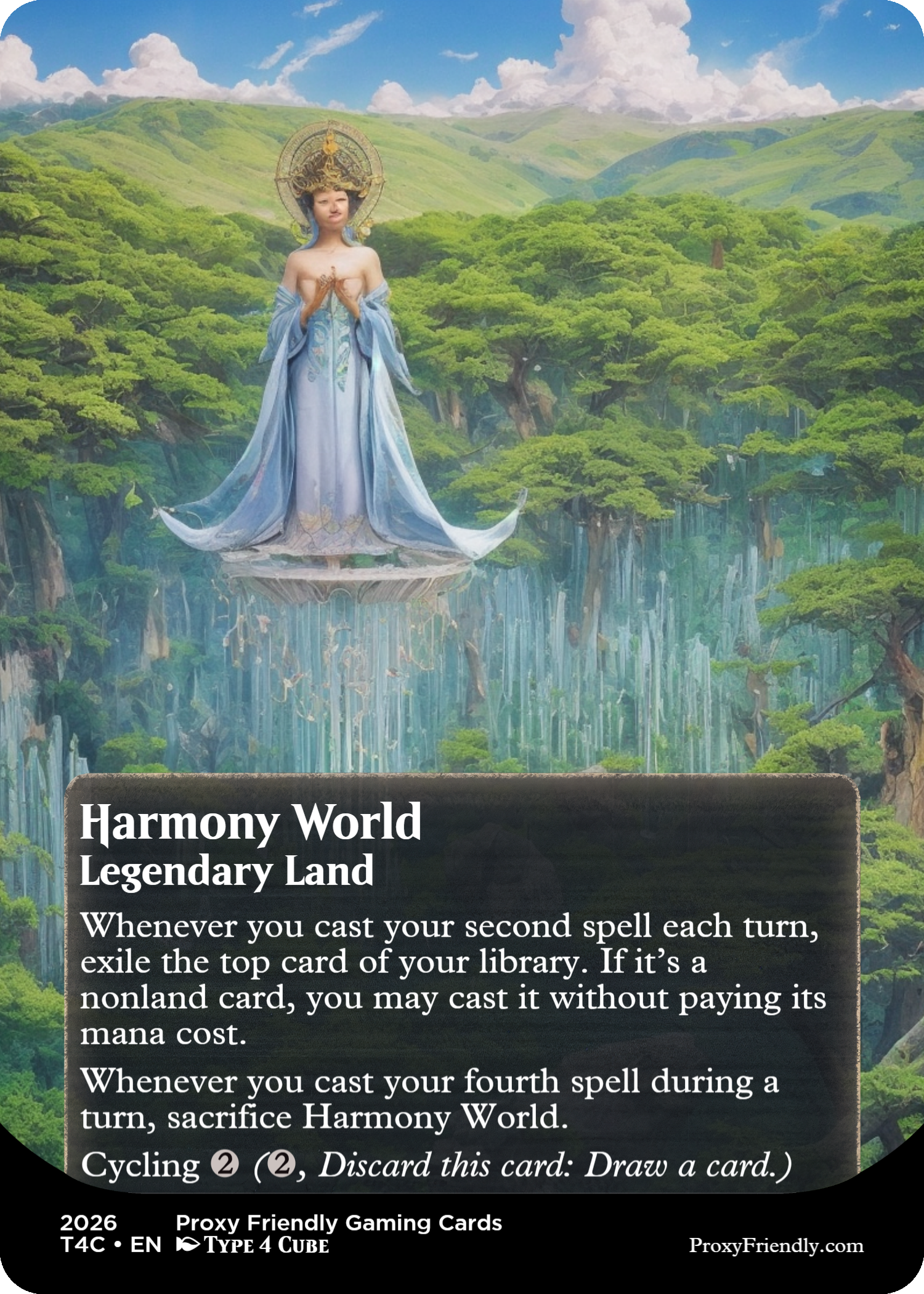
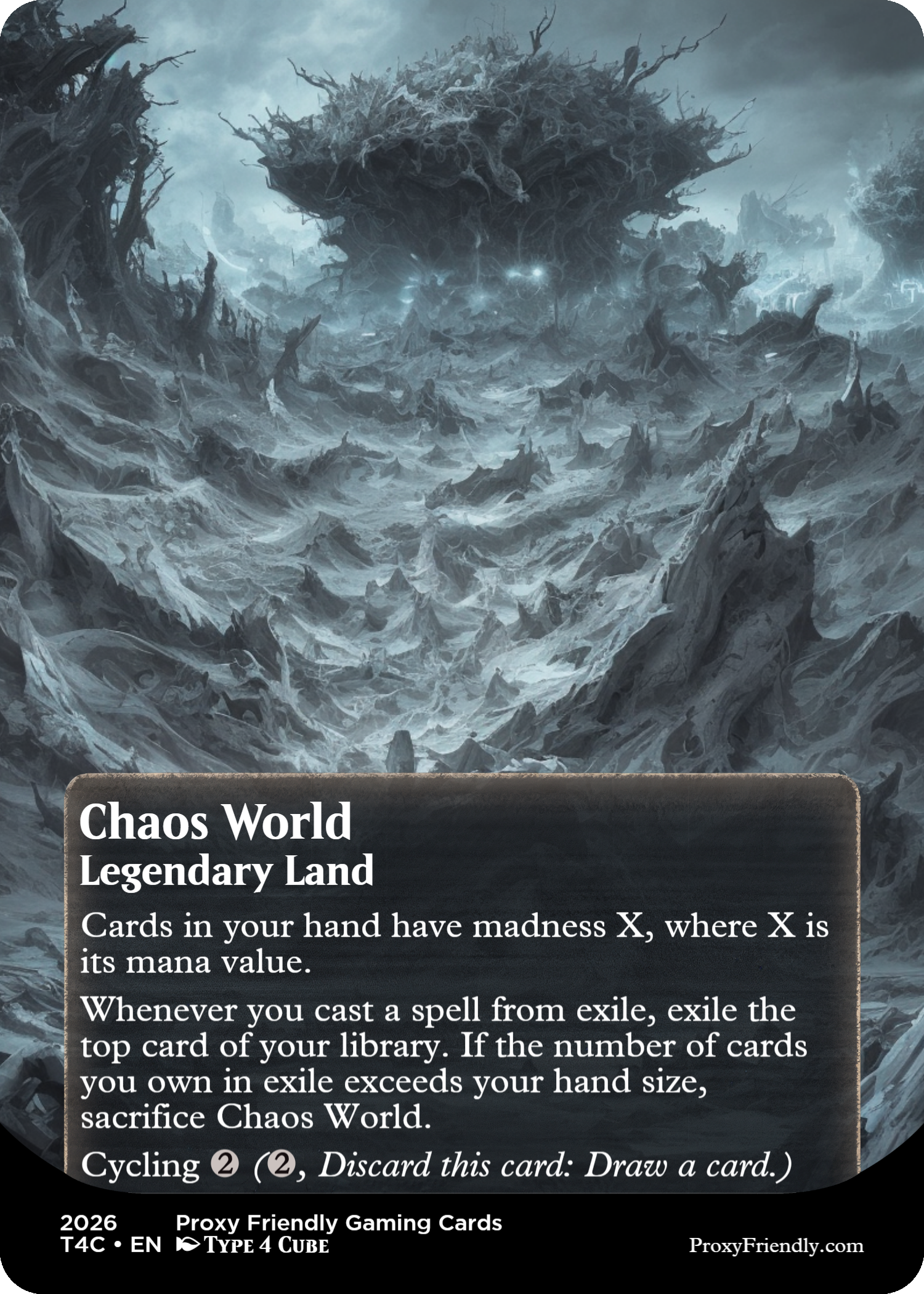
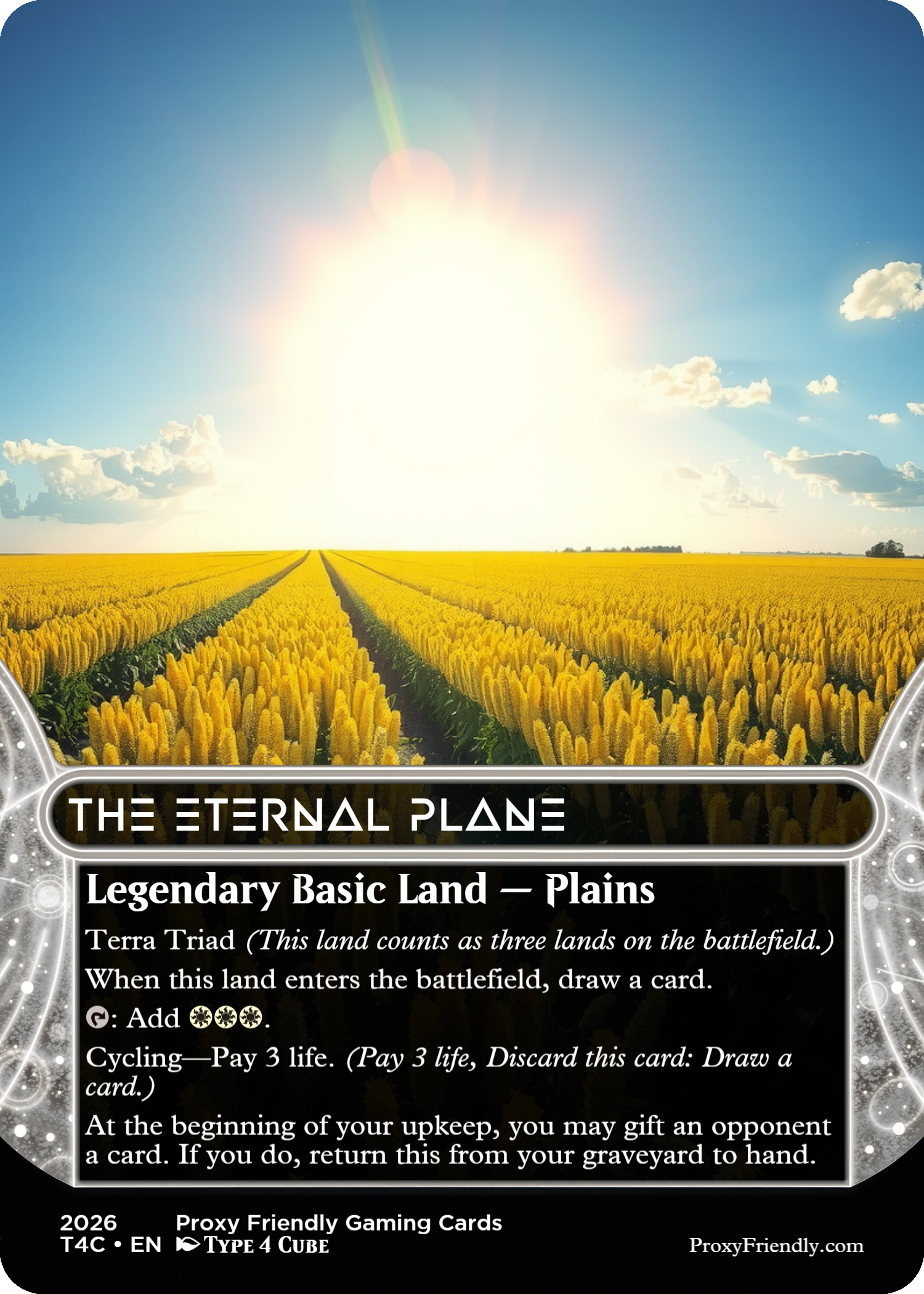
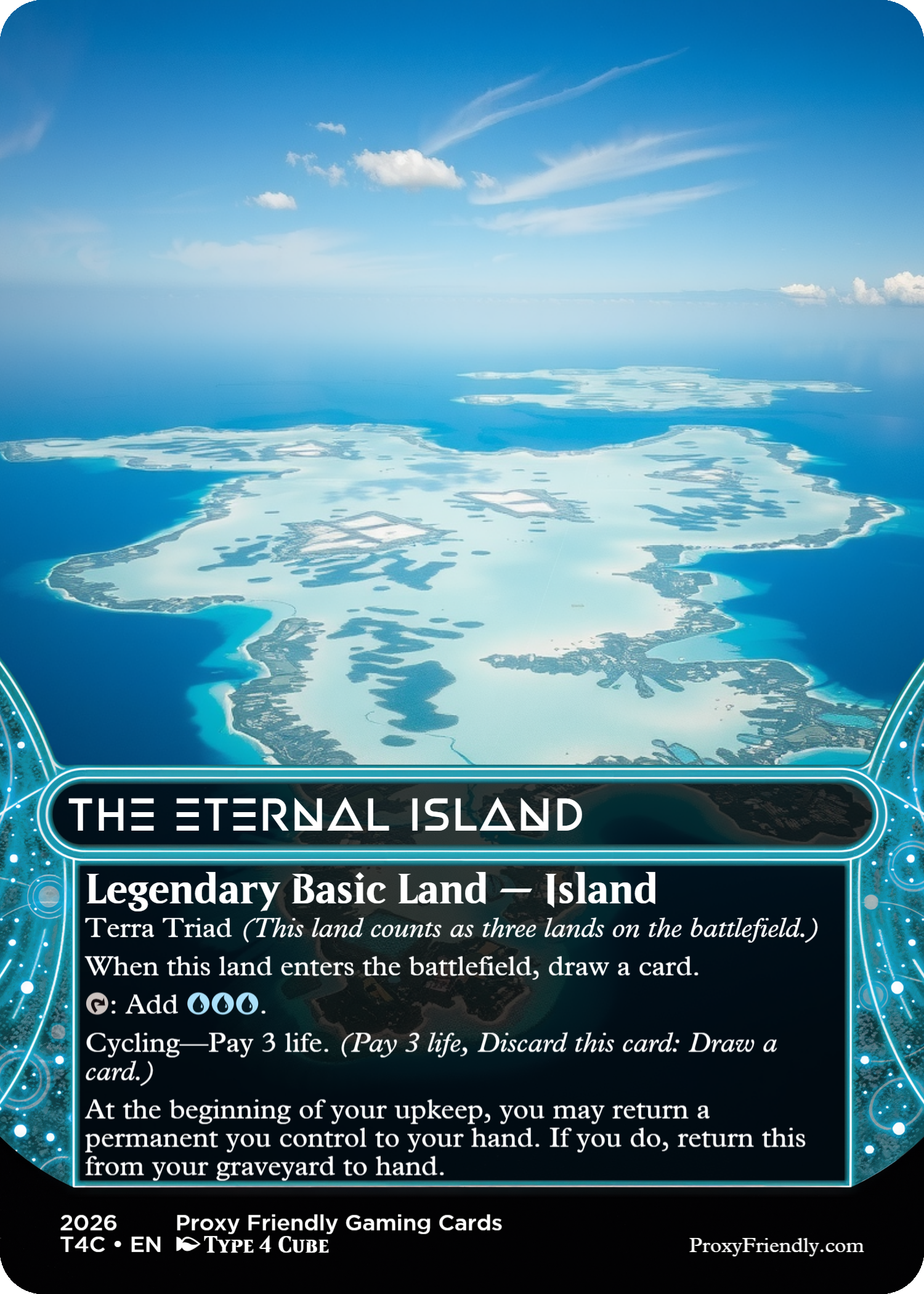
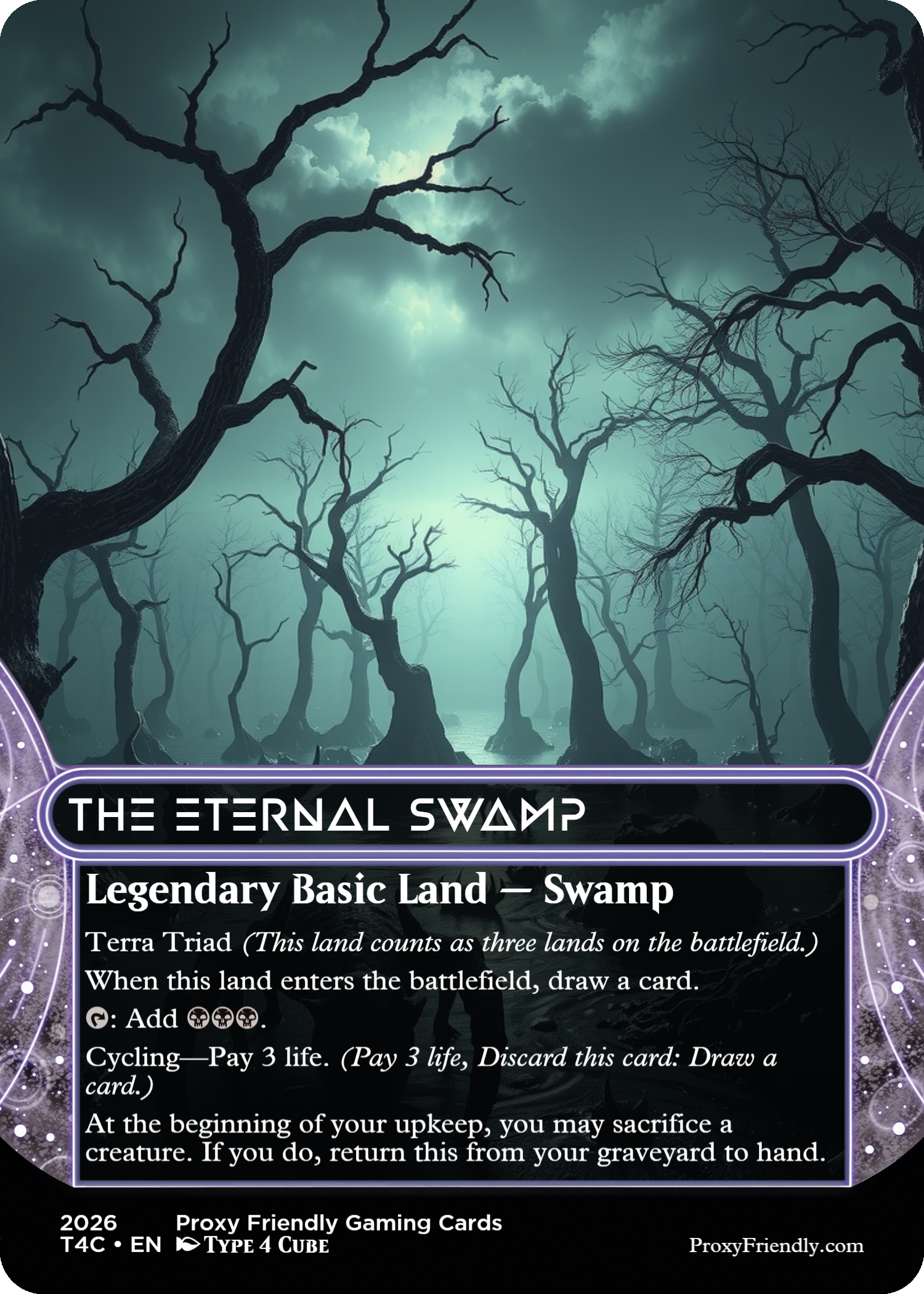
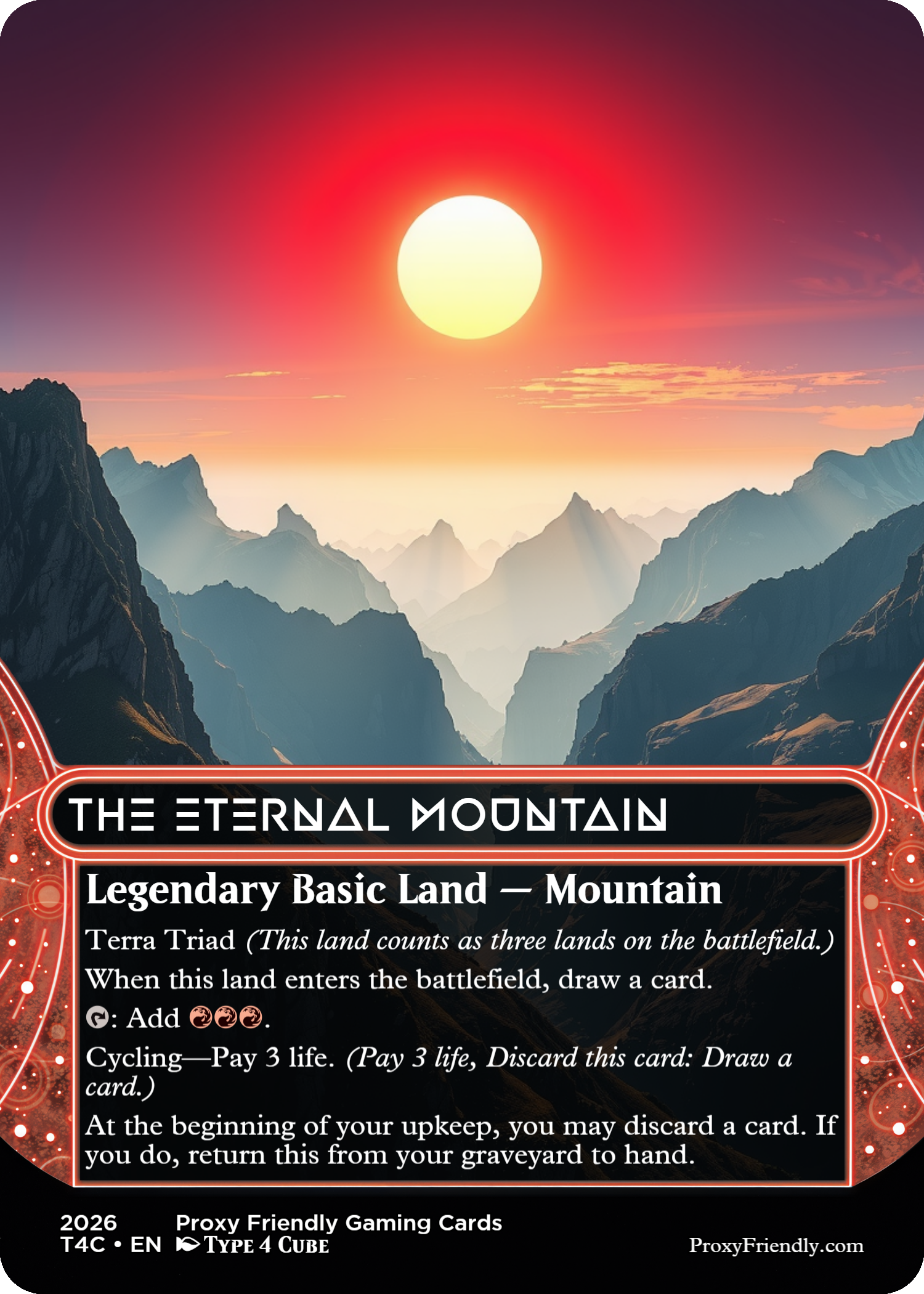
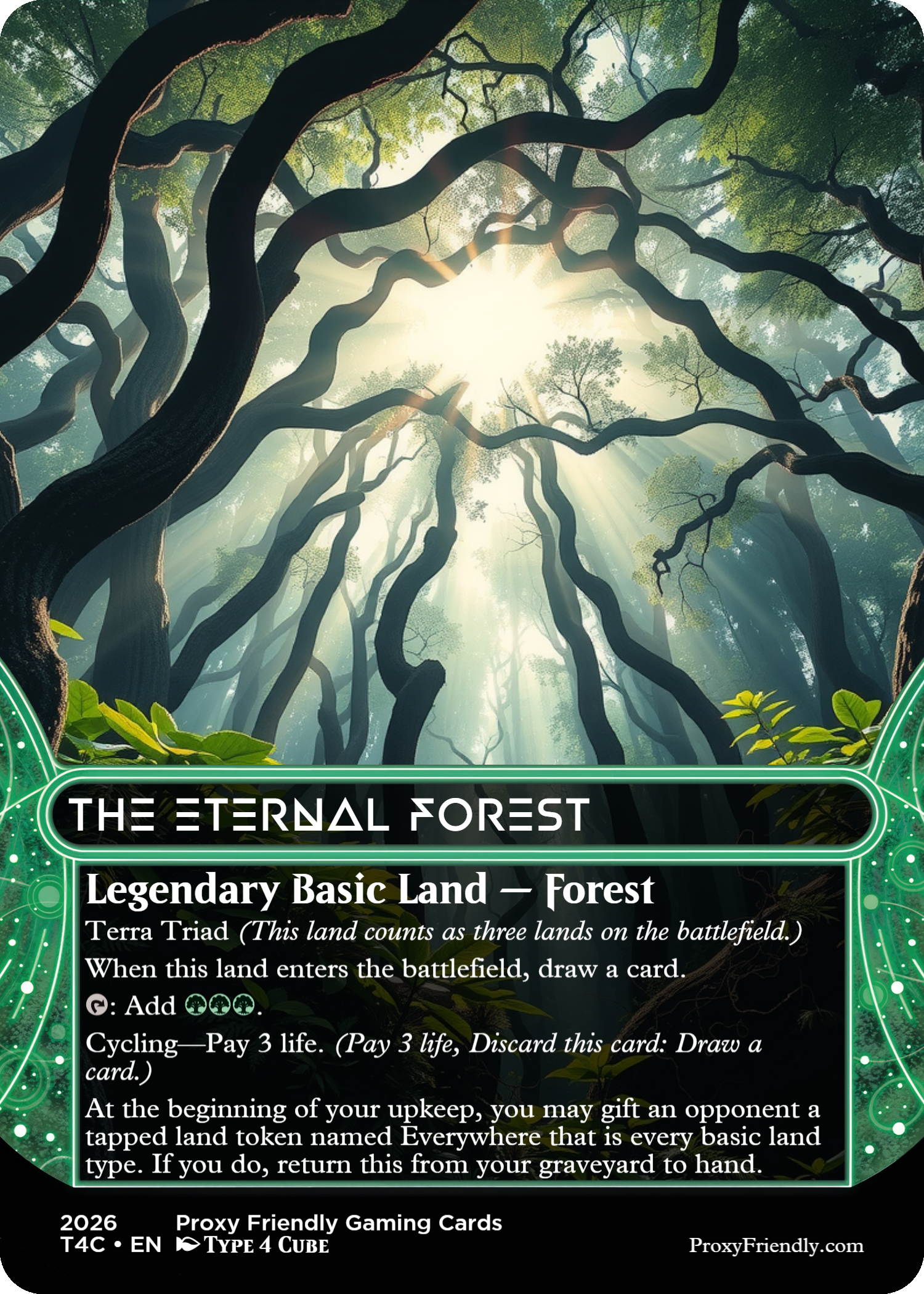
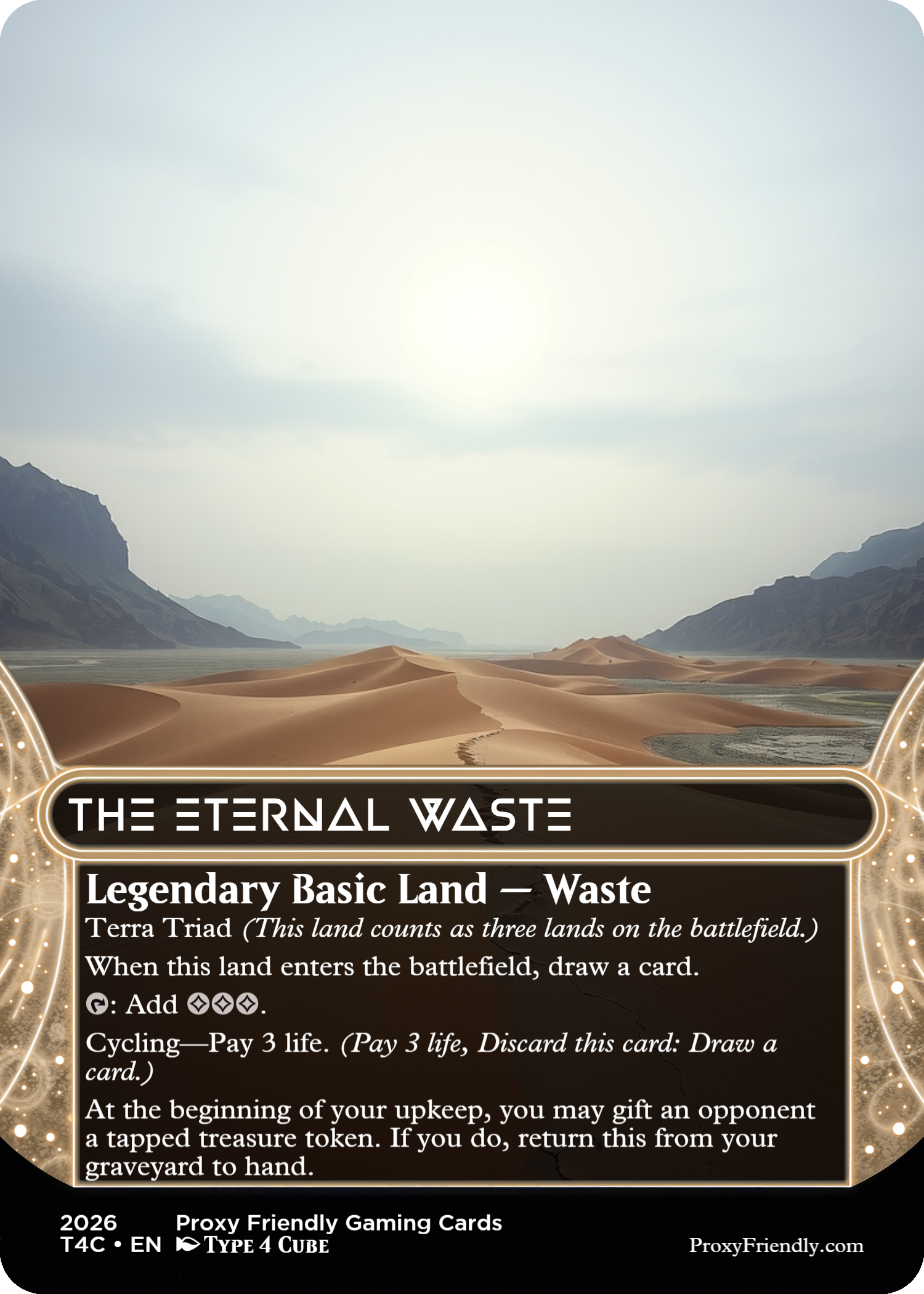
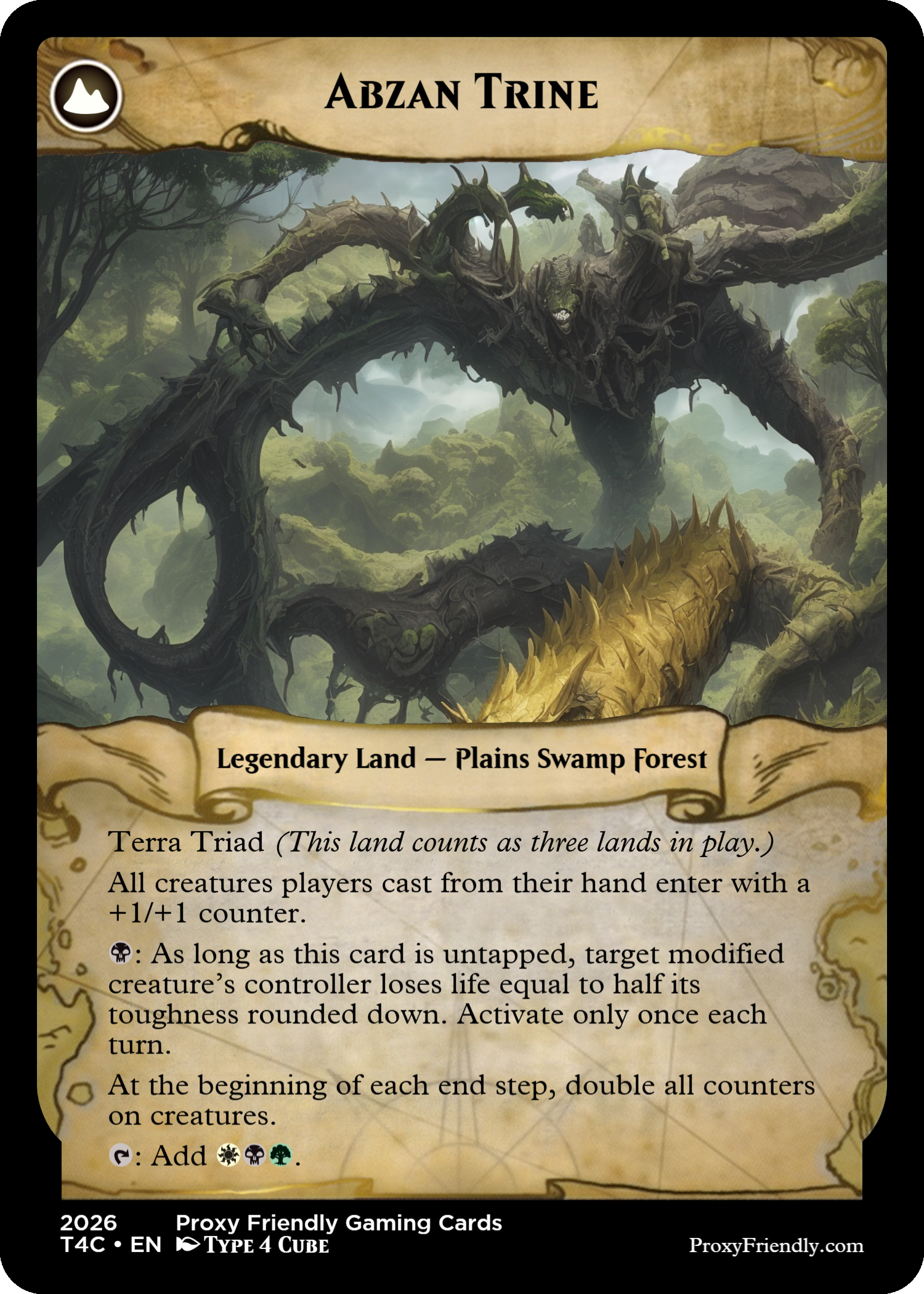
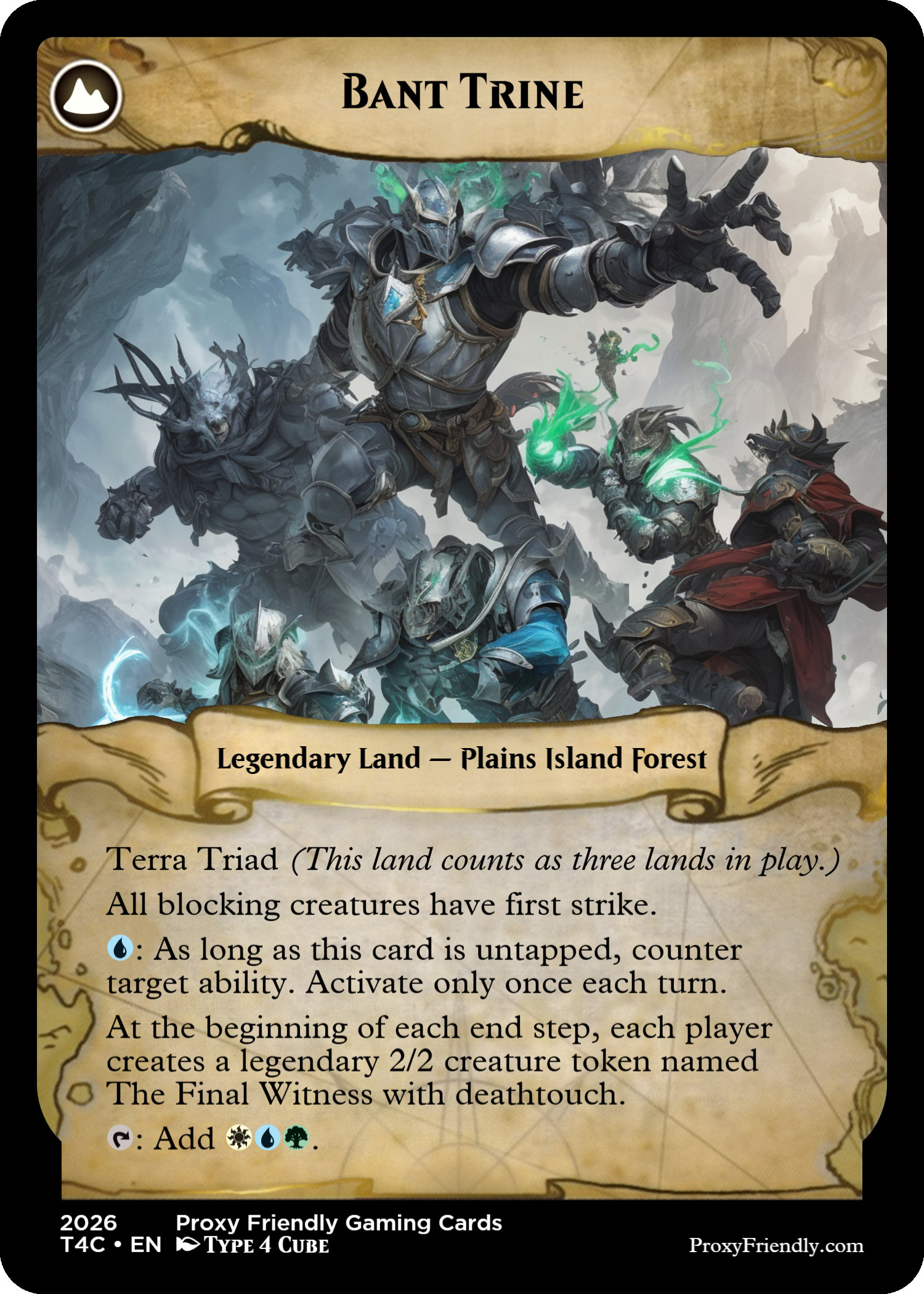
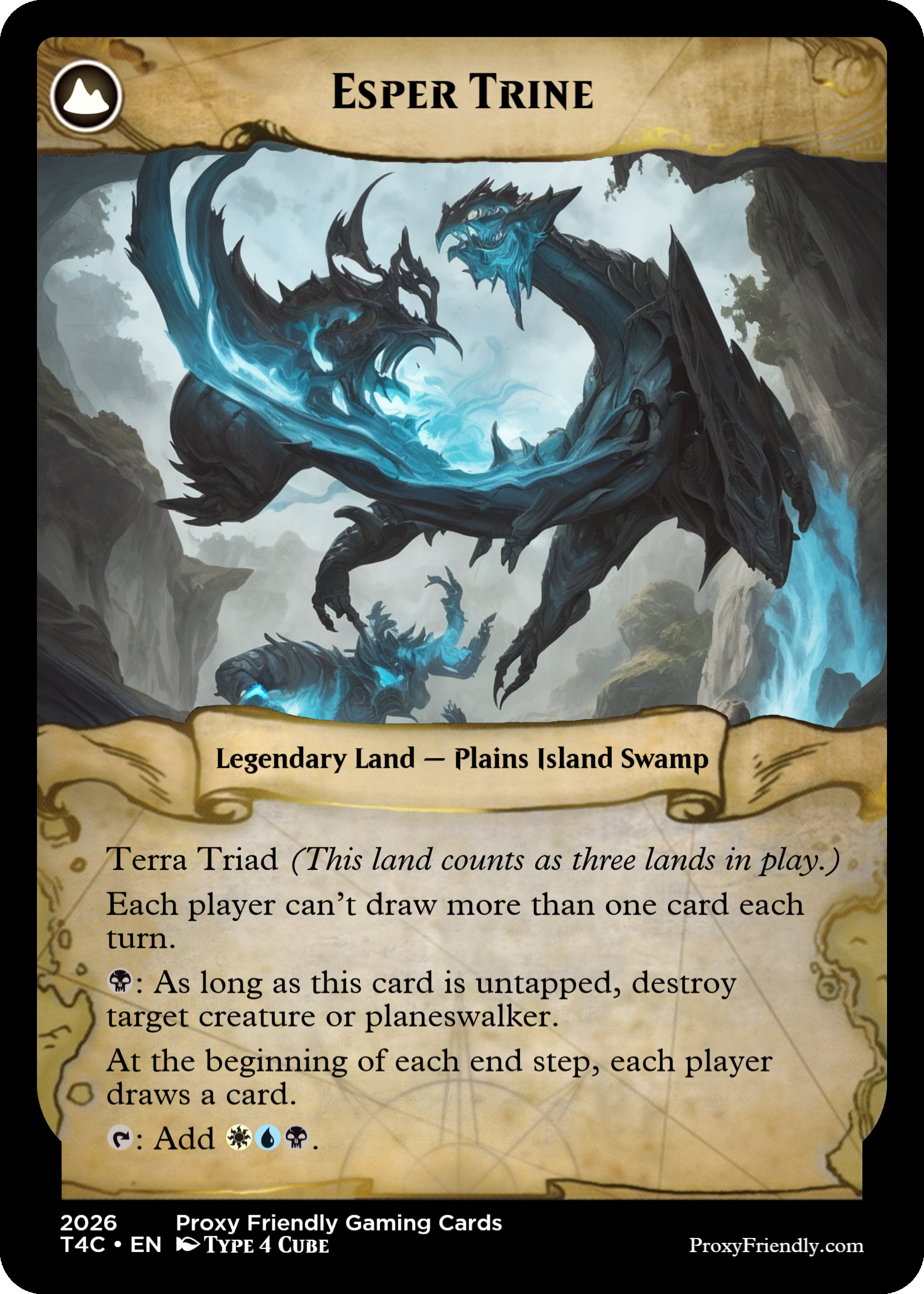
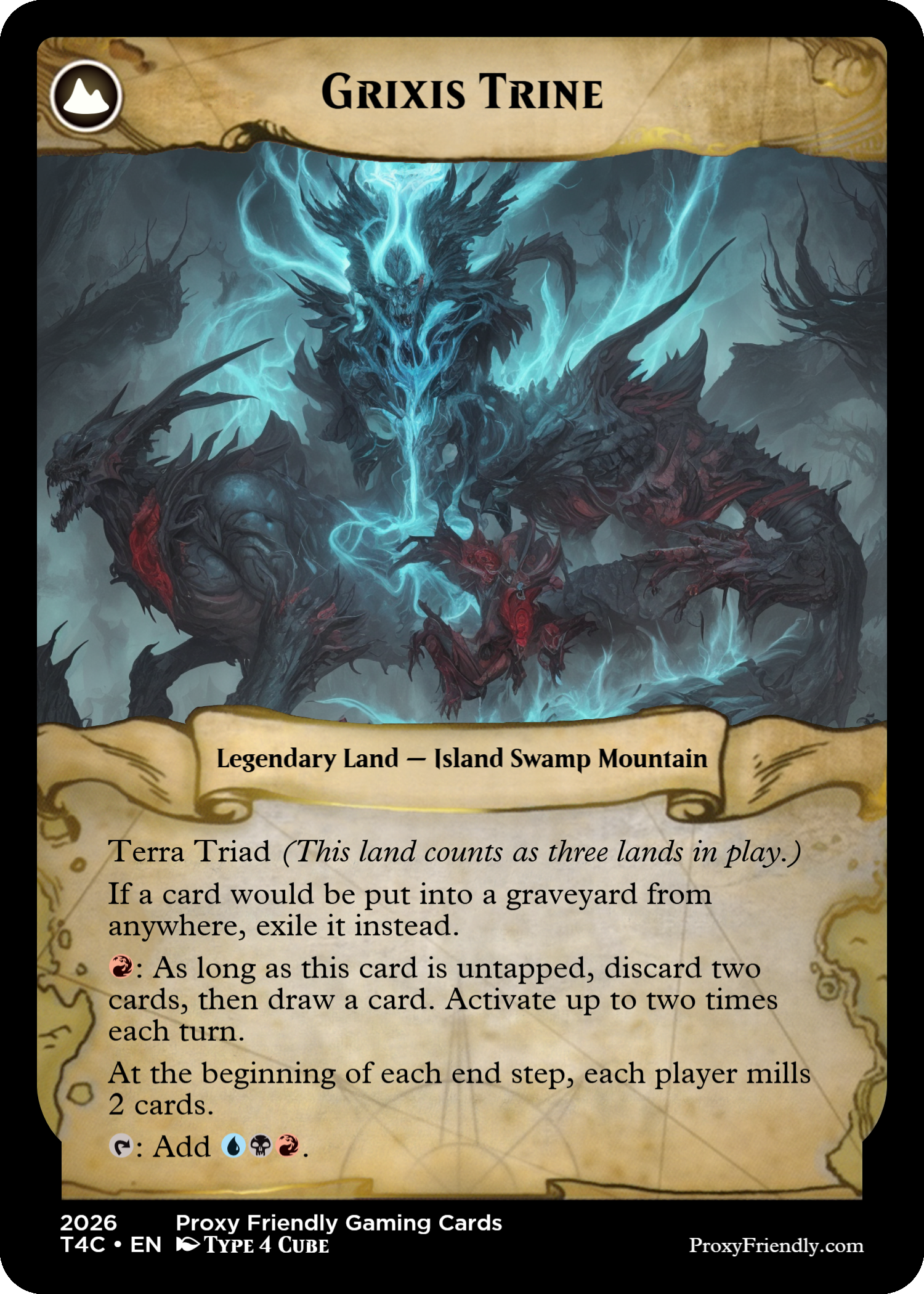
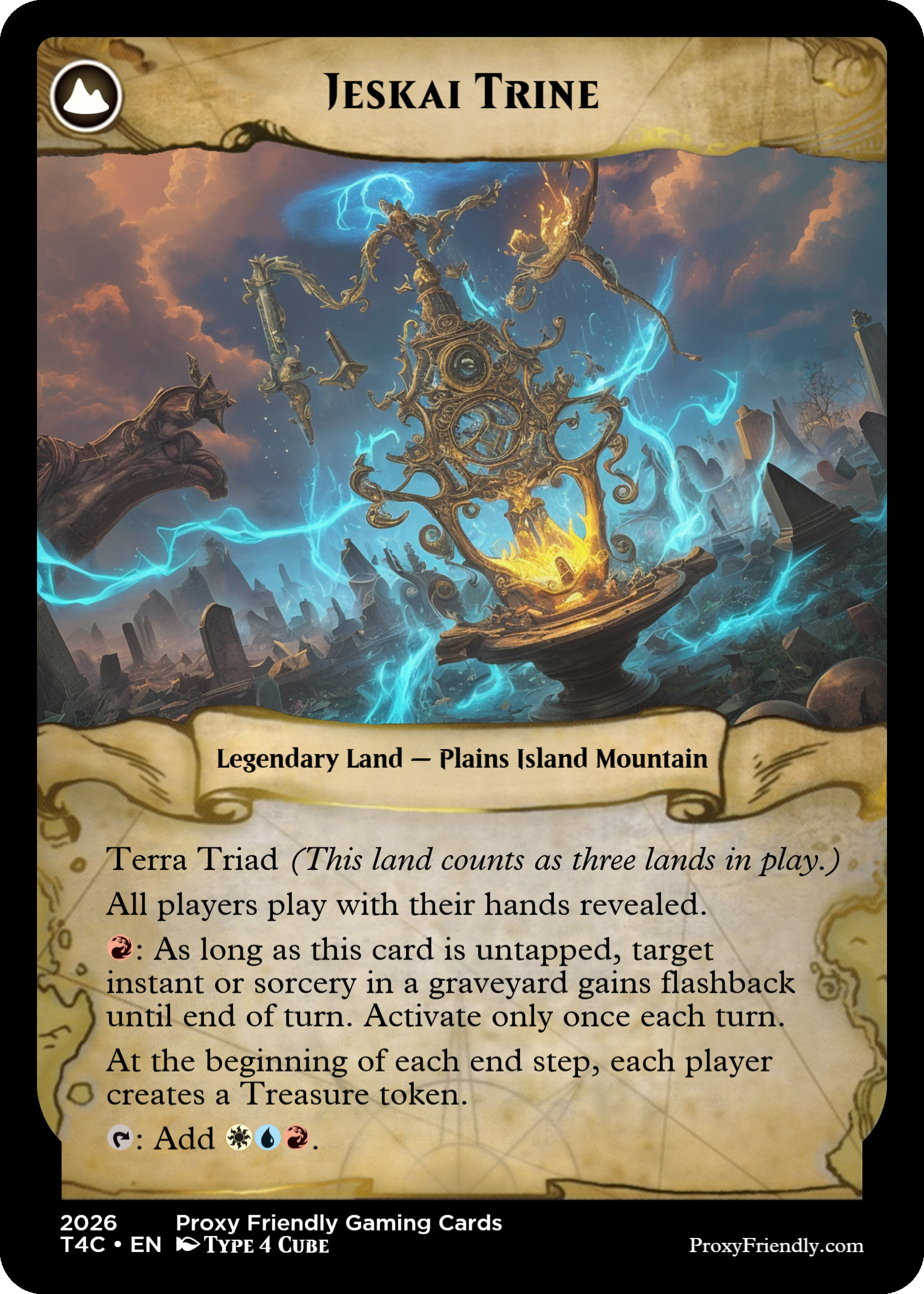
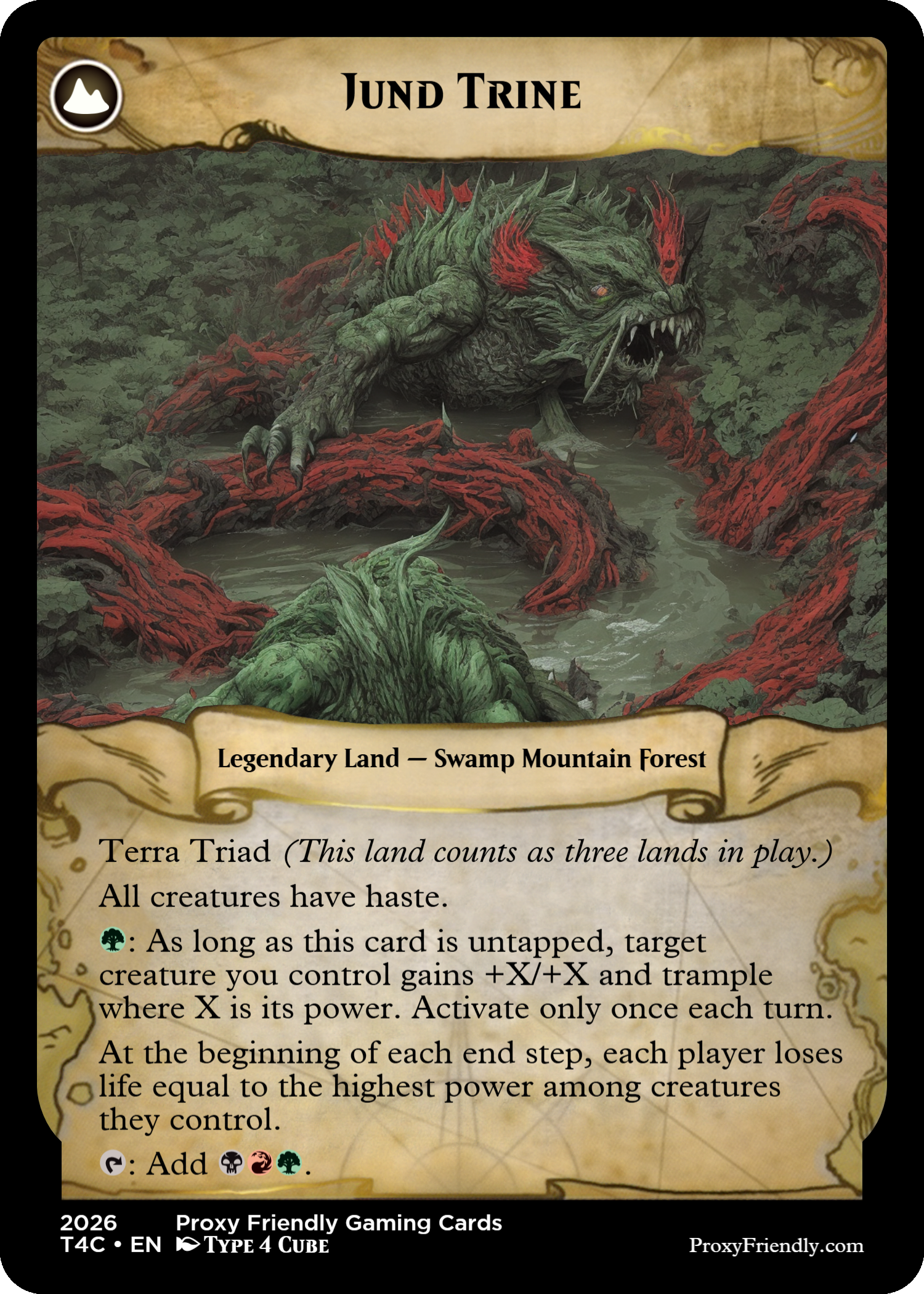
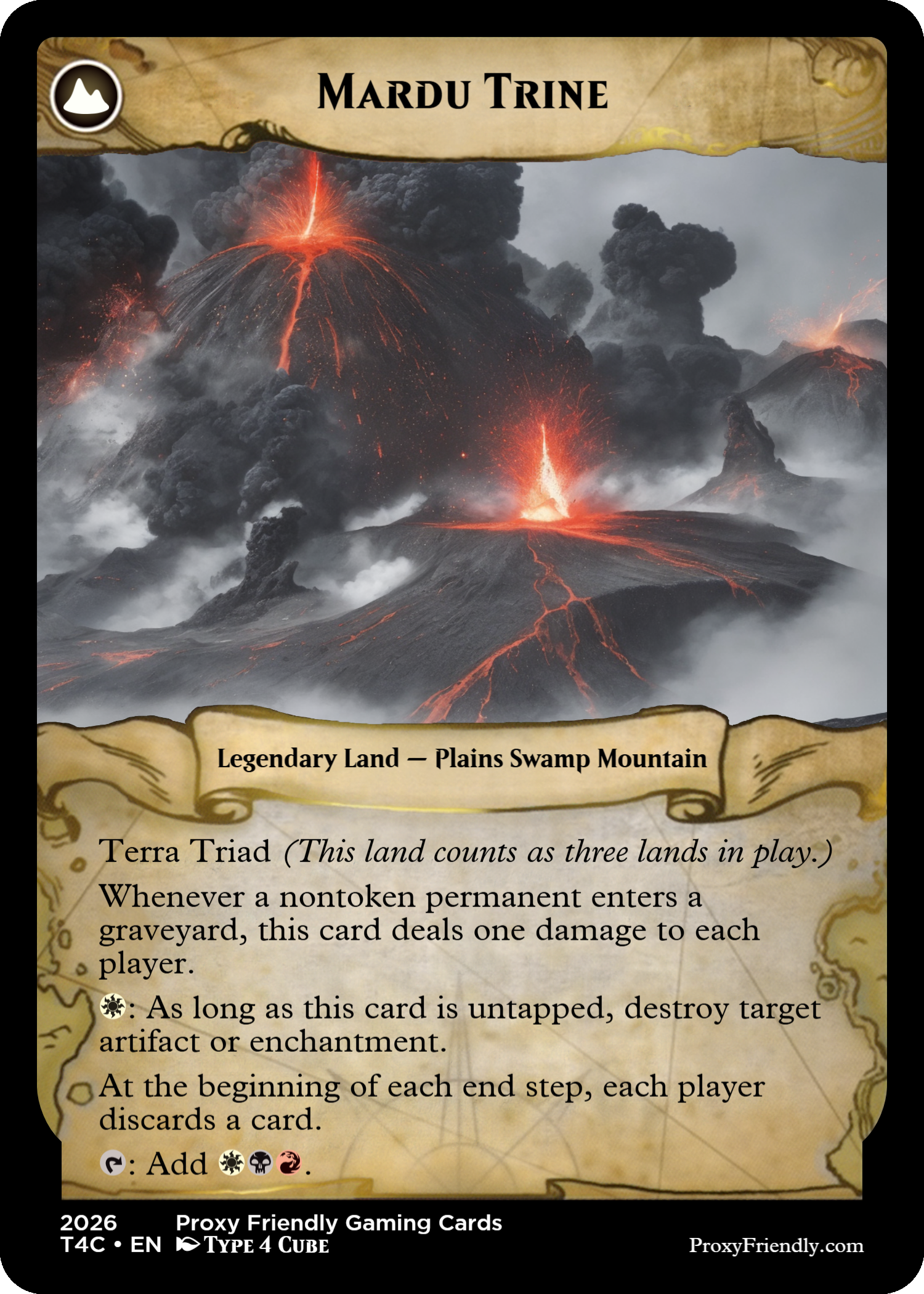
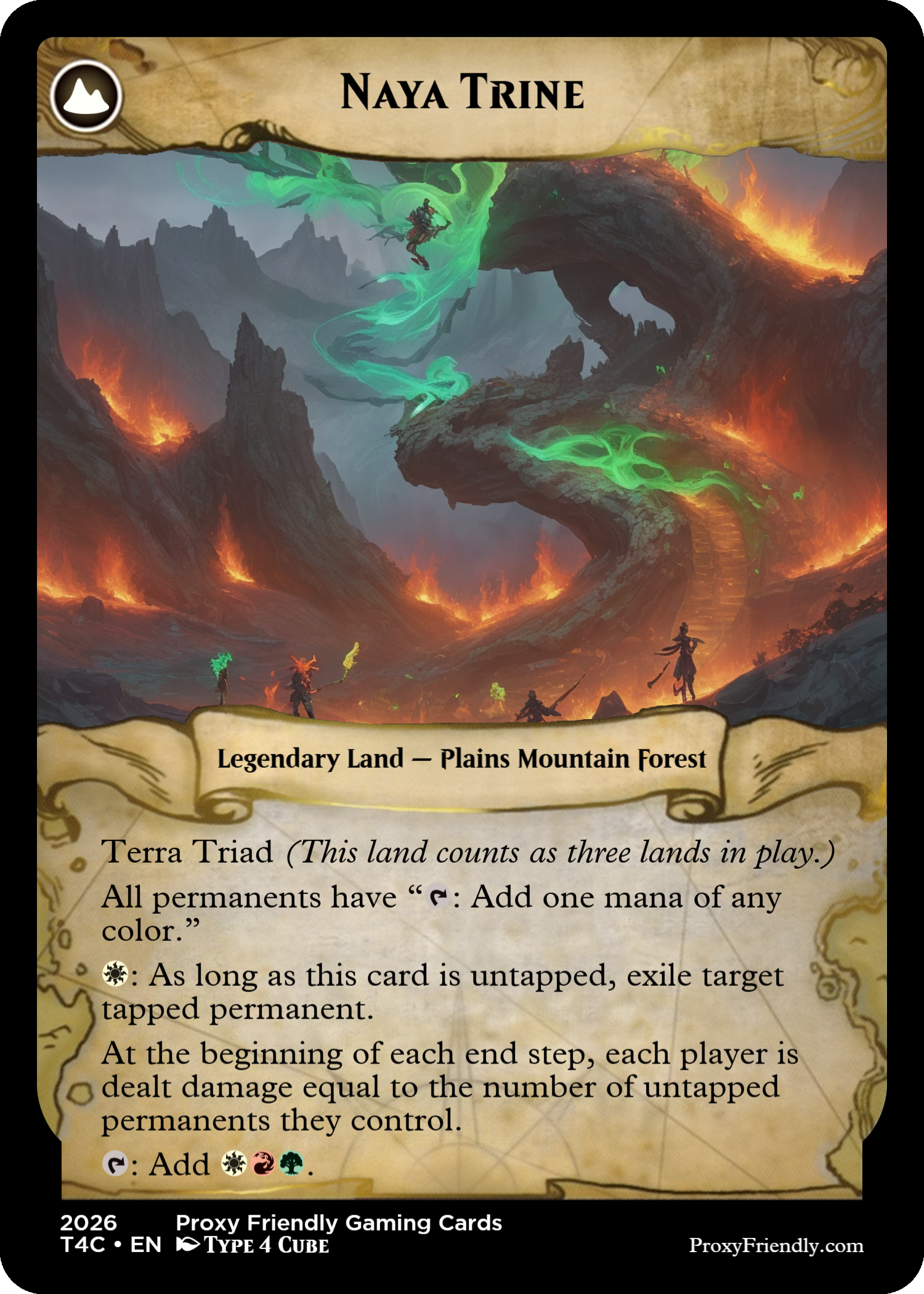
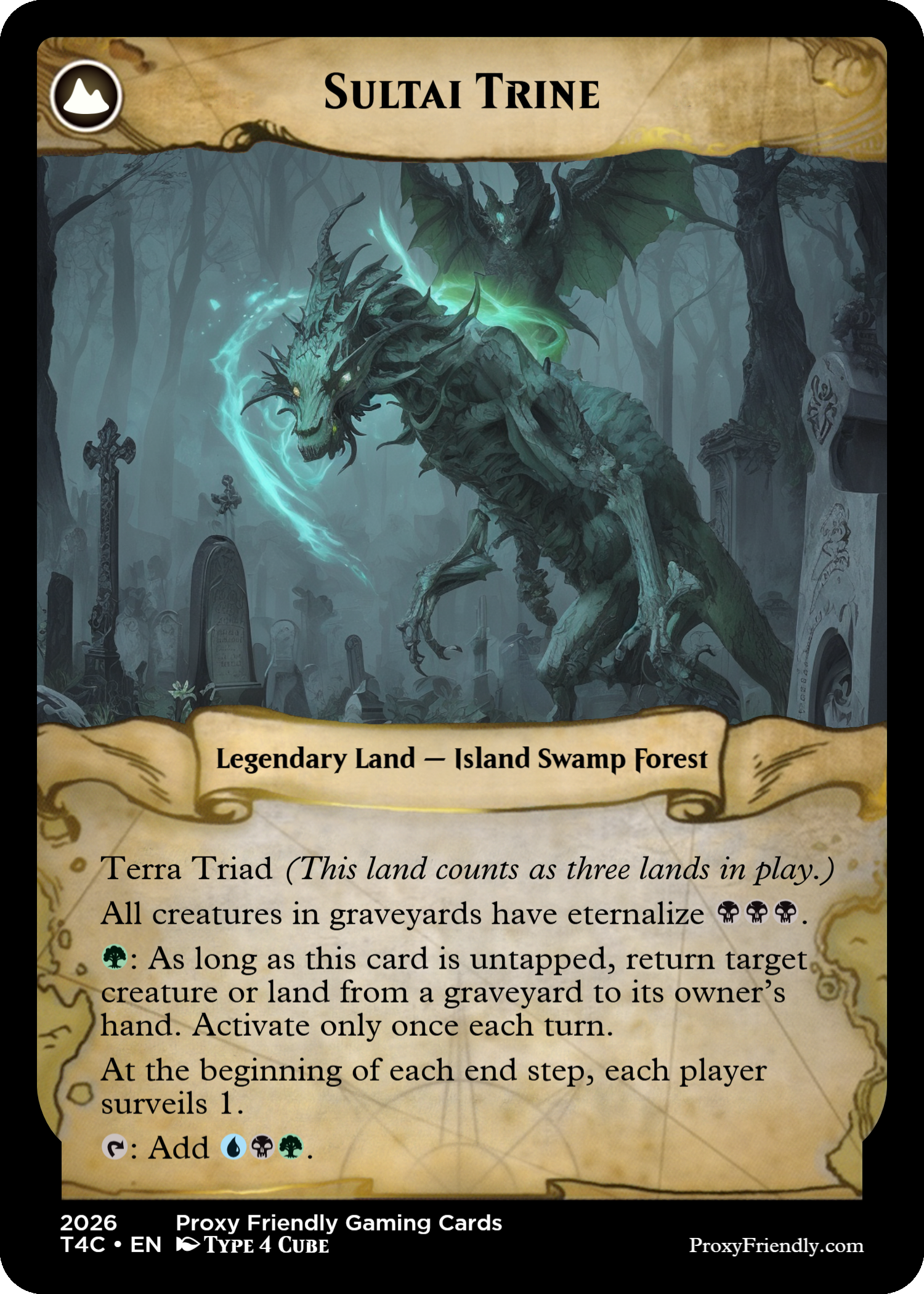
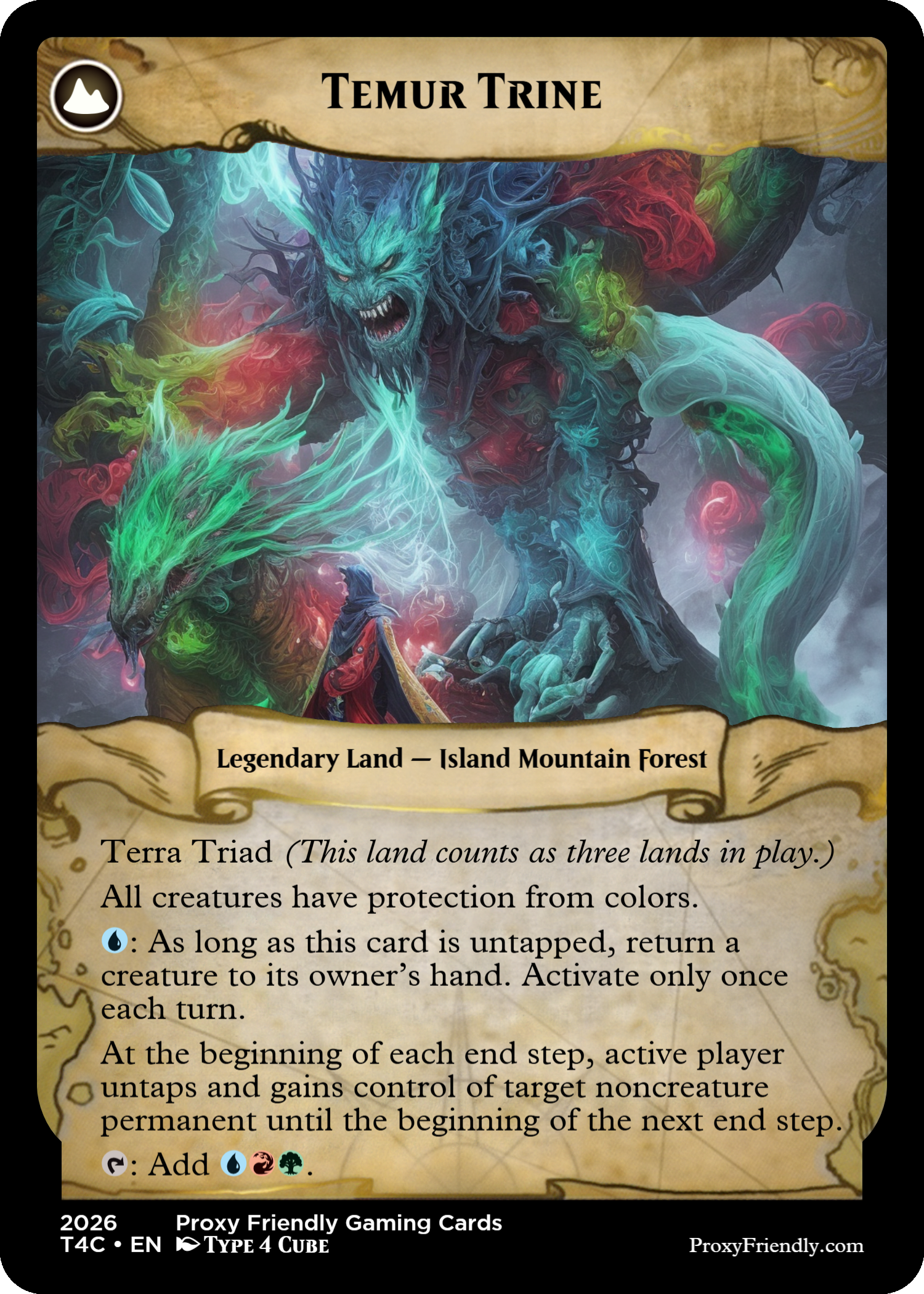
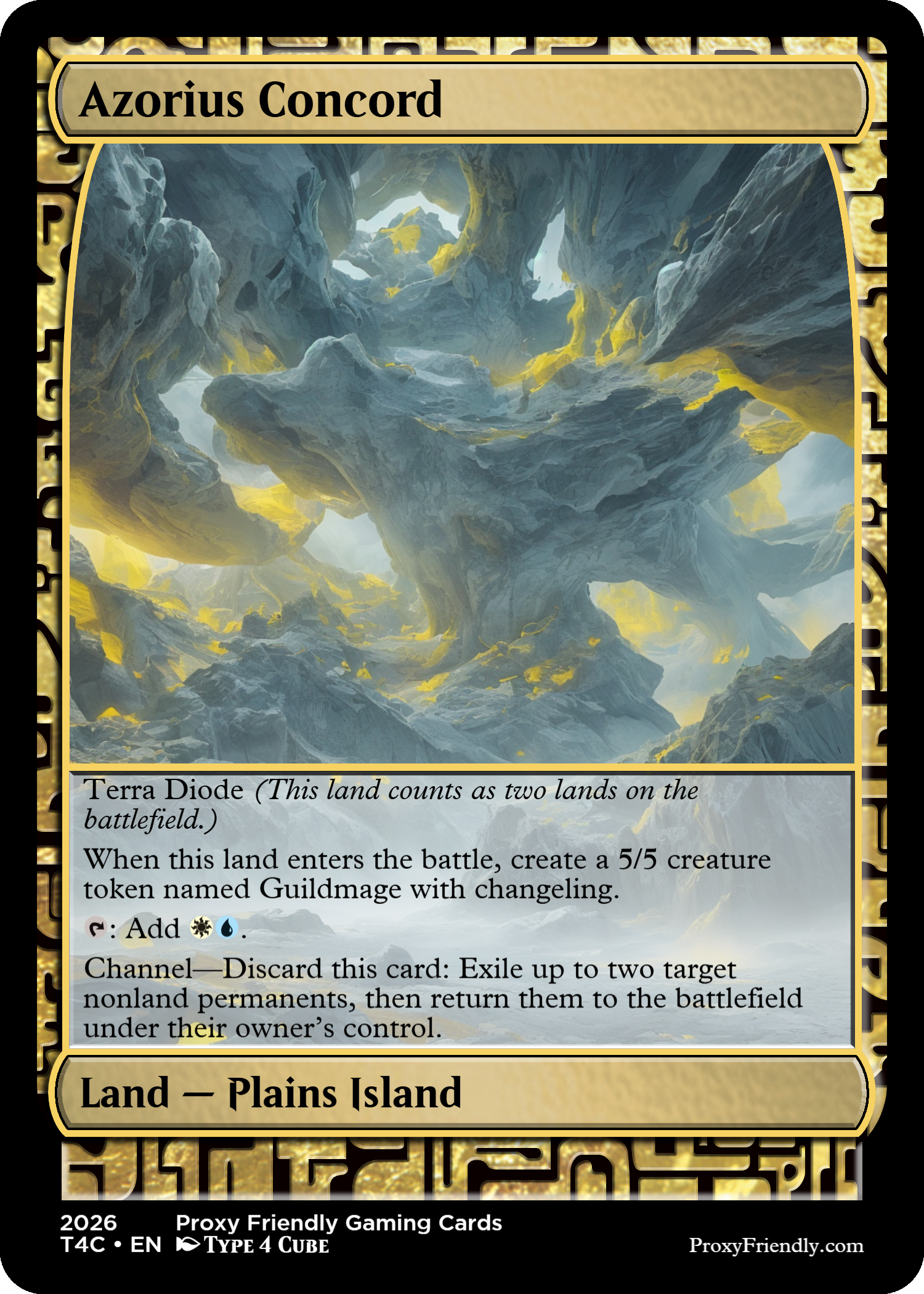
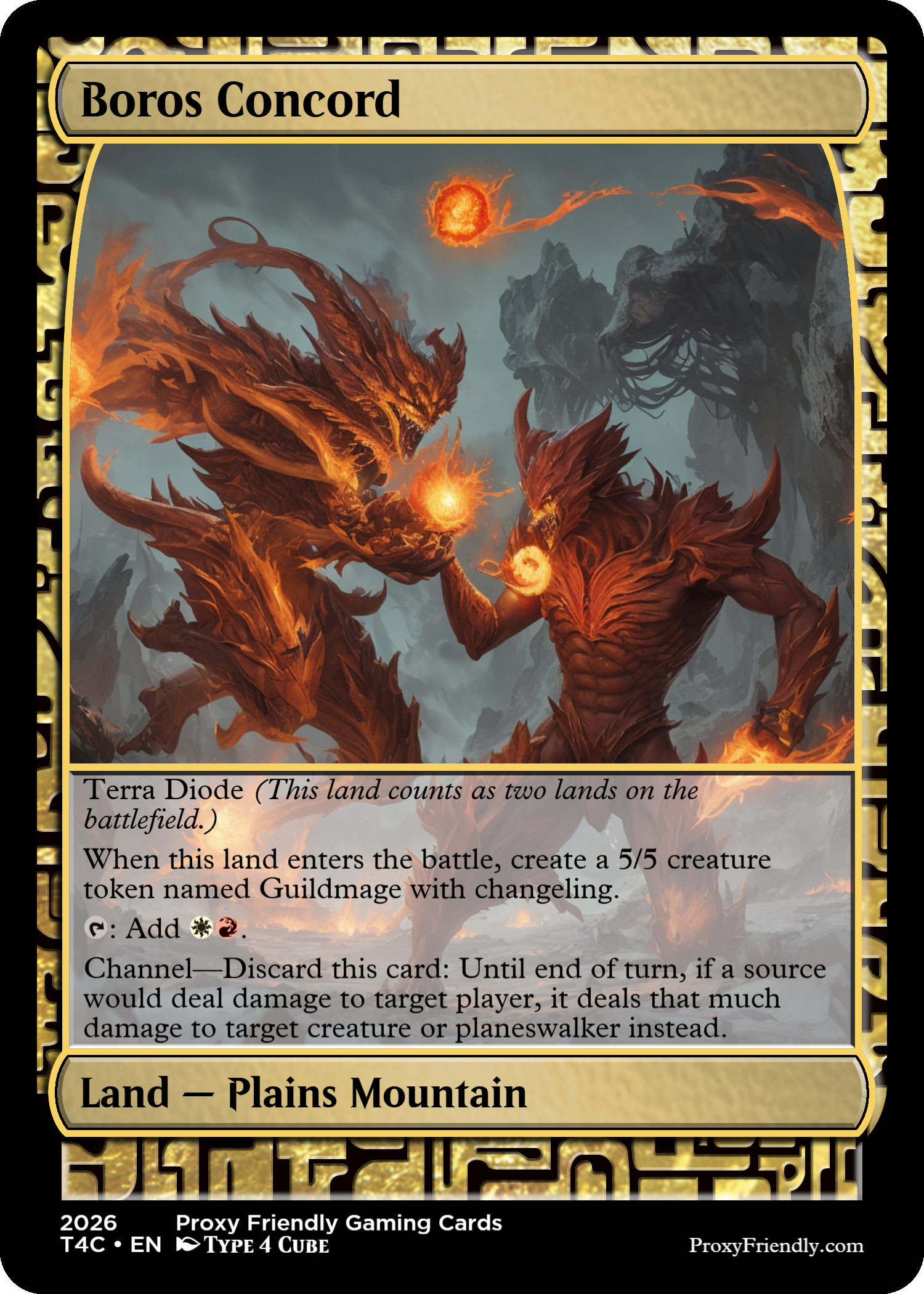
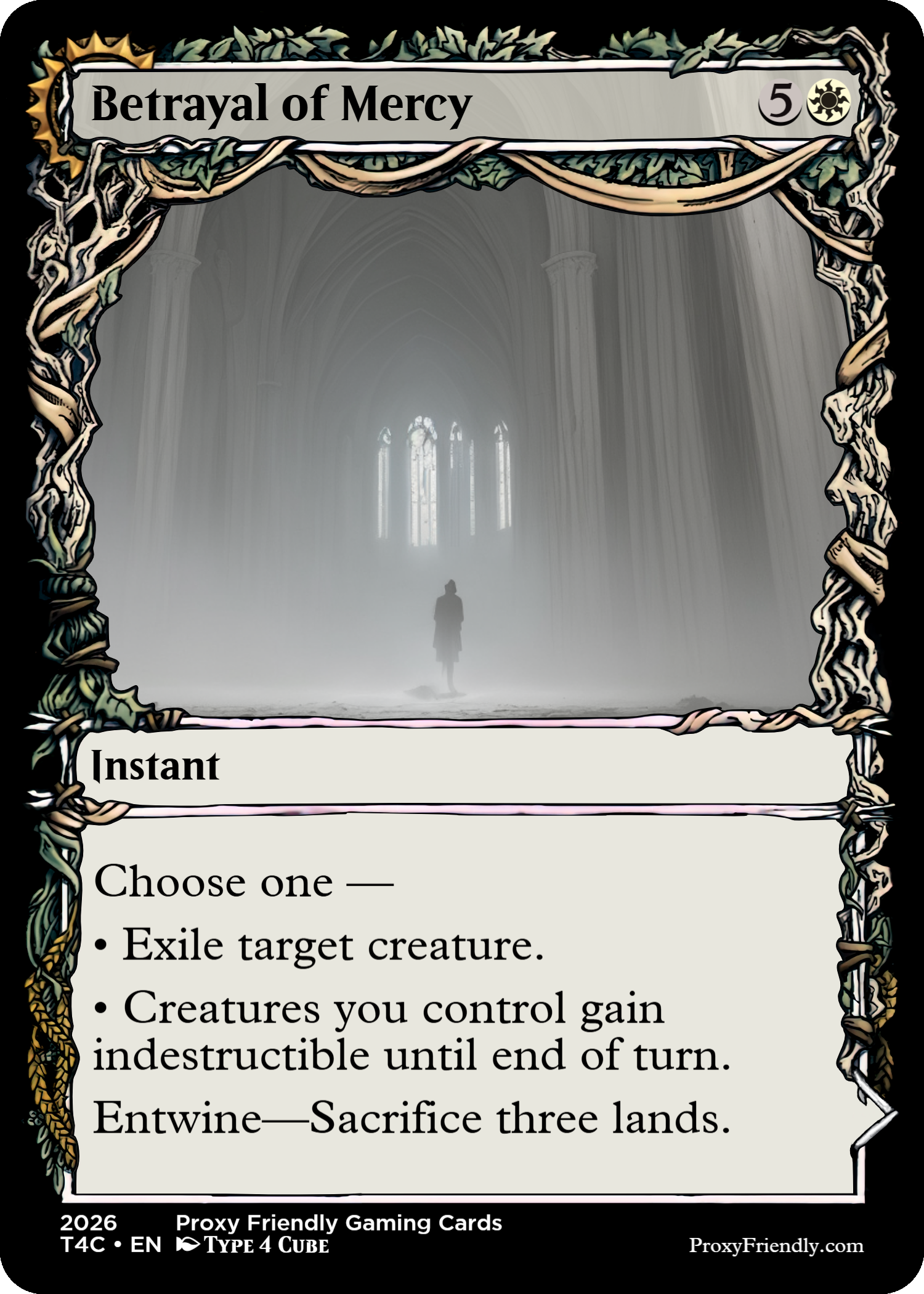
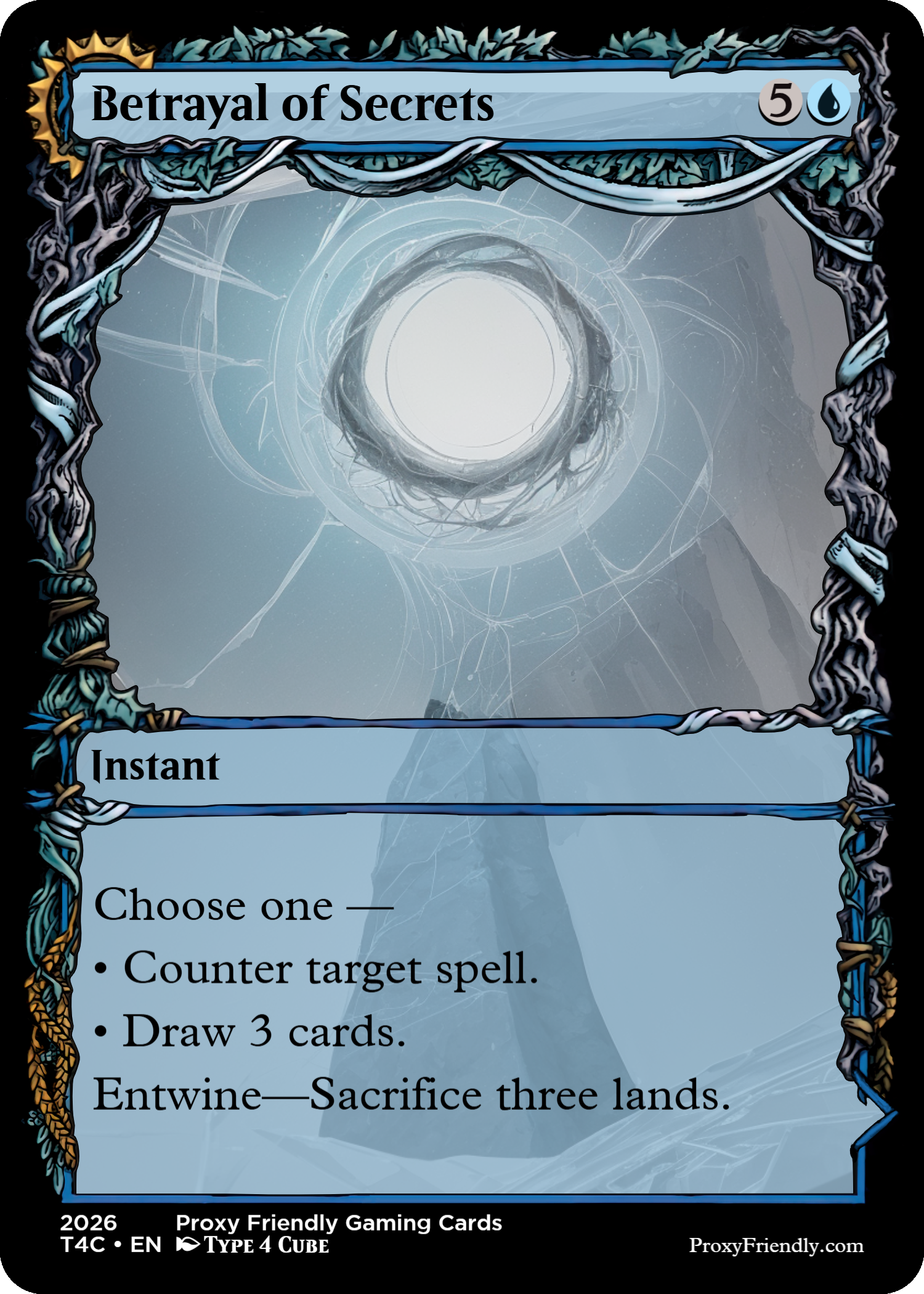
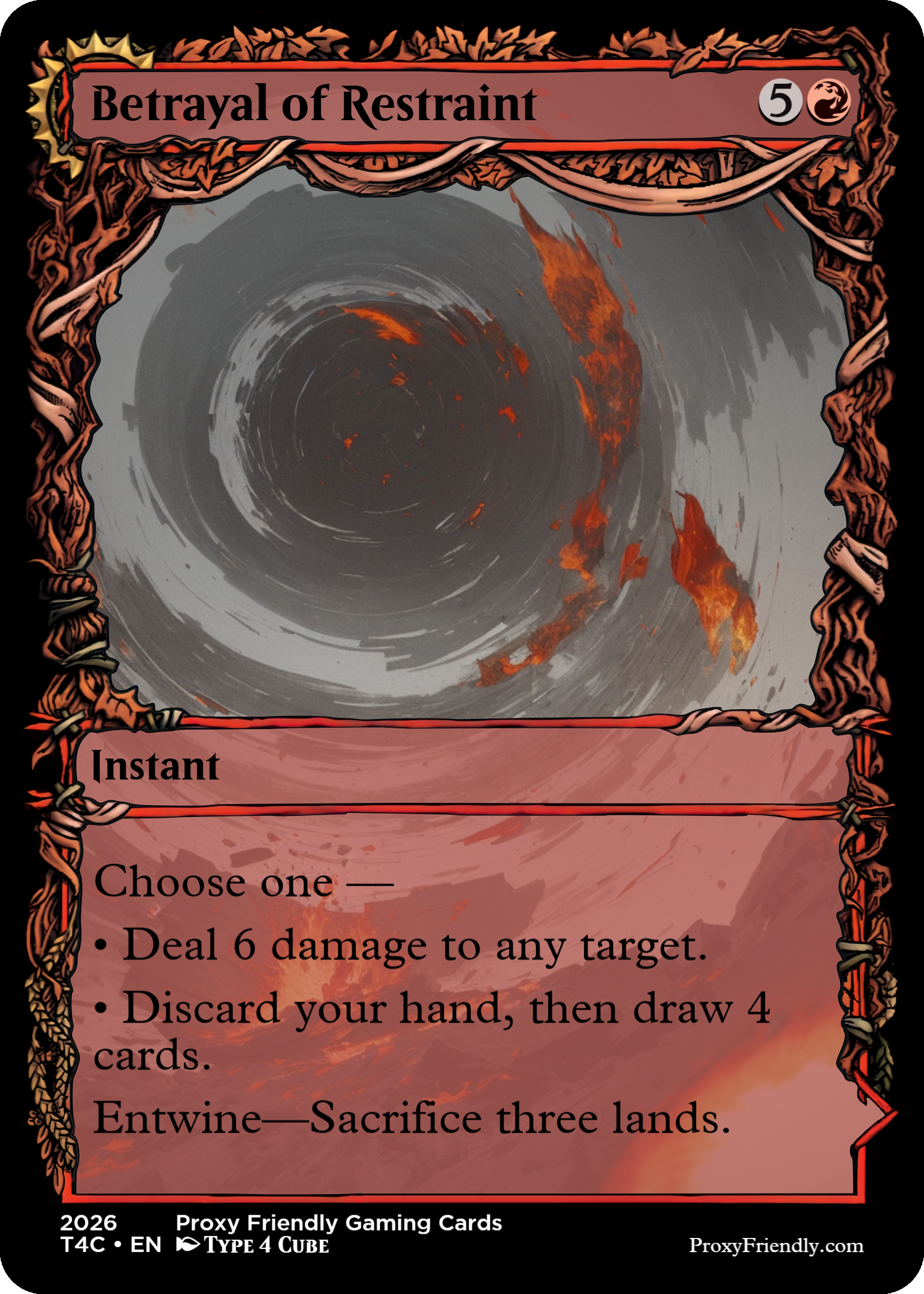
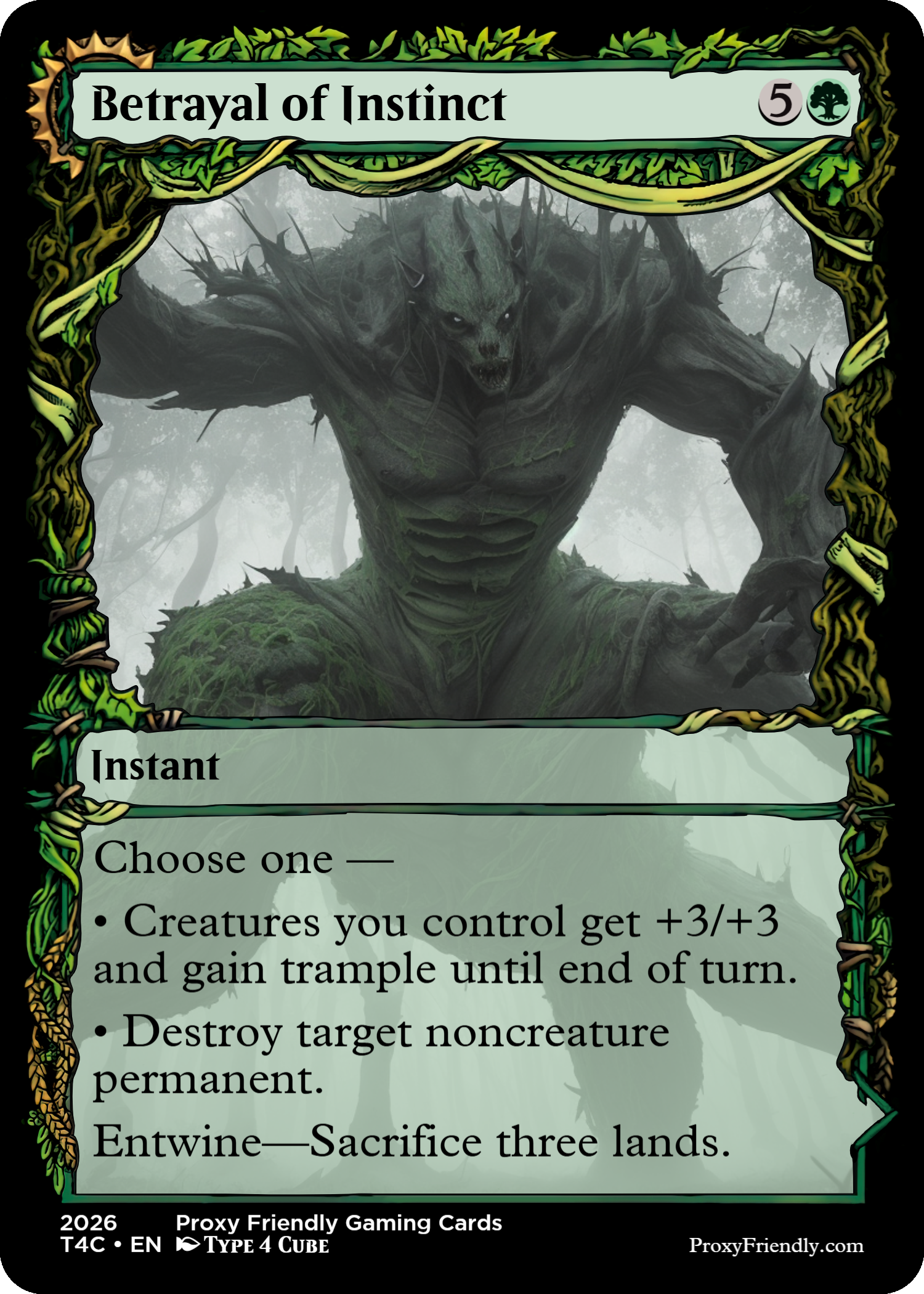
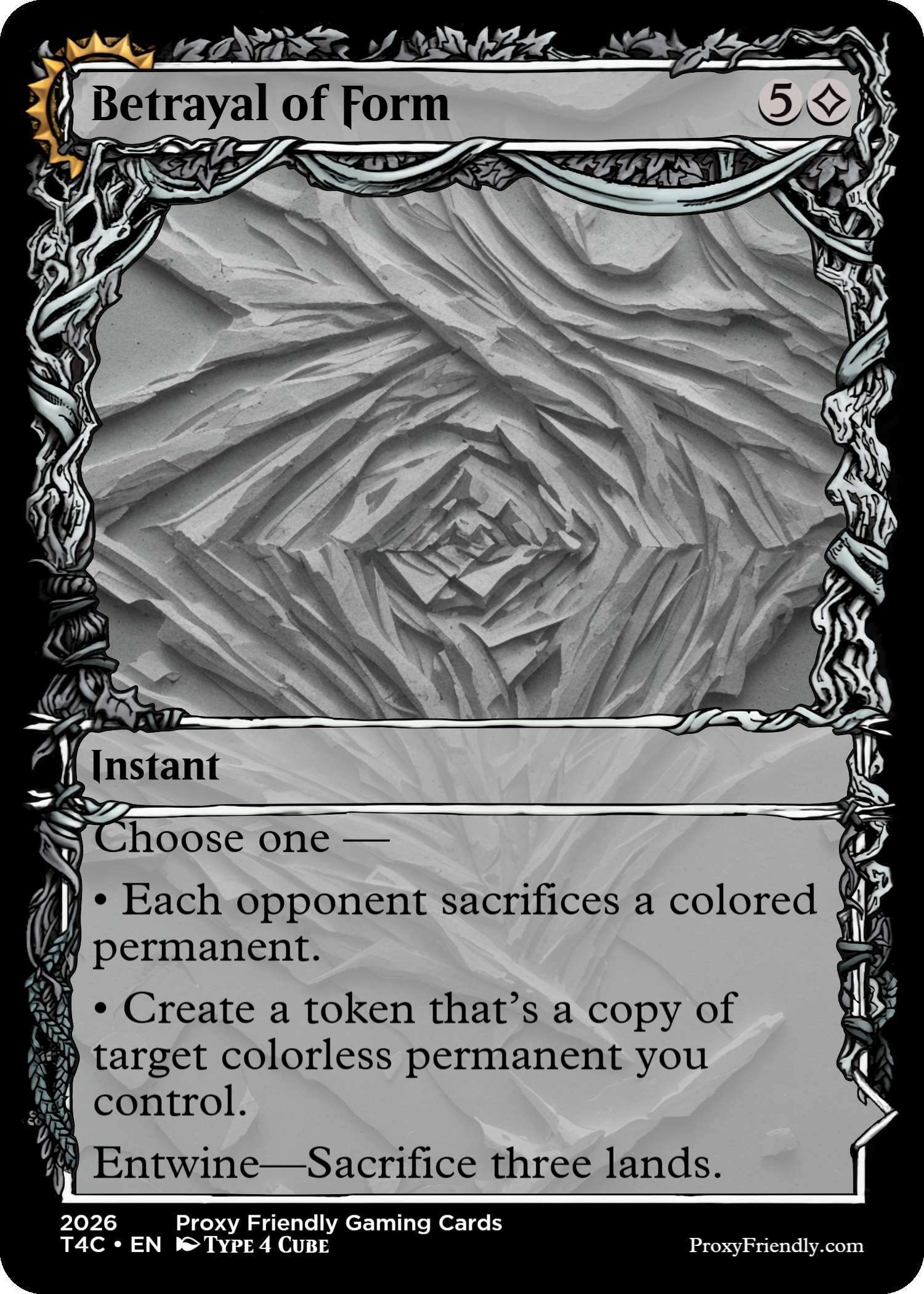
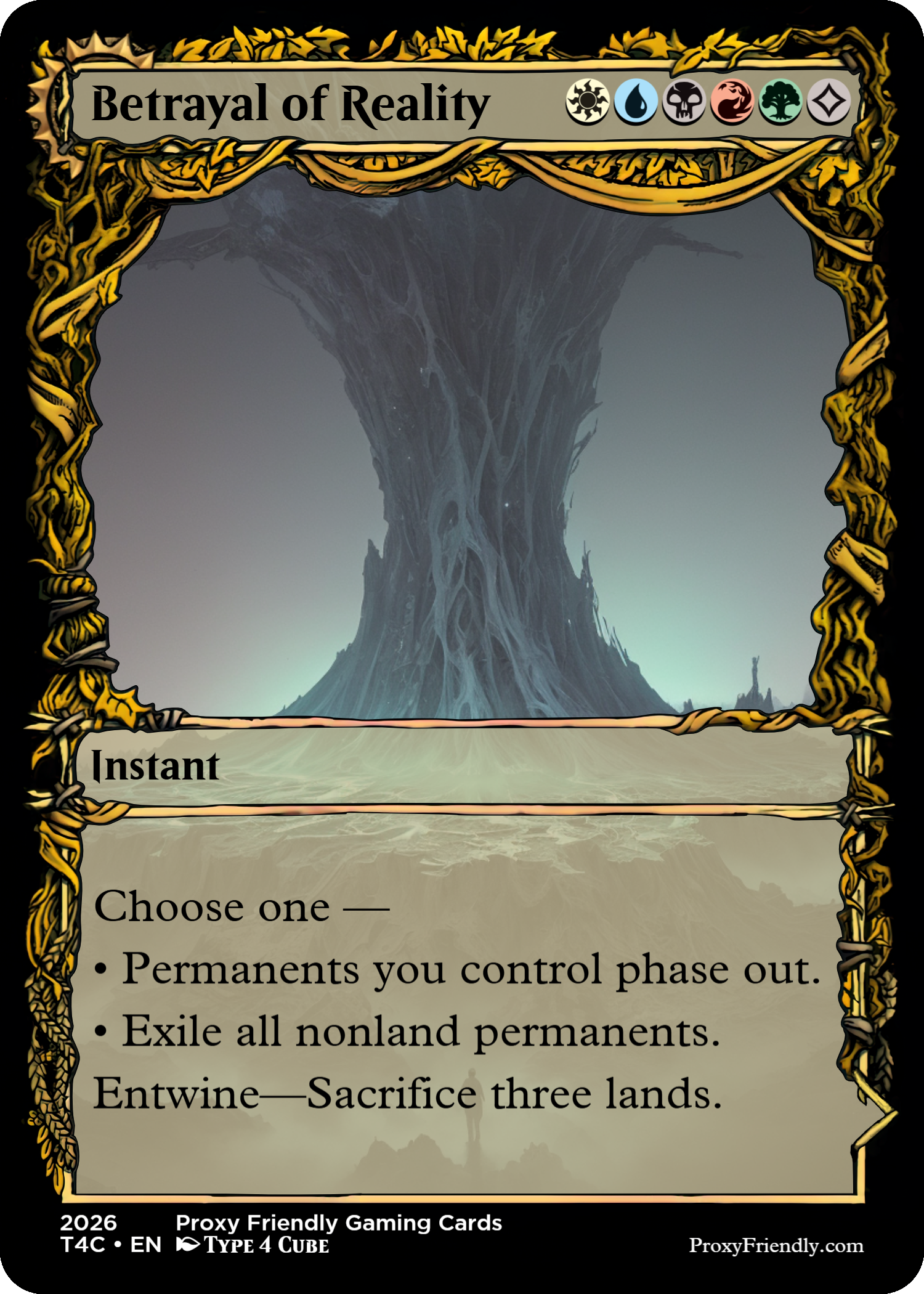
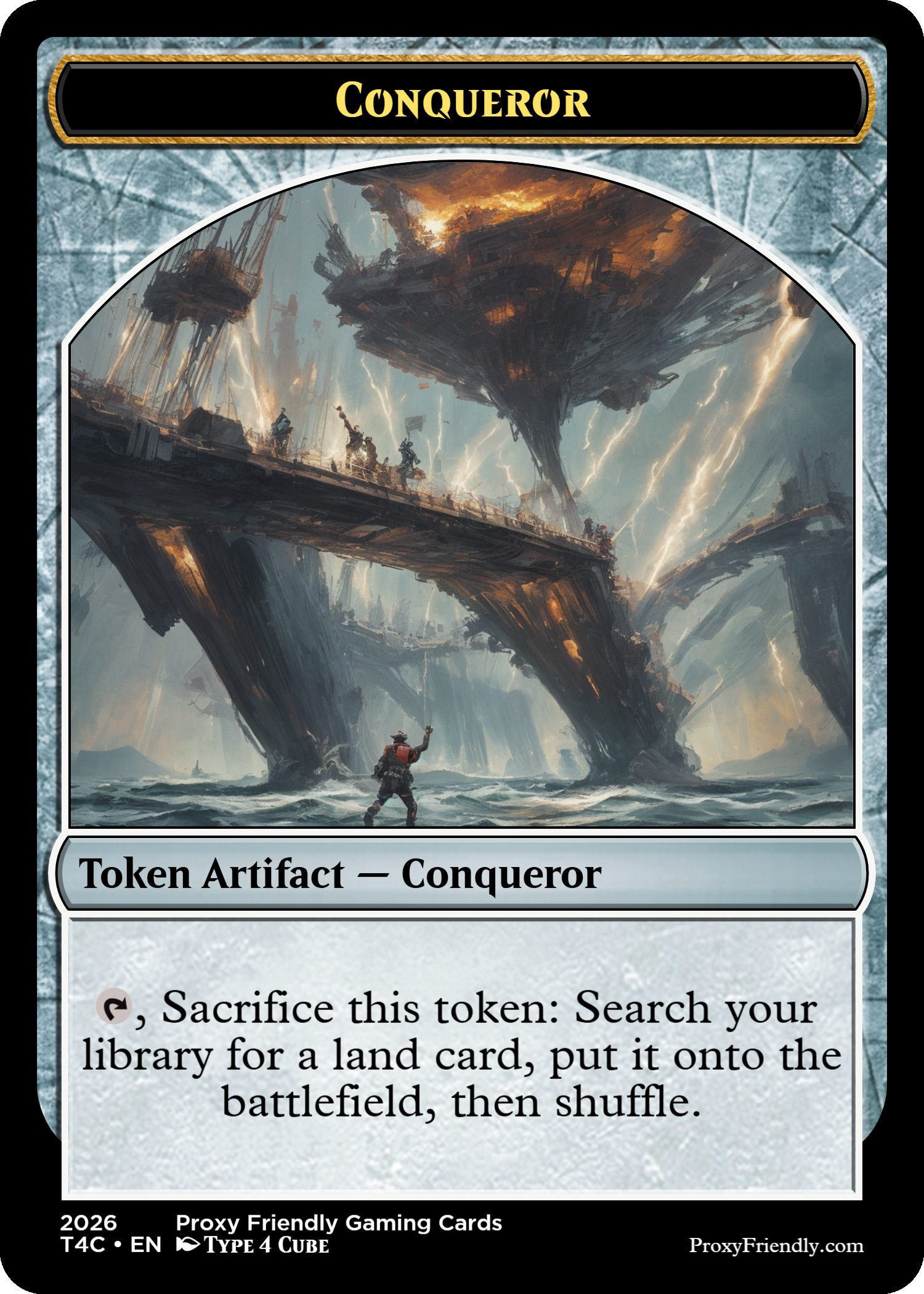
Terra Triad/Diode: These lands count as multiple lands on the battlefield. Inspired by an original Type 4 Cube custom card, “Three Islands" (basically The Eternal Island design) by Paul Mastriano and Stephen Menendian (OG Type 4 Cube pioneers who introduced Noah to the format), our team loved the concept so much that we expanded upon the idea by also giving the lands various searchable types in order to make more cards viable in the format. These abilities also inspired us to complete the “Betrayal” cycle. Betrayal of Flesh (black) is in the Core Set. Side note, we also just wanted many more power/relevant lands in the cube. The World Lands break game rules and enable archetypes, and the land-type lands enable landcycling effects and the new custom token type “Conqueror Token”” which is basically Lander Token on steroids.
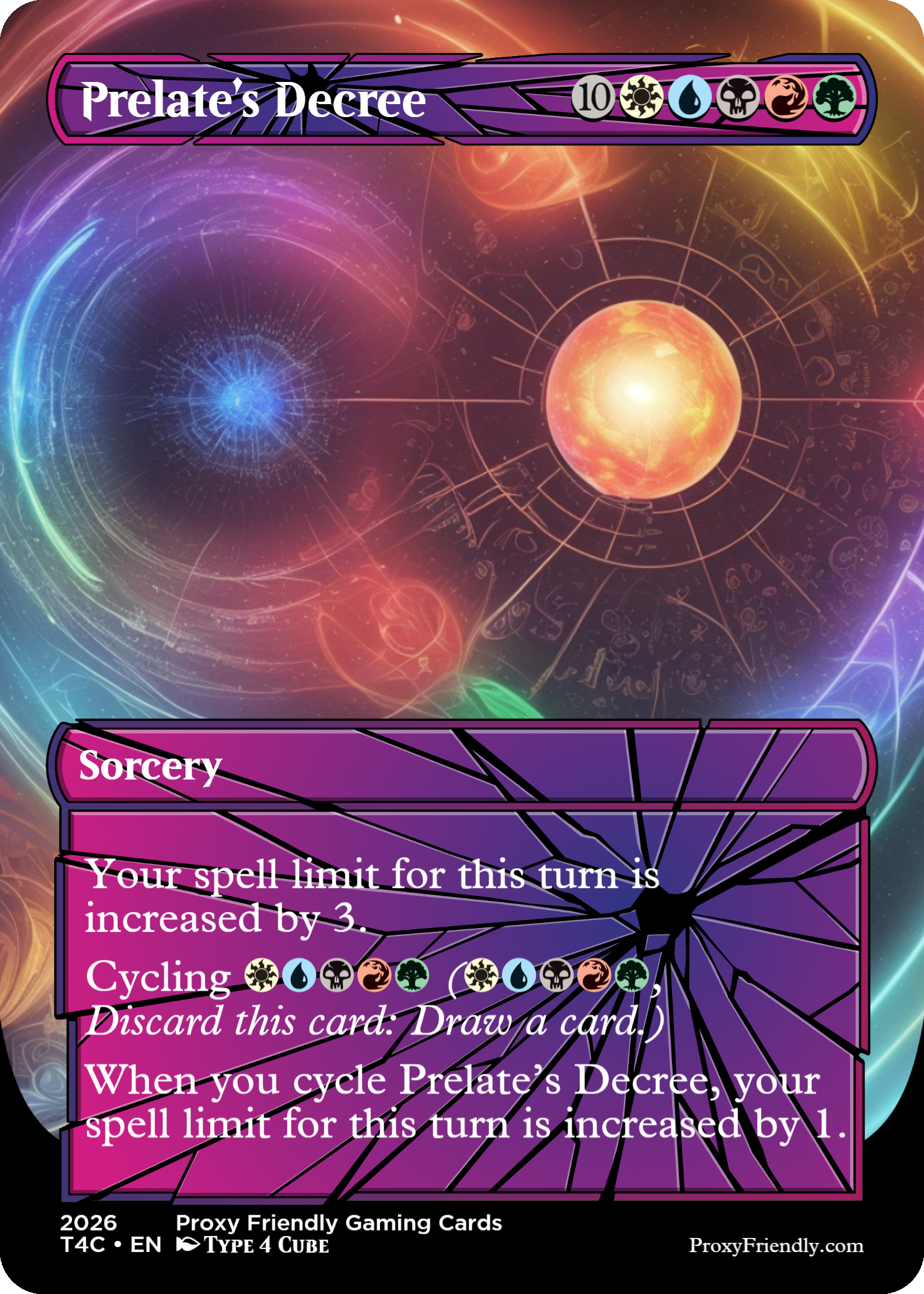
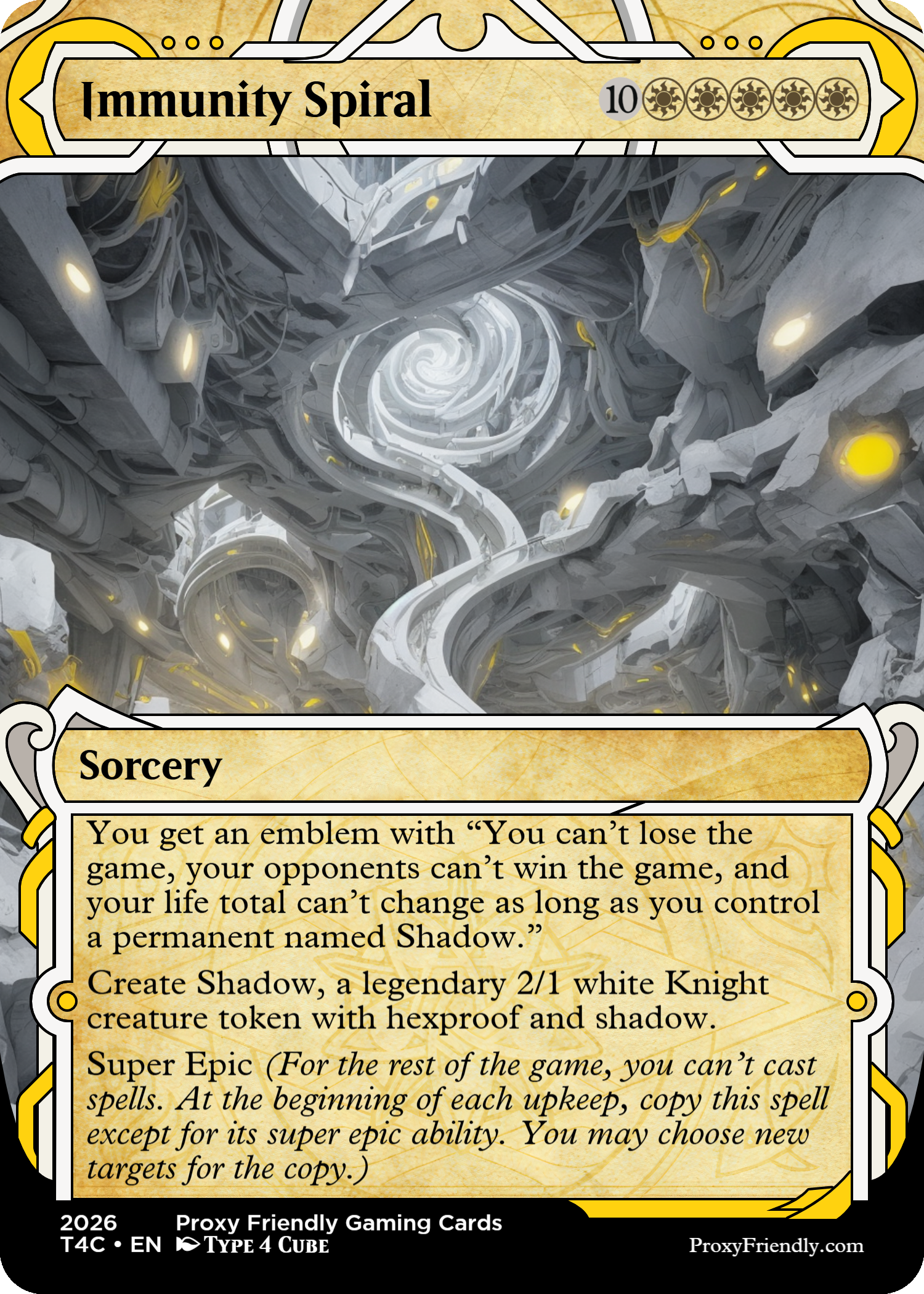
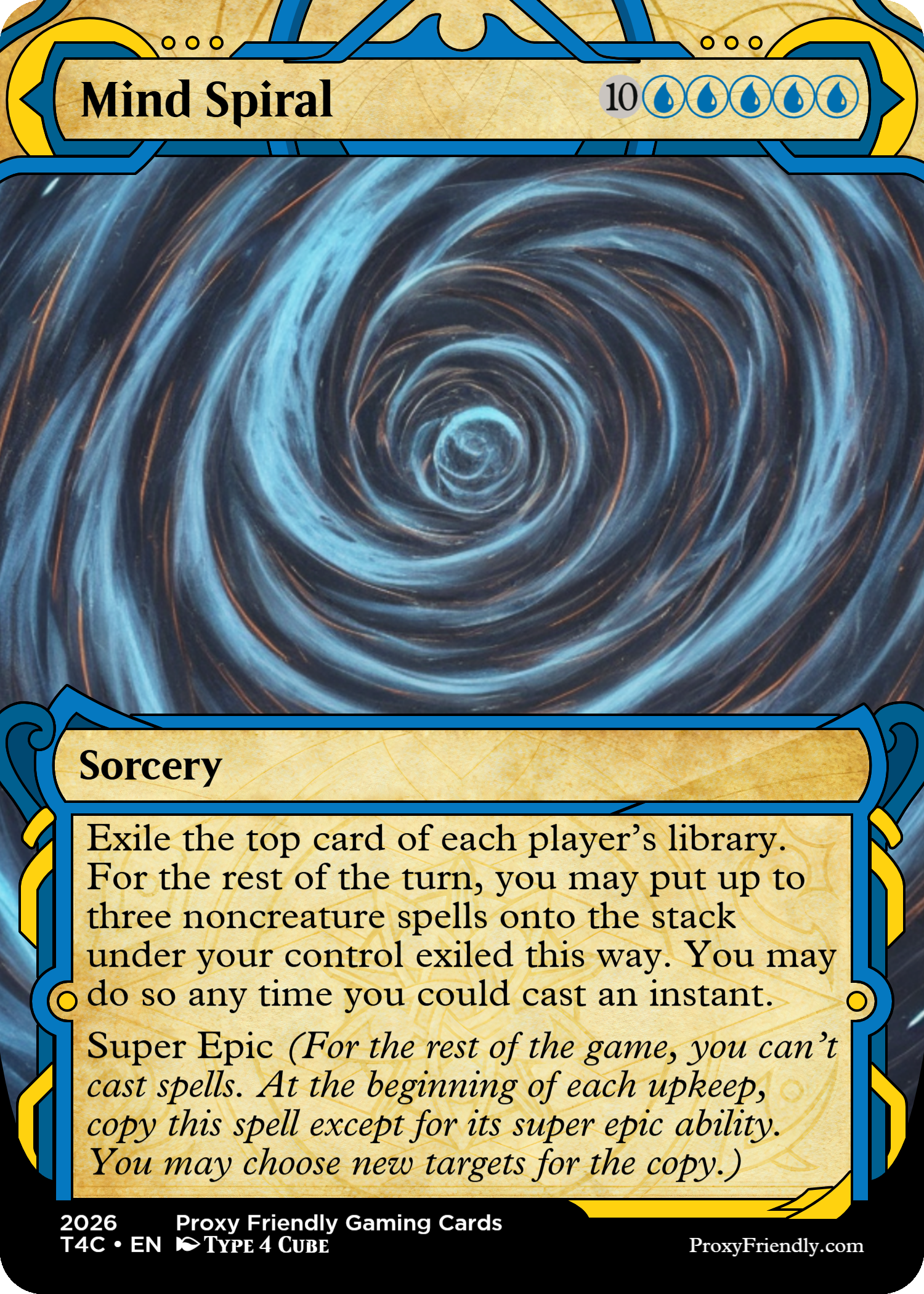
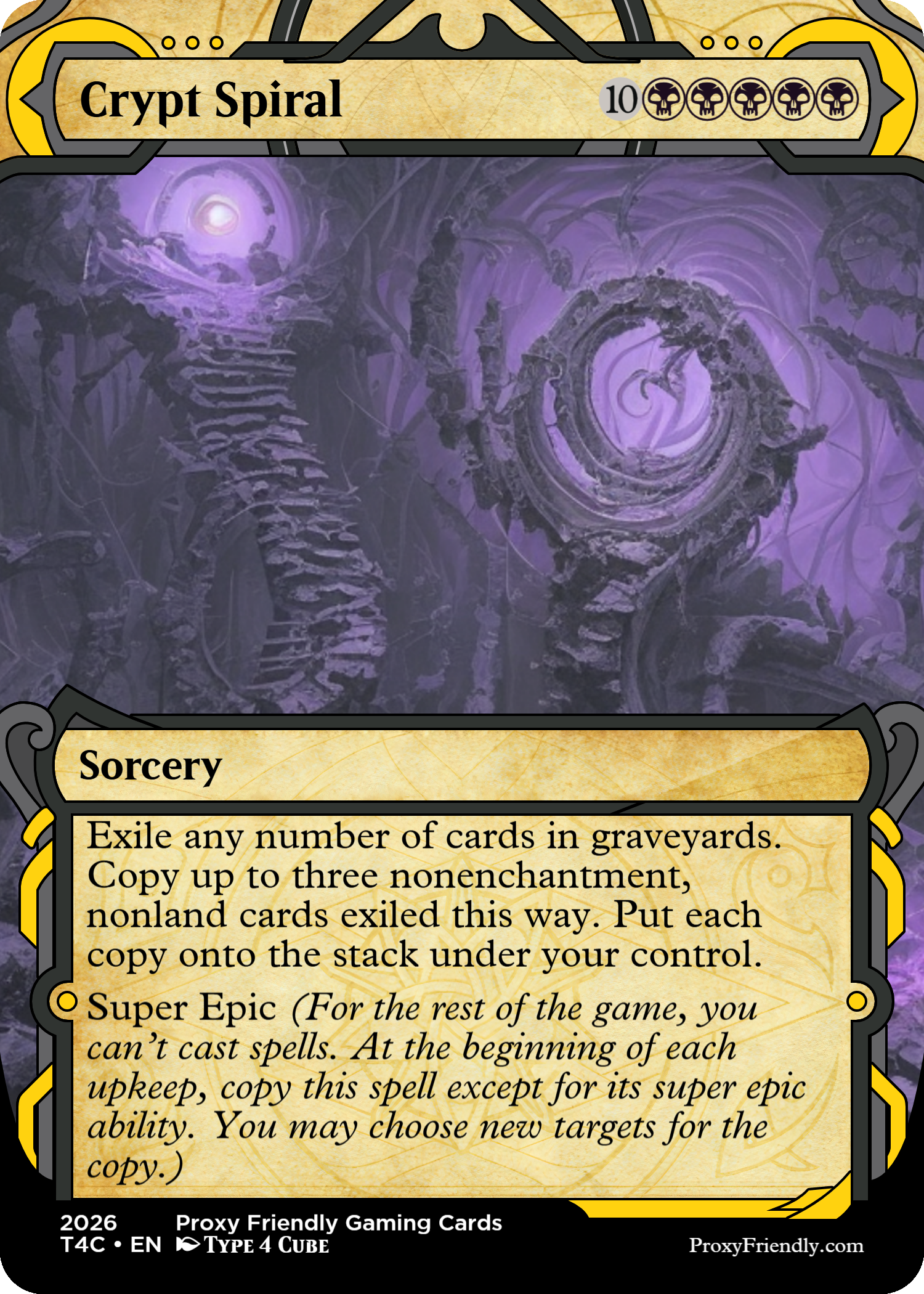
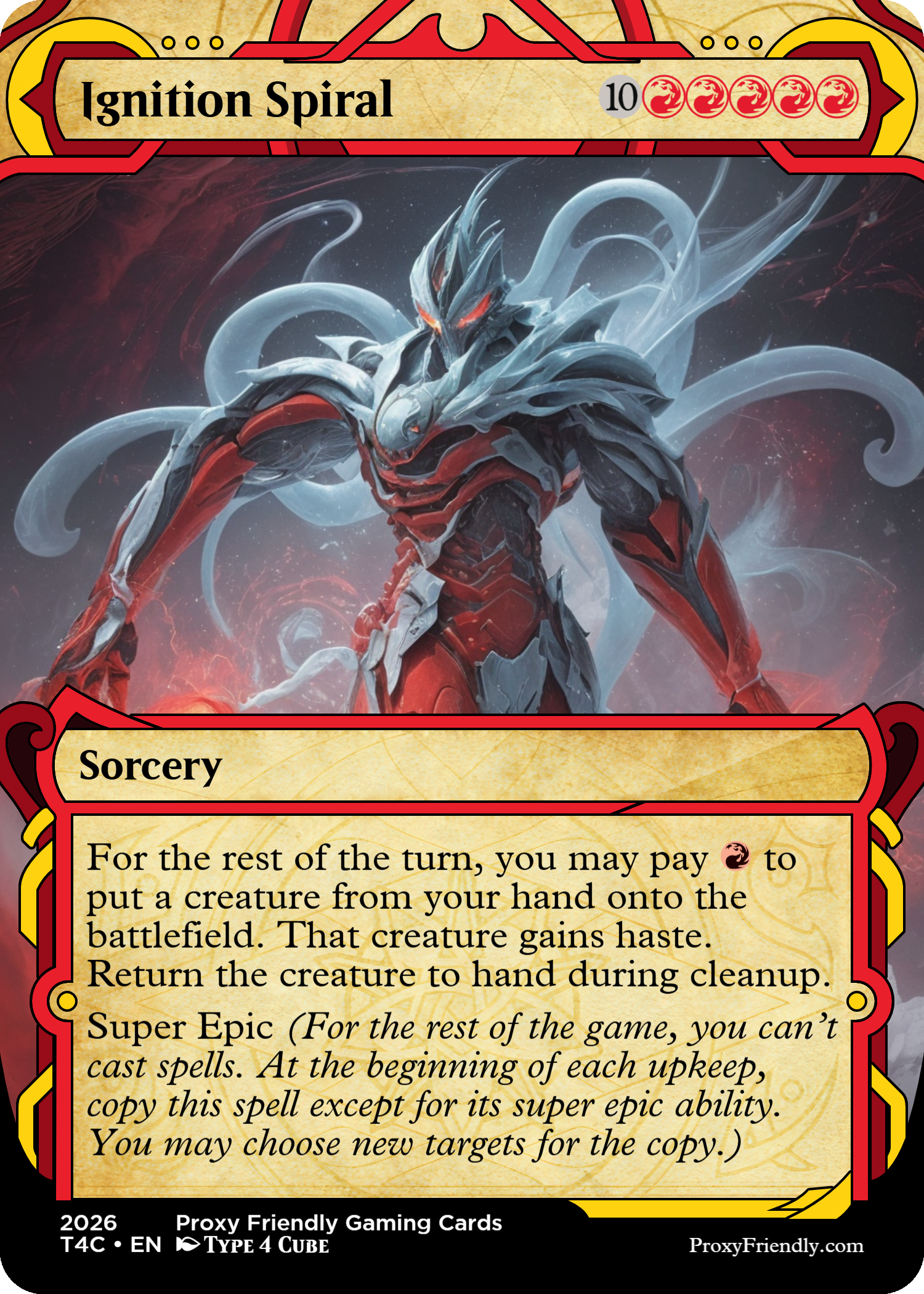
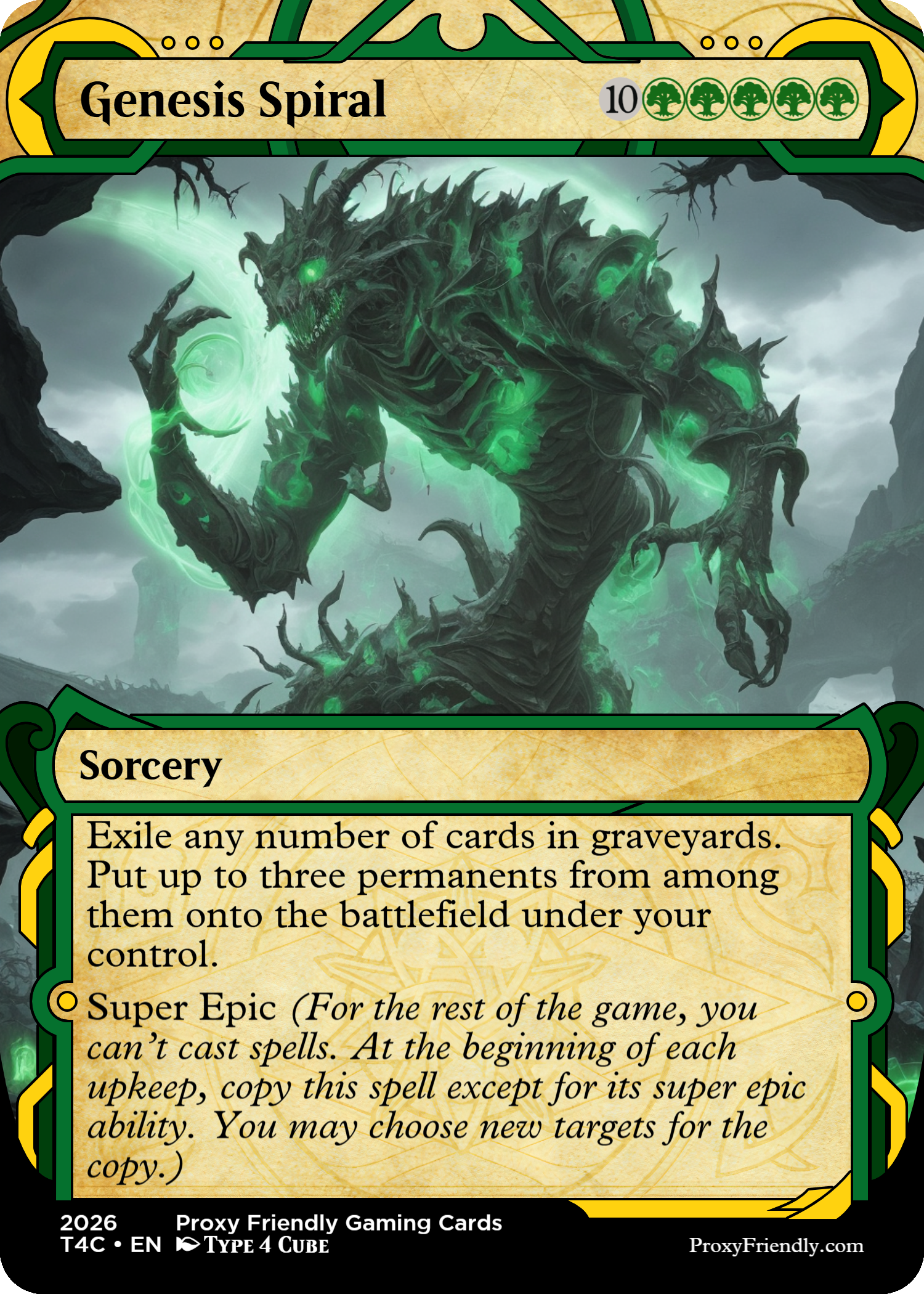
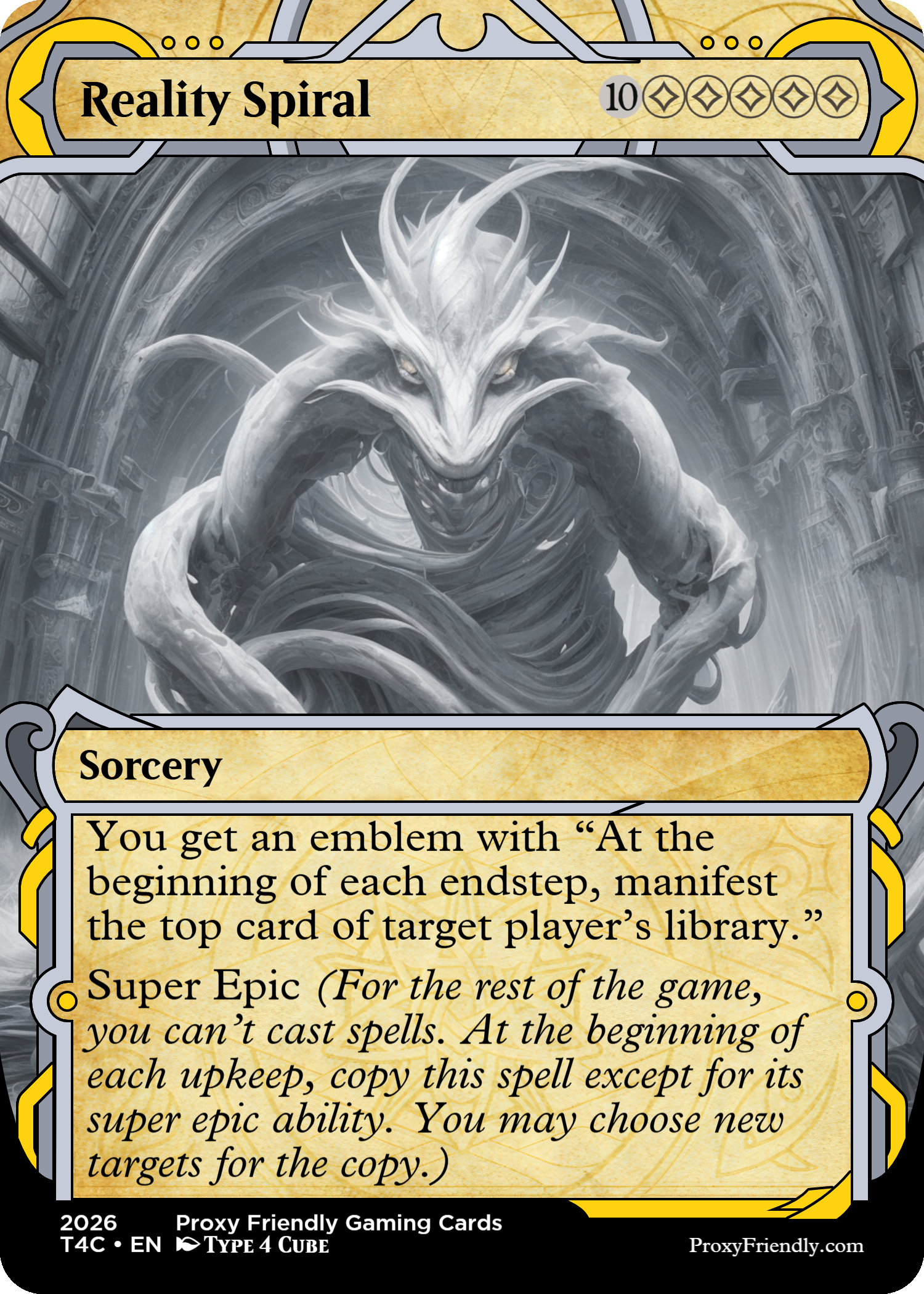
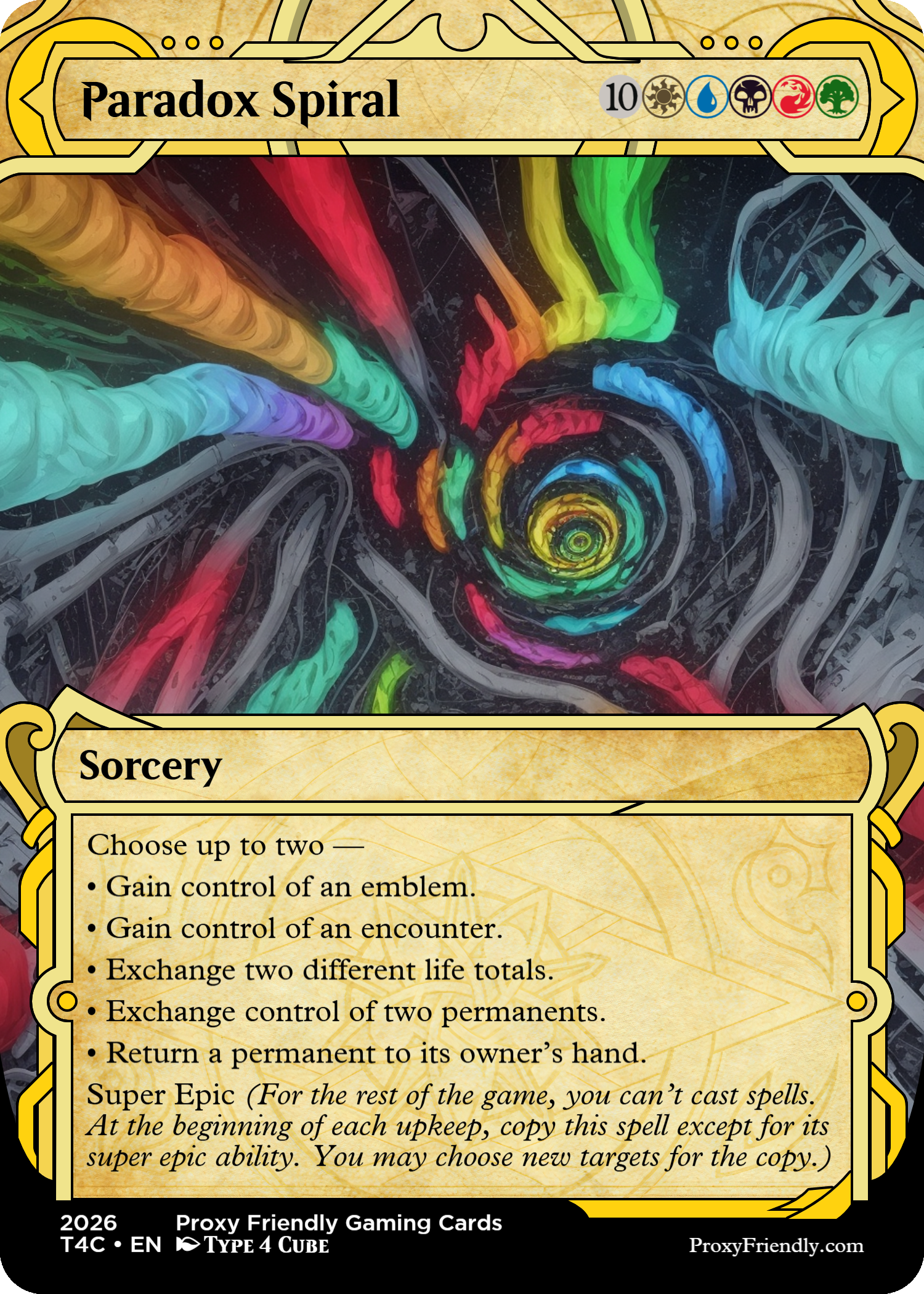
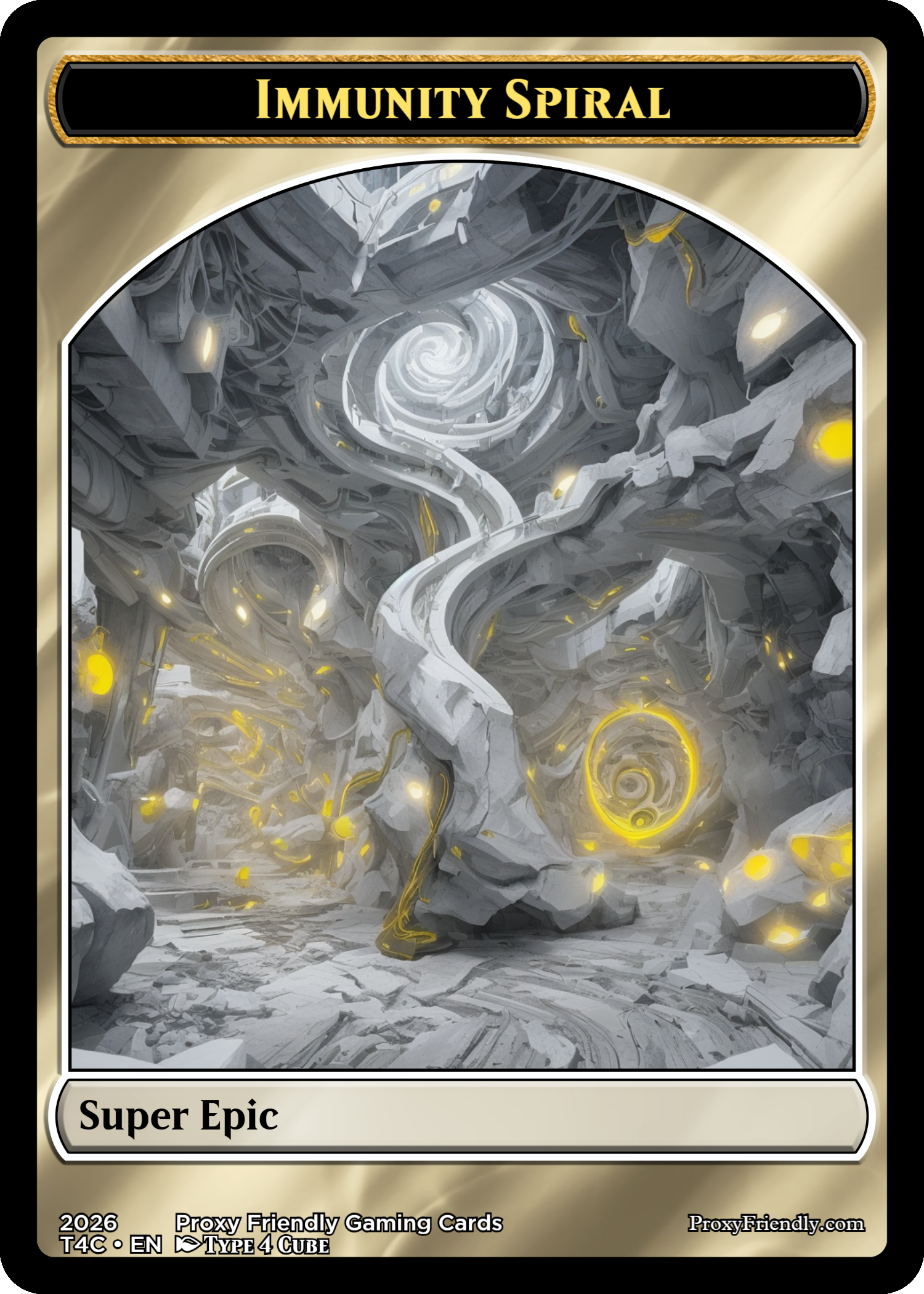
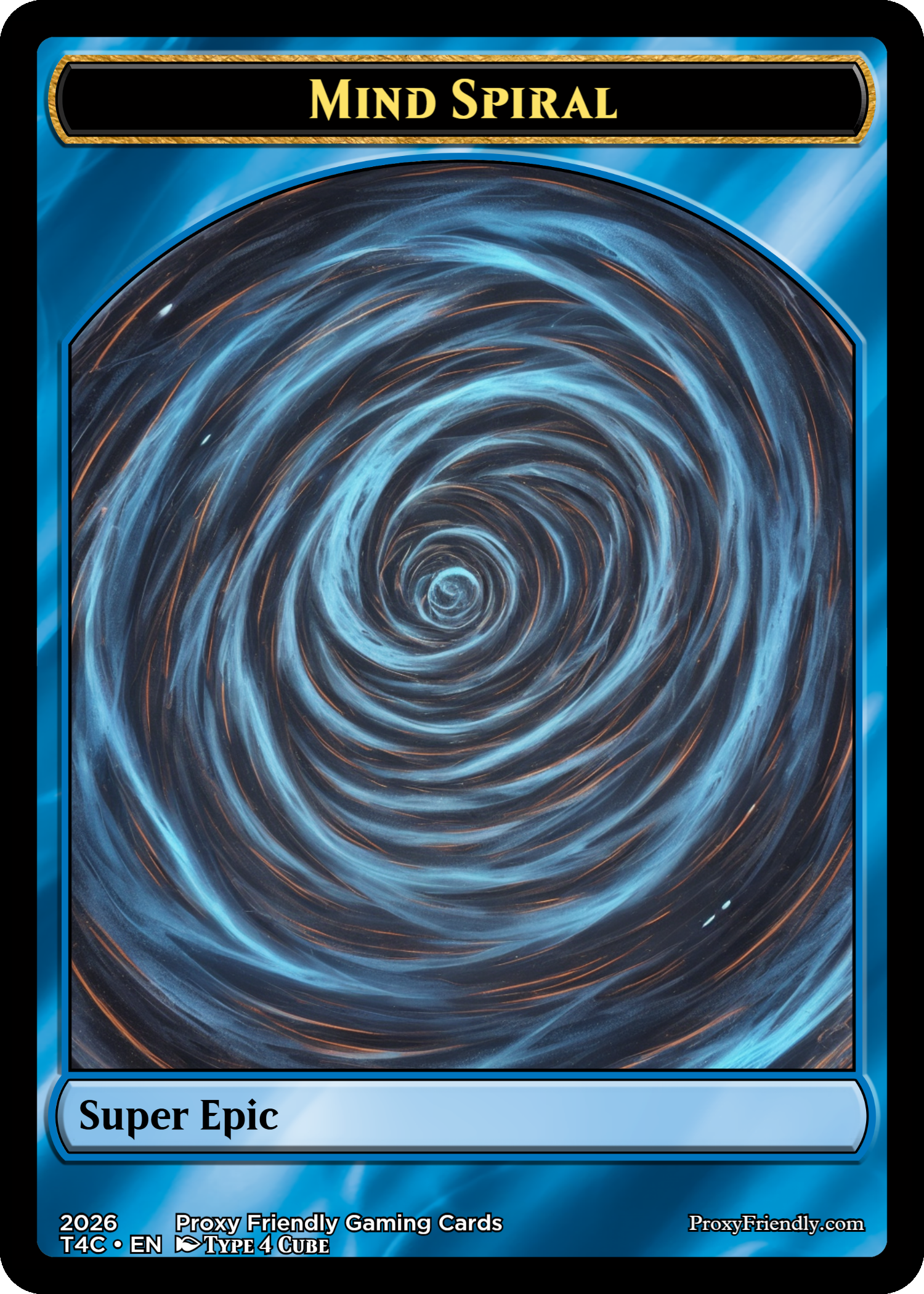
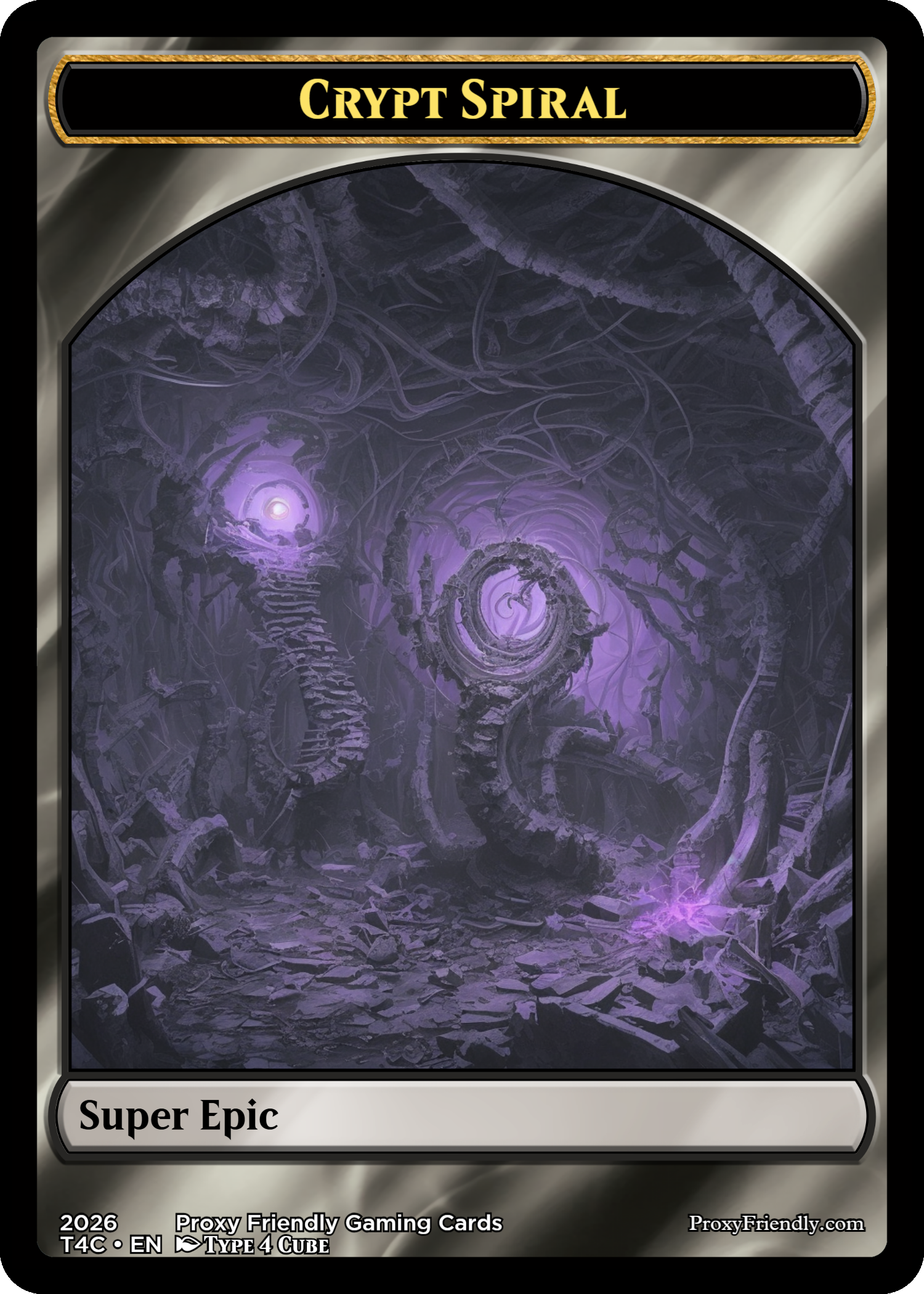
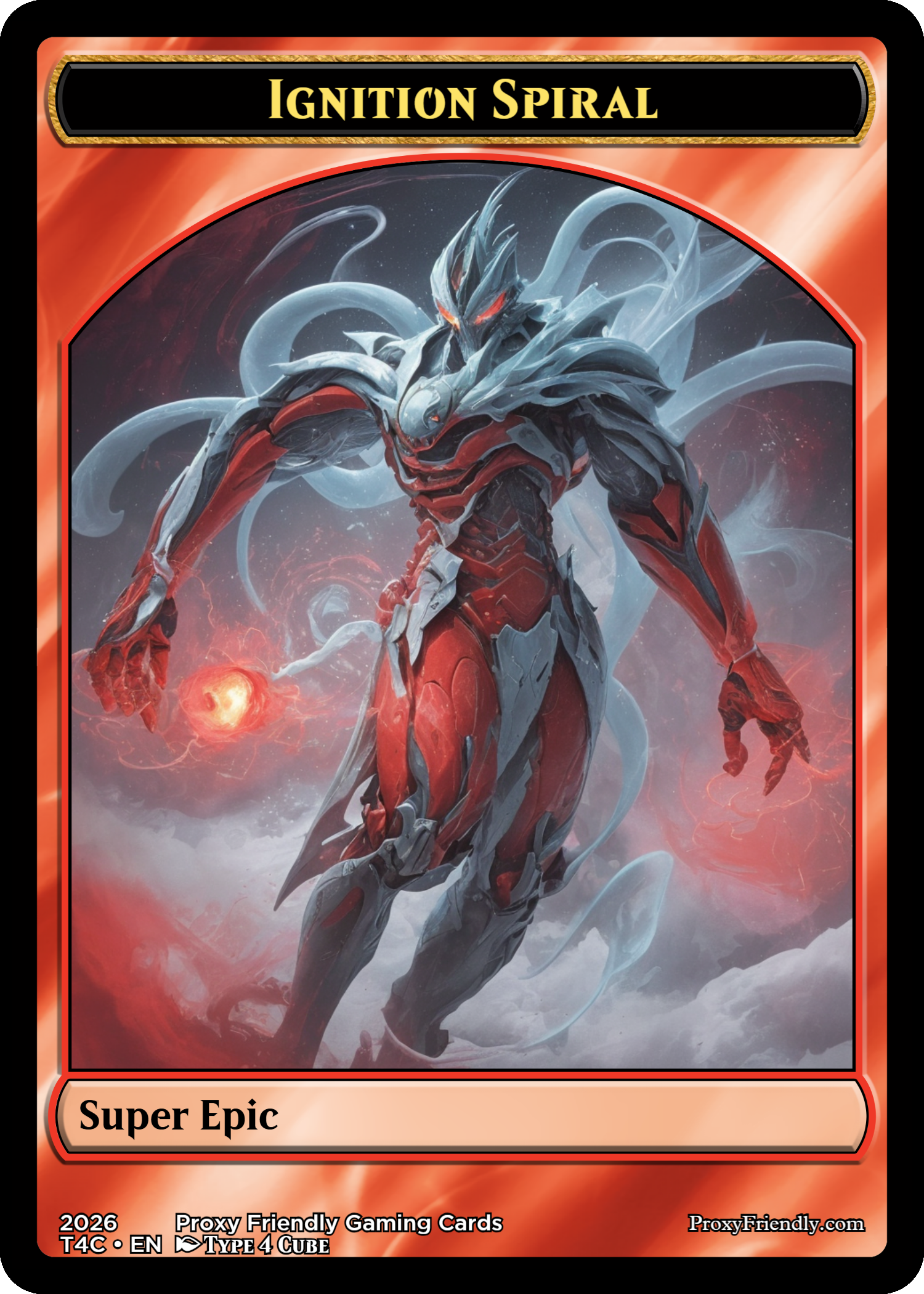
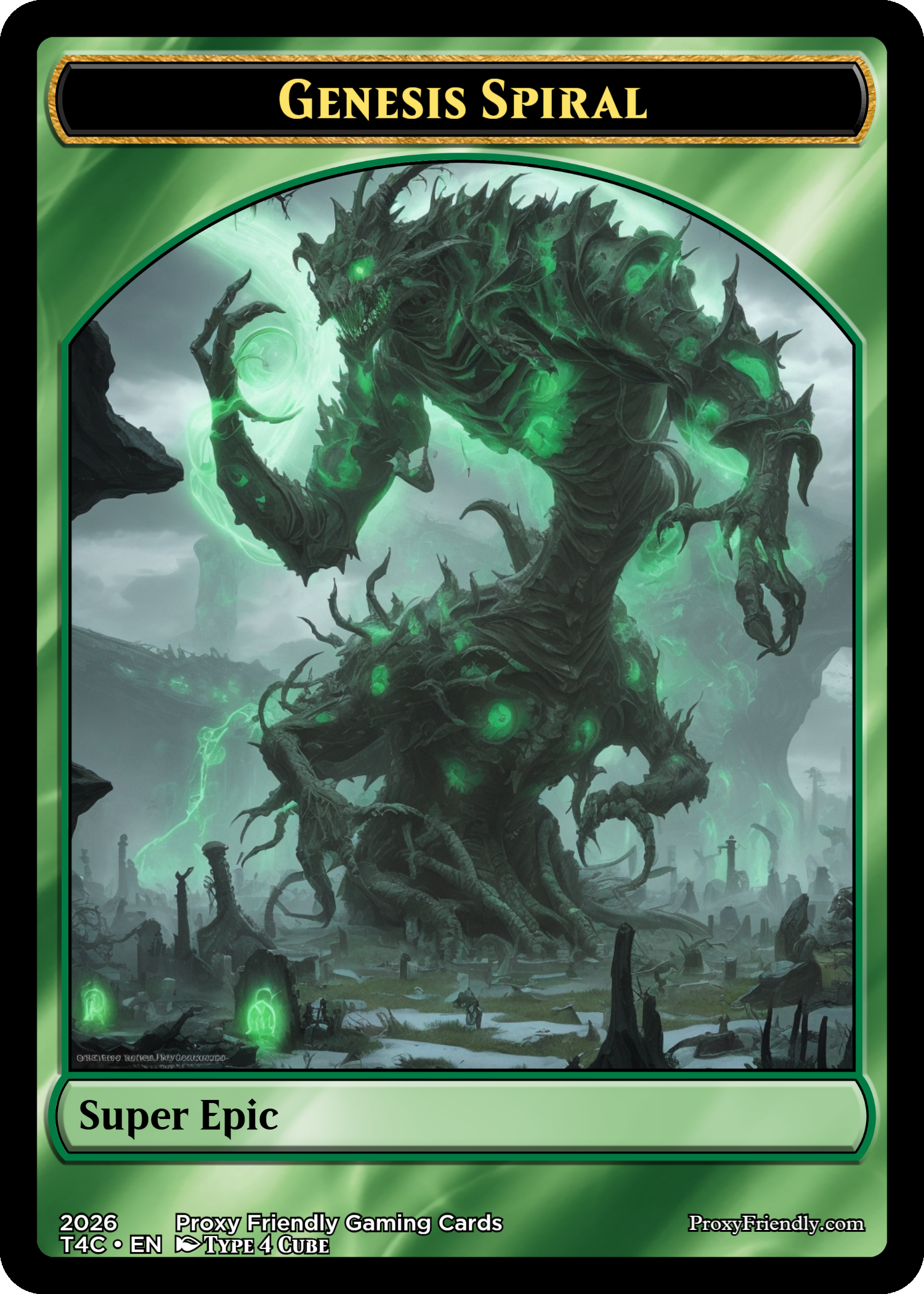
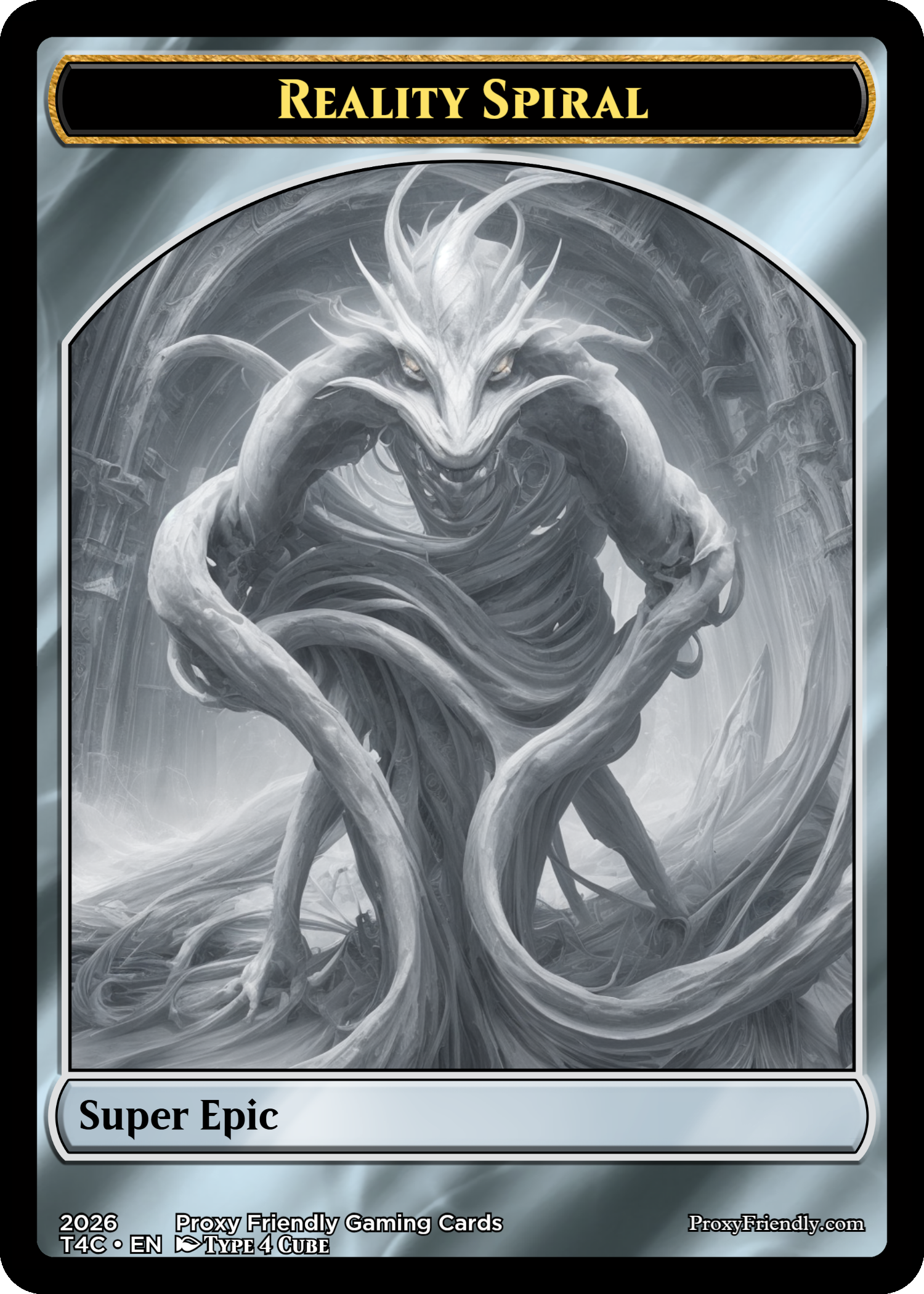
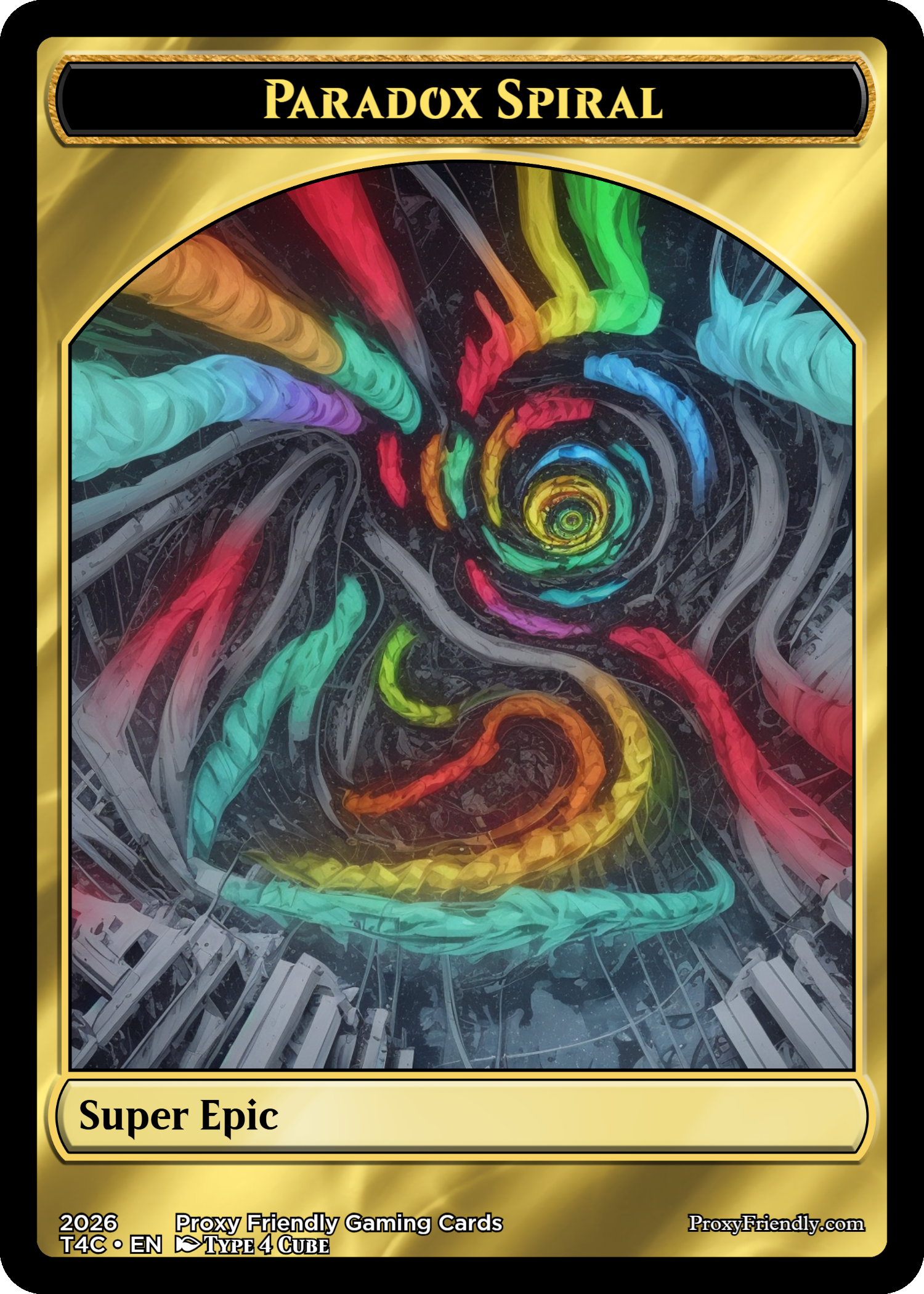
Super Epic: We found the Epic mechanic to be too weak but interesting to consider. We chose to level it up, make the resolution of the spell extremely powerful, and occur every upkeep to make the drawback desirable enough to build around. We love how these turned out!
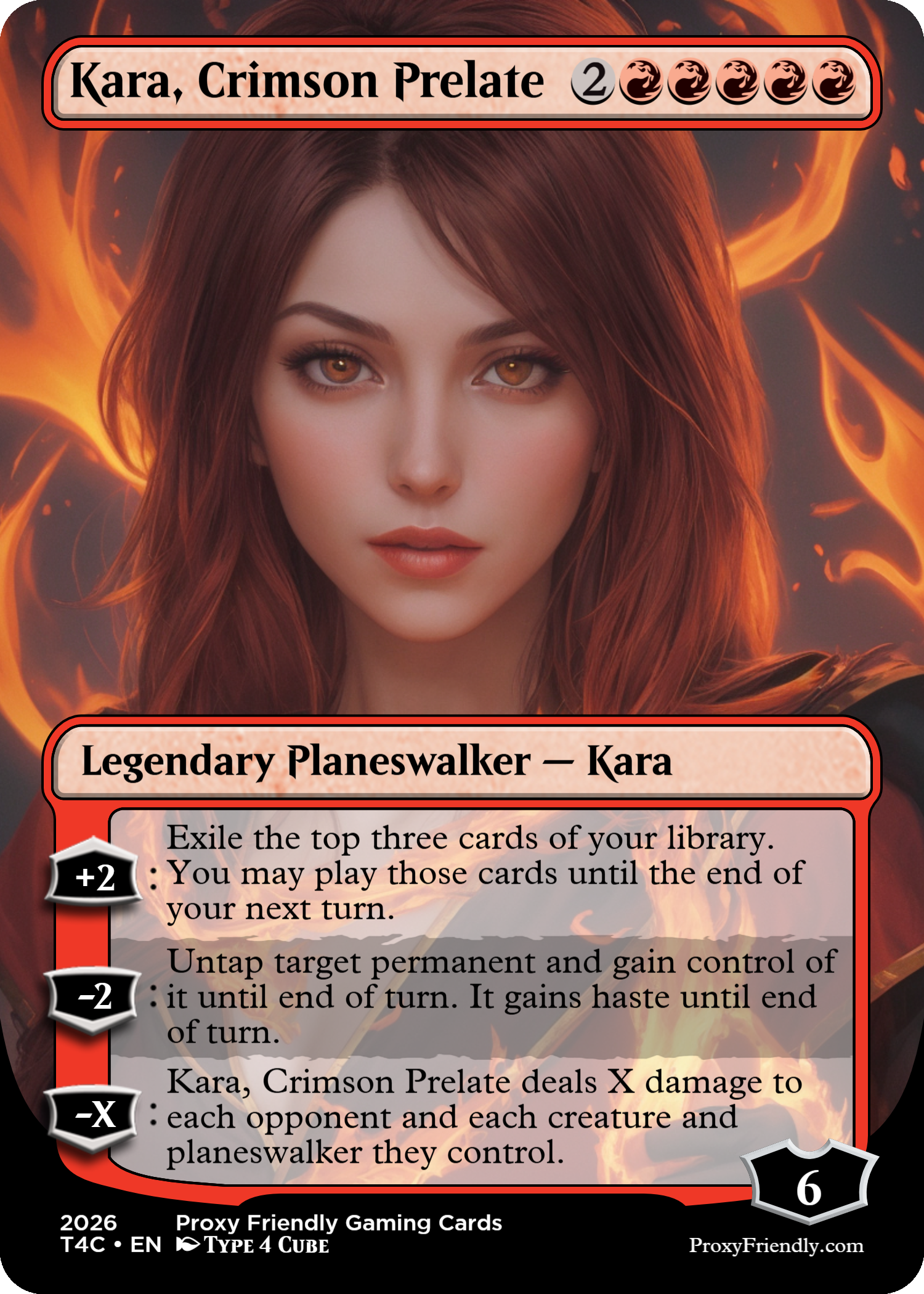
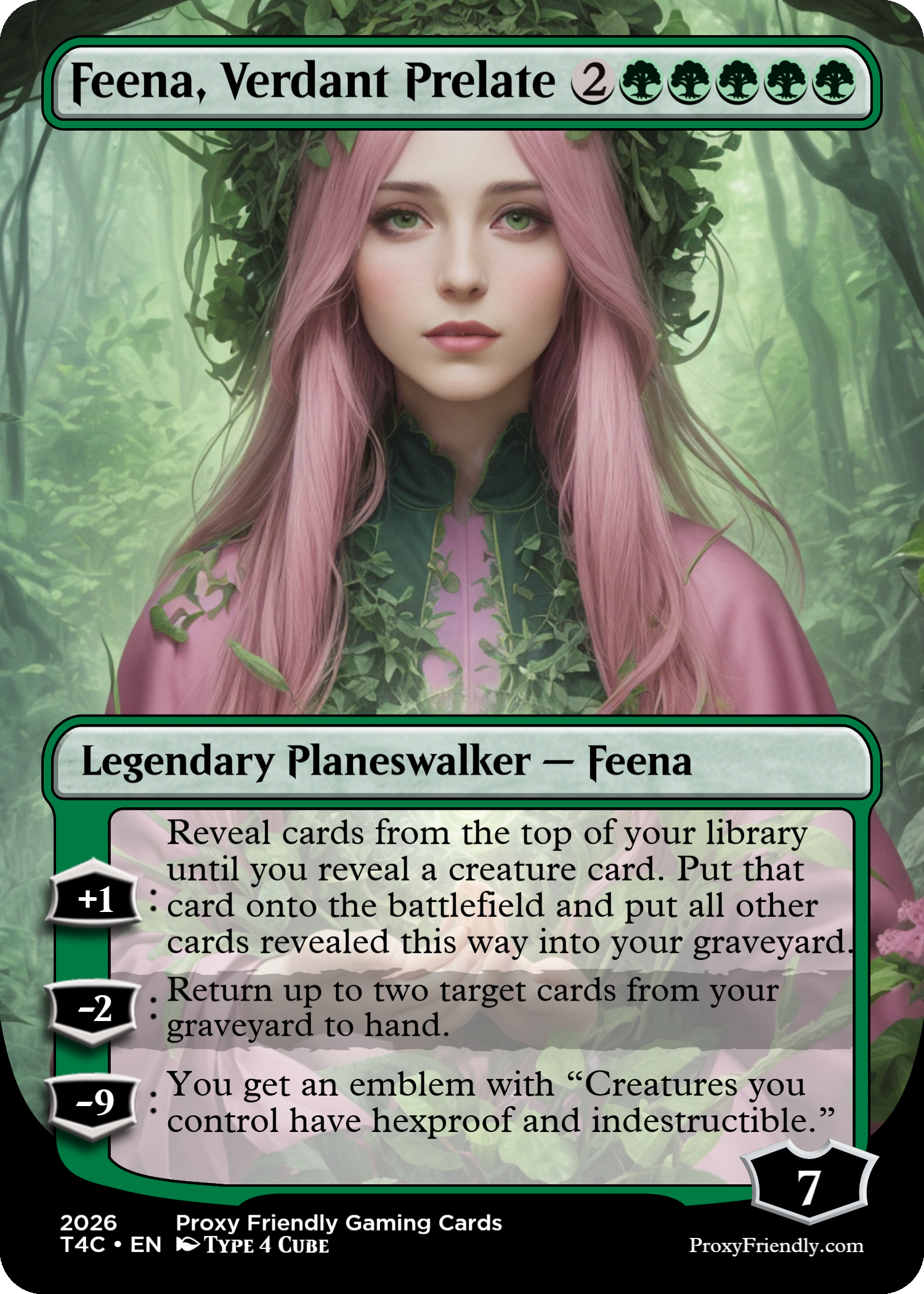
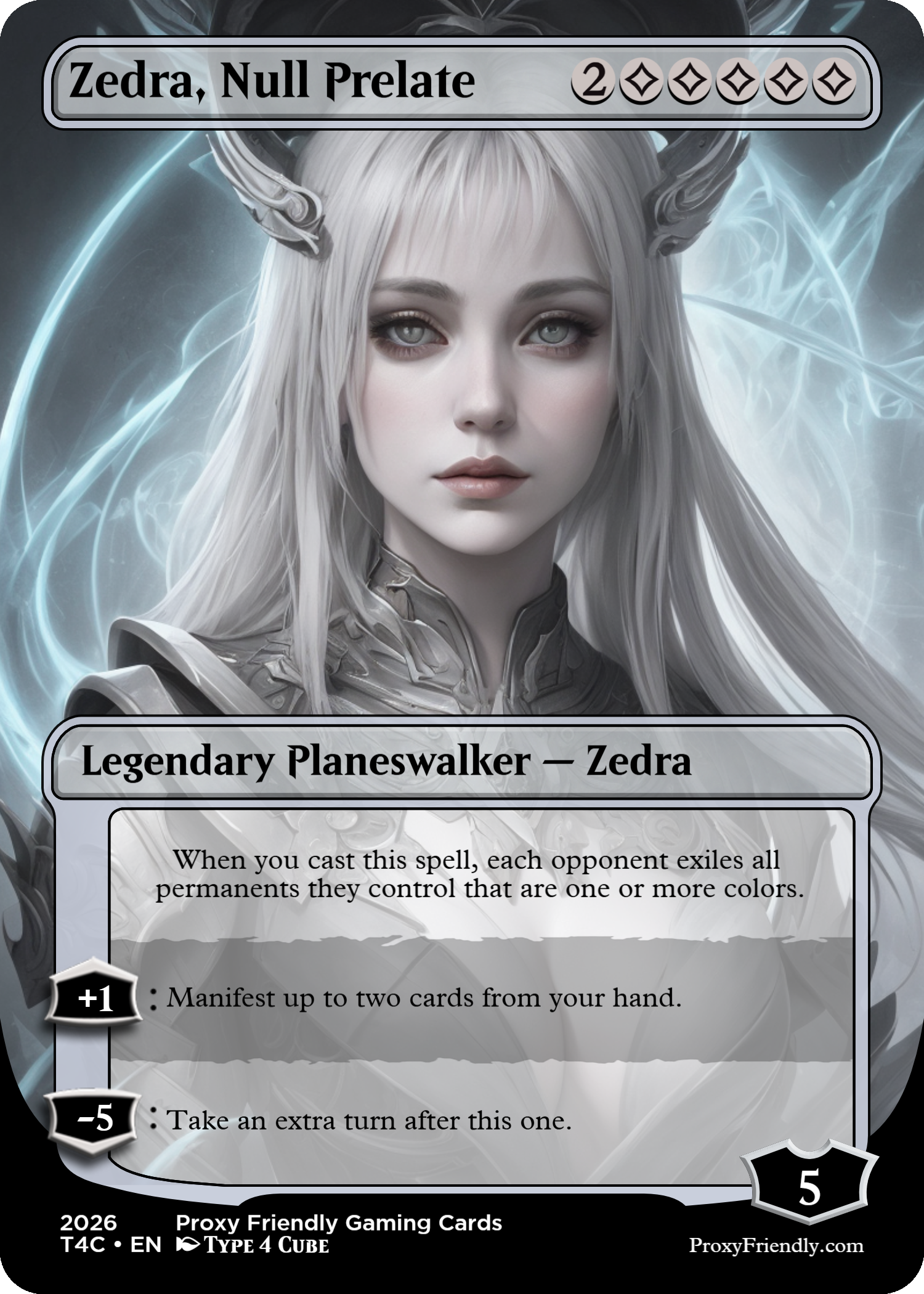
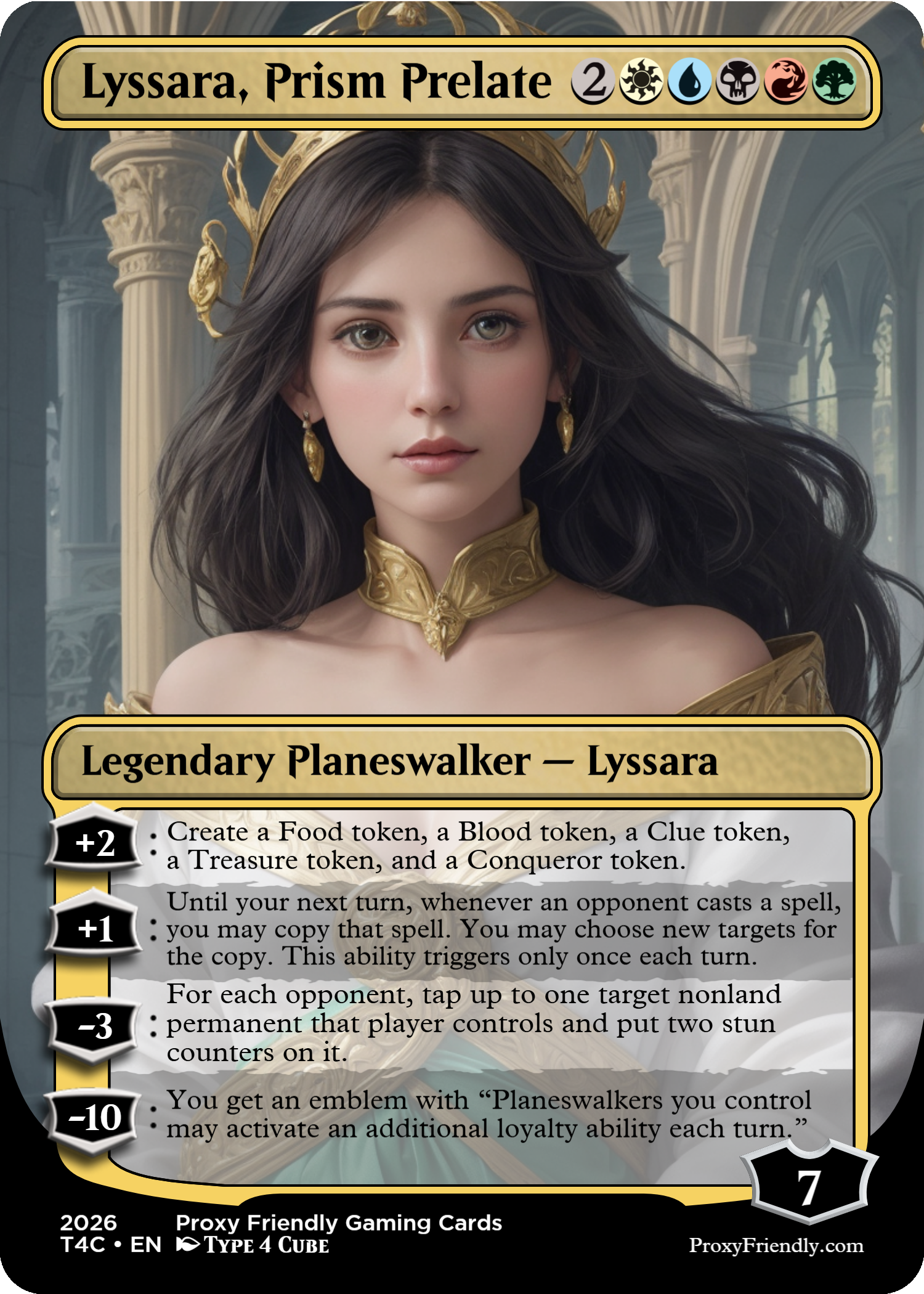
Prelate Lore: The five original female Planeswalker Prelates and their signature Decree spell were also previously designed custom cards from back in the day when Type 4 was relatively new, circa 2005. Along with Dream World and The Lightspeed Matrix, these eight cards set the bar for how we chose to design this foundational custom set. Our goal is to bring this format back to life and show the world that extreme chaos and extremely powerful interactions are some of the most interesting and skill-testing experiences. It’s also fun. We love fun!
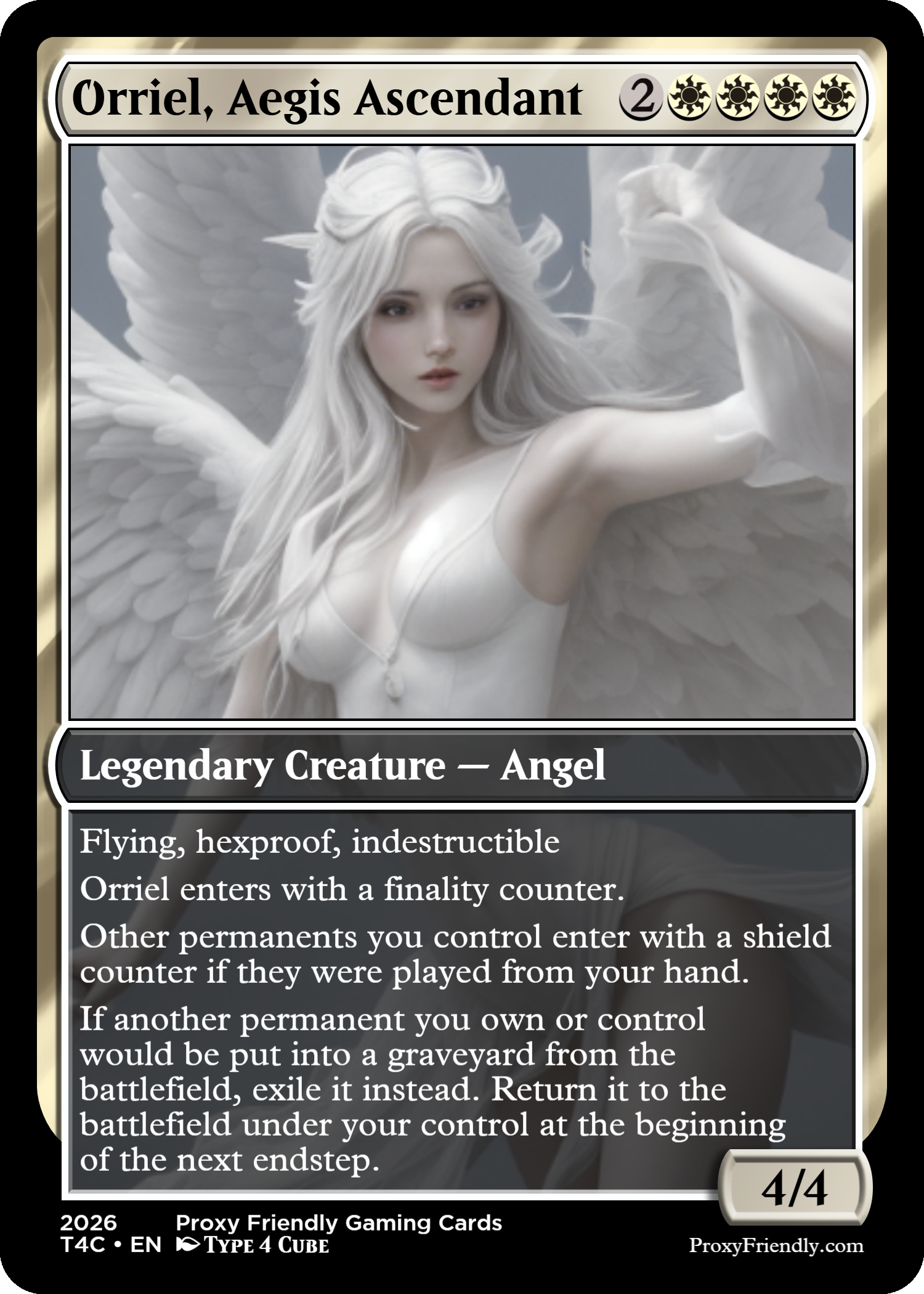
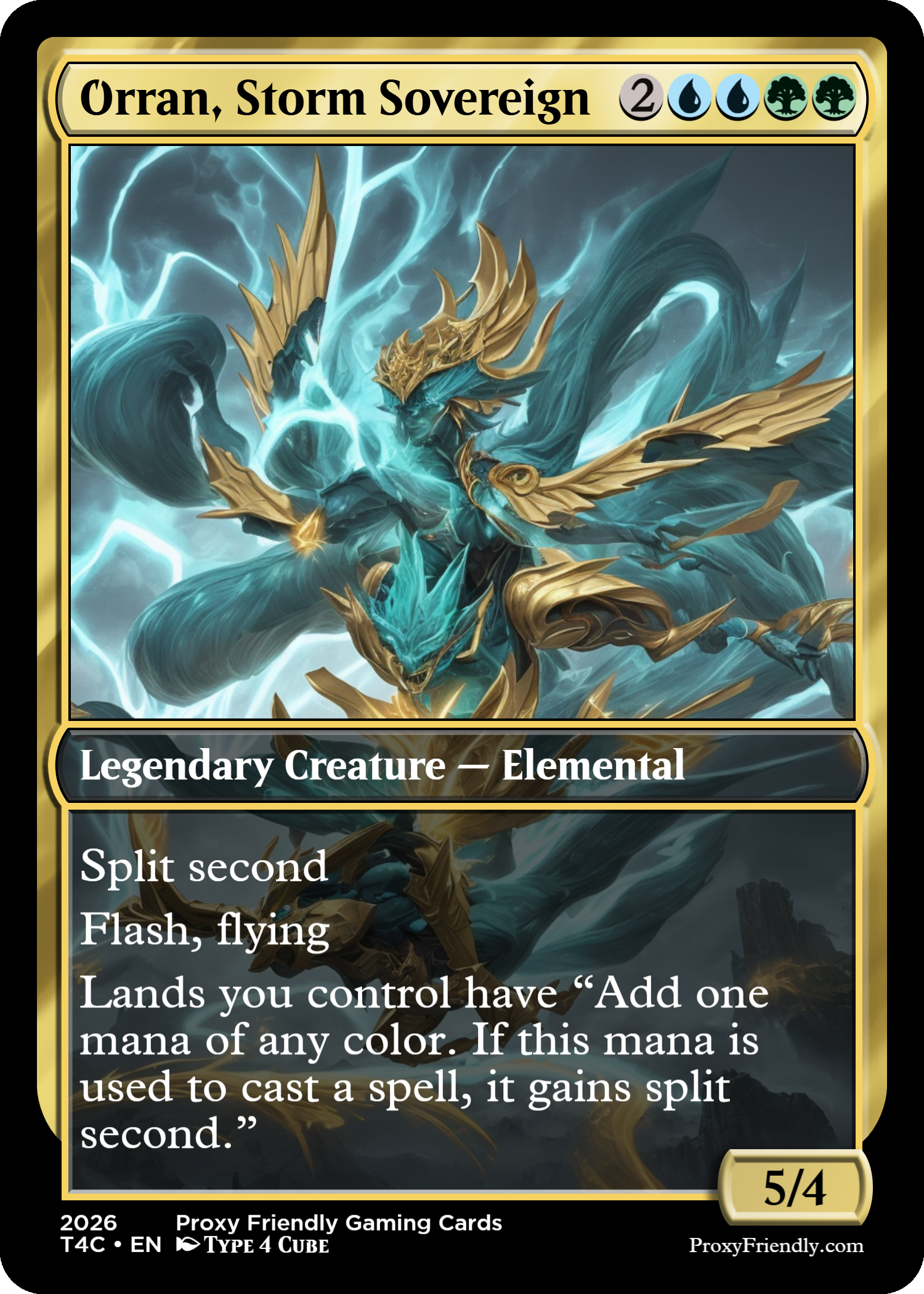
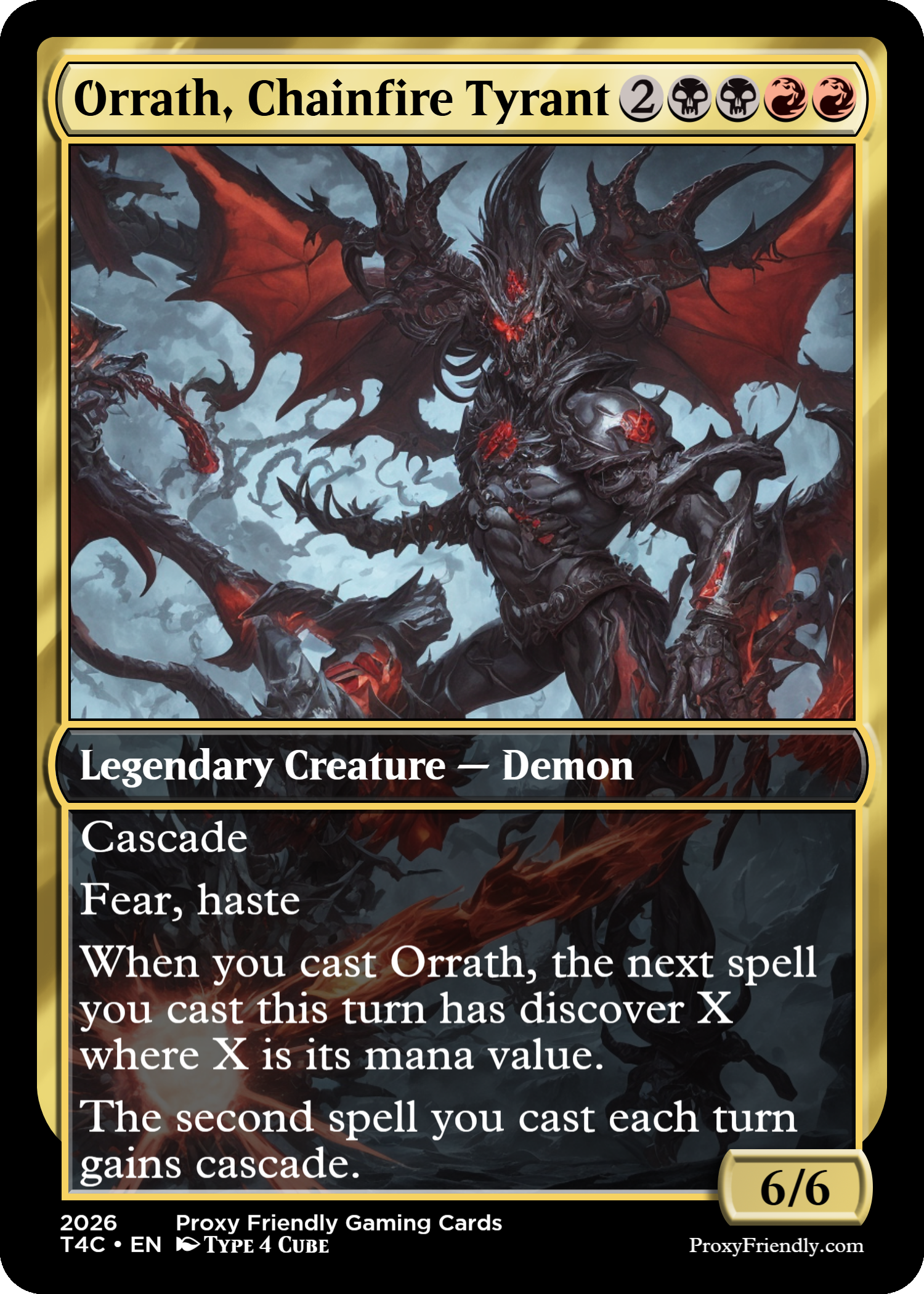
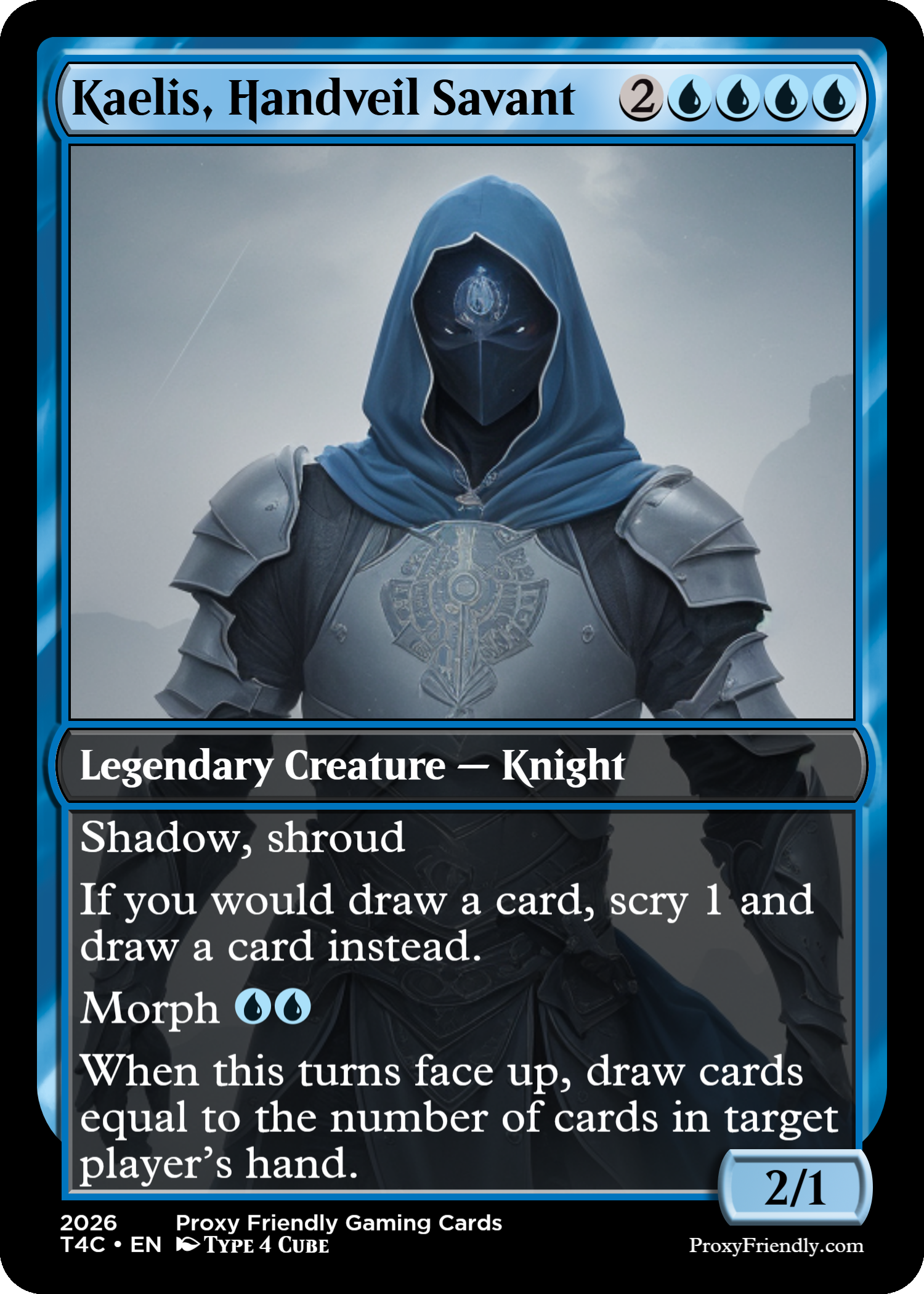
Triplet Siblings: These are our attempt at developing lore-based characters within the Type 4 Cube universe. We intend to develop a wide range of signature spells and abilities based on these creatures in future sets to come.
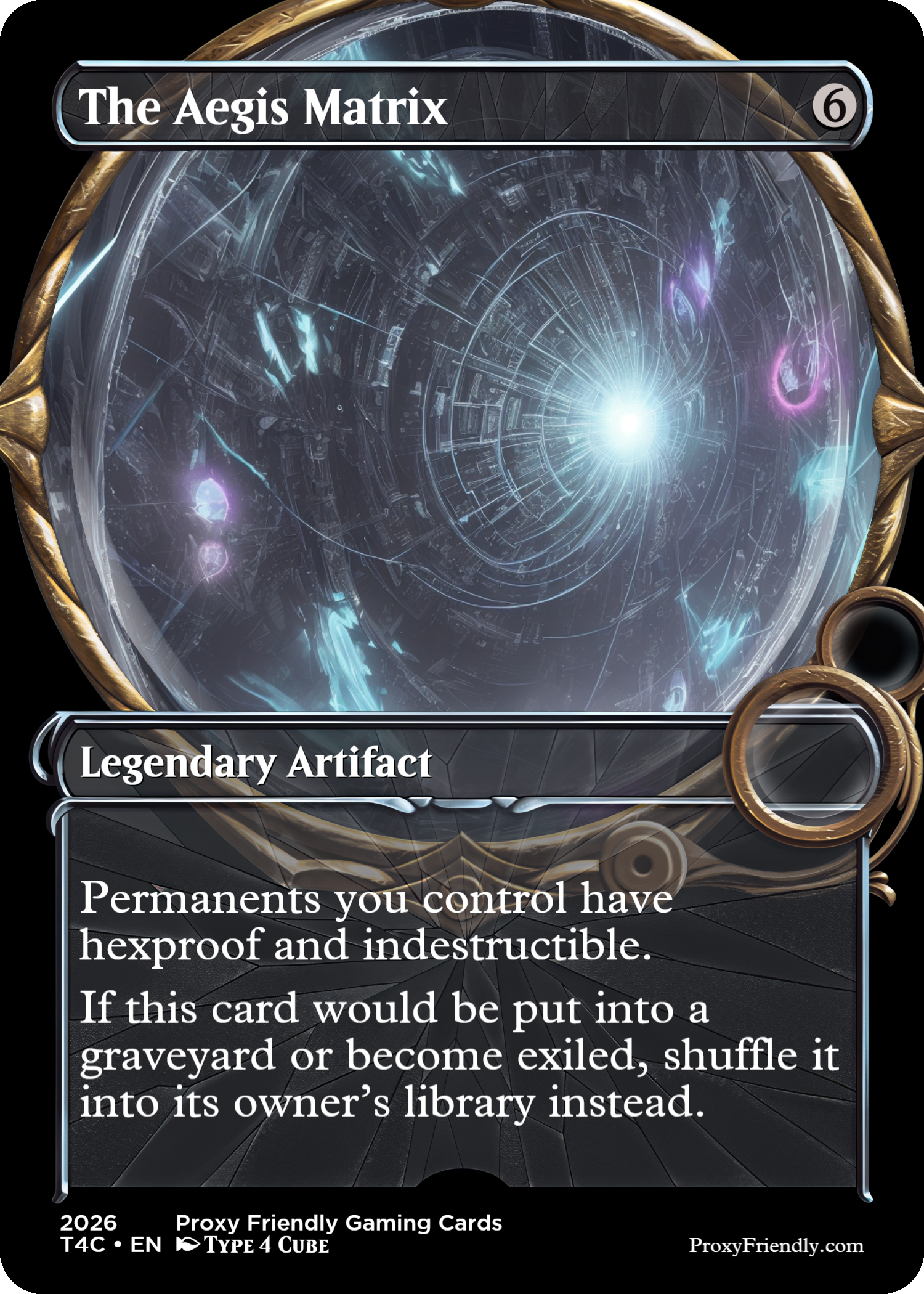
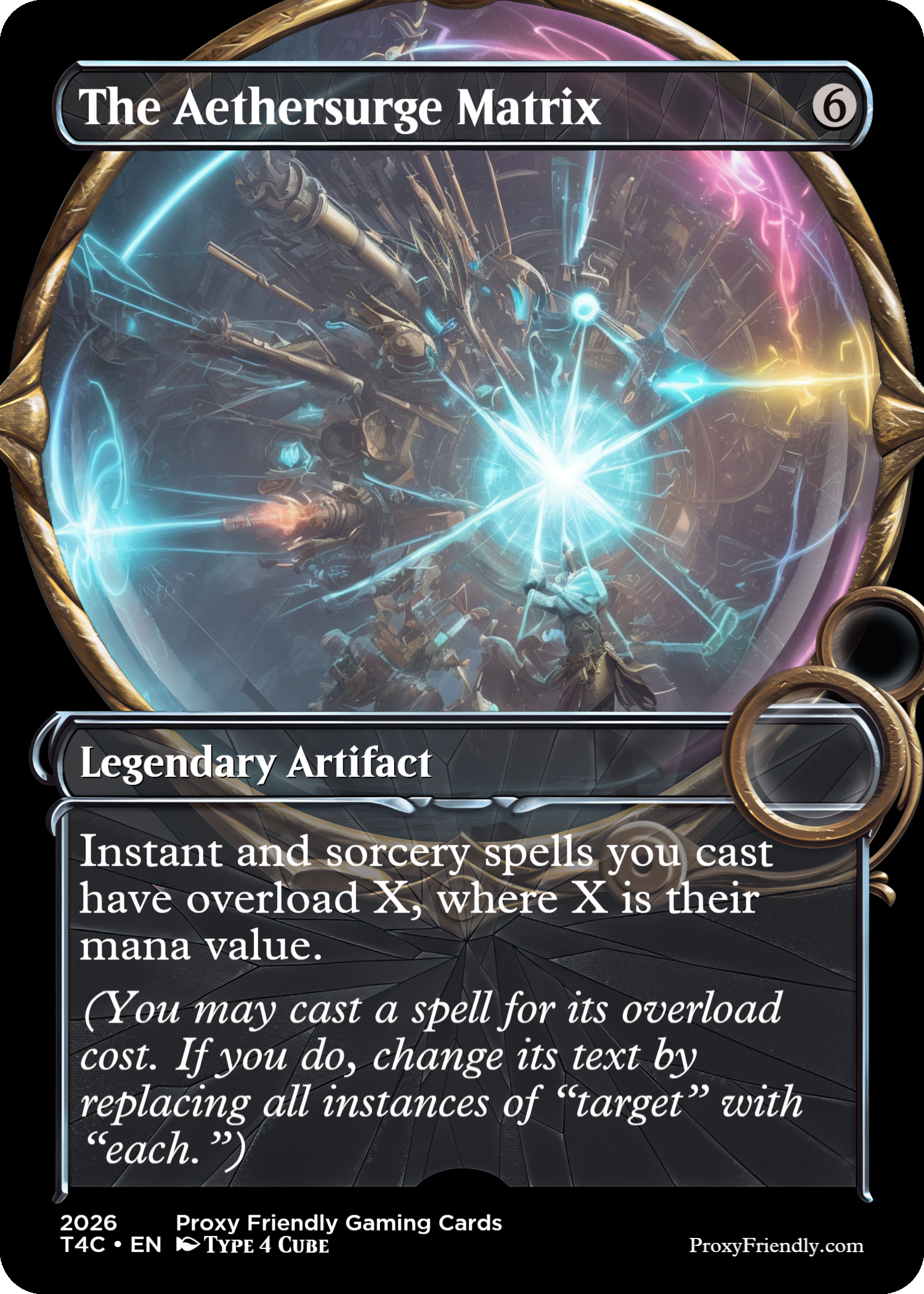
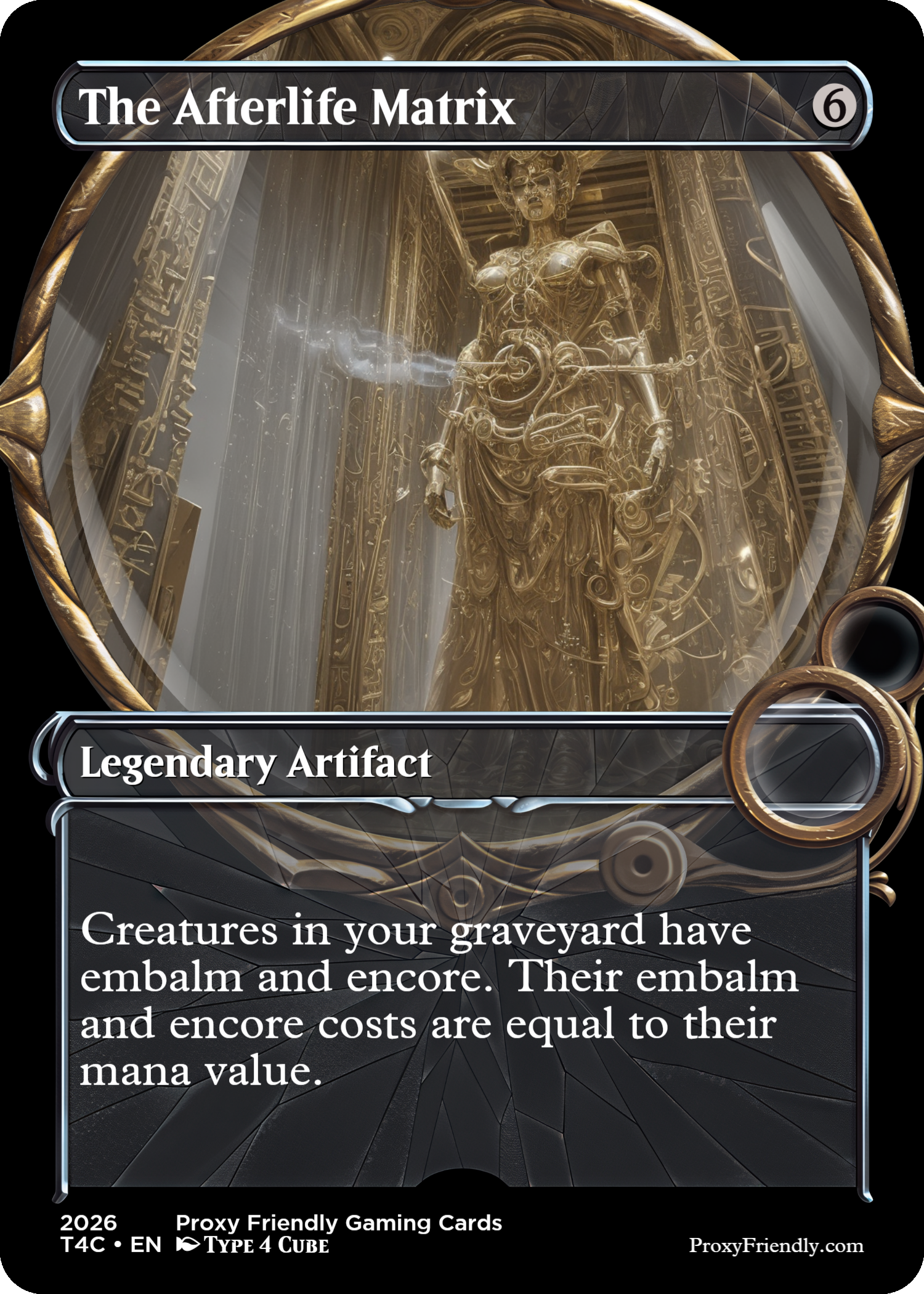
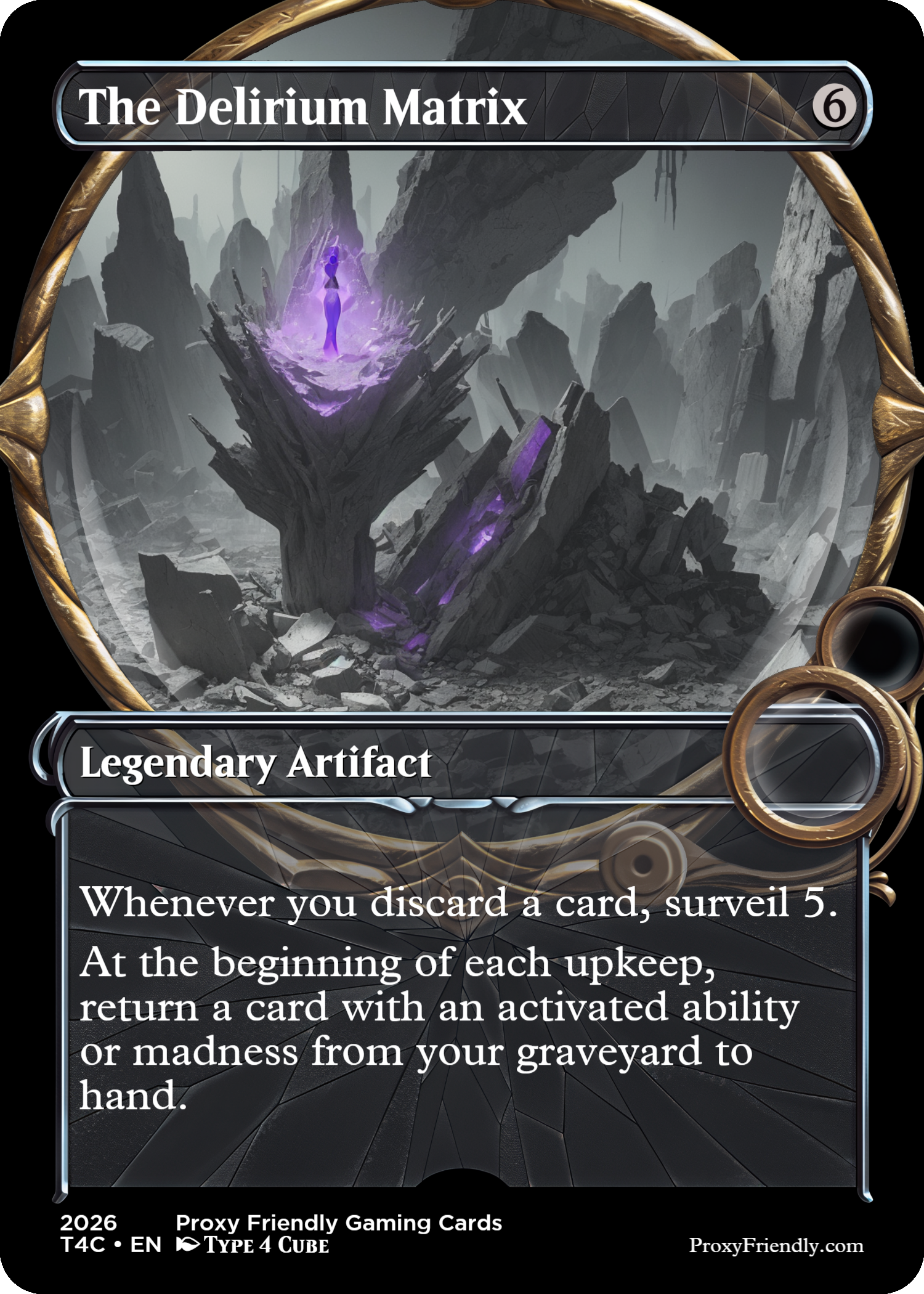
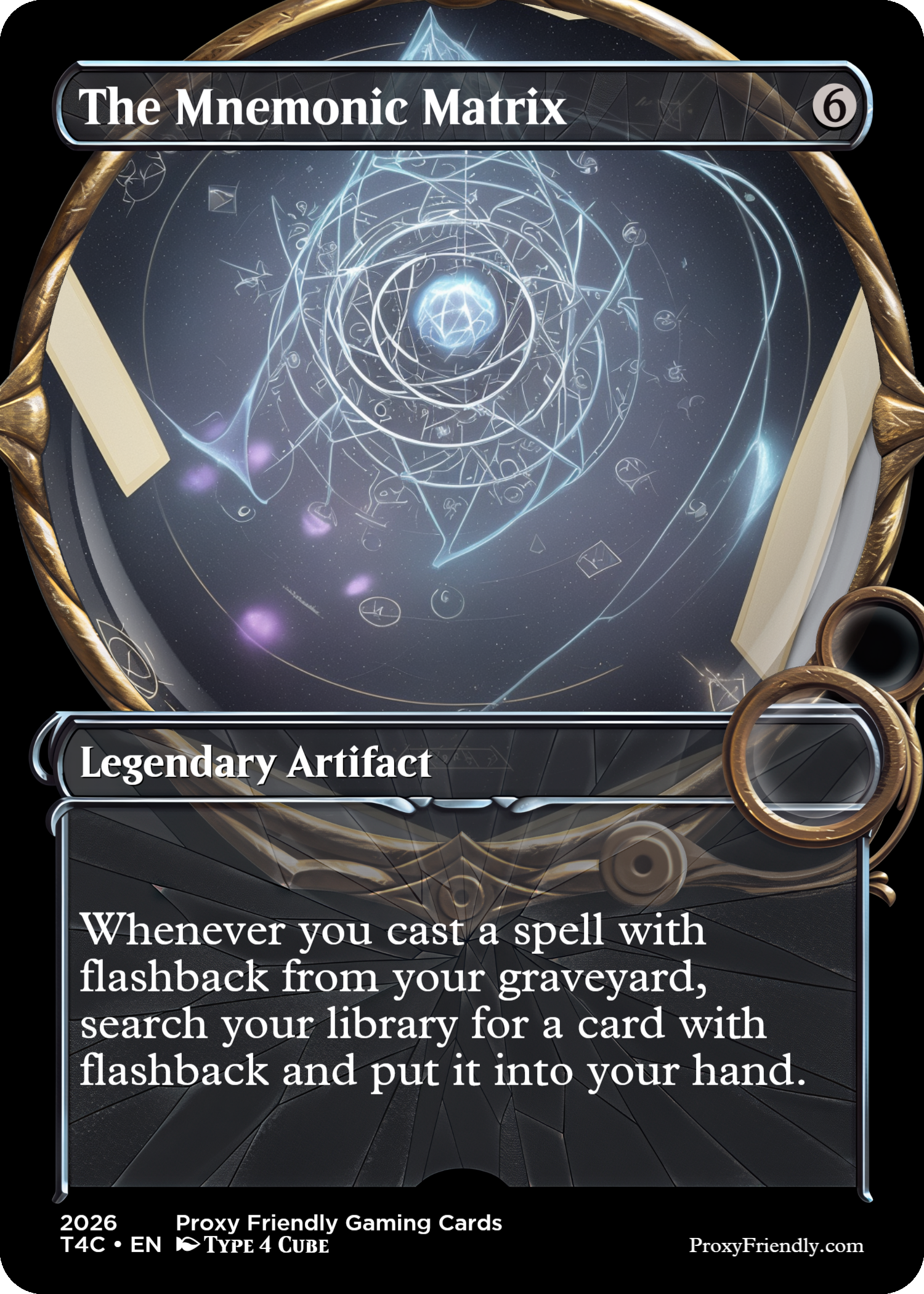
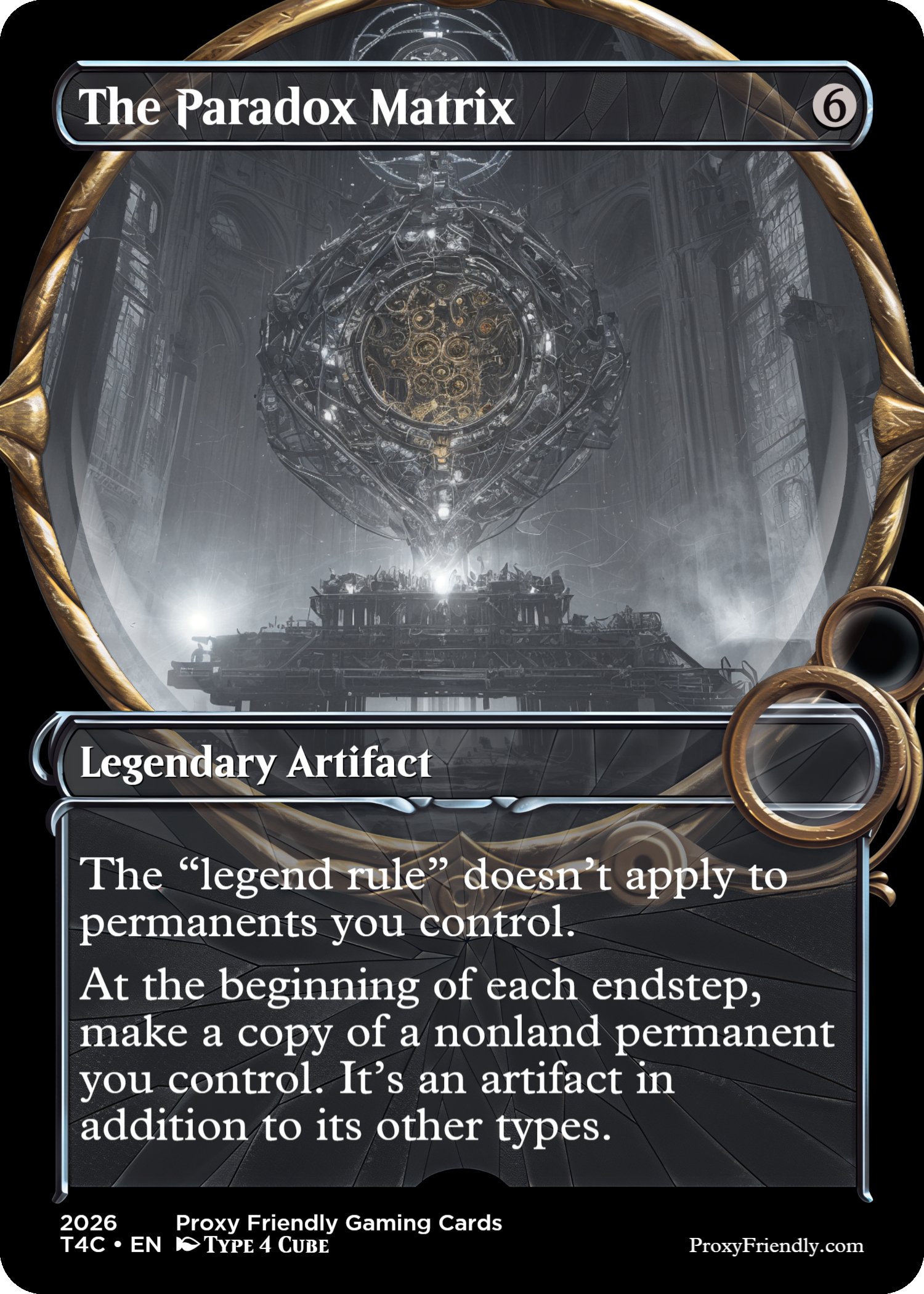
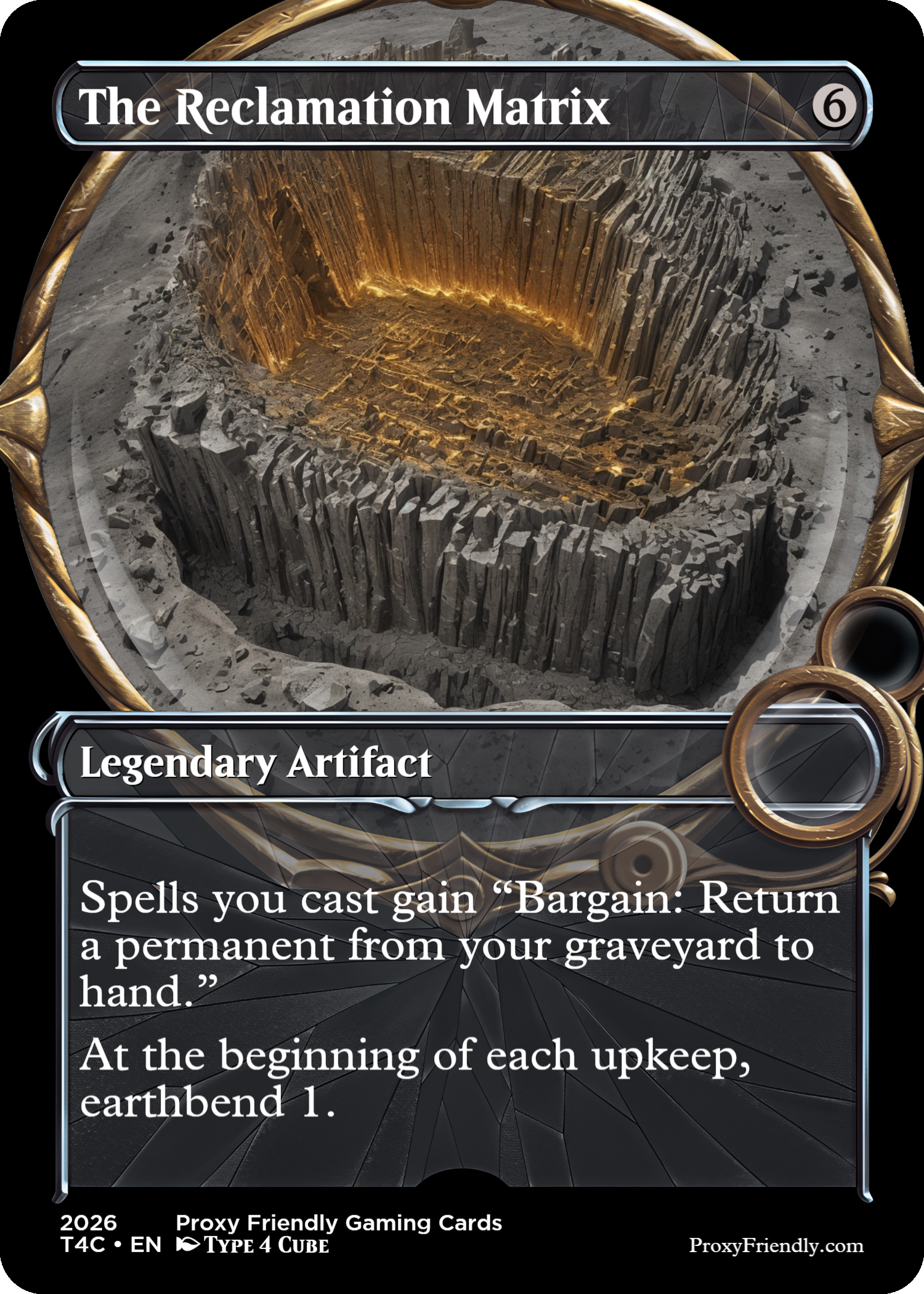
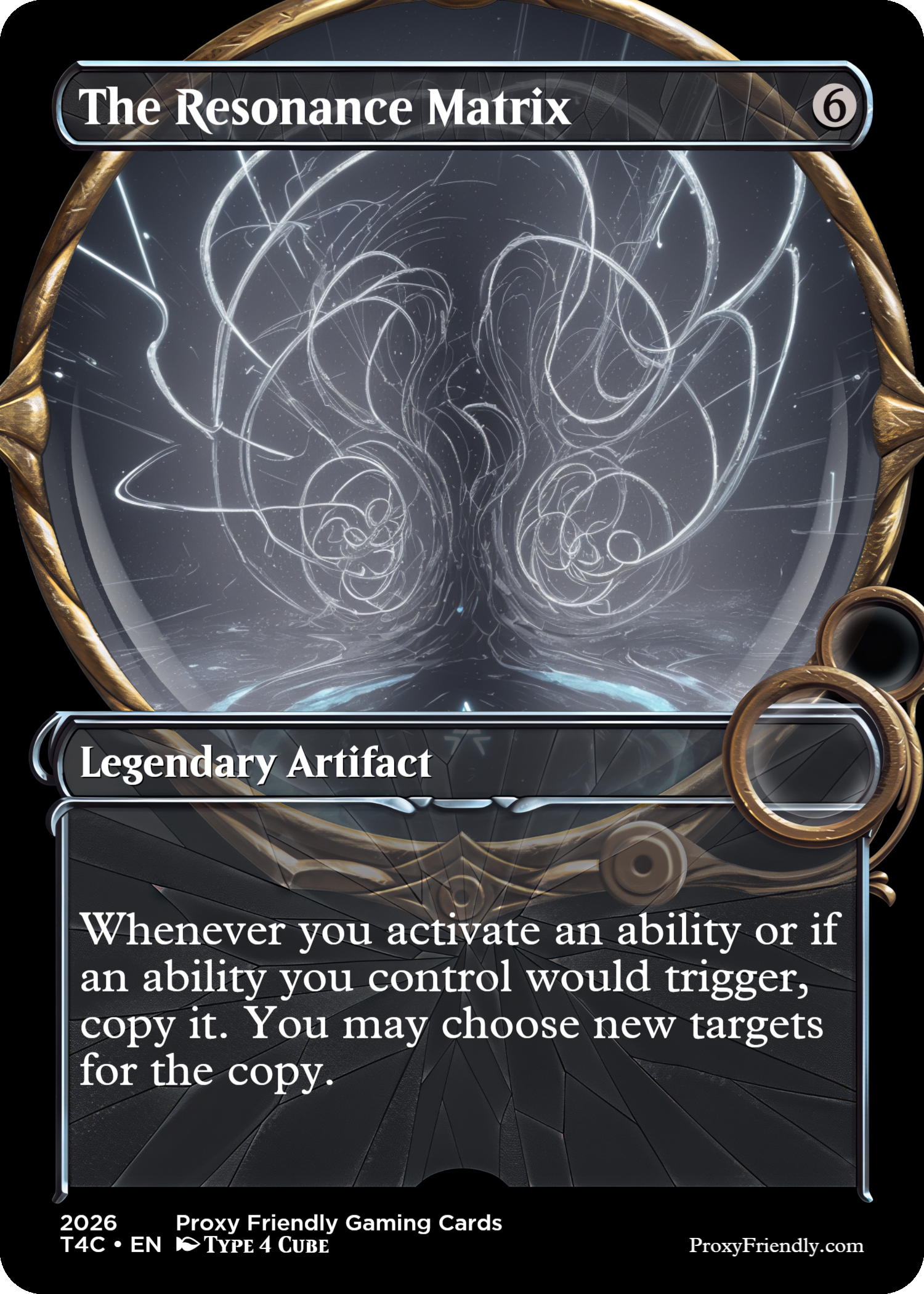
Matrix Artifacts: We considered splitting these up, but we wanted to prioritize a well-rounded draft experience for this primary custom set. These artifacts are all excellent build-arounds and help enable archetypes and synergies that otherwise would be too challenging to achieve. Think of these like format glue. We intend to experiment with specializing in our smaller expansion sets.
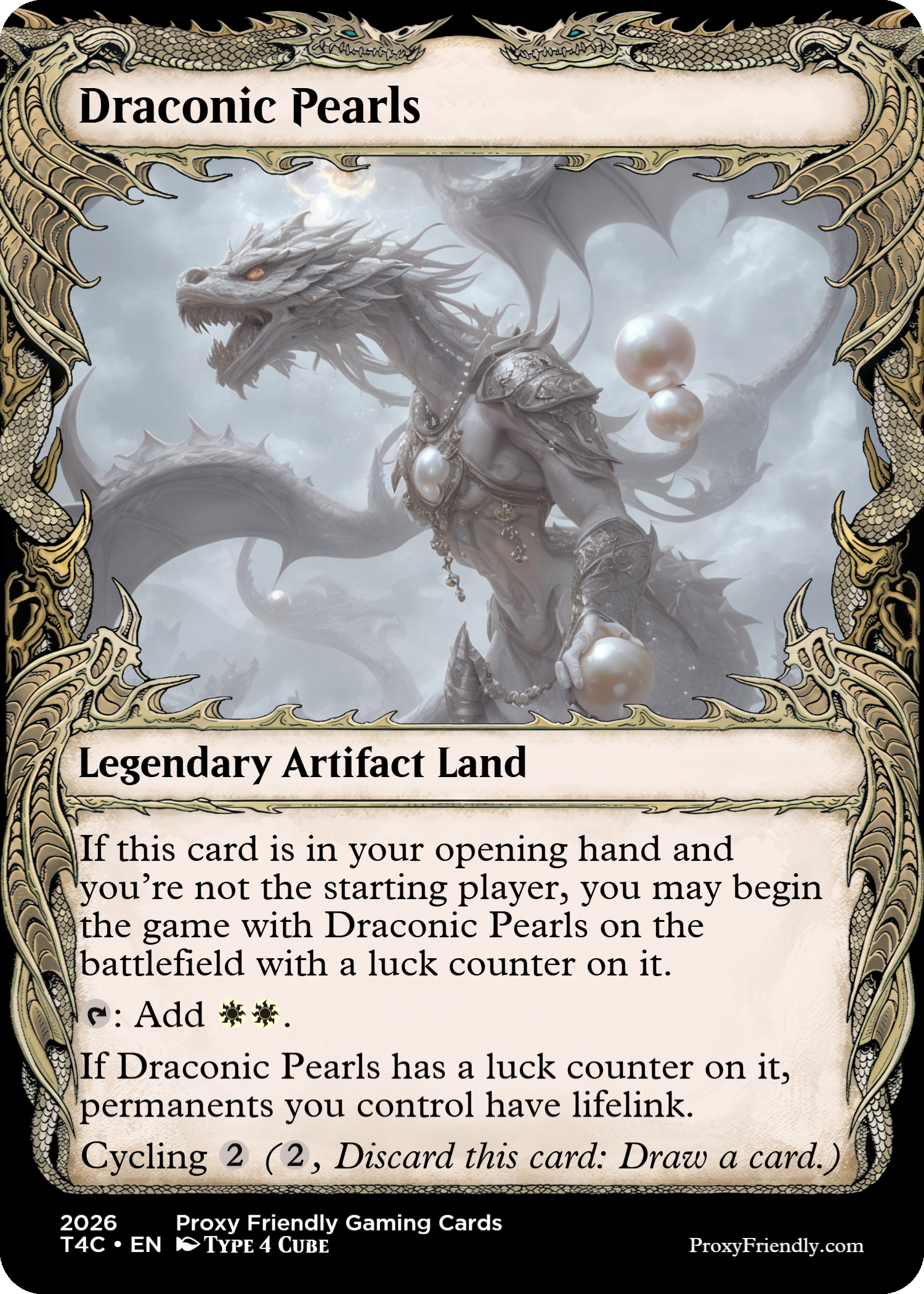
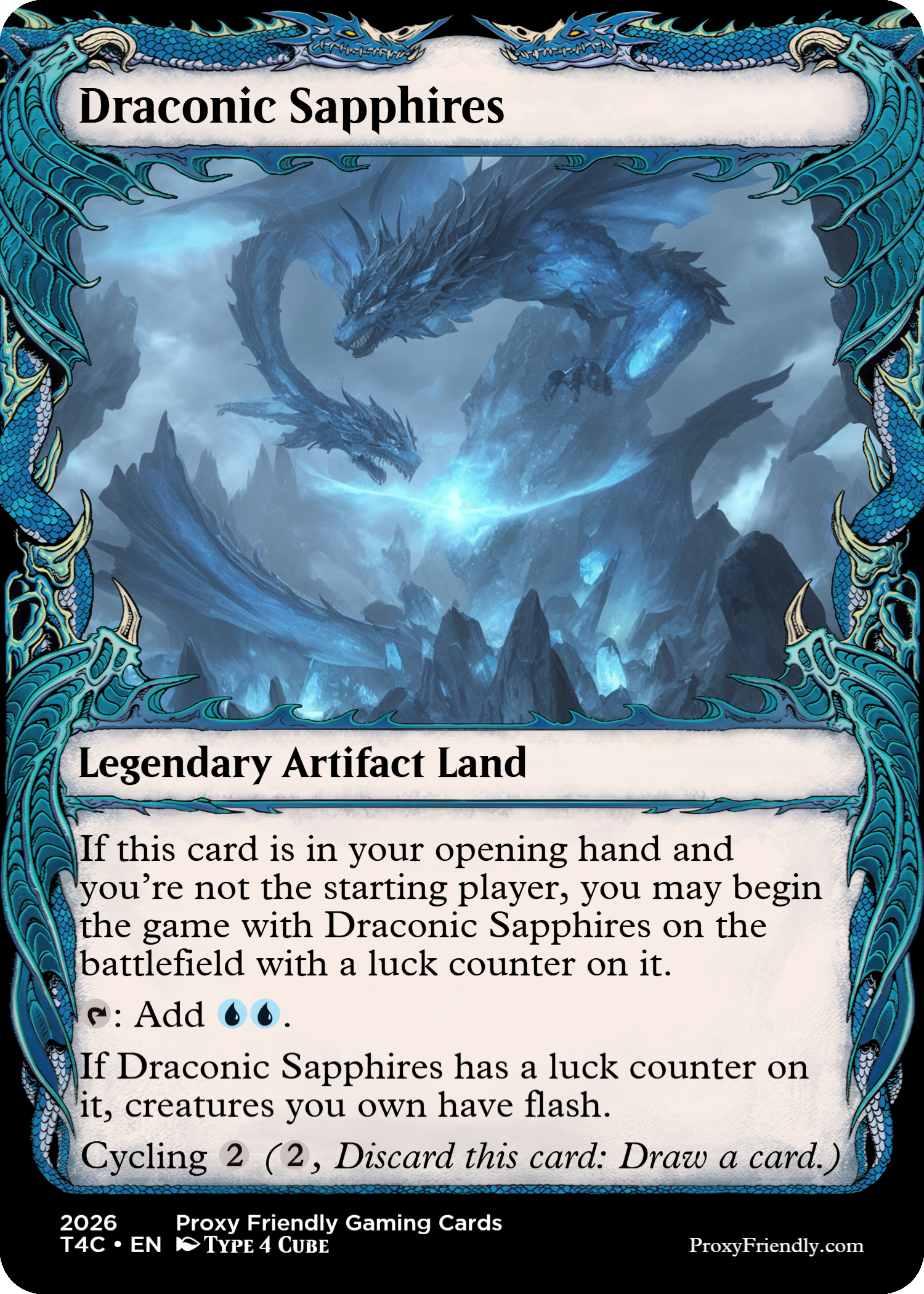
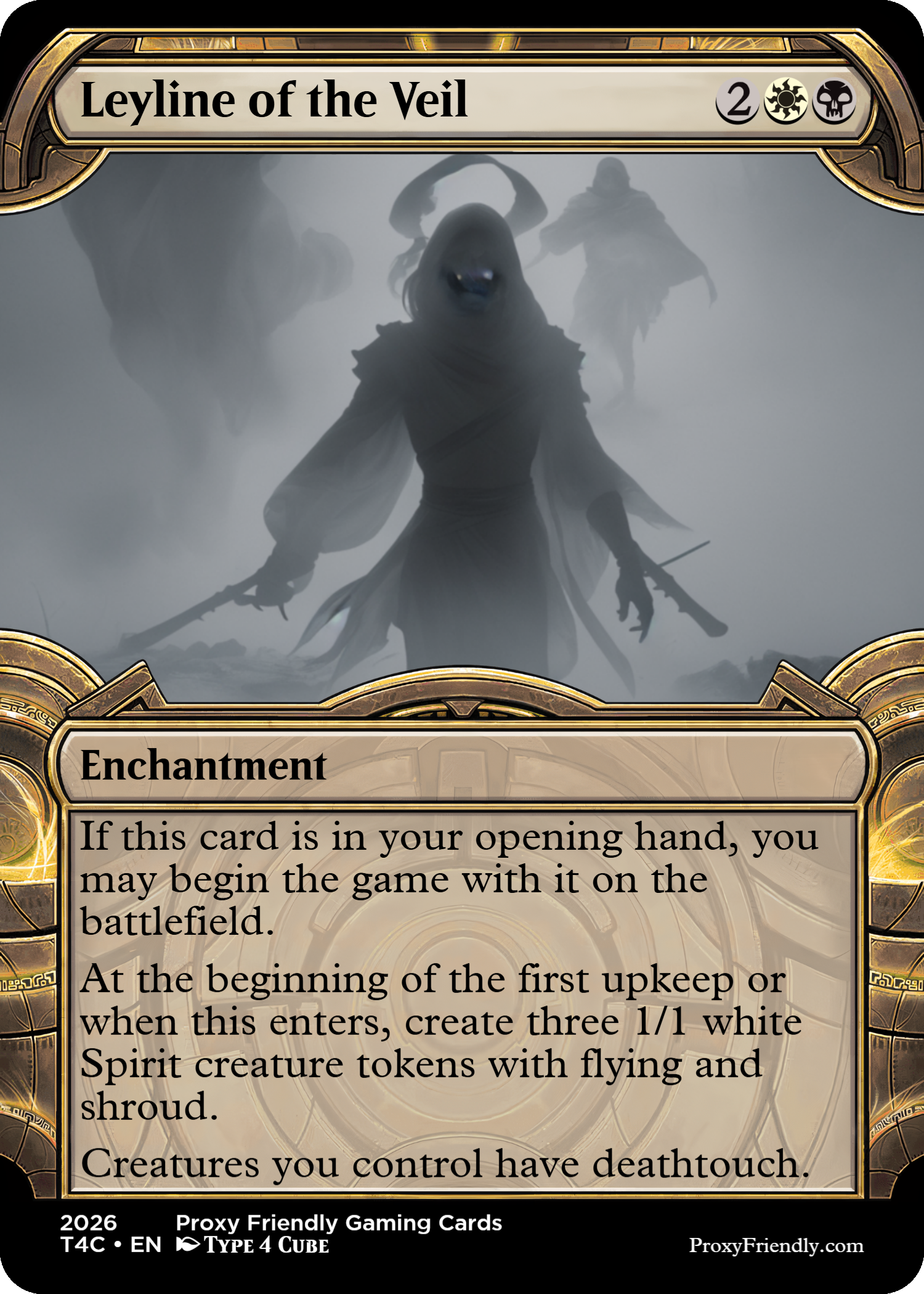
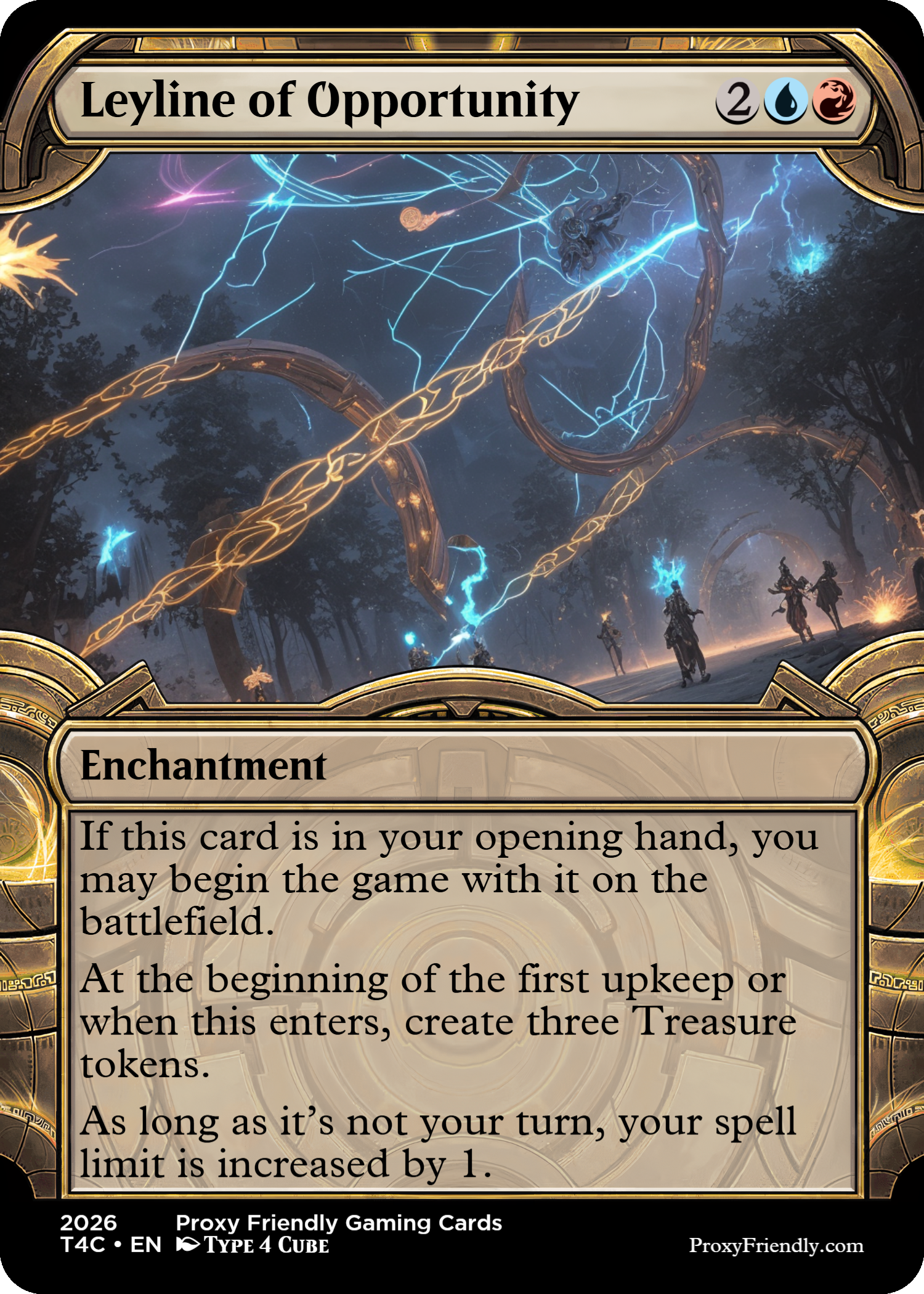
Pregame Effects: These we also considered releasing gradually, but we wanted more pregame effects after every draft, so we decided there likely couldn’t be enough. Between the Draconic Artifact Lands, Leylines, and Chancellors, games have immediately become considerably more explosive and exciting!
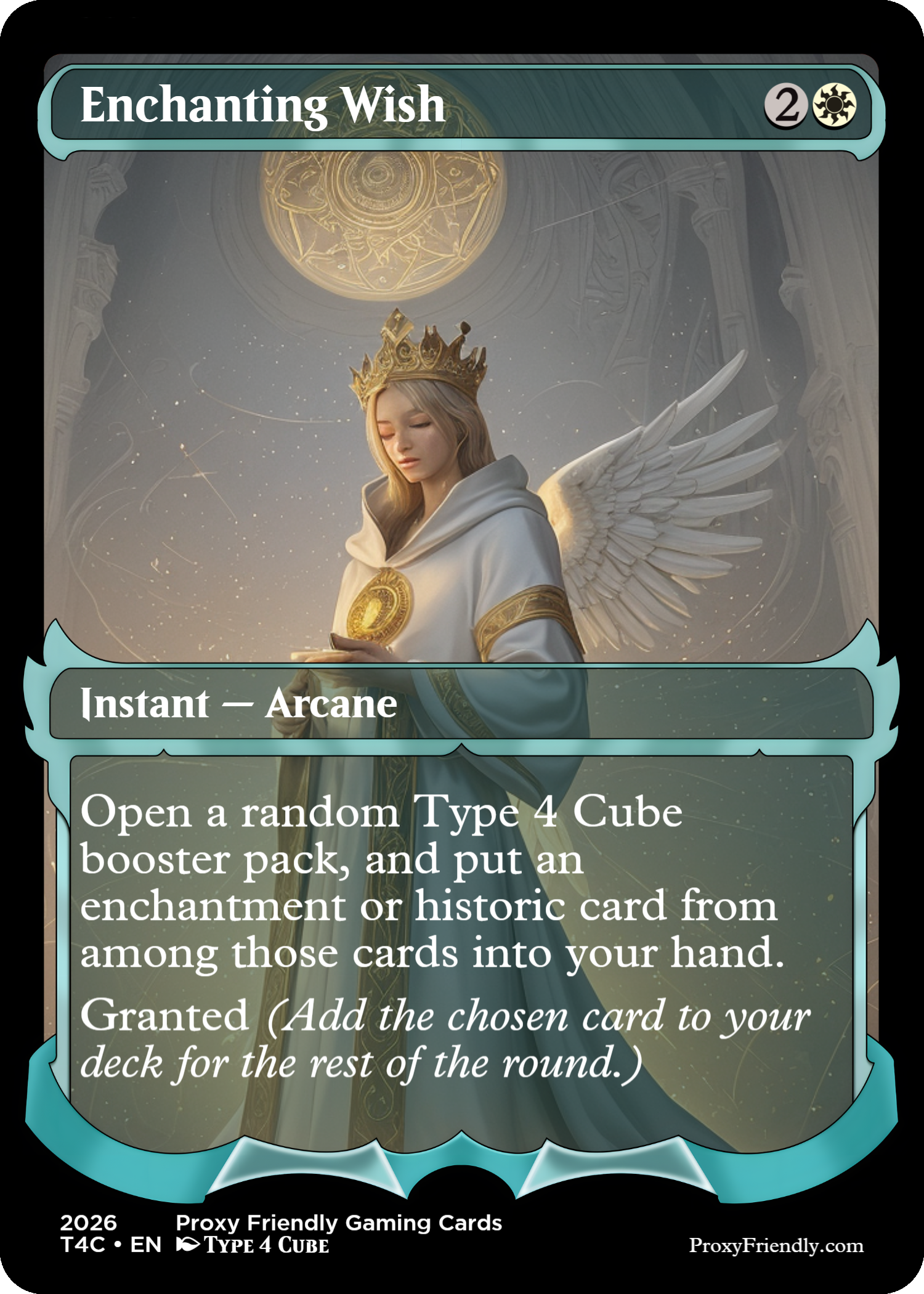
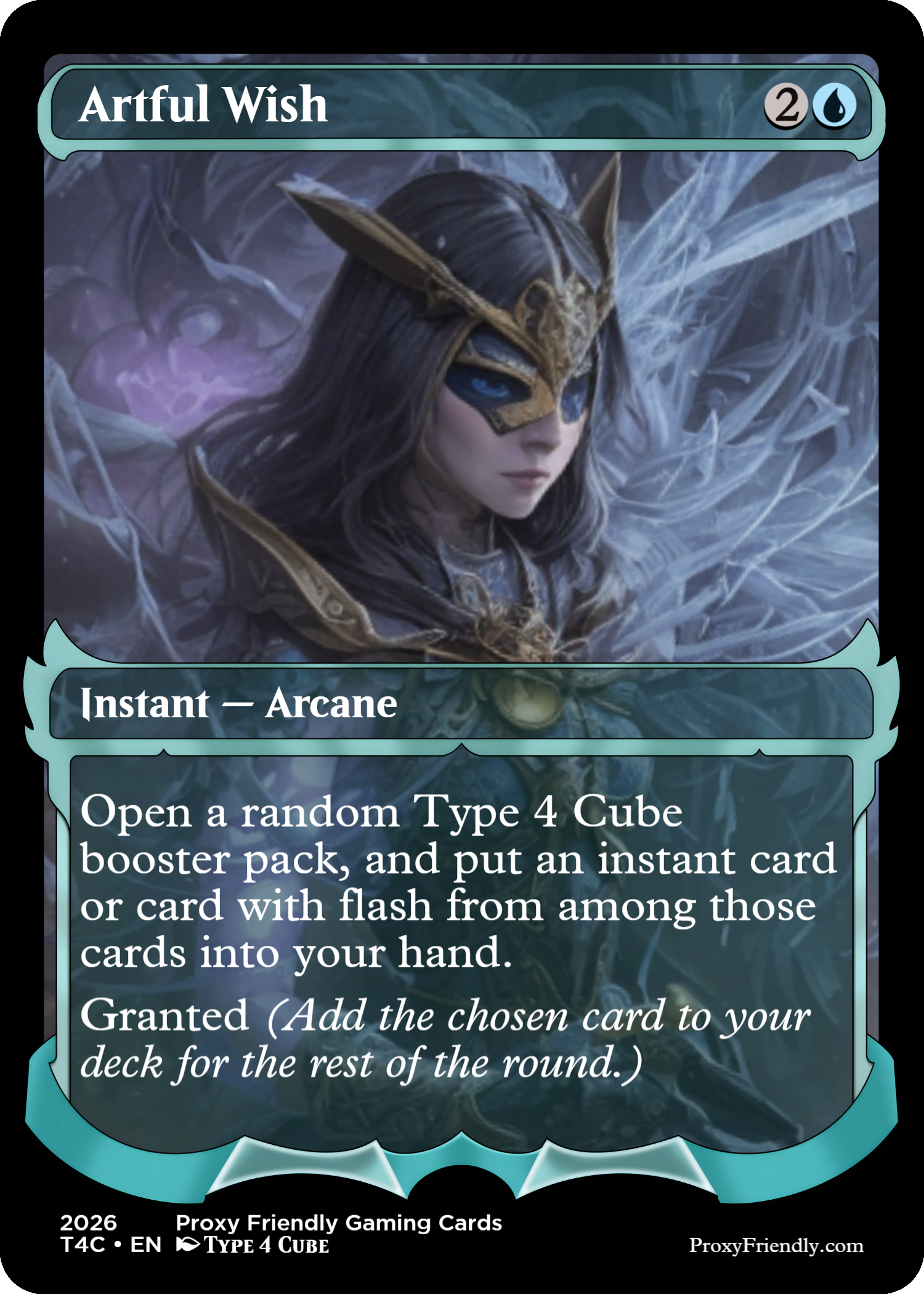
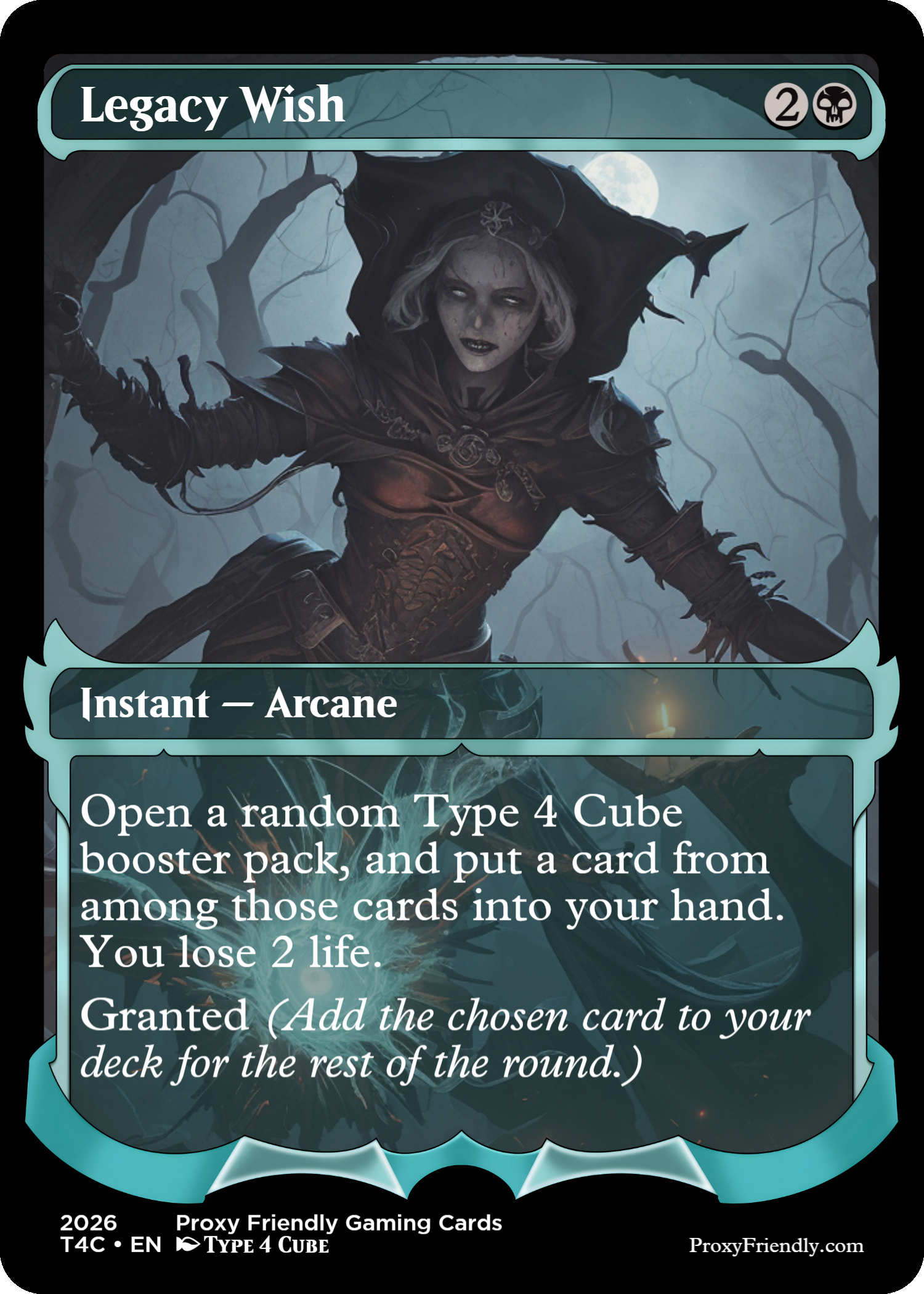
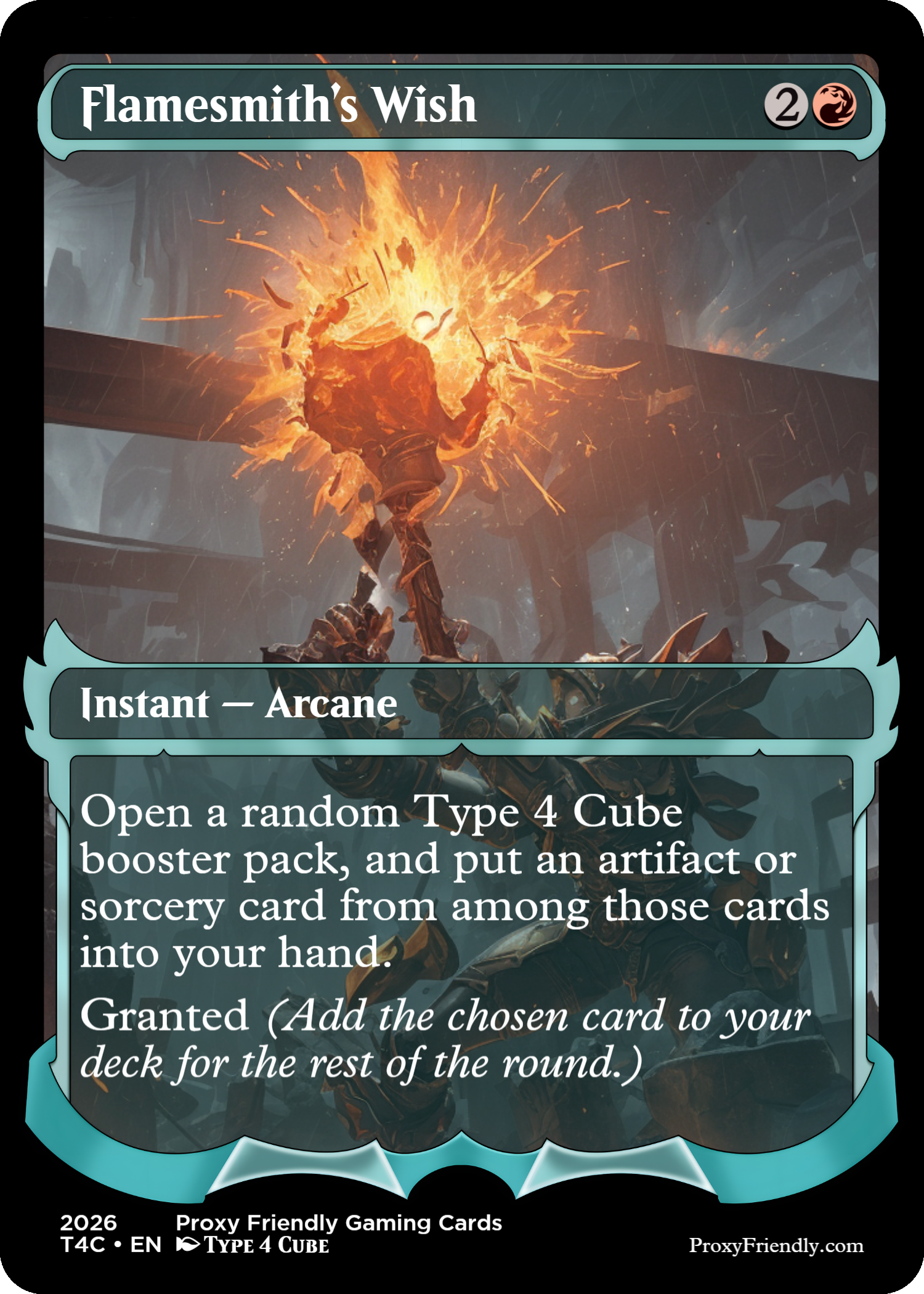
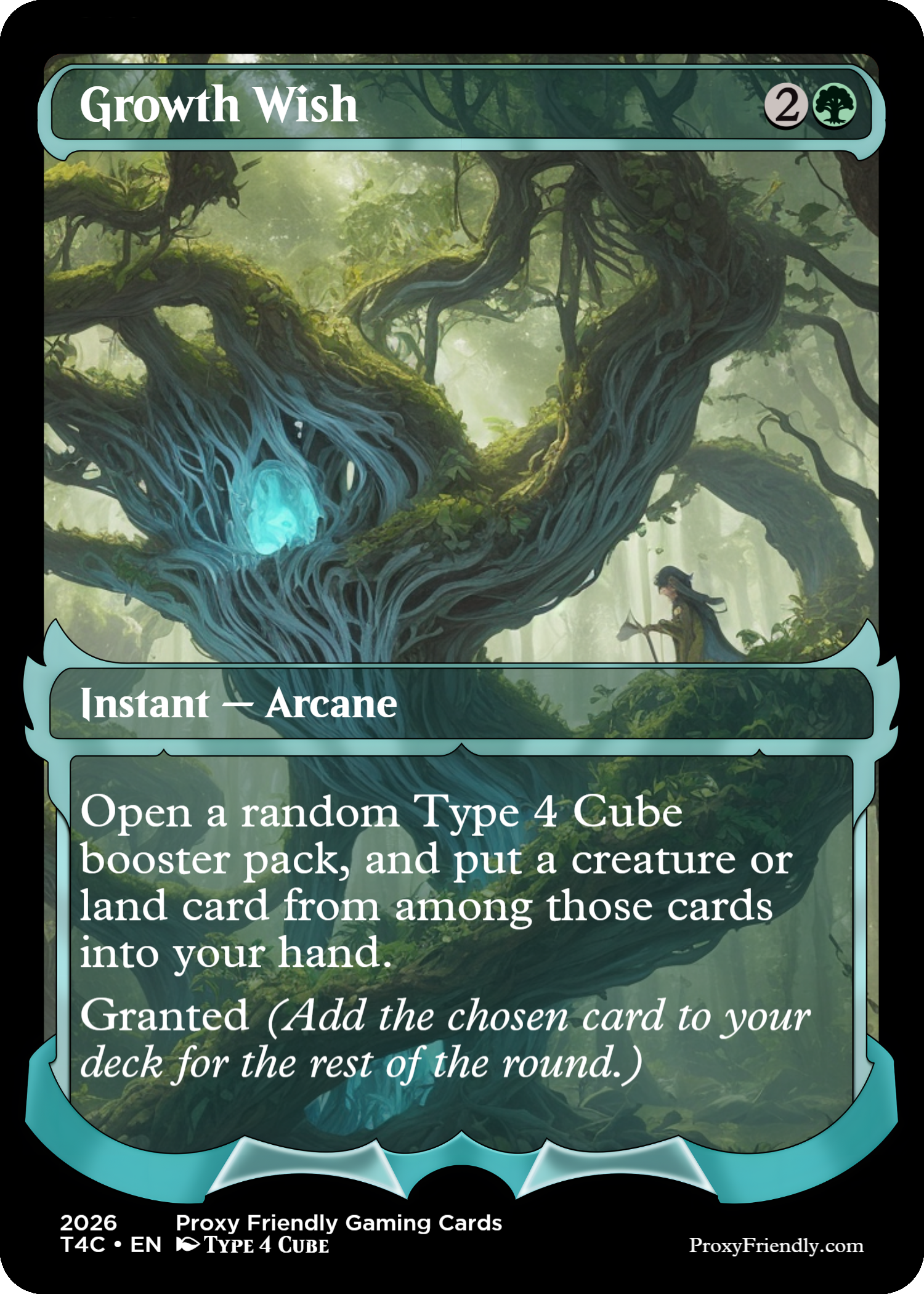
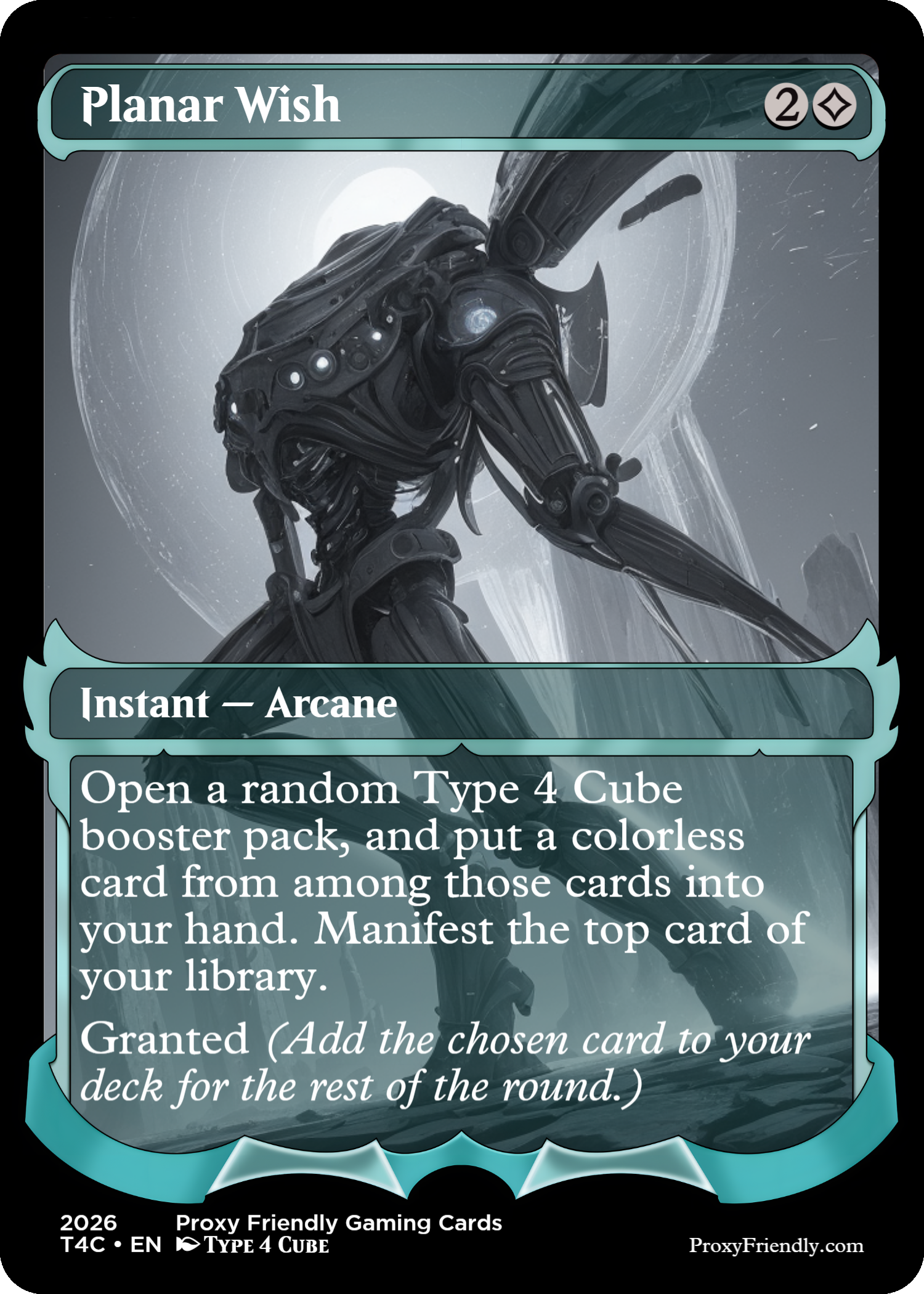
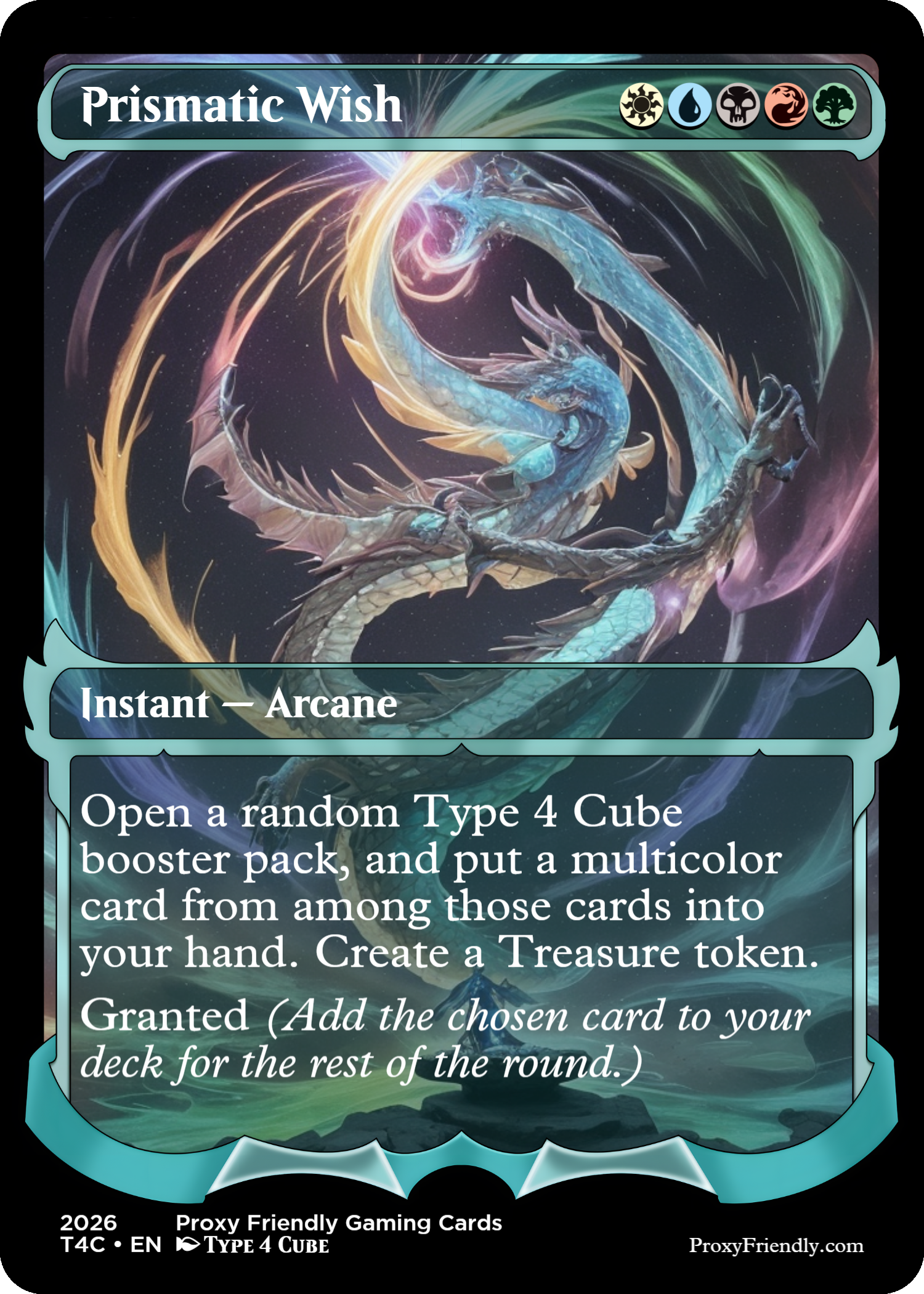
Granted: There are a handful of Booster Tutor-like cards in the Core Set (Cunning Wish, etc.), but after each game, those cards need to be removed from our decks, and sometimes we forget and end up cheating involuntarily when playing new games with the same decks. Plus, with the new tournament format for our Cube Qualifiers, we had the idea of designing Wish-like cards that actually allowed players to keep the cards they add to their decks for the rest of a tournament round. Example: If Player 1 casts Enchanting Wish and adds a Historic card to their hand but loses that game, Player 1 is “Granted” the choice to leave it in their deck or move it to their sideboard to play with in future games during that round. Easily one of our favorite custom mechanics in the set!
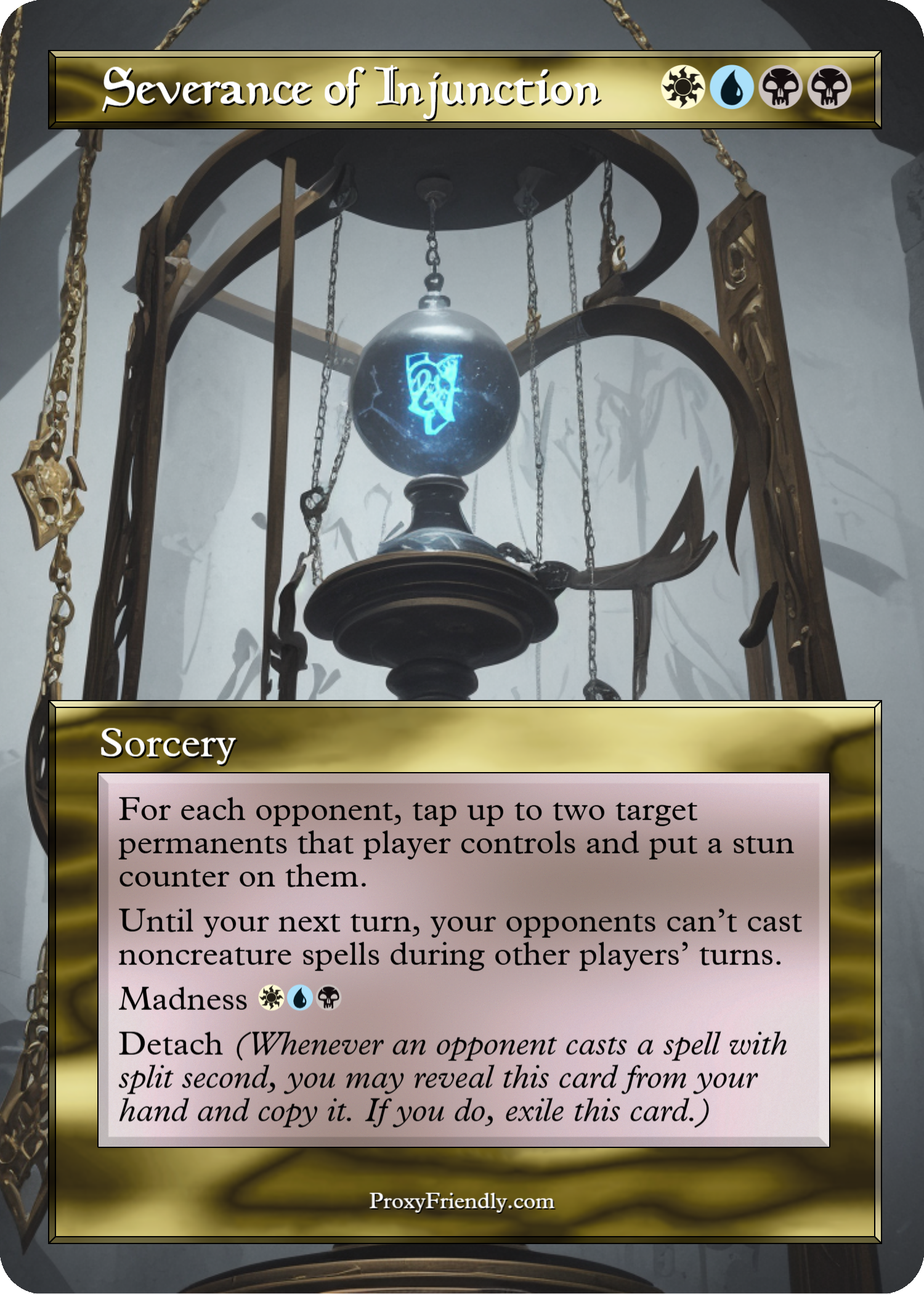
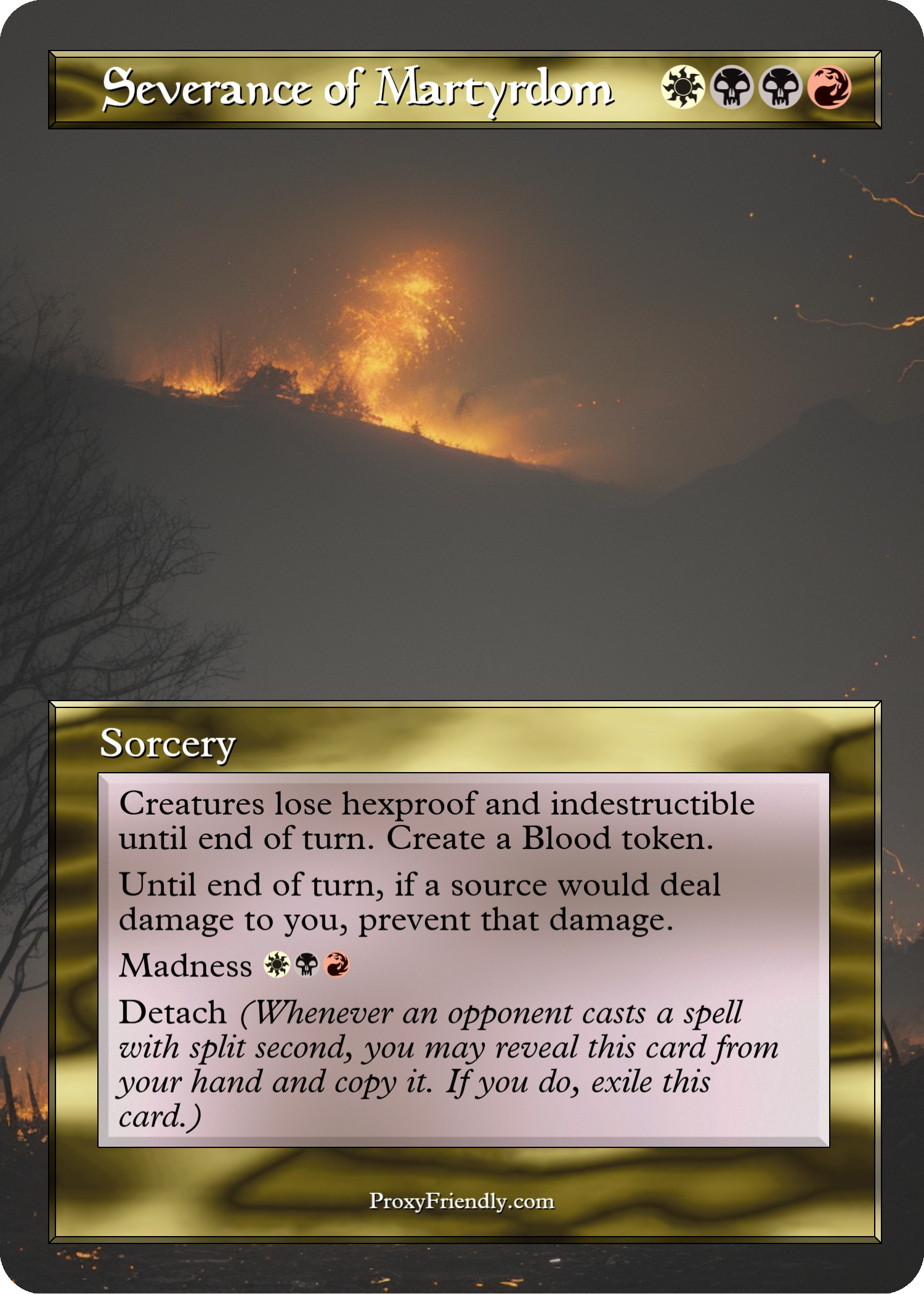
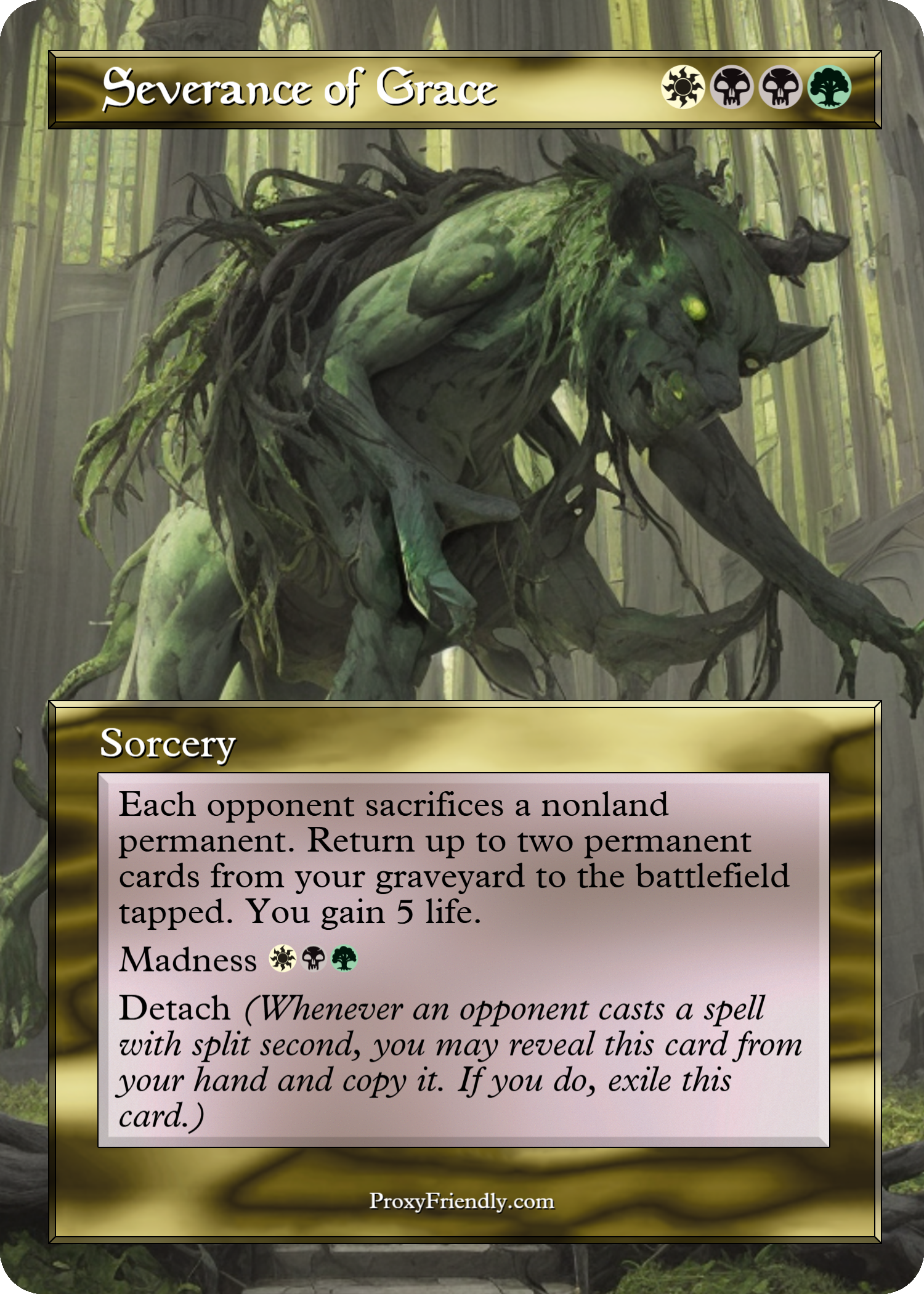
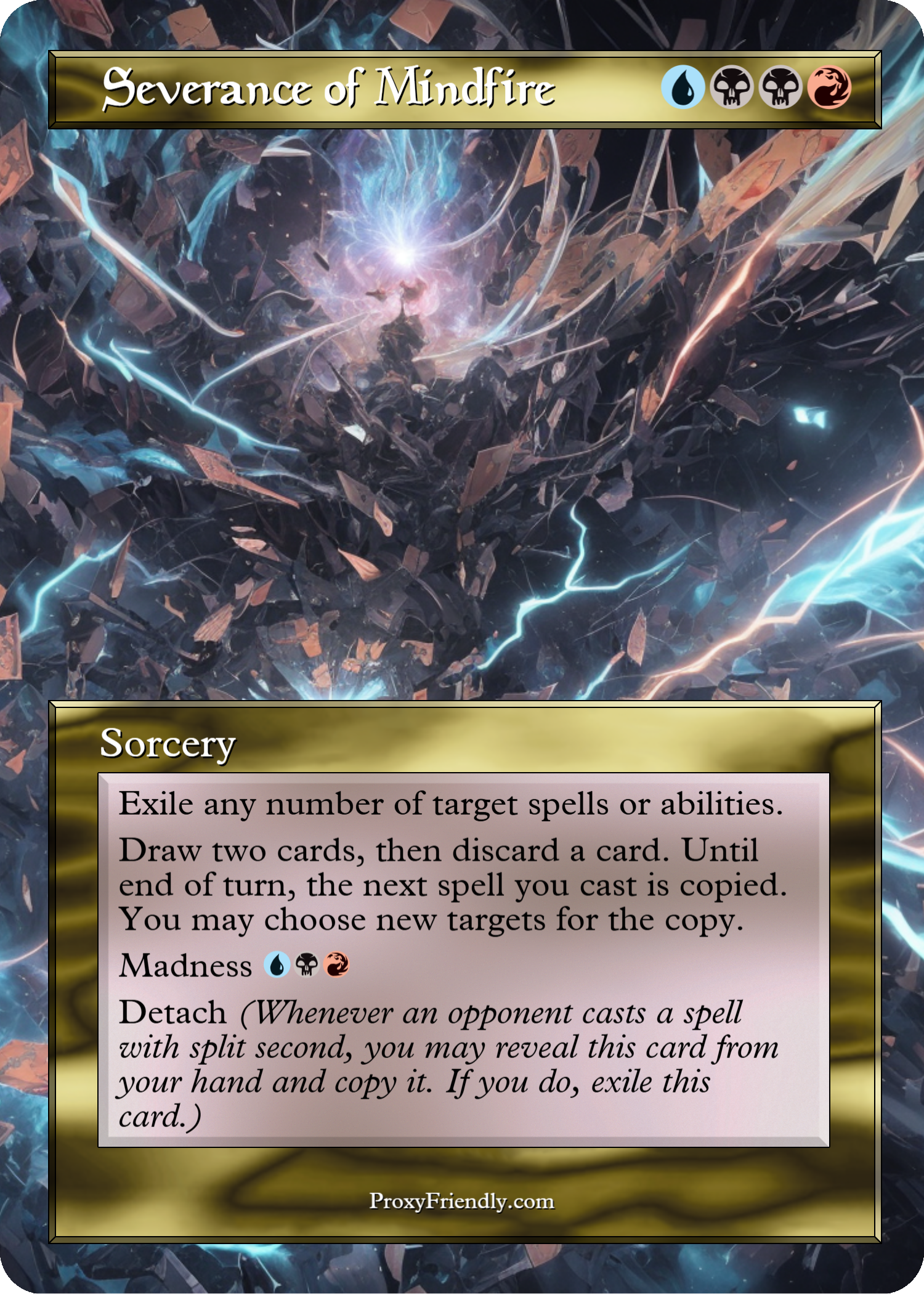
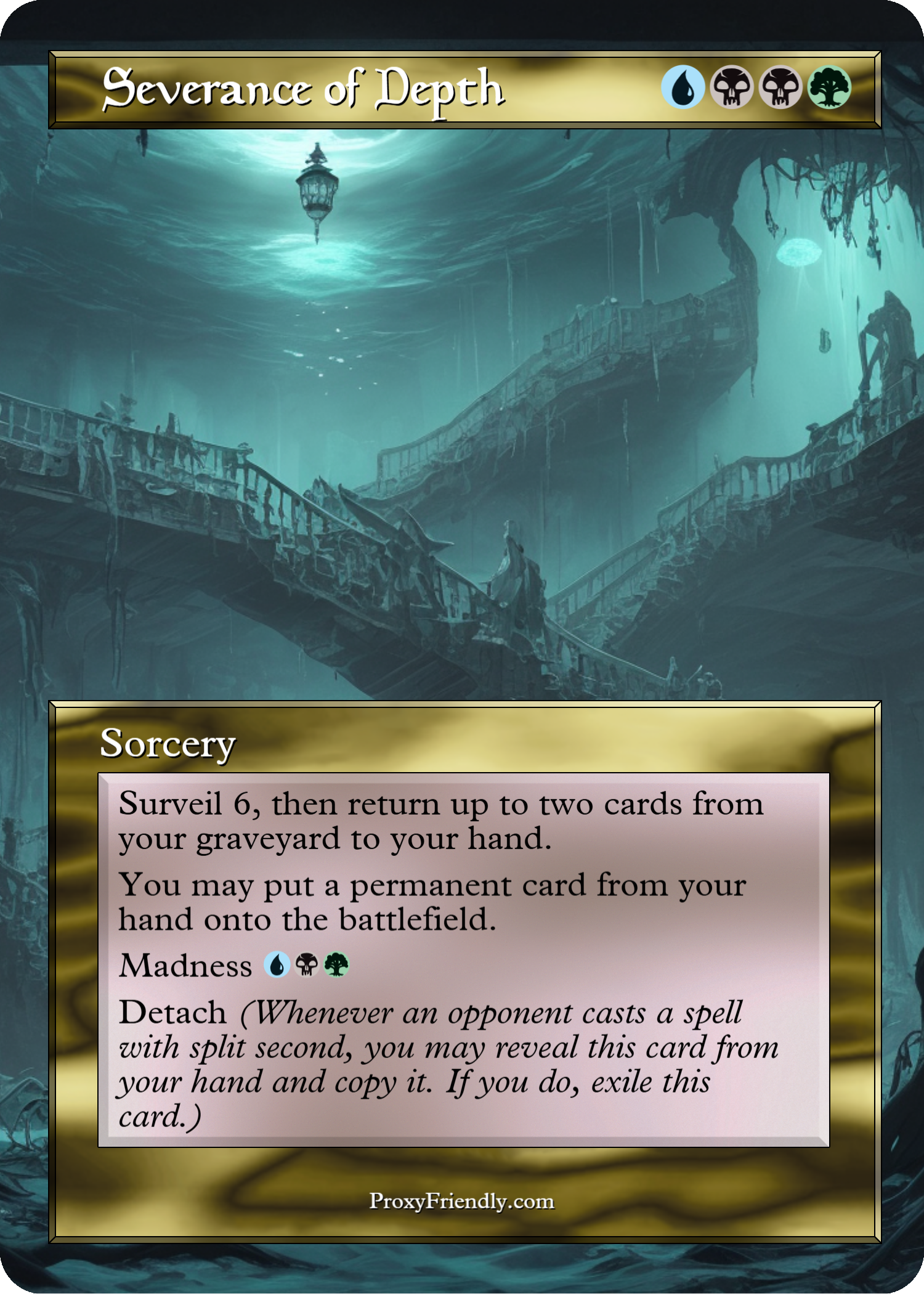
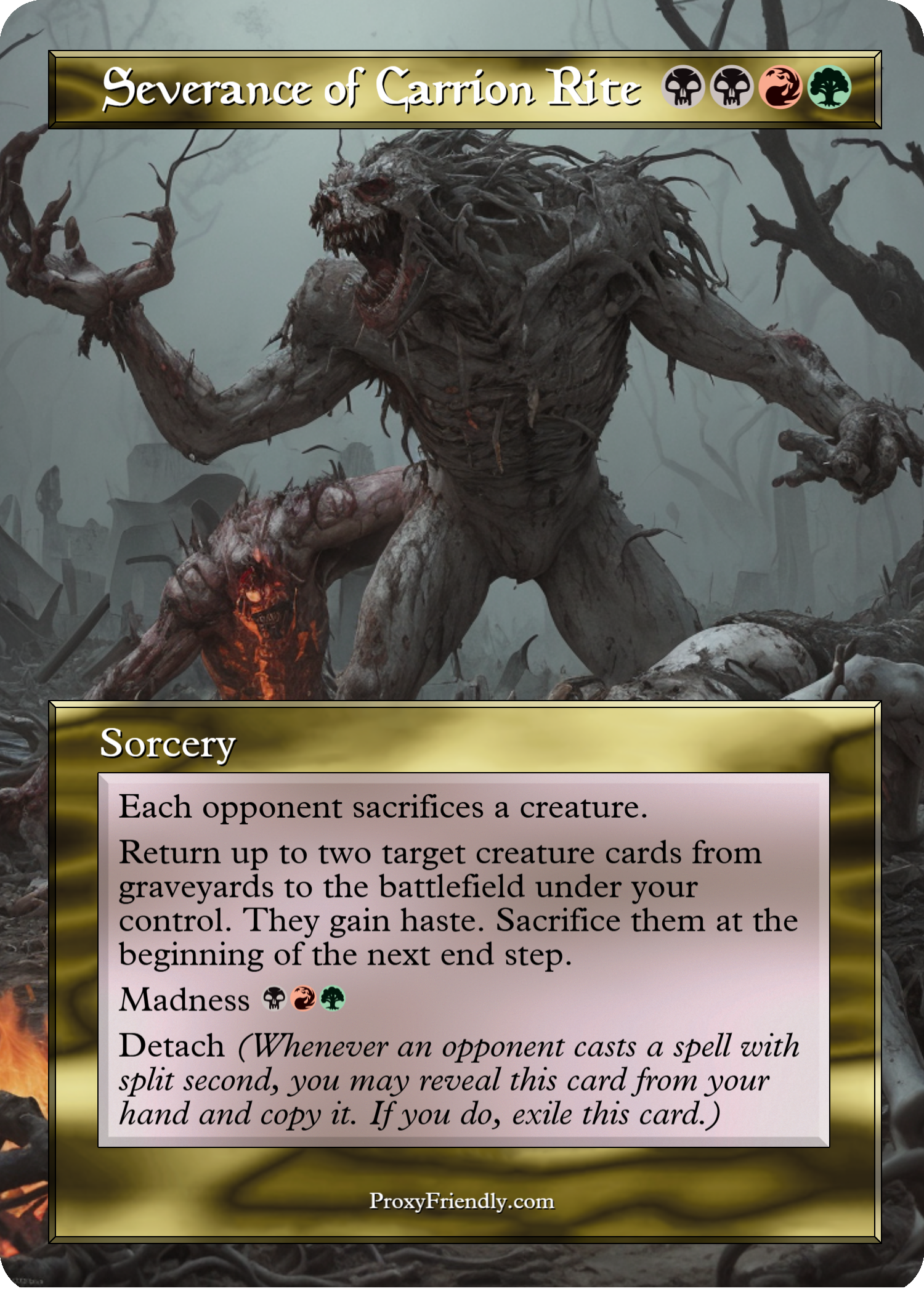
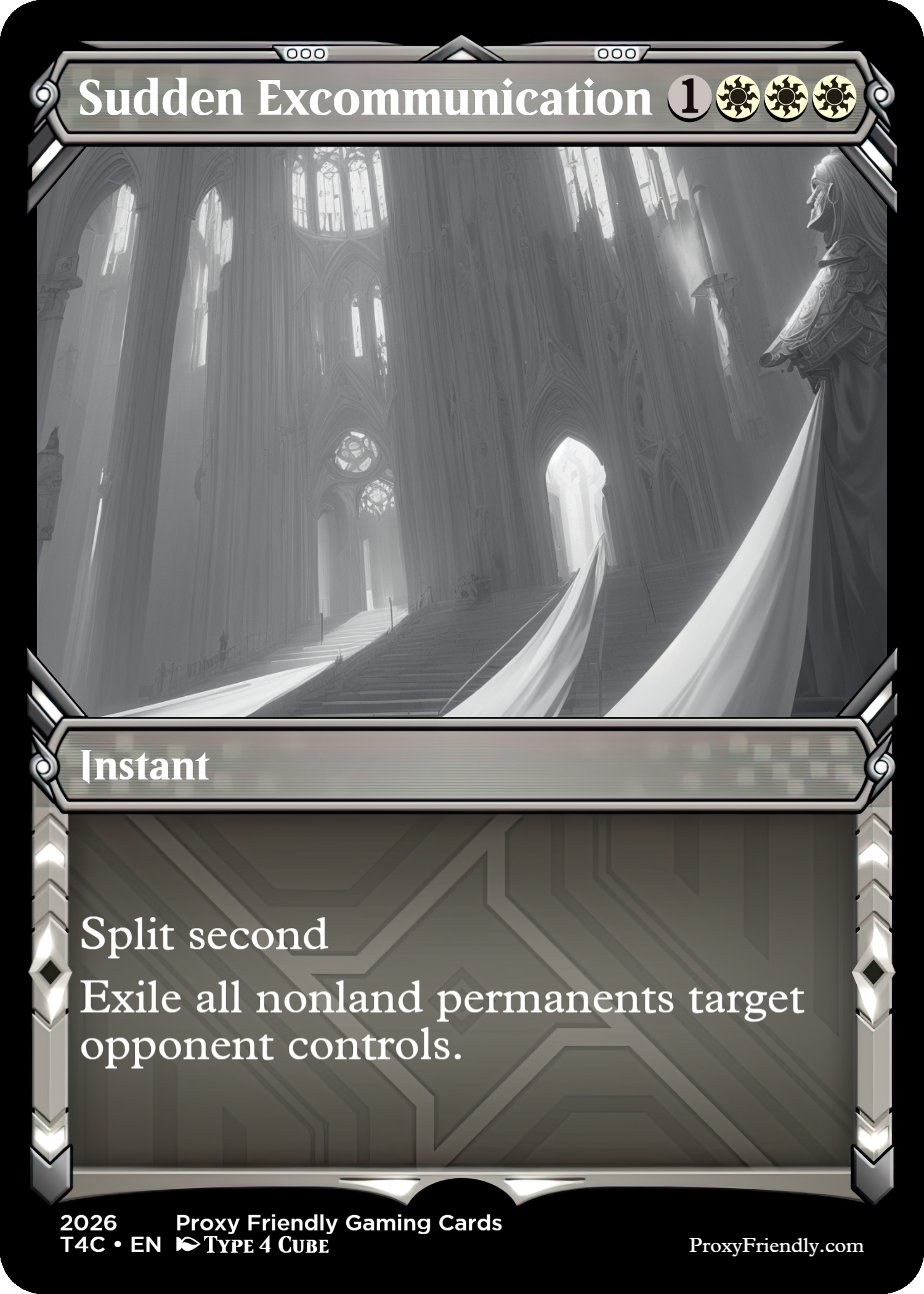
Detach: We wanted to make sure the split second mechanic was well supported but also responsibly managed. With our desire to make Type 4 Cube an enjoyable and exciting tournament format, Detach is the mechanic we landed on for this purpose and will be included in future set expansions.
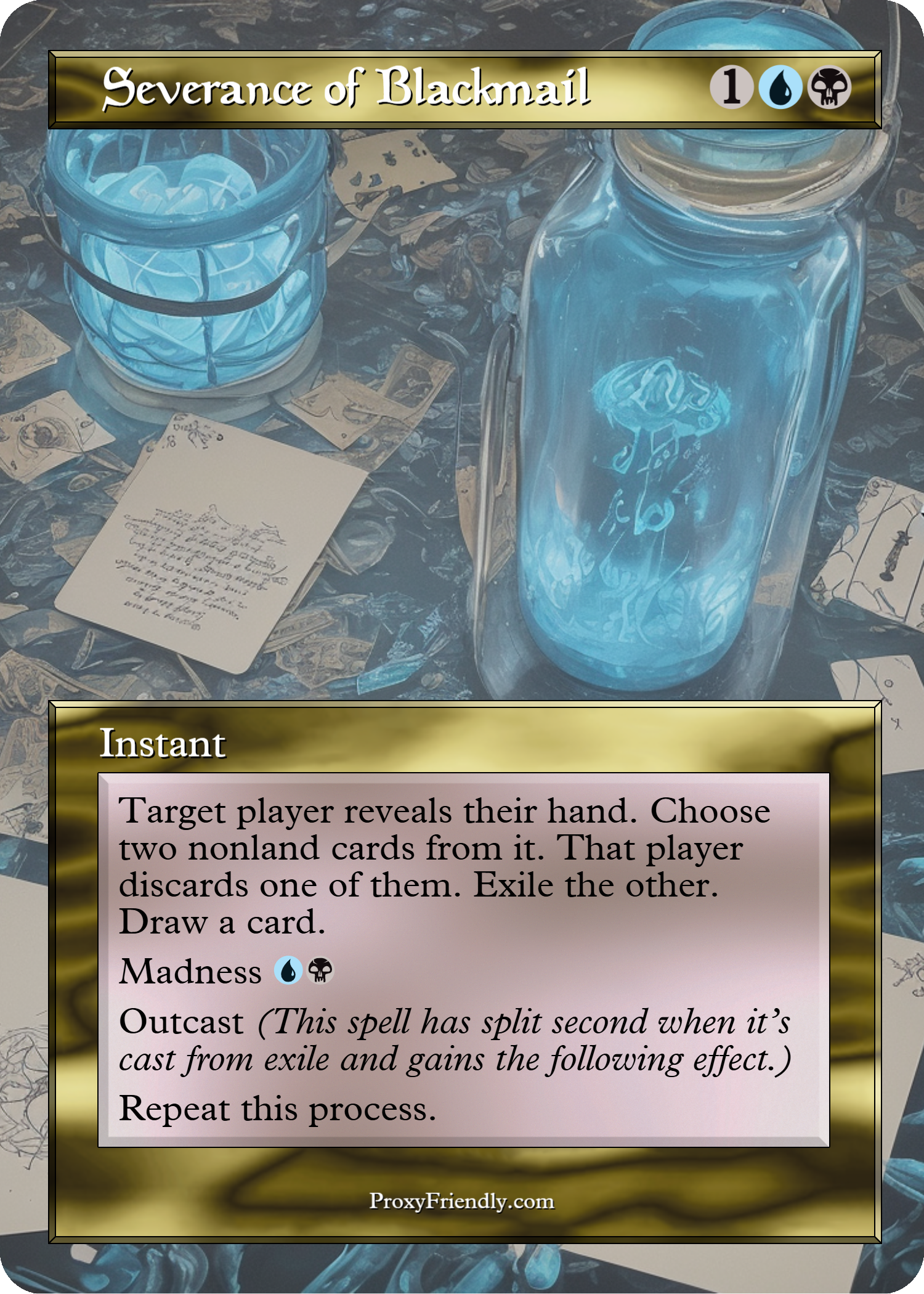
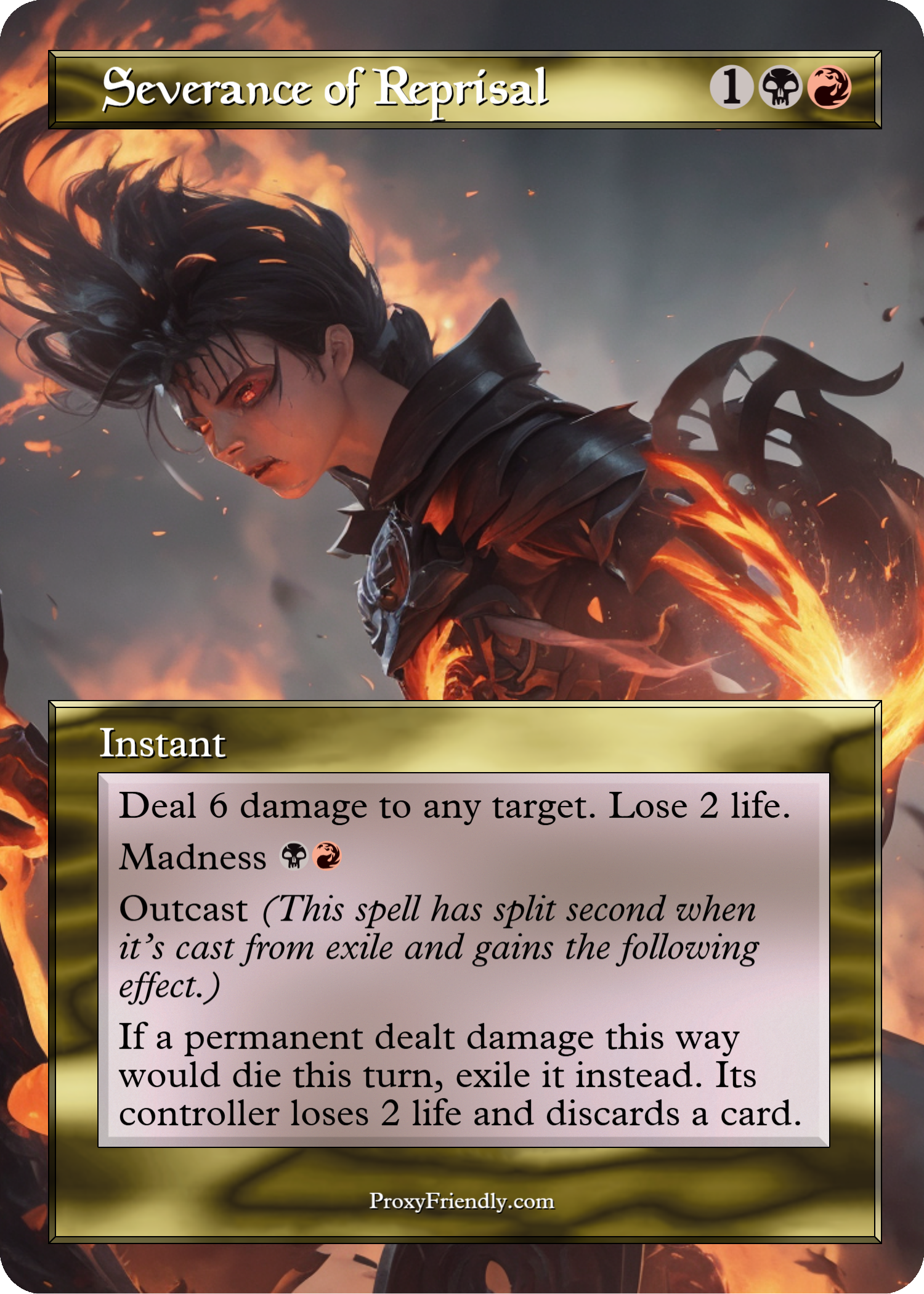
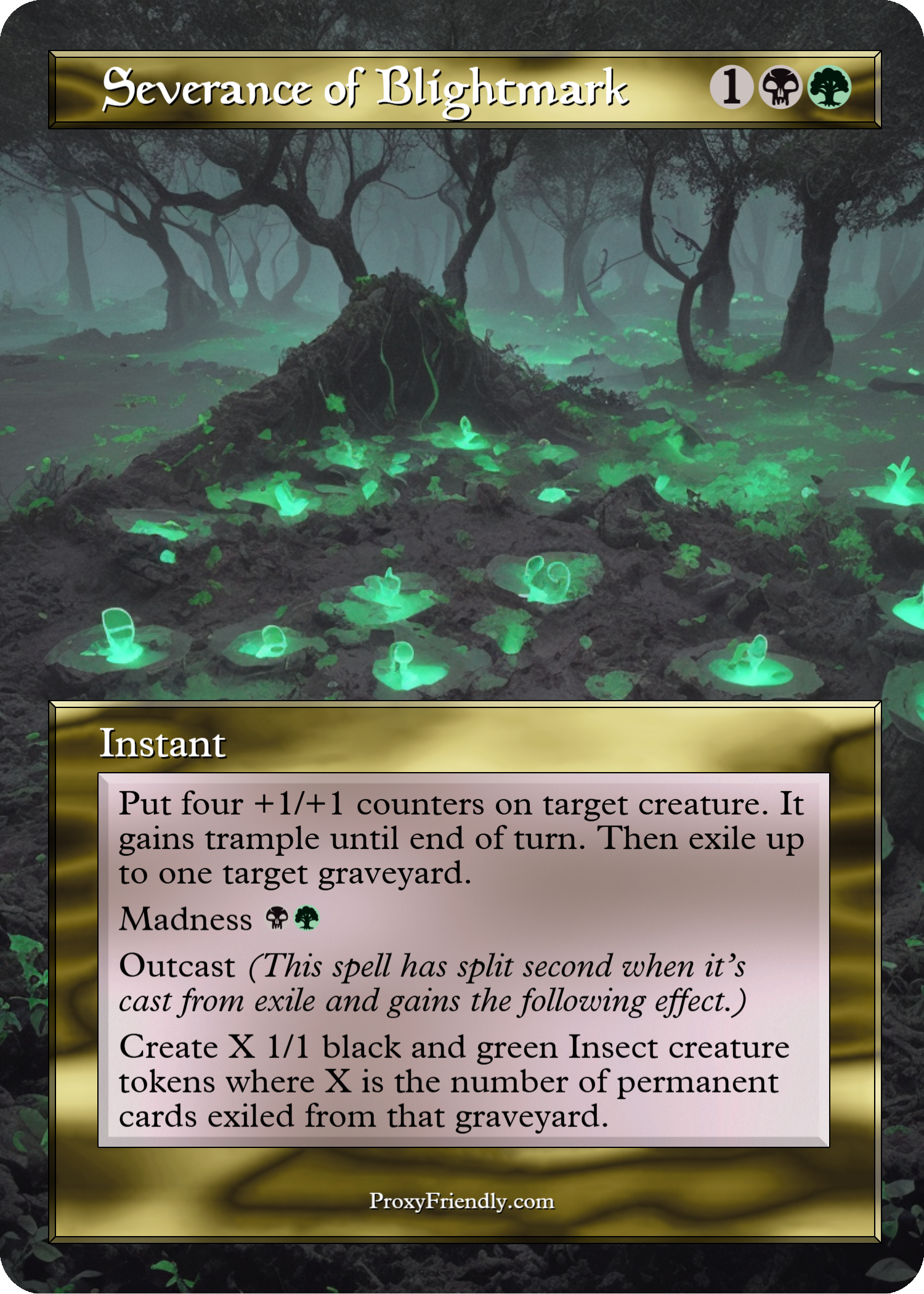
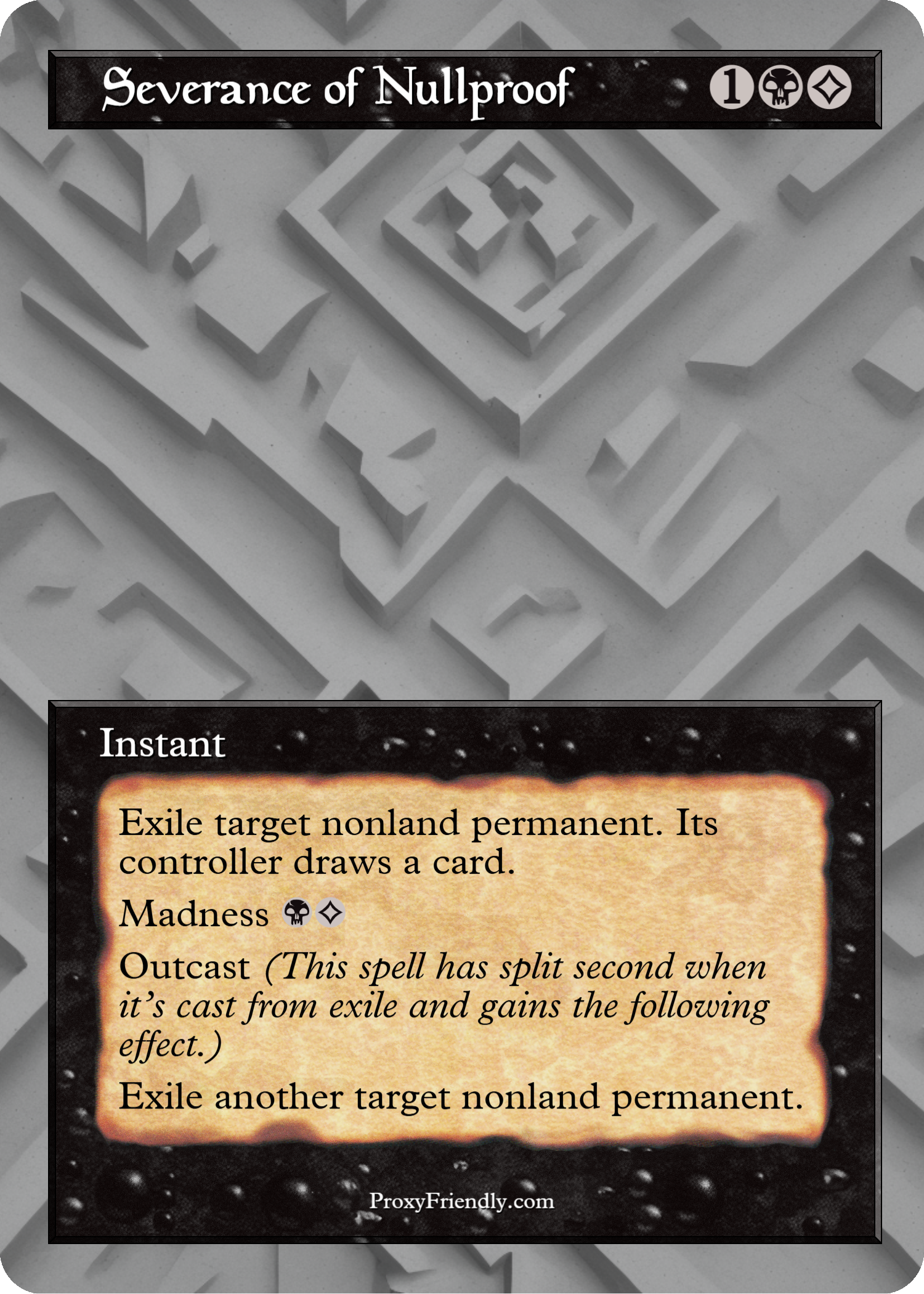
Outcast: We also wanted to create powerful madness cards, as there aren’t that many official cards with madness that are suitable for the Type 4 format. Outcast not only synergizes well with madness, but it will also be utilized in future set expansions that leverage casting spells from exile. The flavor of being an outcast and reconciling with additional abilities added to the spell when cast from exile hits hard!
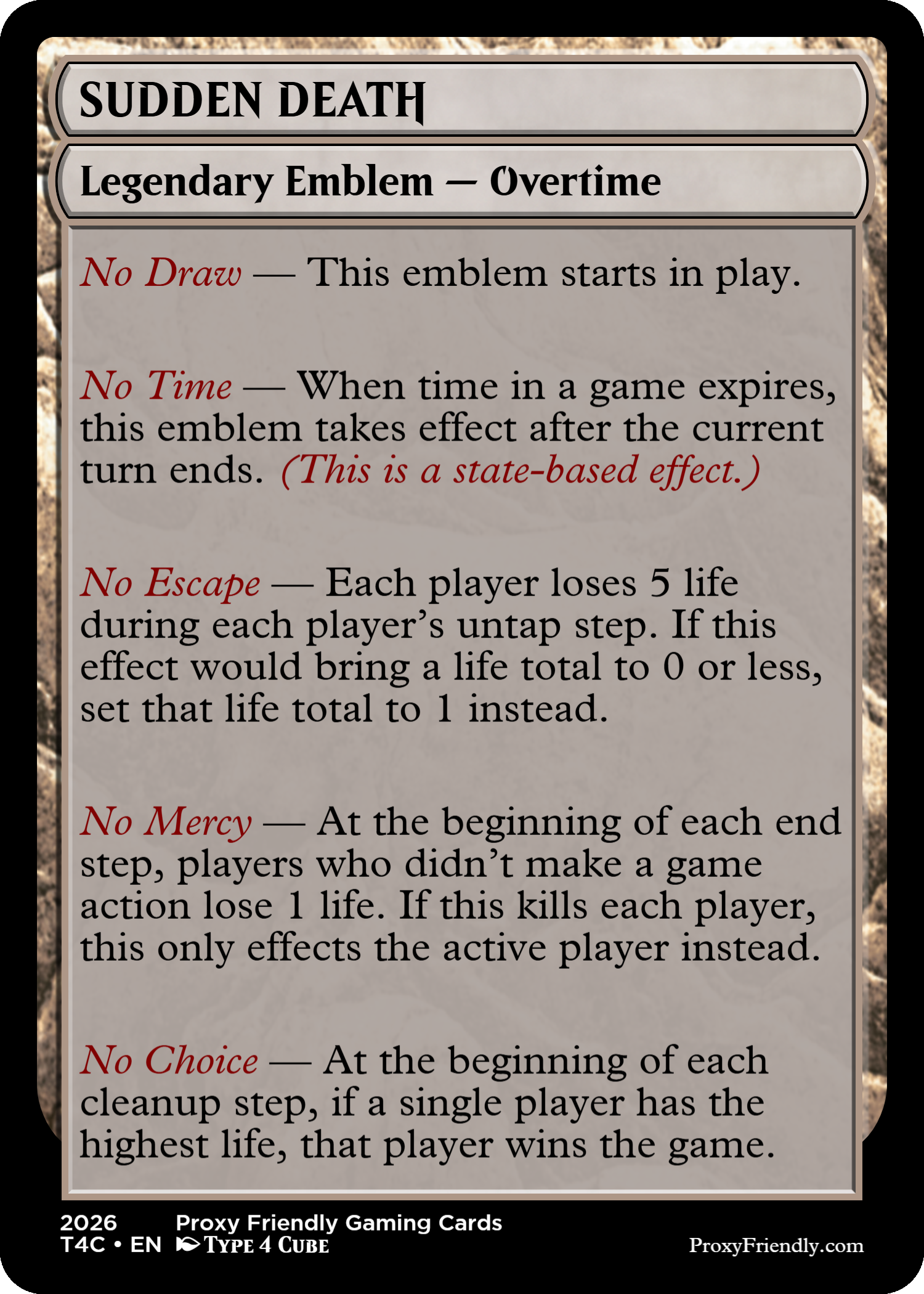
Over Time: While testing this cube to make it a fun but reliable tournament format that almost guarantees games end within 35 minutes, our cube team created the Sudden Death emblem to guarantee games end with clear winners and tournaments end before bedtime. You can read this token below in the token section of this page.
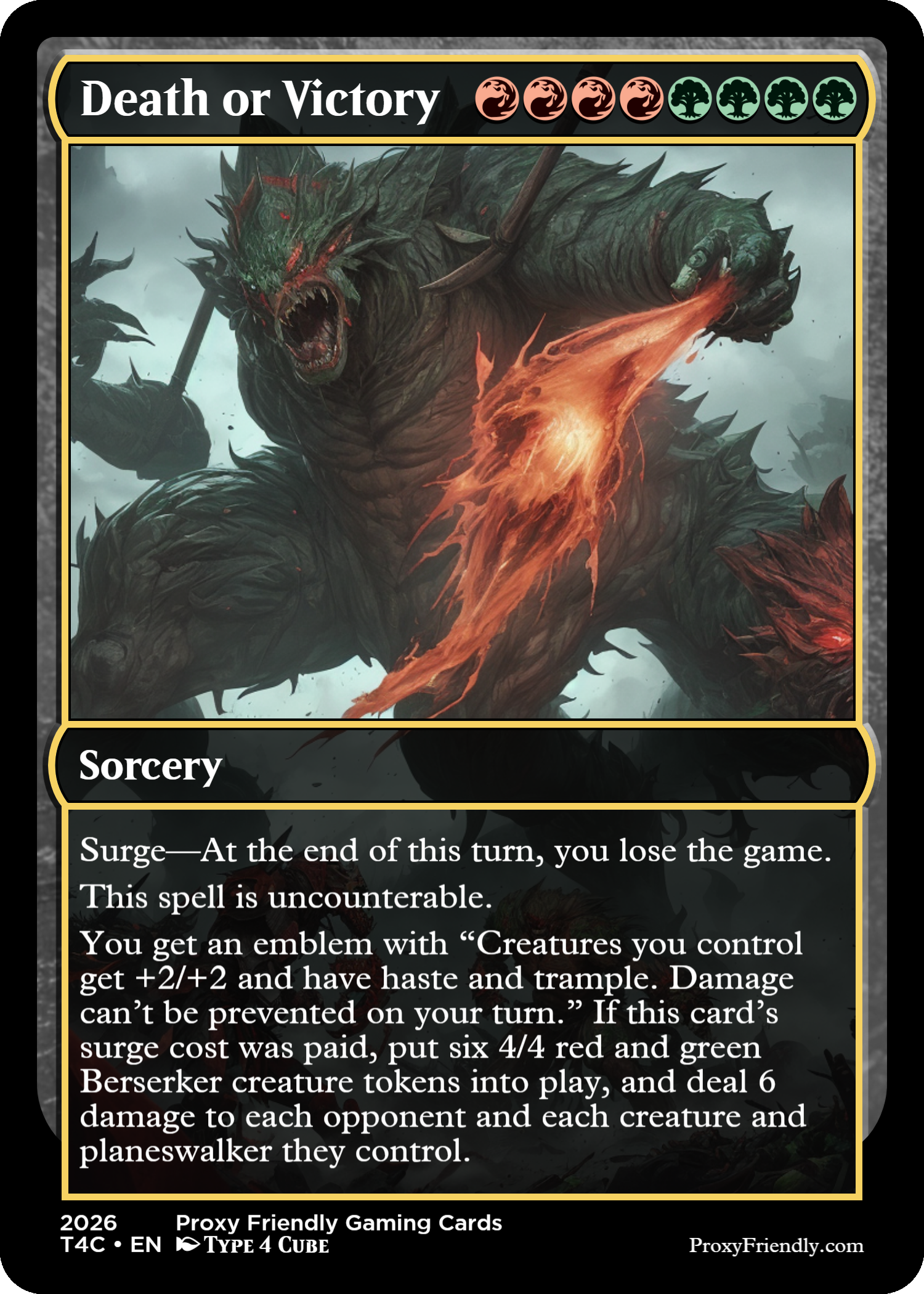
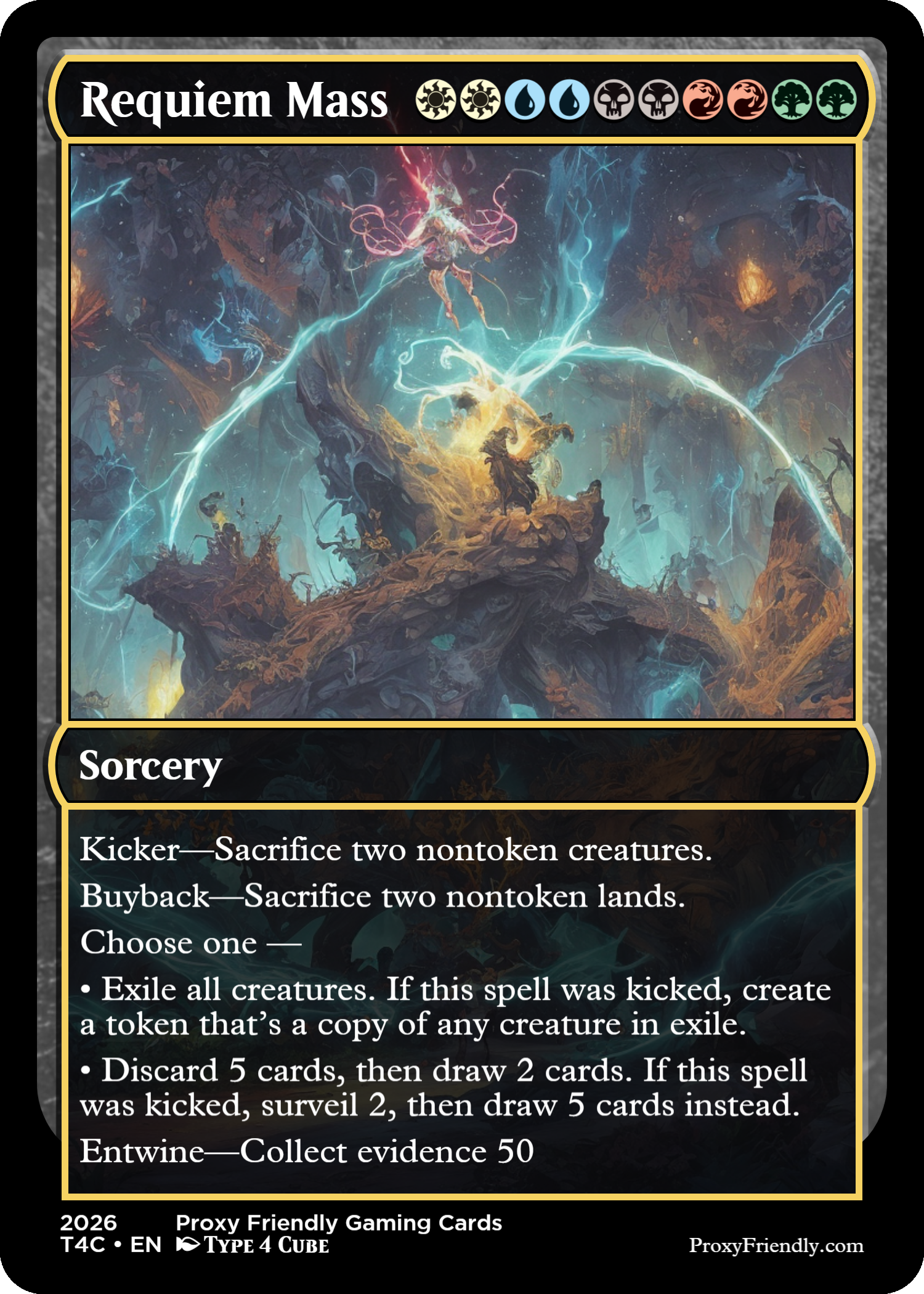
Lastly, there are a handful of unique cards that aren’t part of a specific cycle. At least not yet. These are also intended to act like glue and potential build-arounds that create corner-case synergies and play patterns that wouldn’t normally occur. We do intend to expand upon some of these already in our scheduled upcoming expansions this summer and fall. Stay tuned!
Overall, the 150-card Custom Set plus its 11-card bonus sheet (FF7 Encounters) are designed to mix with the 600-card Core Set of official MTG cards for a total of 761 drafted cards. This number is our preference for a 16-player tournament environment, leaving 41 cards undrafted so Wish-like cards have “packs” for players to add cards to hand from.
During our Cube and Mini Qualifier events, the most recently released Universe Beyond mini set bonus sheet cards will be awarded to the final table Competitors. This is the only way to acquire these cards to add to your own Type 4 Cube at home.
Future 100-card expansion sets and their corresponding Universe Beyond mini-set bonus sheet Encounters are intended to replace the 100-card Moxfield Core Set sideboard list in order to maximize power-level density and archetype cohesiveness.
We’re excited to be sharing this experience with the world. Be sure to join us on Discord to connect and share your experiences and potential new expansion card ideas with us!
PS, Custom Set tokens will be included in all Custom Set Precon orders for FREE!
Here’s what you receive with each custom cube precon set:
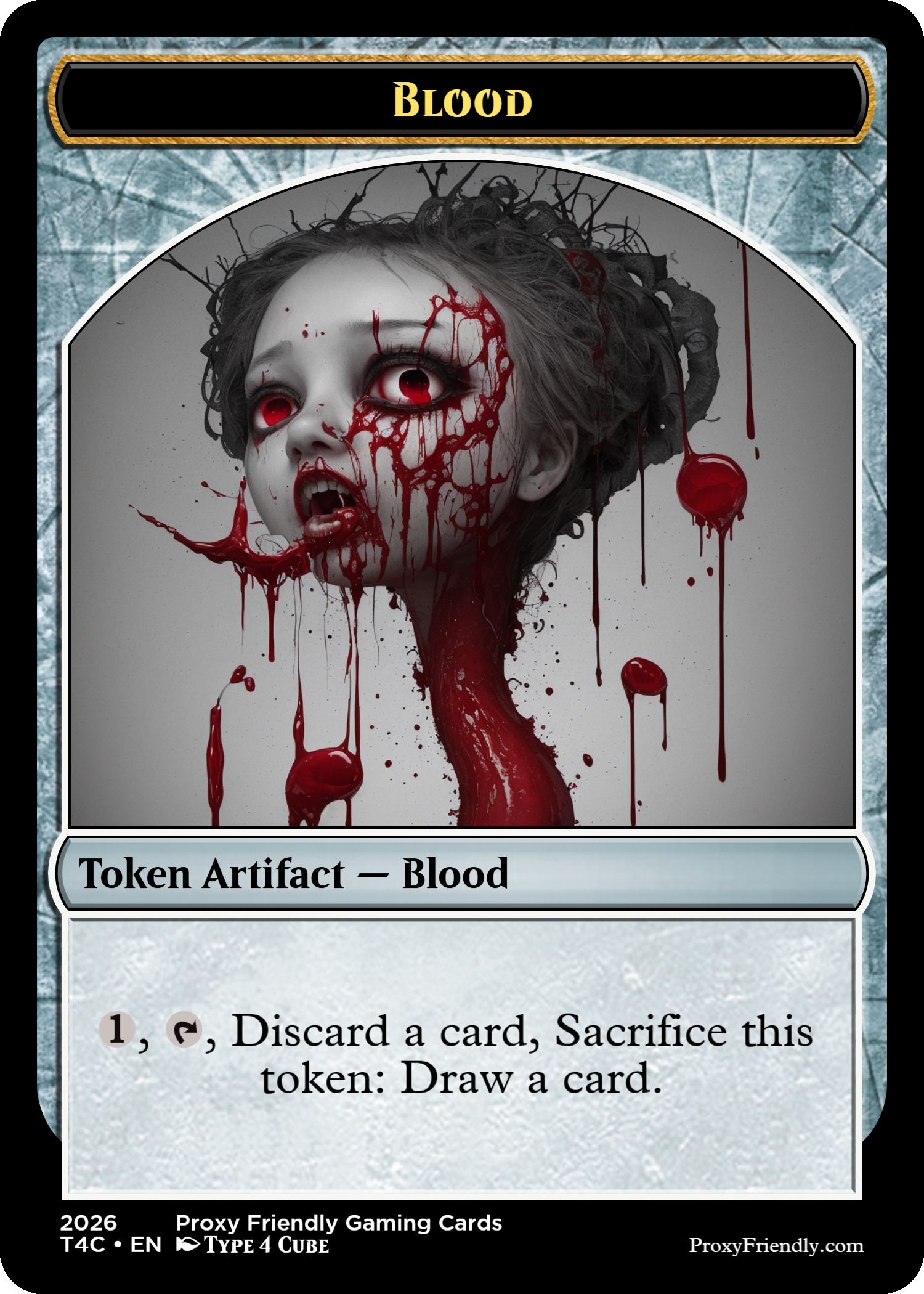
4x each Token Artifact
4x each Token Emblem
4x each Token Legendary
8x each Token Creature
8x each Token Land
This way 4 players are accounted for and can use dice to represent additional tokens as needed.
-
Proxy Friendly house rules:
Players share an infinite mana pool that never empties between turns and phases.
Players can use the infinite mana pool to pay the cost in the top right corner of a spell once per turn. Alternate costs, additional costs, and activated abilities are unrestricted.
Infinite responding abilities are won by the defending ability.
Spells and abilities that can directly win the game are banned.
Players start games with 5 cards in hand.
One mulligan for a new hand of 5 cards.
Seat 1 draws a card to start their 1st turn.
The maximum hand size is 7 cards.
Players start each game at 20 life.
Custom cards are mythic rarity.
Tournament Games are 30 mins and must have a winner. Read about “Sudden Death”below.
Rule exception:
If mana from an ability, like Cascading Cataracts, filters the infinite mana pool and pays the entire converted mana cost (top right mana value of a card), that spell doesn’t count towards your one spell per turn limit.
Sudden Death:
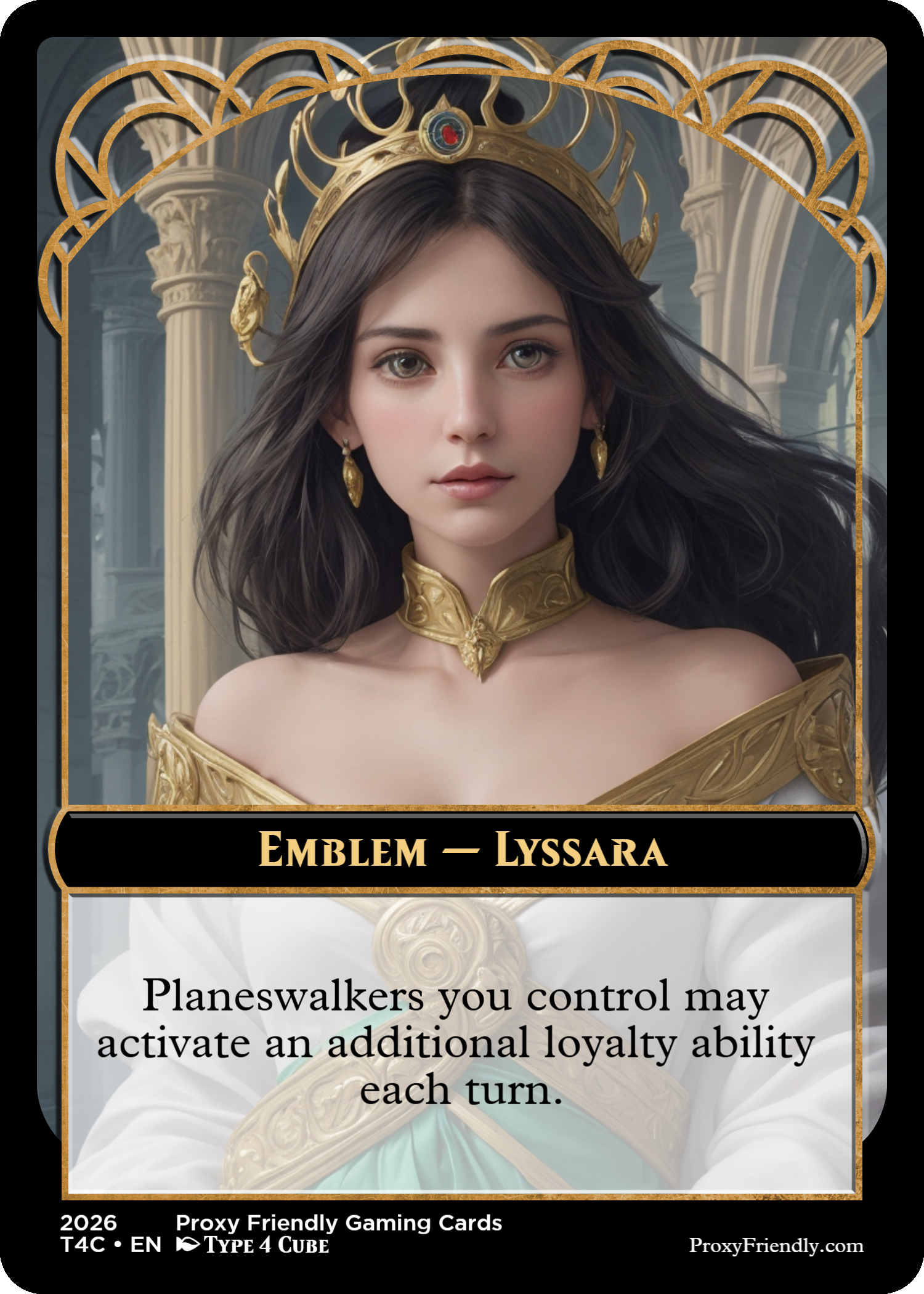
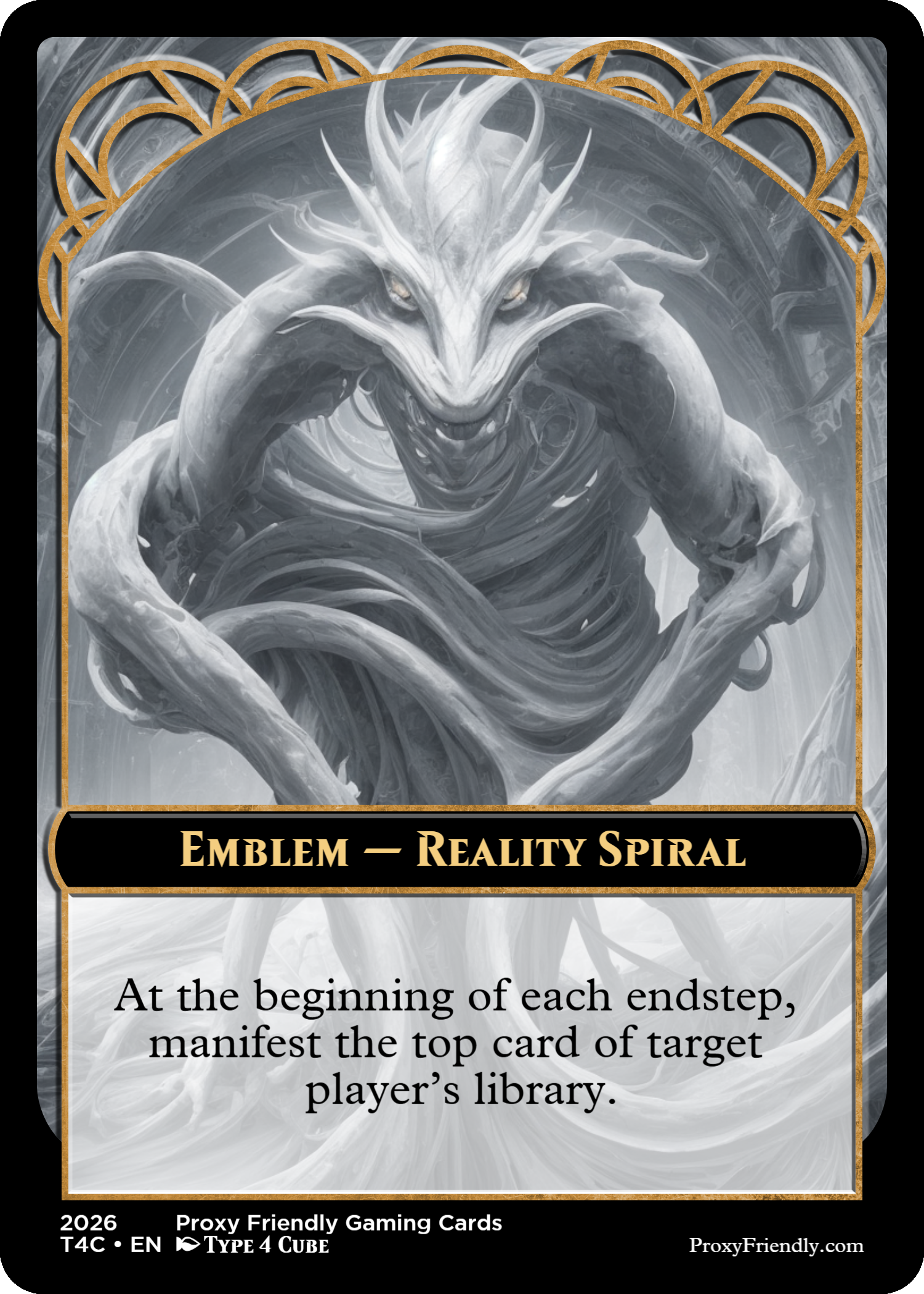
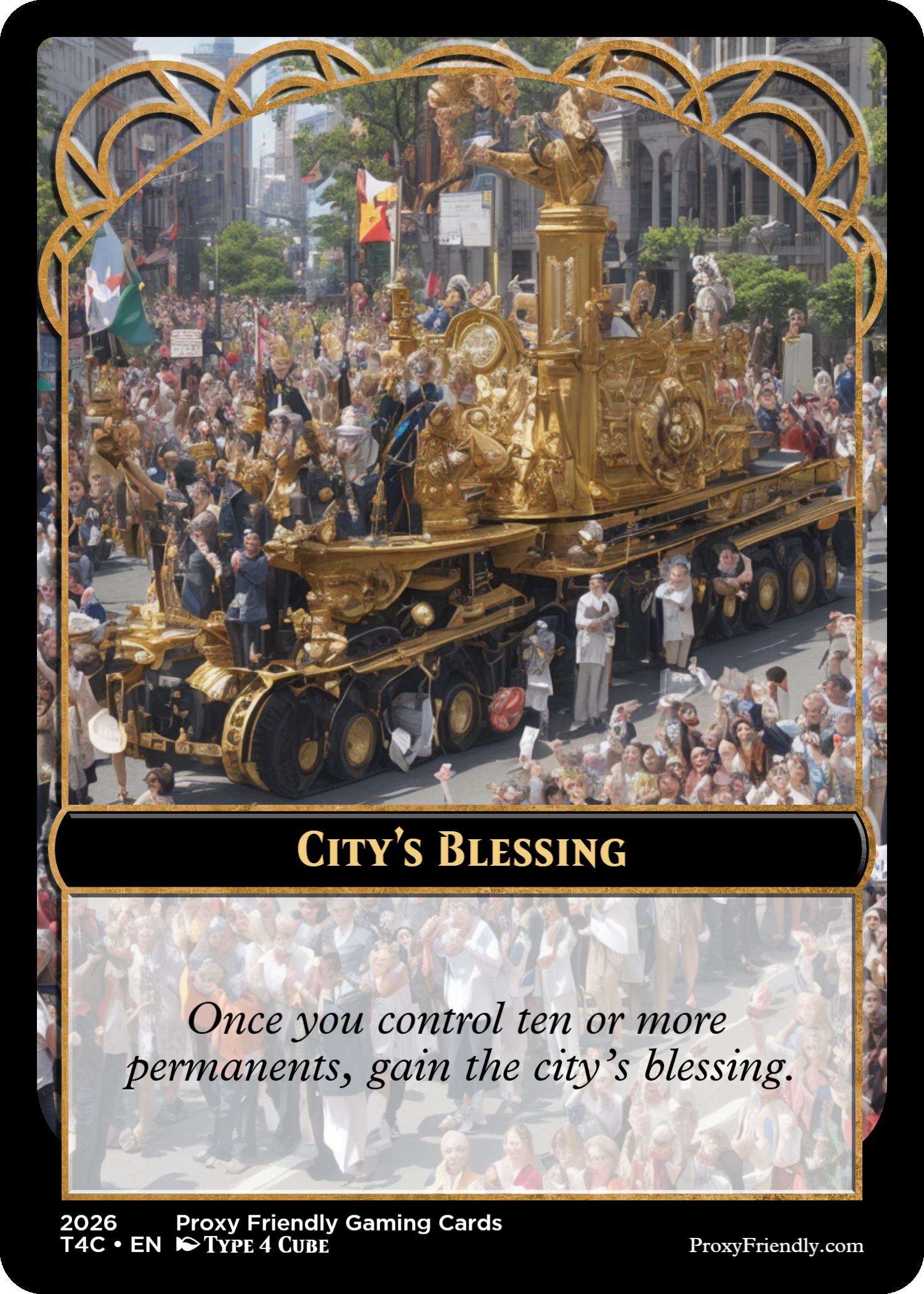
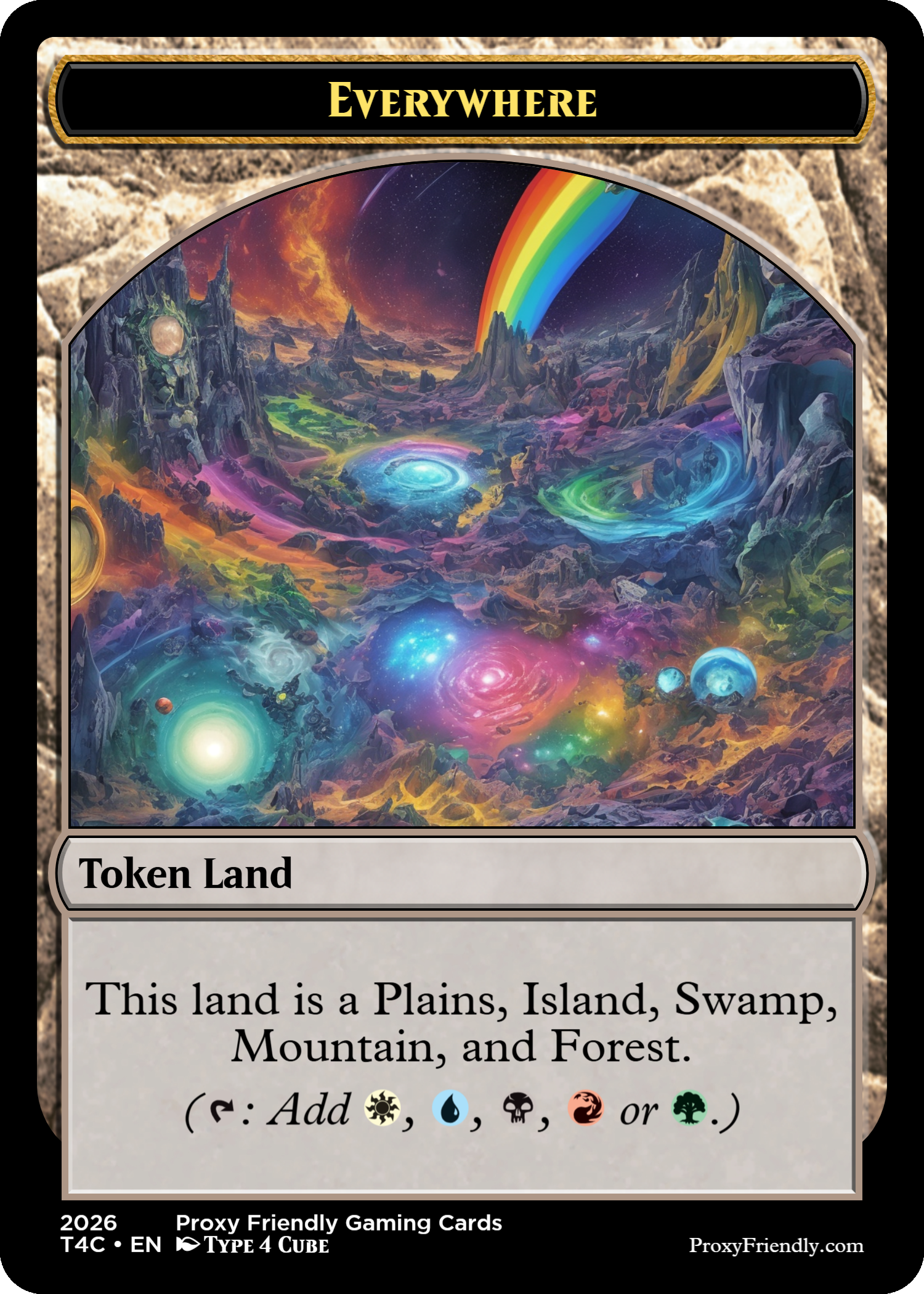
Sudden Death is an emblem that starts each game in play.
1. No Time — When game times expire, this emblem takes effect after the current turn ends.
2. No Escape — Each player loses 5 life during each player’s untap step. If this effect would bring a life total to 0 or less, set that life total to 1 instead.
3. No Mercy — At the beginning of each end step, each player who didn’t take a game action loses 1 life. If this kills each player, this only effects the active player instead.
4. No Choice — At the beginning of each cleanup step, if a single player has the highest life, that player wins the game.
You can view the Sudden Death emblem in the Token section of this gallery below.
-
Casual Type 4 Cube draft:
Generally, a minimum of four players randomize the cube; each creates three piles of 15 cards and then uses those piles as makeshift booster packs to draft a total of 45-card decks. Similar to traditional FNM booster drafting.
After the draft experience is complete, players choose a minimum of 40/45 as their main decks and then shuffle up to play a 4-player free-for-all game. The Proxy Friendly team tends to play multiple games with the same decks and then start a new draft with a portion of the cube that hasn’t been drafted yet. Keeps it fresh all night!
Competitive Type 4 Cube draft:
Our Cube Qualifier events are 16-player capped tournaments that start with four draft pods. Visit our events page for format details.
Each pod follows a judge's call for when it’s time to pick up and pass their packs until all three packs have been drafted. Players receive the most time during the first 4 picks per draft round to accommodate the unavoidable reading to understand our Custom Set cards potentially in each pack. Our Proxy Friendly booth will have Custom Set cards displayed in binders on-site for players to study beforehand.
Players then receive time to finalize their decks before playing. Tournament seating and game 1 turn order are determined randomly by topdeck.gg tournament software.
Round 1: Players play against the players they drafted with in a “first to two wins” match with a maximum game total of five. Games are 30 minutes long. If the game has not been won by the end of time, “Sudden Death” take effect. You can read about Sudden Death on this page at the front of the Token section below. When a single player has the highest life total at the beginning of a cleanup step, that player wins the game.
Round 2: Round 1 winners play against each other in a “first to two wins” match with a maximum game total of five. Games are 30 minutes long. If the game has not been won by the end of time, our “Sudden Death” emblem token takes effect. You can read about Sudden Death on this page at the front of the Token section below. When a single player has the highest life total at the beginning of a cleanup step, that player wins the game.
1st Place is granted a 1-round bye into our 10K Circuit Finale; and the Top 4 each draft between premium Magic singles and earn a Starter Cube Set.
-
![A fantasy landscape of icy mountains and clouds with a lightning bolt streaking across the sky, and a glowing city below.]()
World
-
![Designer card from a game called Nightmare World. The card shows a dark, eerie landscape with two undead skeleton-like figures with glowing red eyes and long hair, set against a desolate, rocky terrain with a cloudy sky. The text on the card describes gameplay mechanics and has a title "Nightmare World".]()
World
-
![A fantasy-themed trading card titled 'Harmony World Legendary Land' featuring a woman in flowing blue and white robes with a large ornate headdress, standing on a floating platform in a lush green forest with waterfalls in the background and a partly cloudy sky.]()
World
-
![A dark, snowy landscape with twisted, leafless trees and a large, ominous, floating landmass in the background, creating a fantastical and eerie scene.]()
World
-
![A field of yellow flowers under a bright sun with a few clouds in the sky, and a glowing card with the title 'The Eternal Plane' and description of a legendary basic land called 'Plains' for a game, including rules about drawing and gifting cards.]()
Eternal
-
![Aerial view of a large island with shallow water and landmasses, under a blue sky with clouds.]()
Eternal
-
![Dark, foggy swamp with leafless trees and a cloudy sky.]()
Eternal
-
![A fantasy-themed gaming card titled 'The Eternal Mountain' with a mountain landscape and sunset background.]()
Eternal
-
![Sunlight filtering through the branches of tall, twisted trees in an ancient forest.]()
Eternal
-
![A card titled "The Eternal Waste" featuring a desert landscape with sand dunes and mountain ranges. The card explains the land type, a land called Terra Triad, with game instructions.]()
Eternal
-
![A fantasy trading card titled "Draconic Pearls." The card features a dragon-like humanoid creature with a serpentine body, sharp scales, and glowing eyes, holding large pearl-like orbs. The border is ornate with gold and dragon motifs, and the background depicts clouds and mist.]()
Gemstone
-
![A fantasy illustration of two large blue dragons in a dark, icy landscape, breathing ice or frost, with a glowing blue light in the background, surrounded by icy mountains and clouds.]()
Gemstone
-
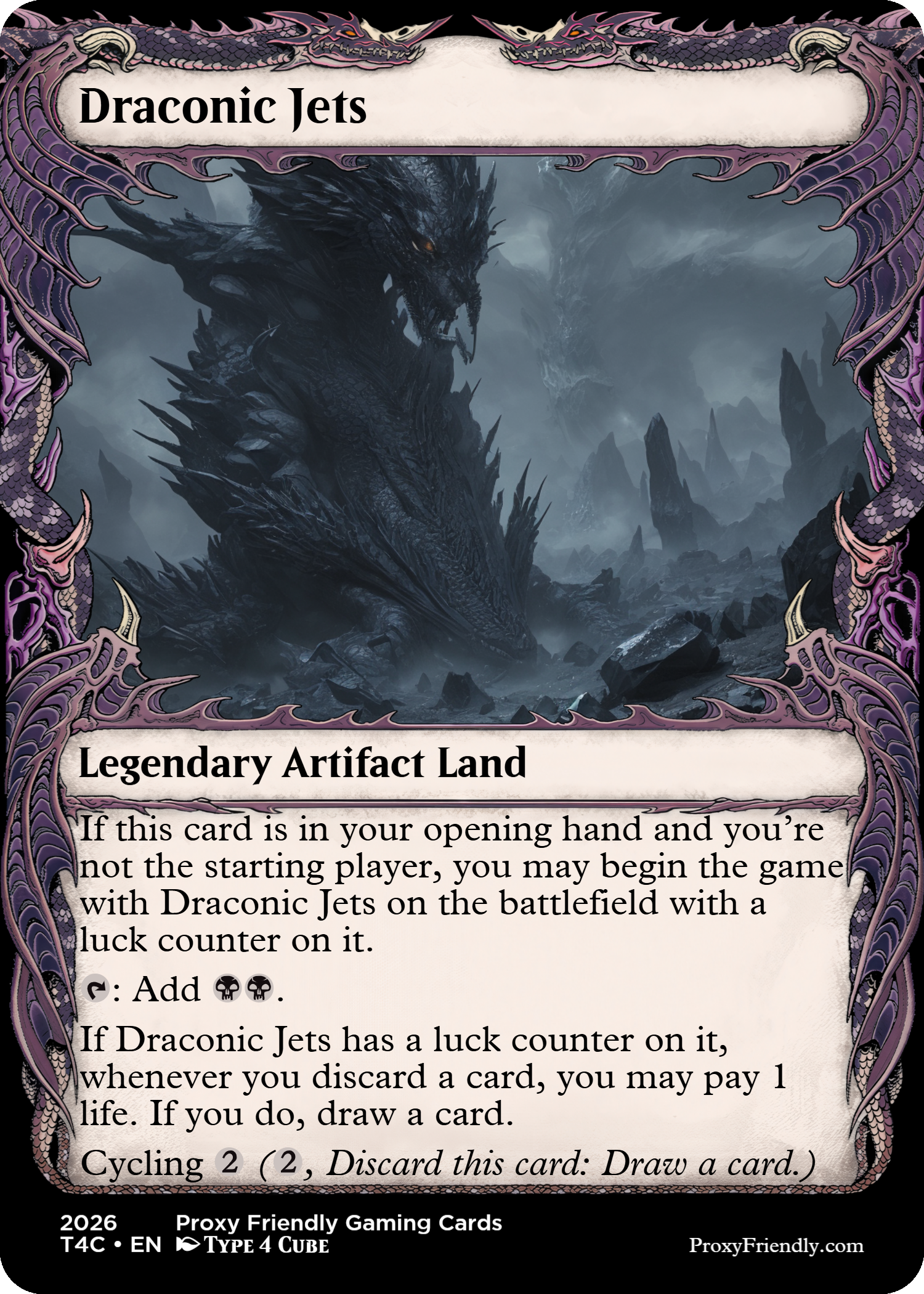
![A trading card titled "Draconic Jets" depicting a large, dark dragon with glowing eyes, set against a stormy mountainous landscape. The card has a decorative frame with purple and black serpent motifs.]()
Gemstone
-
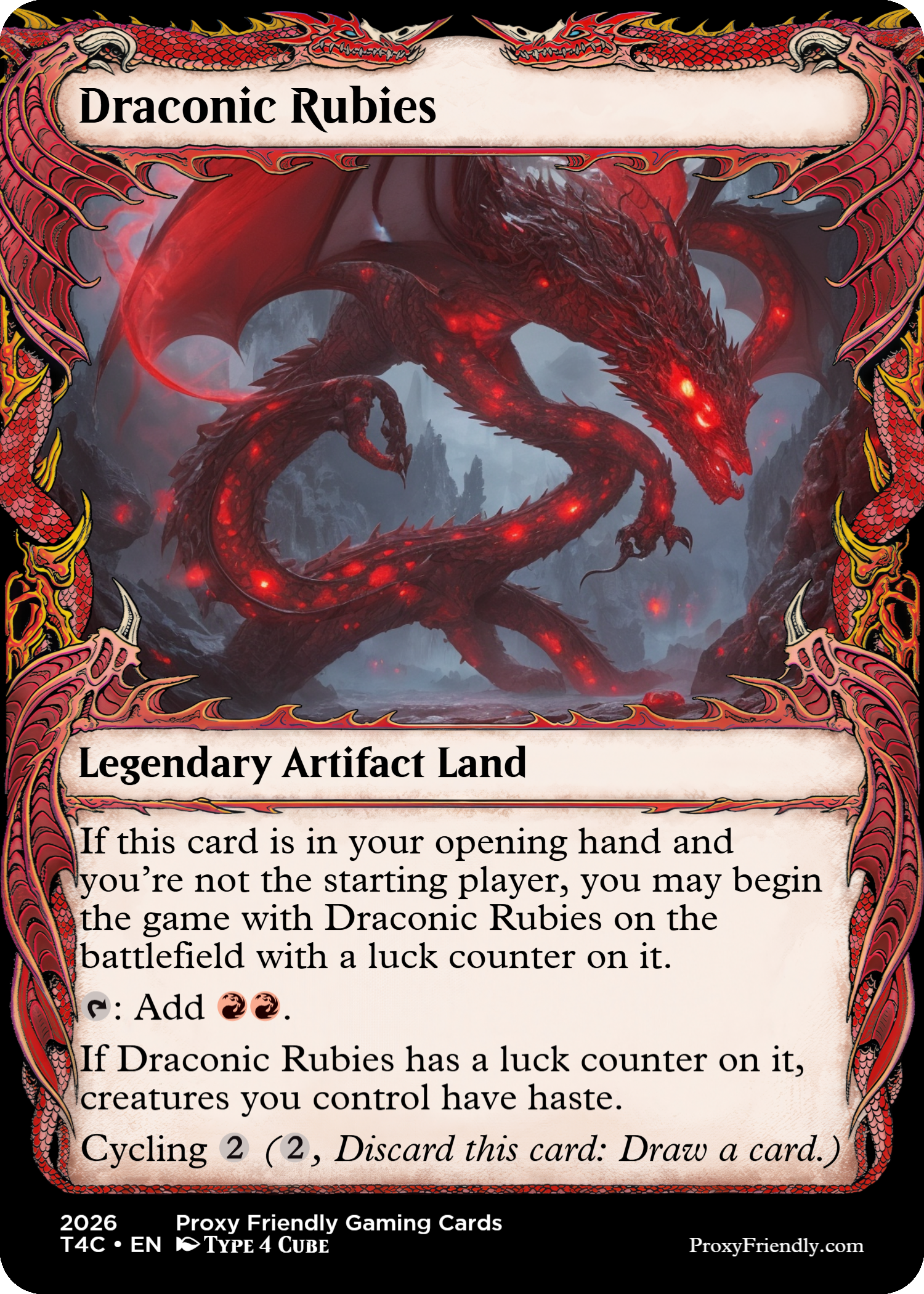
![A fantasy trading card titled "Draconic Rubies" features a large red dragon with glowing spots, wings, and fierce appearance, set against a mountainous background. The border is decorated with intricate red and gold dragon designs.]()
Gemstone
-
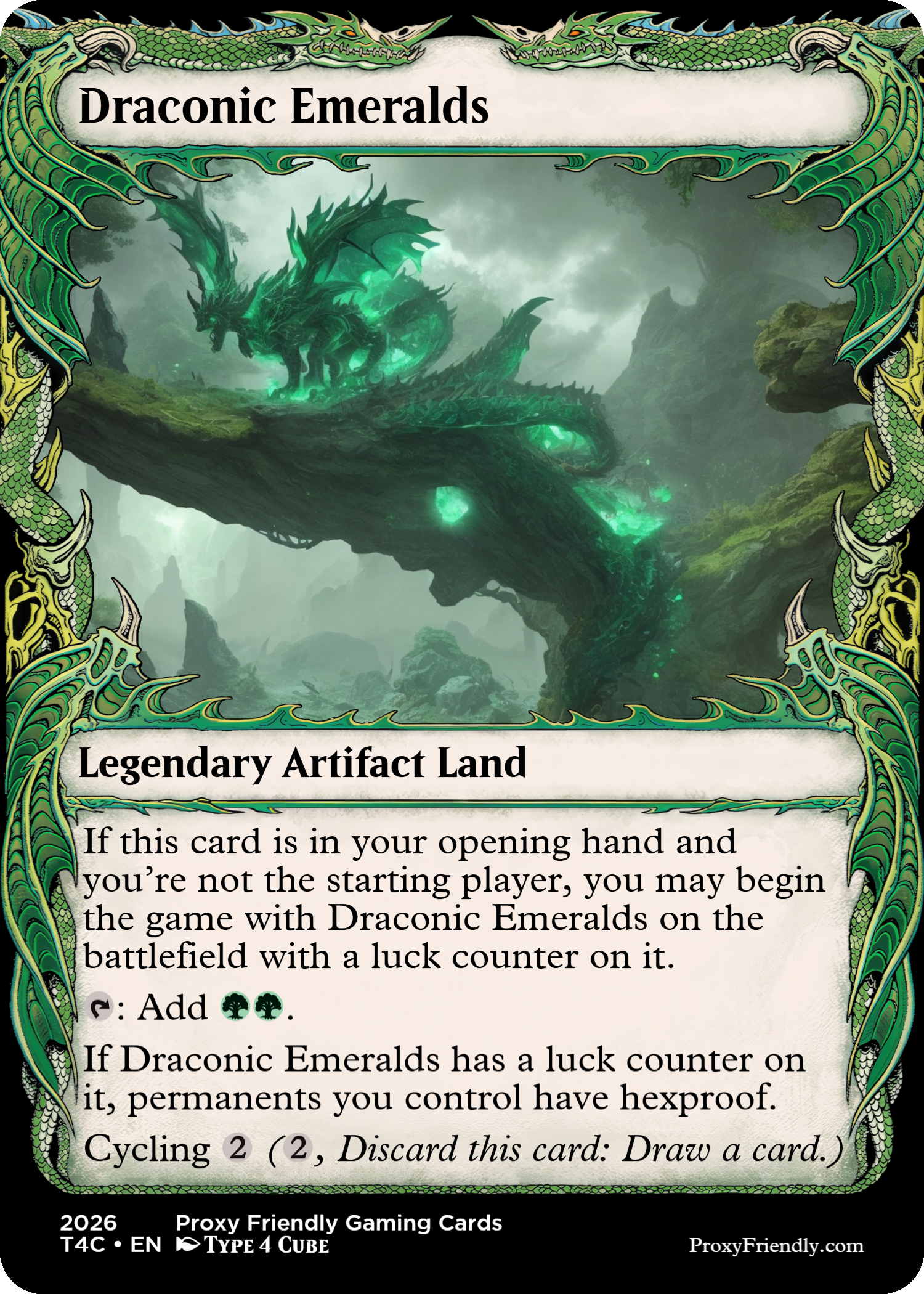
![A fantasy-themed trading card titled "Draconic Emeralds" featuring a large, glowing, green dragon-like creature with emerald eyes, perched on a twisted, ancient tree branch in a misty, mystical landscape.]()
Gemstone
-
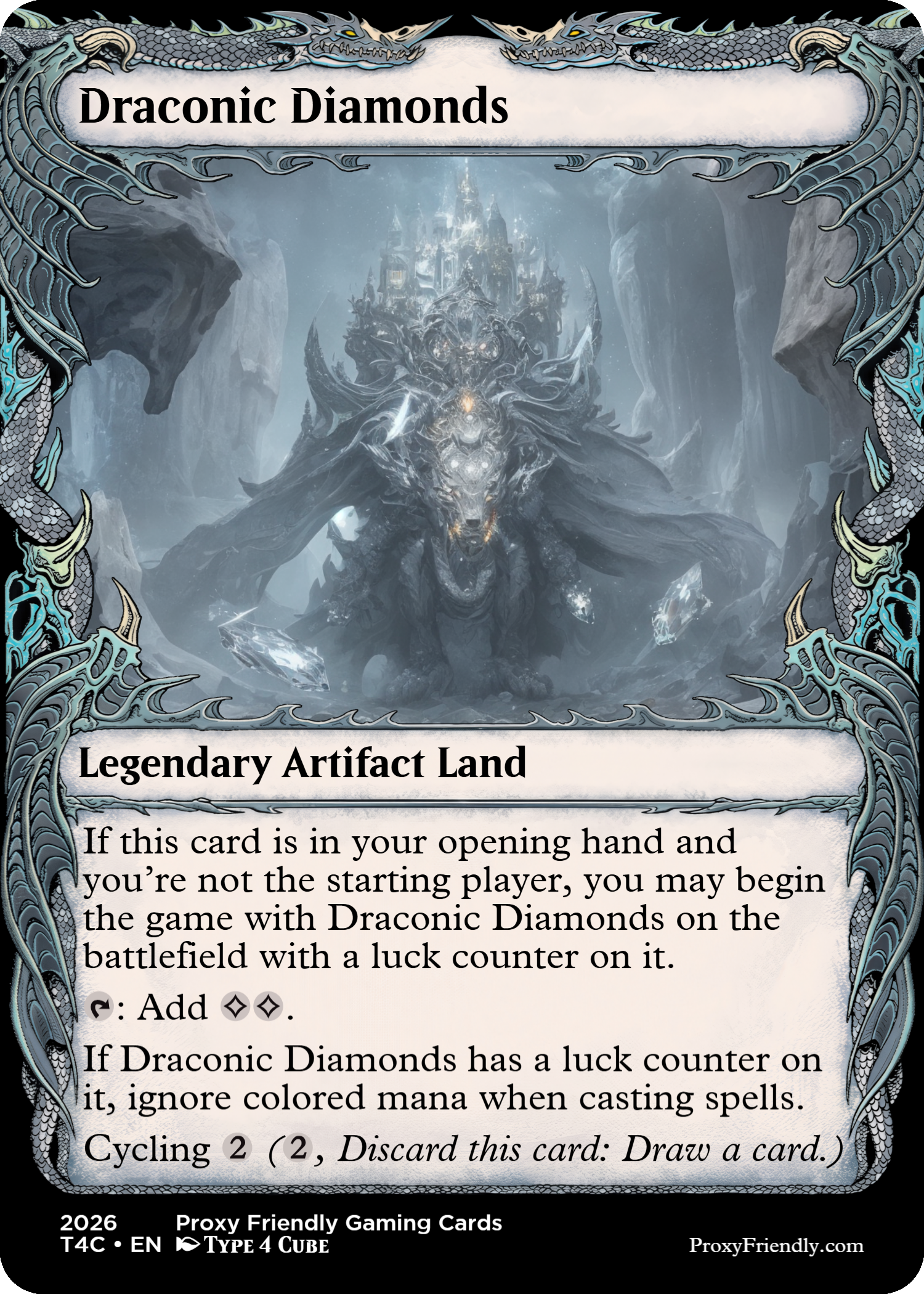
![A fantasy trading card titled "Draconic Diamonds" depicts a dark, armored dragon on a snowy mountain landscape. The card has a dragon-themed border with serpents and scales, and features text describing it as a legendary artifact land with game mechanics details at the bottom.]()
Gemstone
-
![A fantasy-style card titled 'Abzan Trine' showing a massive, twisted tree creature in a swamp forest with moss and rocks in the background.]()
Trine
-
![A fantasy trading card titled 'Bant Trine' featuring armored warriors in combat in a mountain forest. The card indicates a legendary land from Plains Island Forest with special abilities and game effects.]()
Trine
-
![A fantasy trading card titled "Esper Trine" depicting a large, dark dragon with glowing blue accents flying over a mountainous landscape with waterfalls and mist. The card is labeled as a legendary land from Plains and Island Swamp with game instructions and symbols.]()
Trine
-
![A fantasy trading card titled 'Grixis Trine' featuring a dark, monstrous creature with a blue, lightning-like aura, set against a gloomy landscape with twisted trees.]()
Trine
-
![A fantasy-themed trading card titled 'Jeskai Trine'. The illustration depicts an ornate, glowing, golden divine structure with blue and orange lightning bolts emanating from it, set against a stormy sky with dark clouds and ruined landscape. The card is labeled as 'Legendary Land — Plains Island Mountain', with game text and symbols below.]()
Trine
-
![A fantasy trading card titled 'Jund Trine' depicting a monstrous creature with green skin, red spikes, and sharp teeth emerging from a swamp forest with red roots and green foliage.]()
Trine
-
![A fantasy game card titled "MARDU TRINE" depicting a volcanic landscape with erupting volcanoes and smoke. The card is labeled as "Legendary Land — Plains Swamp Mountain" and includes game instructions and symbols at the bottom.]()
Trine
-
![A fantasy game card titled 'Naya Trine' depicts a volcanic landscape with fiery eruptions, dark mountains, and glowing green magical energy swirling in the sky. There are three characters at the bottom unleashing magic.]()
Trine
-
![A fantasy-themed trading card titled 'Sultai Trine' showing a monstrous creature in a graveyard. The creature has a dragon-like head, sharp horns, glowing eyes, and a skeletal body with wings. The background features tombstones and a dark, misty swamp forest.]()
Trine
-
![A colorful fantasy card titled "Temur Trine" depicts a legendary island mountain forest in a game setting. The illustration features a massive, fierce, dragon-like creature with glowing blue and red accents and a smaller, green, wolf-like figure emitting energy. A figure in the foreground examines the scene, against a dark, misty background.]()
Trine
-
![Artwork of a mountainous landscape with rocky formations and yellow glowing accents, seen from within a cavern or mountain gap.]()
Concord
-
![Illustration of two fiery, dragon-like creatures fighting in a mountainous landscape, with glowing orbs of fire.]()
Concord
-
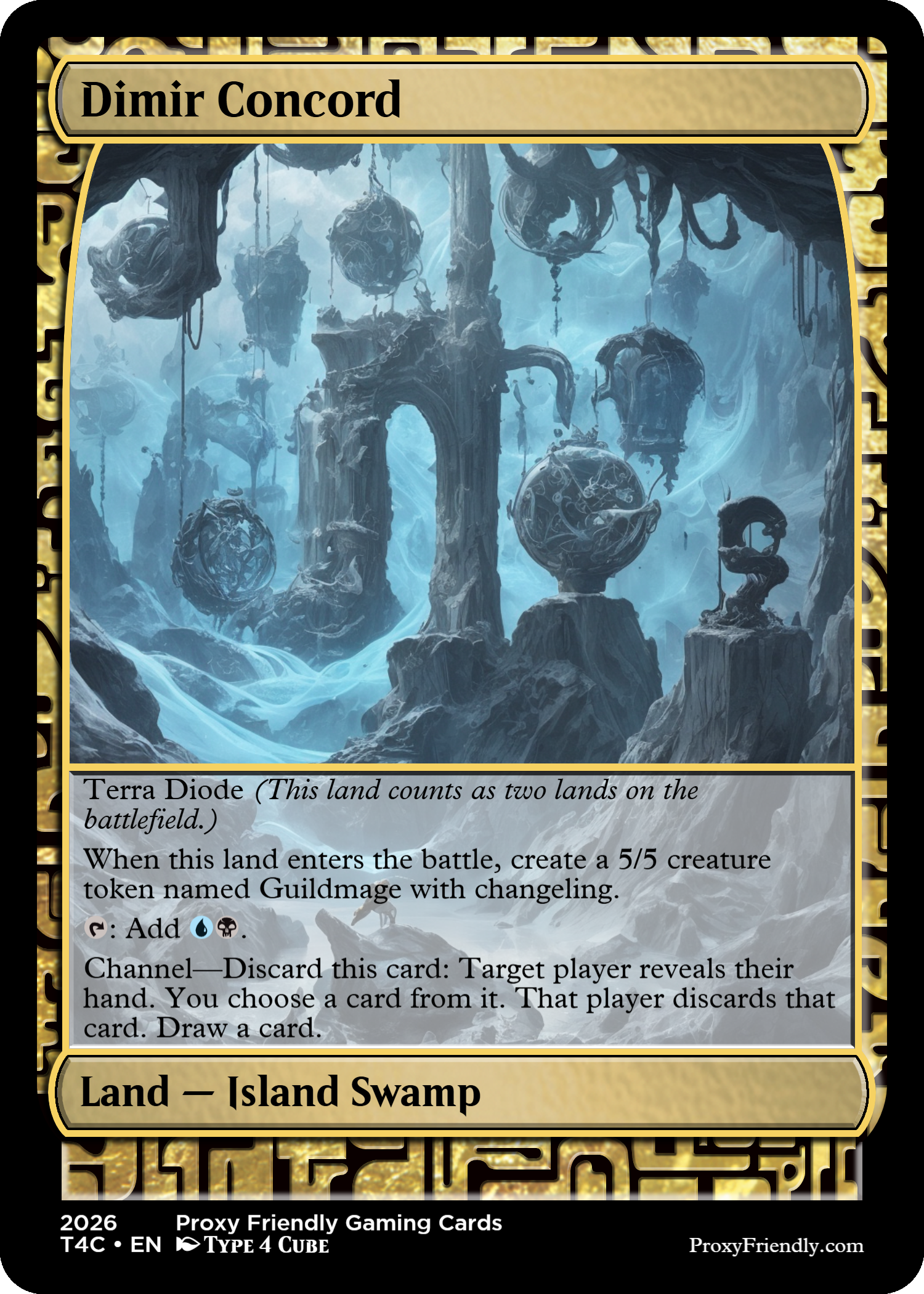
![A fantasy-style illustration of an icy, cavernous landscape with floating rock formations and spherical objects, some with intricate designs, hanging from the ceiling.]()
Concord
-
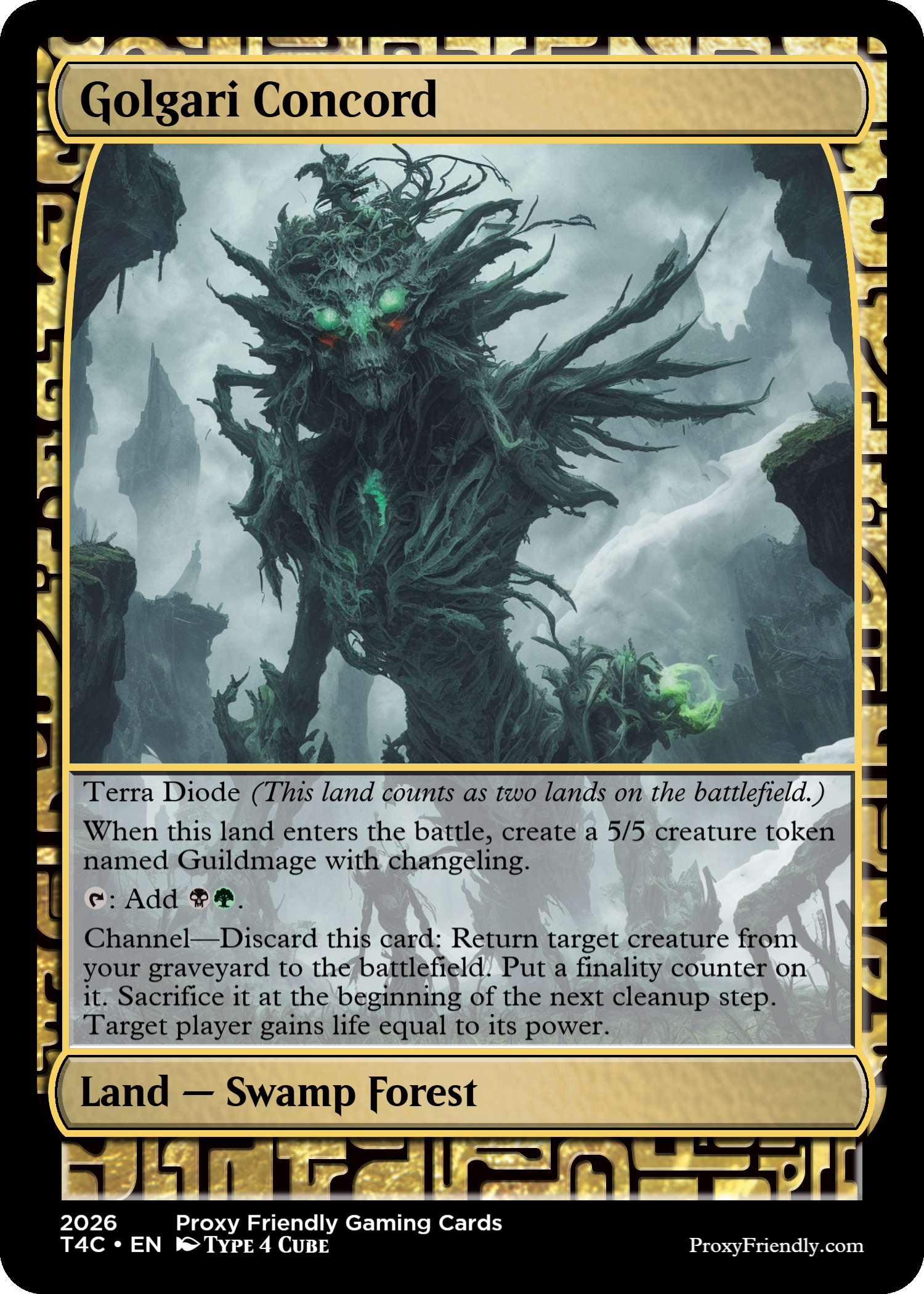
![A fantasy illustrated card titled Golgari Concord showing a twisted, tree-like creature with glowing green eyes and moss or magic flowing from its hands, set in a misty, mountainous landscape.]()
Concord
-
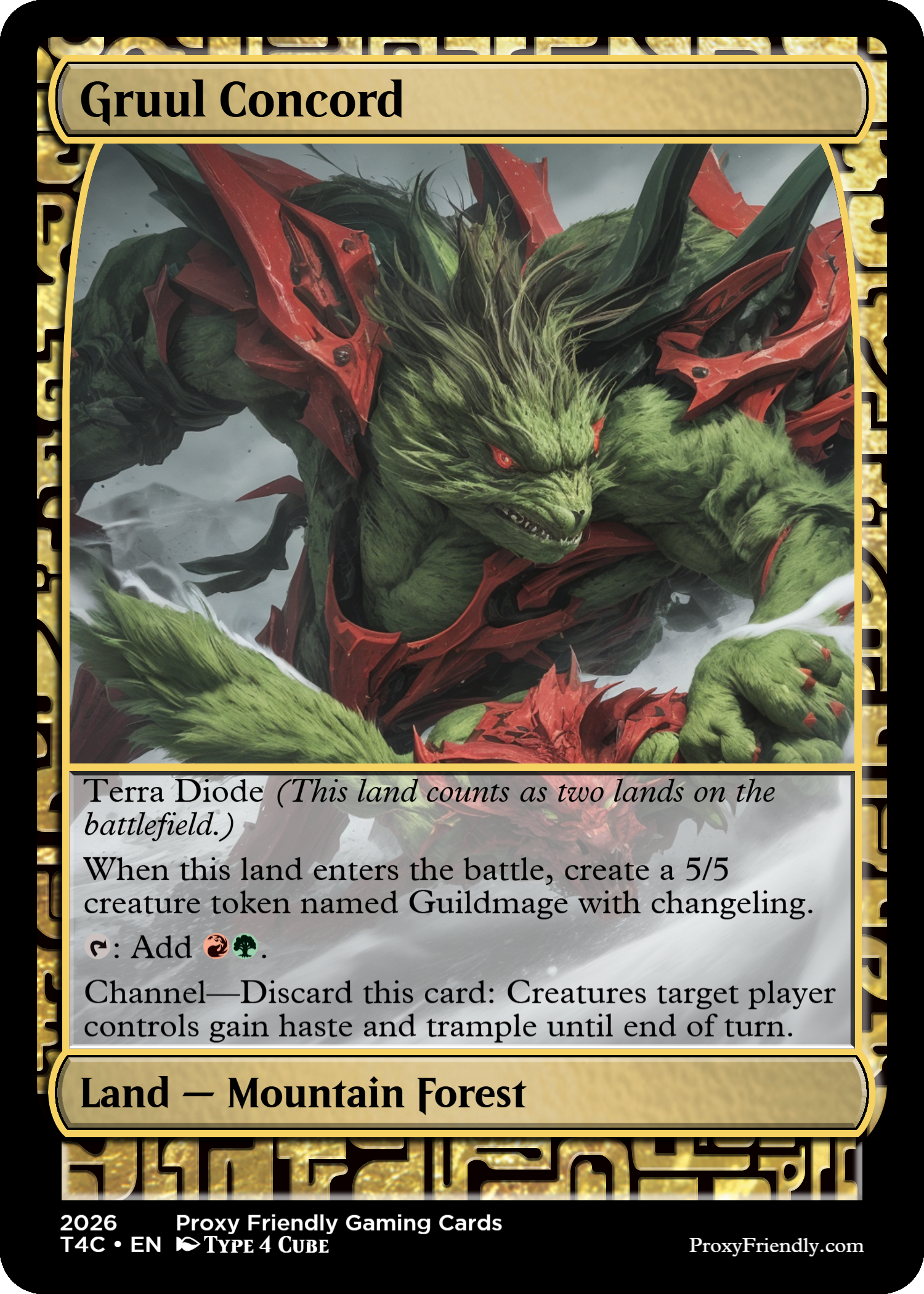
![A fantasy illustration of a green, fierce-looking creature with red eyes, sharp teeth, and mane-like hair, wearing red armor, in a dynamic pose.]()
Concord
-
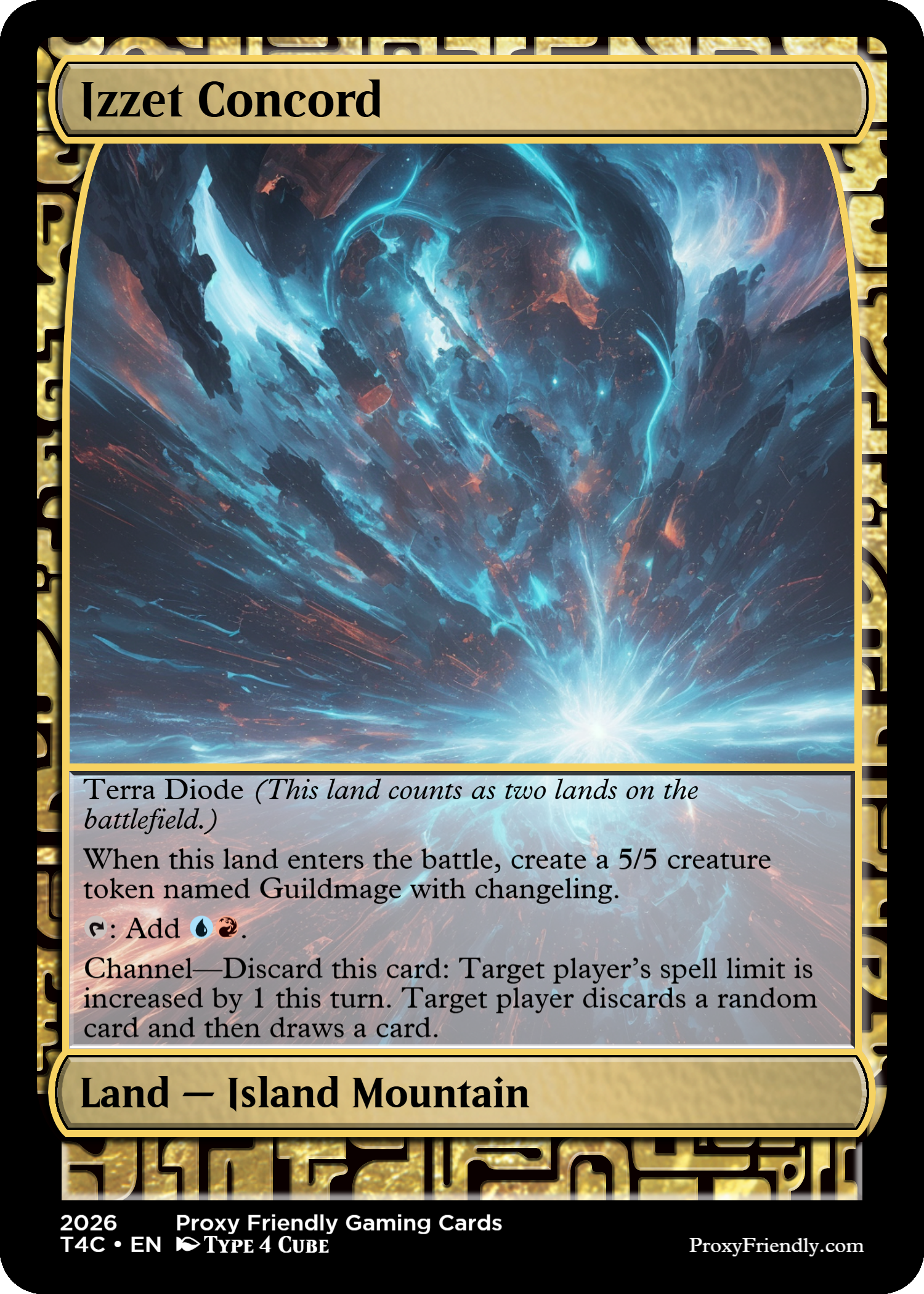
![A Magic: The Gathering card titled "Tizzet Concord" showing a cosmic explosion with blue and orange energy in space, and a bright burst at the bottom emitting rays outward.]()
Concord
-
![A fantasy landscape with snowy mountains, floating islands, and mysterious structures in a dark, foggy sky.]()
Concord
-
![A fantasy trading card titled 'Rakdos Concord' depicts a giant, dark, fiery monster with glowing red eyes, large horns, and a menacing appearance, set in a dark, mountainous landscape.]()
Concord
-
![A fantasy-themed trading card featuring a medieval knight in shining armor, standing in a lush forest with tall trees, a majestic castle with spires and a clock tower, and a vibrant rainbow arcing across a stormy sky.]()
Concord
-
![A fantasy trading card titled 'Simic Concord' featuring a lush forest with large trees and green foliage, with a misty background and blue flowers on a branch.]()
Concord
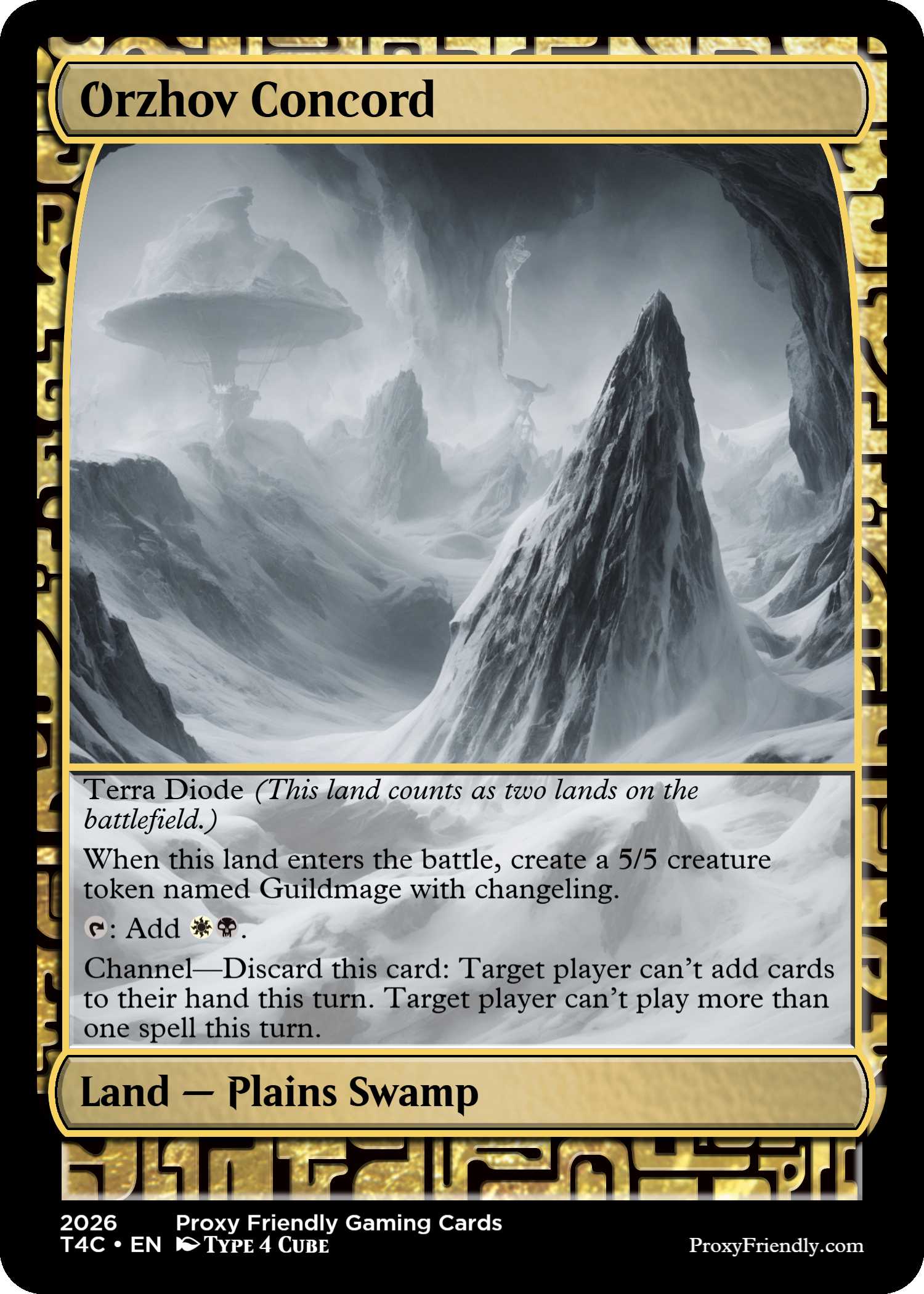
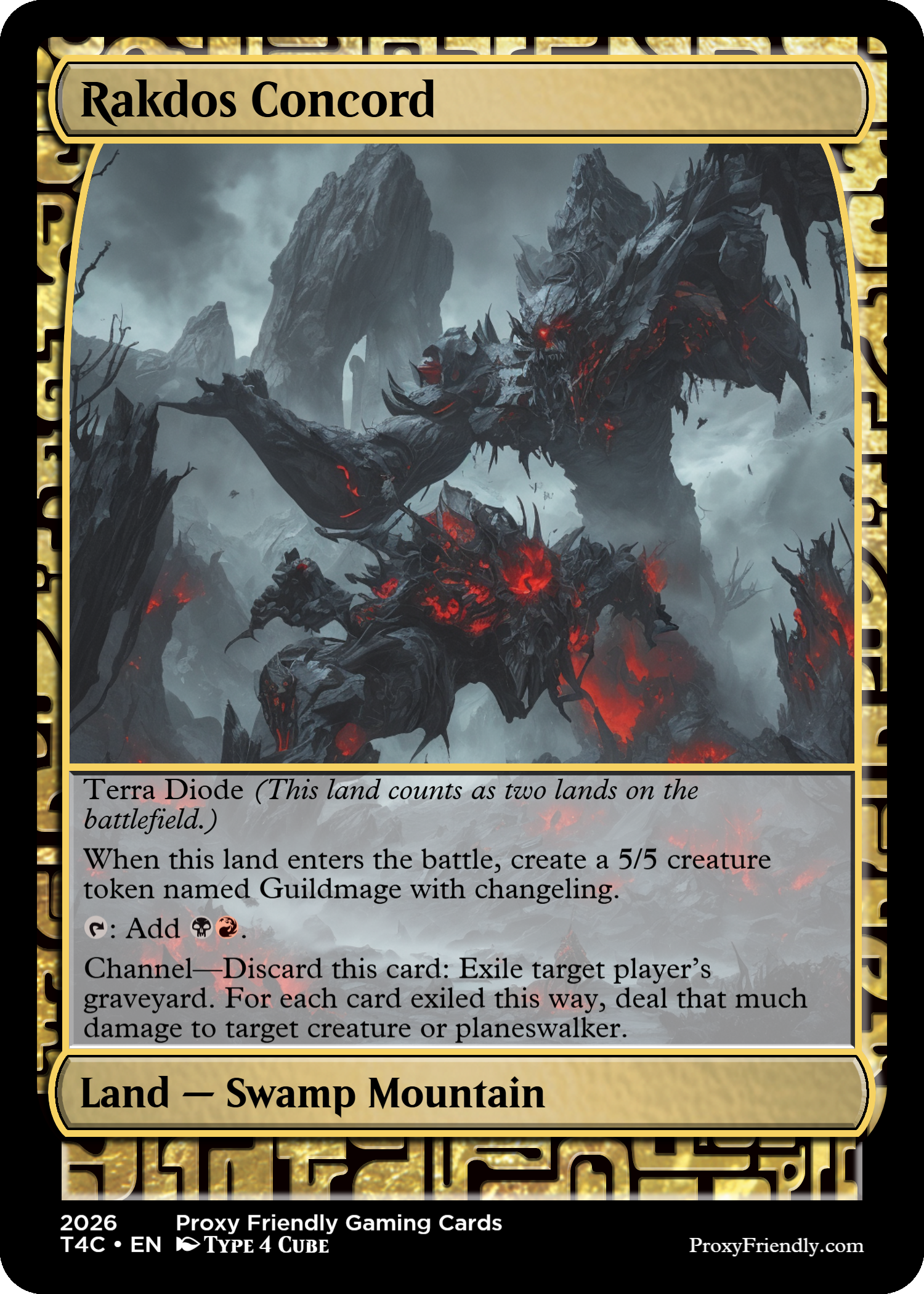
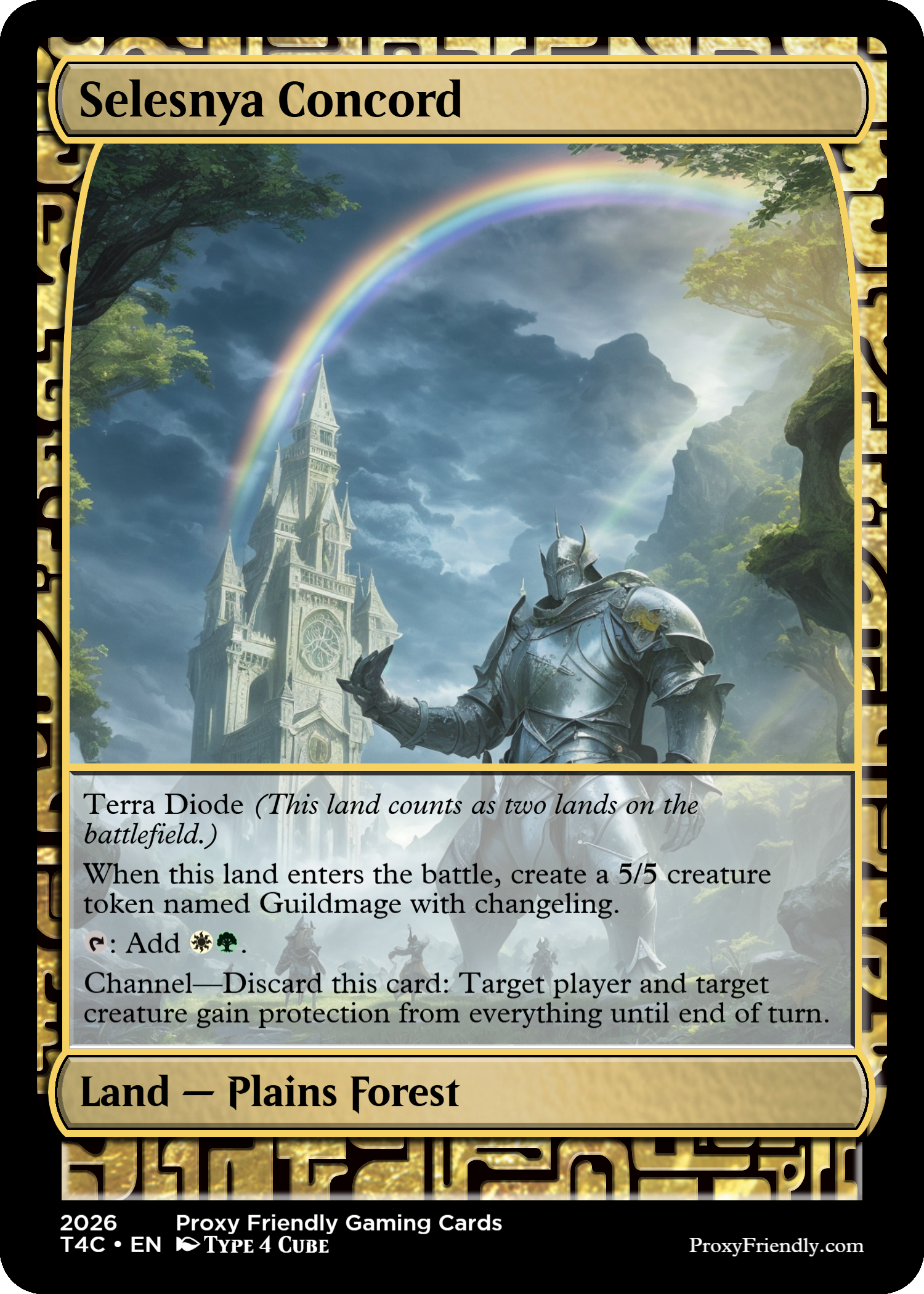
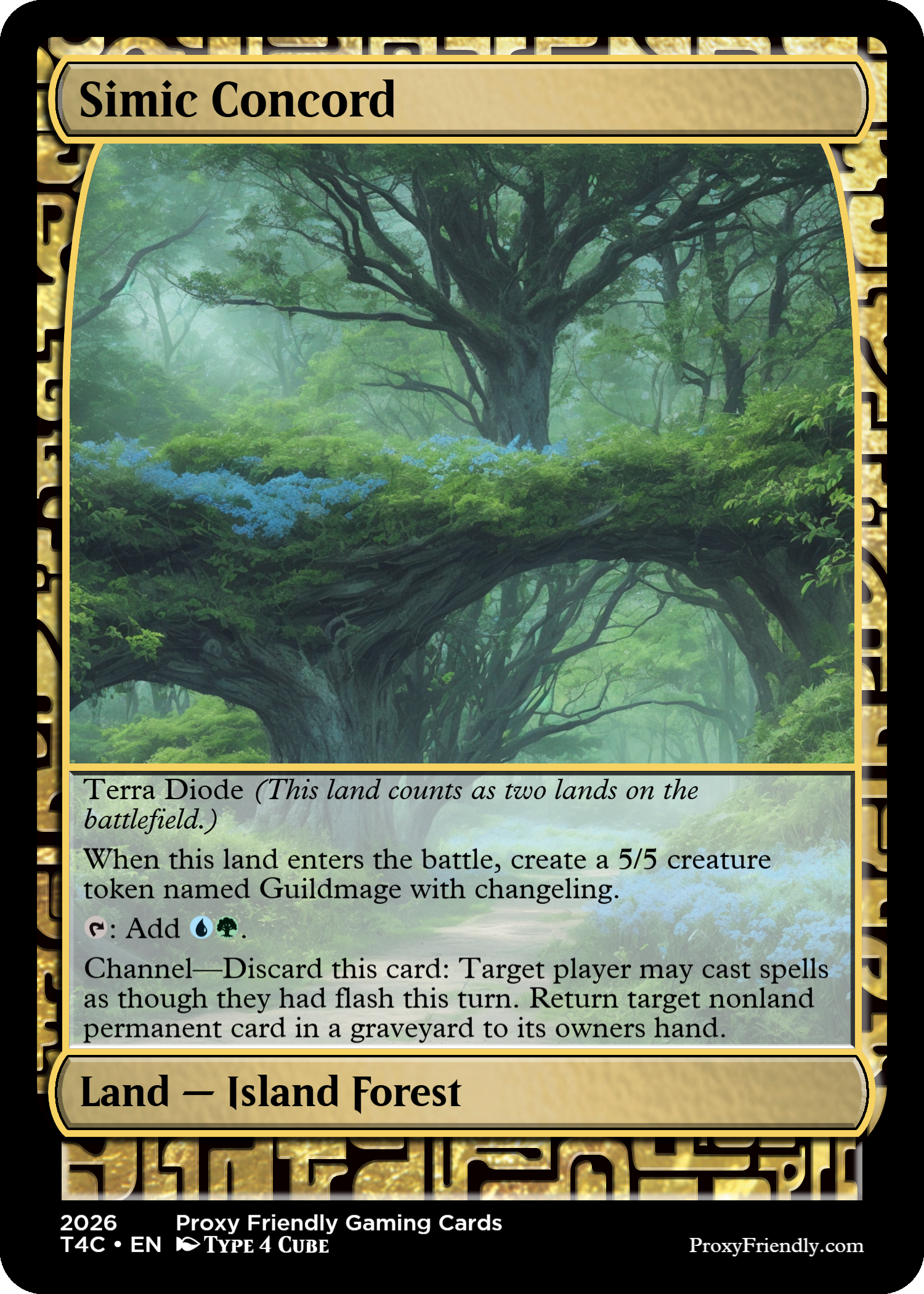
-
![A gaming card titled 'Prelate's Decree' featuring a cosmic background with glowing celestial bodies, constellations, and magical symbols. The card has a purple and black crystalline pattern with a crack running across the surface. It displays game information, symbols, and text about its effect in a card game.]()
Decree
-
![A fantasy-themed game card titled 'Immunity Spiral' with an illustration of a swirling, rocky, underground tunnel with glowing yellow lights. The card has a section describing a 'Sorcery' spell about creating a shadow creature, with additional game instructions and details at the bottom.]()
Super Epic
-
![Trade card titled 'Mind Spiral' featuring a swirling vortex of blue and black. Contains game instructions for a spell card named 'Sorcery,' which allows searching a player's library for a spell and shuffling. The card has a cost of 10 blue mana symbols and a super epic ability.]()
Super Epic
-
![A fantasy-themed gaming card titled 'Crypt Spiral' with an illustration of purple swirling spirals and structures in a dark, mystical environment. The card is part of Proxy Friendly Gaming Cards, produced in 2026, and is classified as a Type 4 Cube card.]()
Super Epic
-
![A digital illustration of a futuristic armored humanoid creature with a wolf-like face, glowing red eyes, and swirling energy around it, set against a dark, starry background.]()
Super Epic
-
![A dark, monstrous creature with glowing green accents, claws, and jagged features, looming in a cloudy, mountainous landscape.]()
Super Epic
-
![A fantasy game card titled 'Reality Spiral' with a grayscale illustration of a dragon-like creature with sharp features and glowing eyes. The card has text describing an in-game ability and is from Proxy Friendly Gaming Cards, 2026.]()
Super Epic
-
![A card titled 'Paradox Spiral' from a stack of gaming cards, with a spiral galaxy illustration featuring multicolored swirls including yellow, green, blue, red, and purple, against a starry black background. The card has symbols indicating various types or attributes and text describing its game effects, including options for gaining control of an emblem or encounter, exchanging life totals, or returning a permanent to its owner's hand.]()
Super Epic
-
![A fantasy-themed trading card titled 'Crownfire Ultimatum' shows a powerful sorceress with lightning and storm clouds behind her. She has a regal, commanding presence with glowing blue magical energy on her chest, and her hair is flowing as lightning strikes around her. The card features the word 'Sorcery' and describes an effect involving gaining life, dealing damage, drawing cards, and discarding.]()
Ultimatum
-
![A fantasy trading card titled "Gravepyre Ultimatum" featuring a dark creature with a skull-like face and glowing green hair, surrounded by smaller fiery and shadowy monsters, with a foggy forest background.]()
Ultimatum
-
![A fantasy-themed trading card titled 'Reclamation Ultimatium' featuring a scene of a ruined stone structure in a forest with burning fires, green foliage, and a mystical glowing blue portal in the center. The card includes details about its game mechanics and type, with a decorative gold and black border.]()
Ultimatum
-
![A fantasy-themed trading card titled "Transmutation Ultimatum" showing a large, ancient, twisted tree with glowing blue symbols and lights, set in a mystical landscape with distant mountains and structures.]()
Ultimatum
-
![A card from a game titled 'Severance of Injuntion' featuring mystical symbols and ornate, gothic design elements. The card describes a sorcery rule involving tapping targets with certain permanents and staging effects during the game.]()
Detach
-
![A digital card from a game titled 'Severance of Martyrdom' with a background of a wildfire on a mountain, and icons representing game mechanics at the top. The card includes a section named 'Sorcery' with game instructions and a website link at the bottom.]()
Detach
-
![A fantasy card game card titled 'Severance of Grace' features an illustration of a creature with the body of a tree, a humanoid face, and branches and roots extending from its form. The card's effects and abilities are described in text, including sacrificing a nonland permanent, gaining life, and casting spells with certain conditions. The card has various symbols at the top and bottom, indicating its mana cost and other game-related attributes.]()
Detach
-
![A card from a game titled 'Severance of Mindfire,' featuring abstract artwork with swirling blue and brown hues, lightning effects, and a black background. The card has four icons at the top indicating color or ability types and a description below detailing its effects.]()
Detach
-
![A dark fantasy-themed game card named 'Sovranace of Depth' with an underwater environment showing ruins and a figure in a flowing dress. The card displays icons for water, skull, skull, and tree, indicating the card's attributes and effects.]()
Detach
-
![A fantasy game card titled "Severance of Carrion Rite" featuring a large, monstrous creature with sharp teeth and a twisted, skeletal appearance, set in a dark, eerie background with gnarled trees.]()
Detach
-
![A fantasy trading card titled 'Death or Victory' depicting a large, monstrous creature breathing fire. The creature has a menacing appearance with sharp teeth, spiky armor, and green skin. The card includes game-related icons and text about sorcery effects.]()
Unique
-
![A fantasy-themed trading card titled 'Requiem Mass' with artwork depicting a chaotic scene with lightning and mystical figures on a dark, rocky landscape.]()
Unique
-
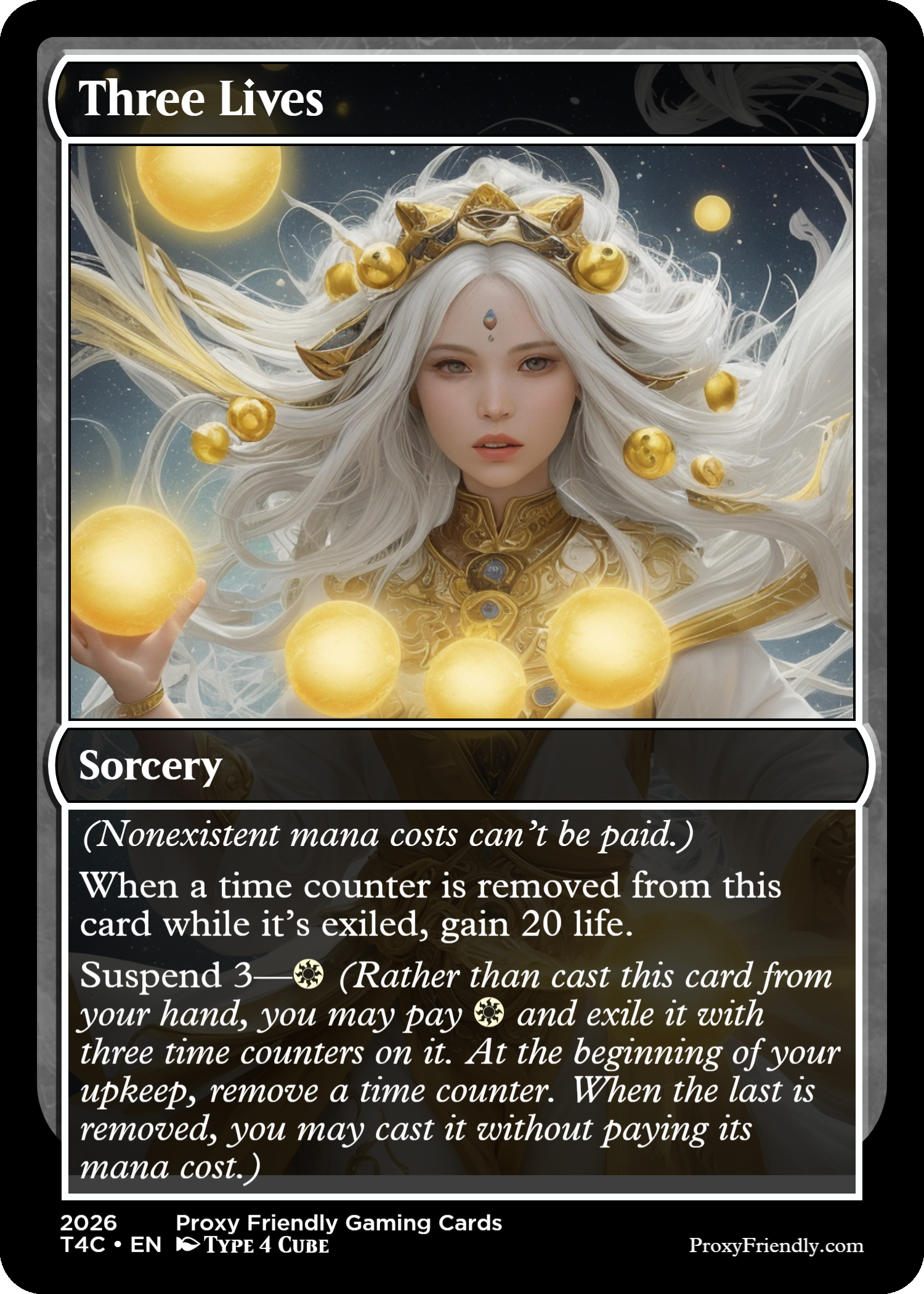
![A fantasy-style trading card titled 'Three Lives' features a woman with long white hair, wearing ornate gold and white armor, and a crown or headdress with gold orbs. She is holding a glowing yellow orb in her hand, and additional orbs float around her, set against a cosmic background with stars and planets.]()
Unique
-
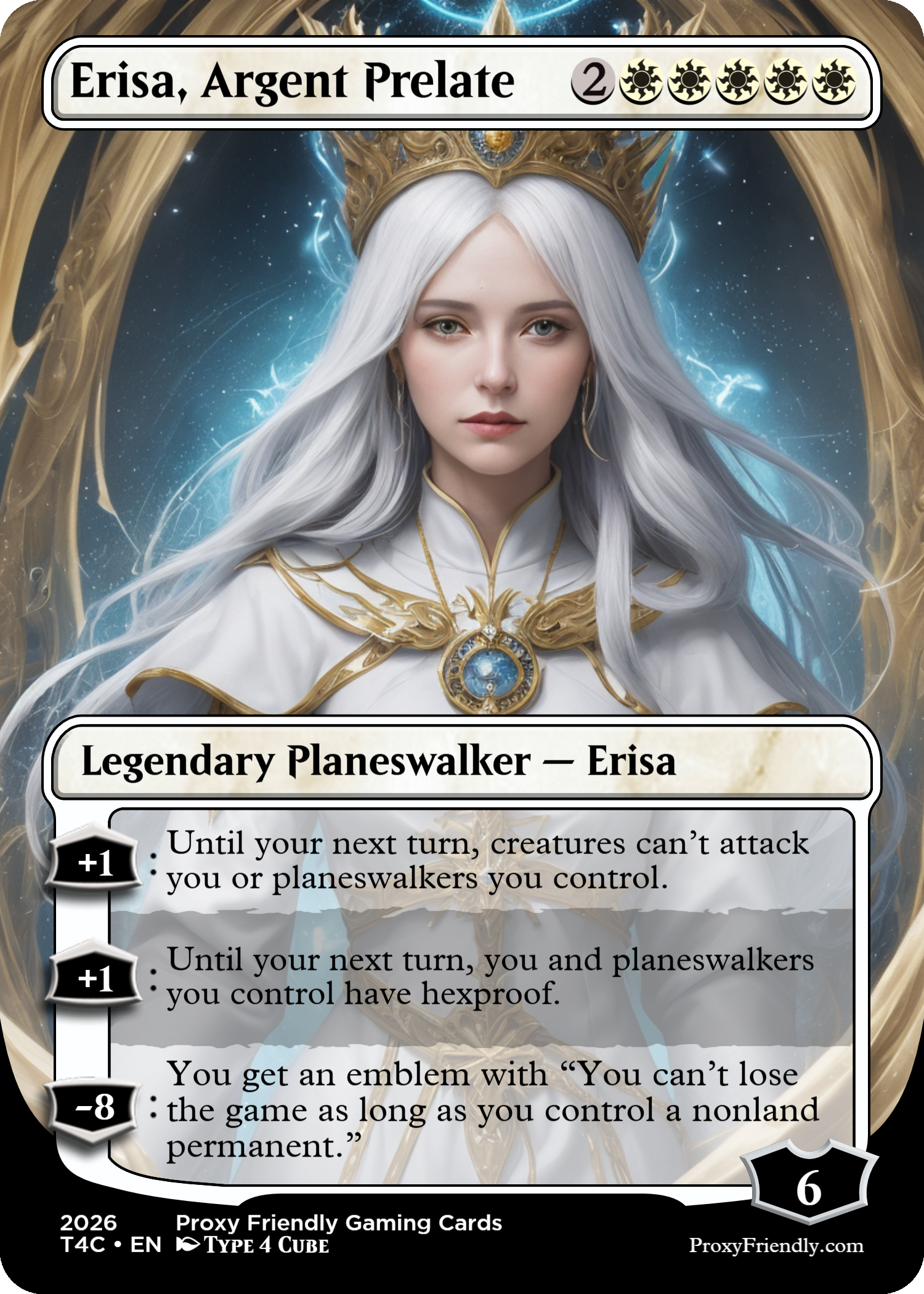
![A fantasy trading card titled 'Erisa, Argent Prelate' featuring a portrait of a woman with long silver hair, wearing a gold and white crown and robes with intricate designs, set against a cosmic background with blue and gold accents.]()
Prelate
-
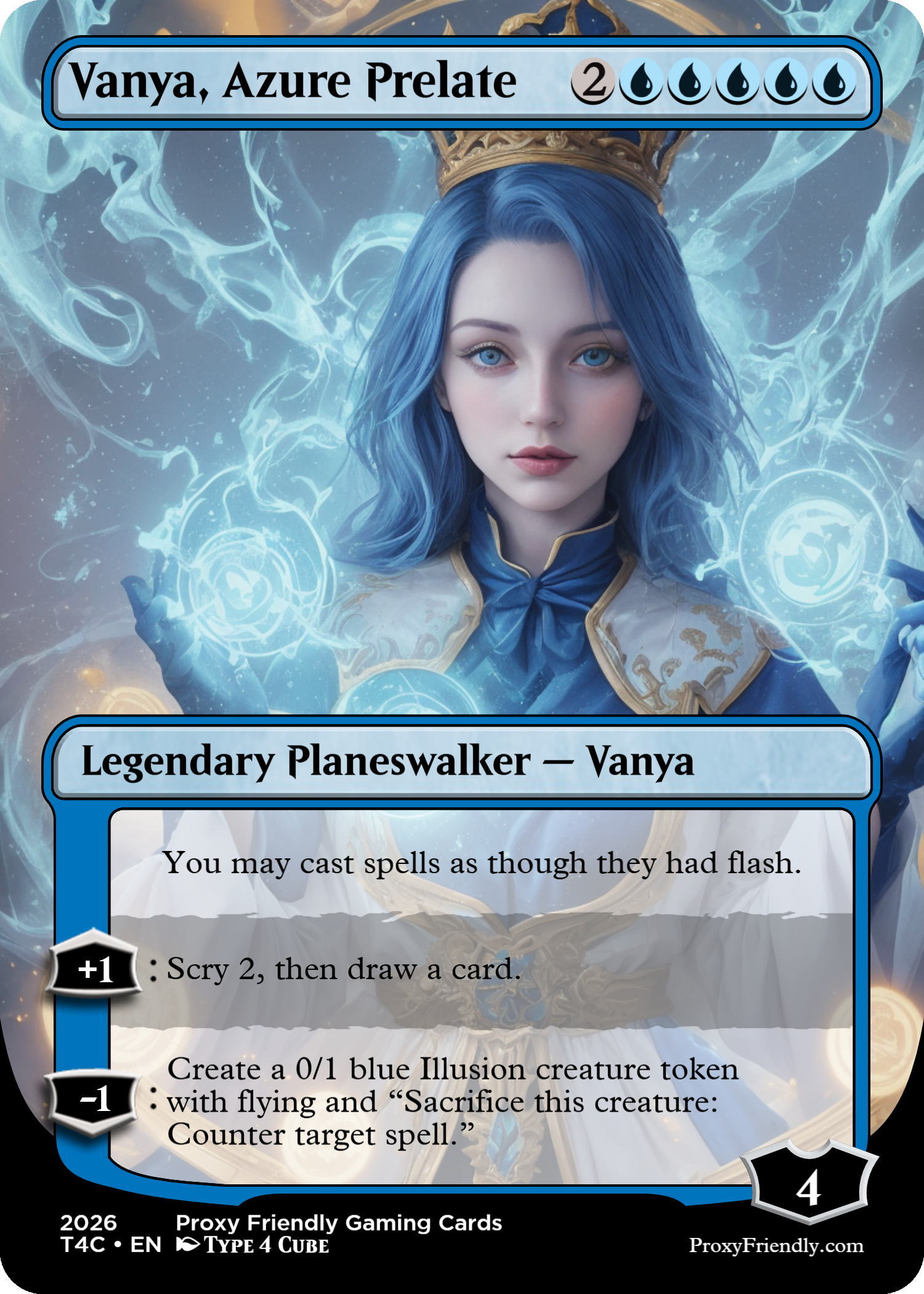
![Magic: The Gathering card titled 'Vanya, Azure Prelate' featuring a woman with blue hair and a crown, surrounded by blue mystical energies. Text indicates she is a legendary planeswalker with abilities involving casting spells and creating illusion tokens.]()
Prelate
-
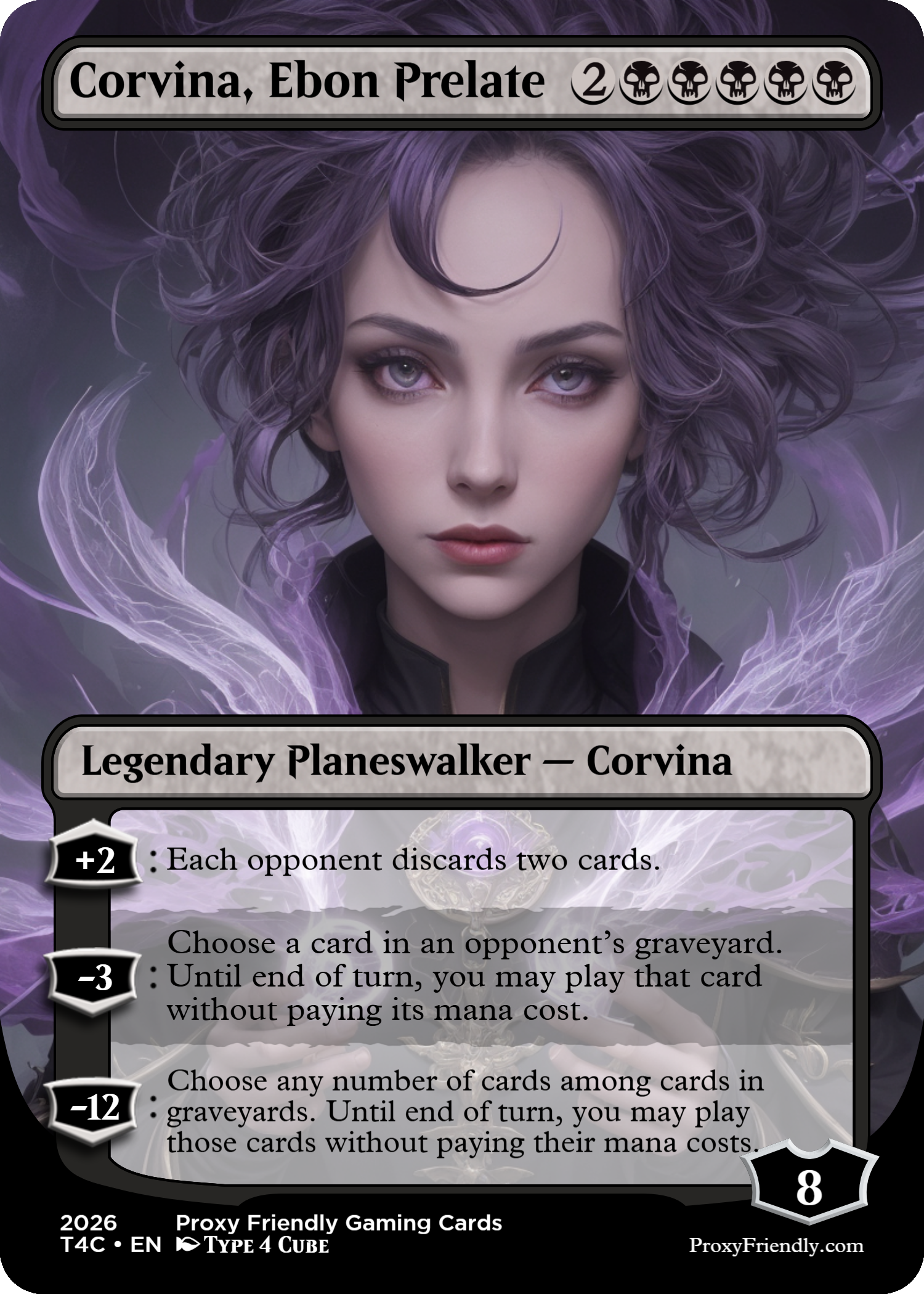
![A trading card featuring a woman with purple curly hair and pale skin, titled "Corvina, Ebon Prelate."]()
Prelate
-
![A fantasy trading card featuring a woman with red hair and fiery background. The card is titled 'Kara, Crimson Prelate' and has game statistics and abilities listed on it.]()
Prelate
-
![A fictional trading card titled 'Feena, Verdant Prelate' featuring a woman with long pink hair dressed in a nature-themed green and pink costume, set against a lush green forest background.]()
Prelate
-
![A fantasy trading card titled "Zedra, Null Prelate," featuring a digital illustration of a female character with long, flowing silver hair, pale skin, and silver horns. She is dressed in ornate armor, set against a swirling blue and white magical background.]()
Prelate
-
![A trading card titled 'Lyssara, Prism Prelate' featuring a portrait of a young woman with long dark hair, wearing gold jewelry and a crown, set against a classical architectural background. The card has game stats and abilities listed below the portrait and is from a collection called 'Proxy Friendly Gaming Cards,' published in 2026.]()
Prelate
-
![A fantasy trading card titled "Orriel, Aegis Ascendant" featuring an angelic woman with long white hair, large white wings, and a white dress.]()
1st Triplets
-
![A fantasy trading card titled "Orran, Storm Sovereign" featuring a powerful elemental dragon surrounded by storm clouds and lightning, with gold armor and a fierce look.]()
1st Triplets
-
![Artwork of Orrath, Chainfire Tyrant, a large demon with dark armor, red wings, and multiple horns, standing menacingly with glowing red eyes and an open mouth.]()
1st Triplets
-
![A fantasy-style digital illustration of a knight in armor with a dark face mask, wearing a blue hooded cloak and armor with intricate patterns, standing against a misty mountain landscape under a cloudy sky.]()
2nd Triplets
-
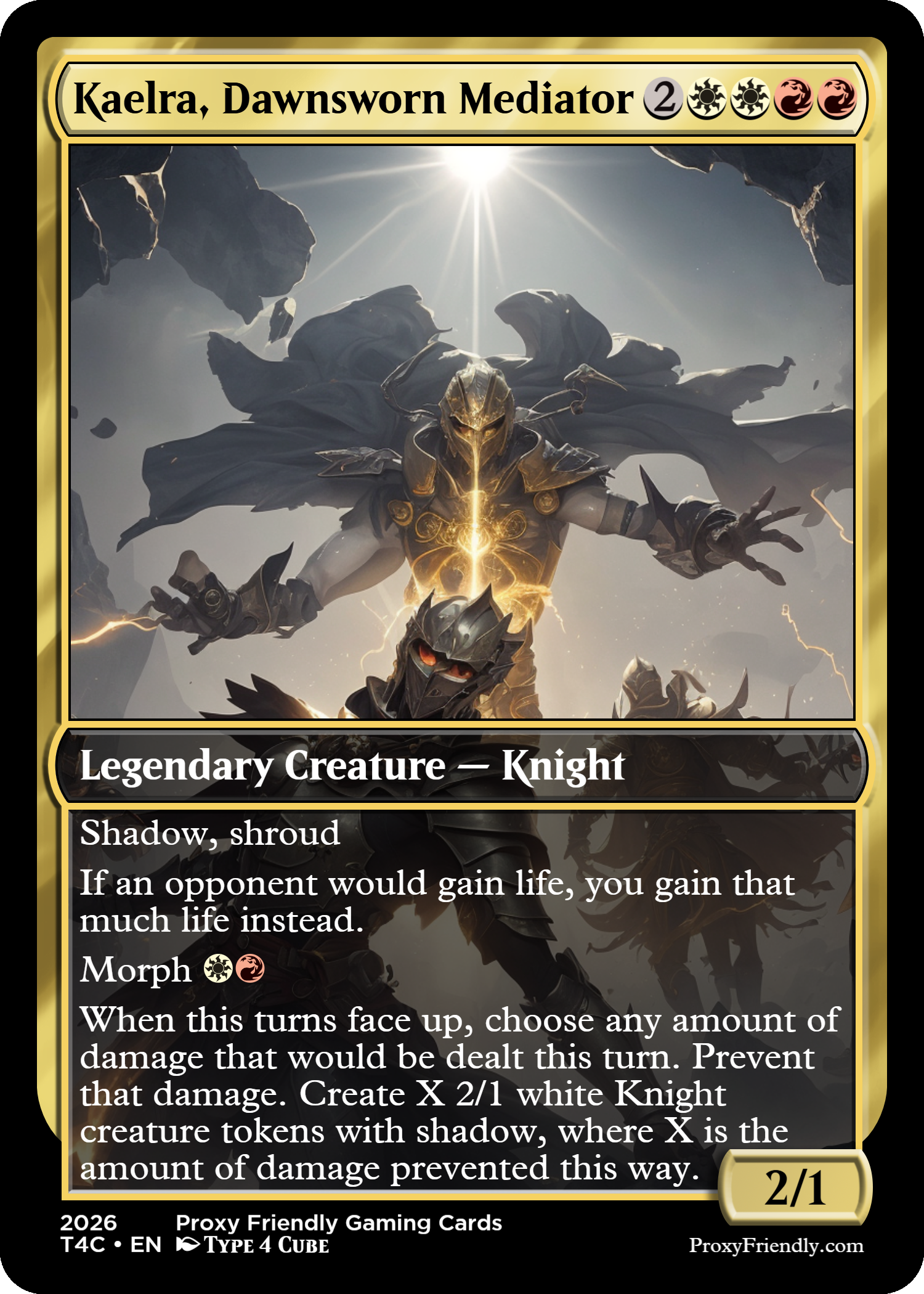
![A fantasy trading card titled "Kaelra, Dawnsworn Mediator" depicting a knight with a glowing golden chest, wearing armor and a cape, surrounded by rocky floating islands and lightning, with a dark armored knight in the foreground.]()
2nd Triplets
-
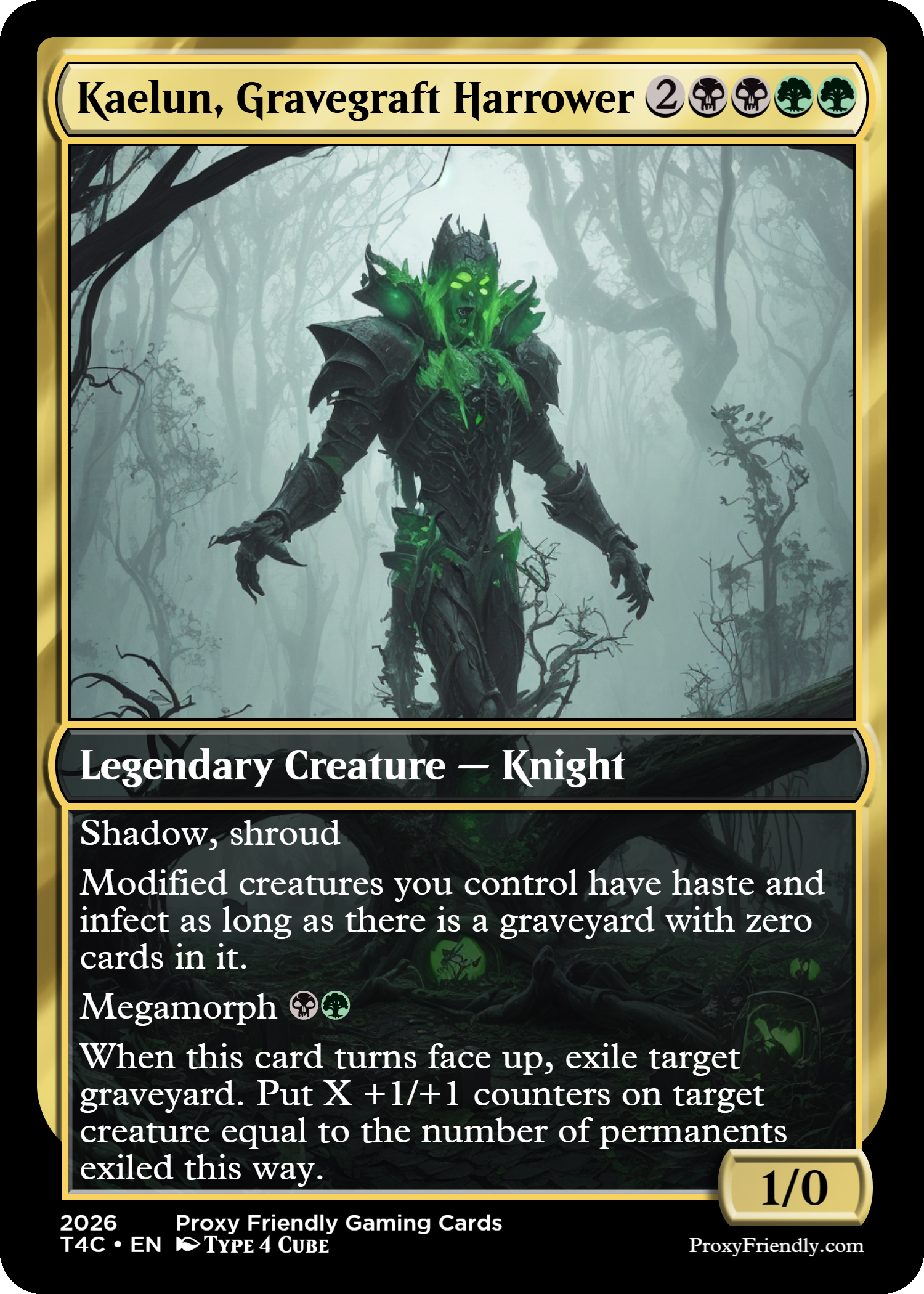
![A Magic: The Gathering card titled 'Kaelun, Gravegraft Harrower' featuring a dark, forest background with a knight in black armor and glowing green accents, surrounded by twisted trees.]()
2nd Triplets
-
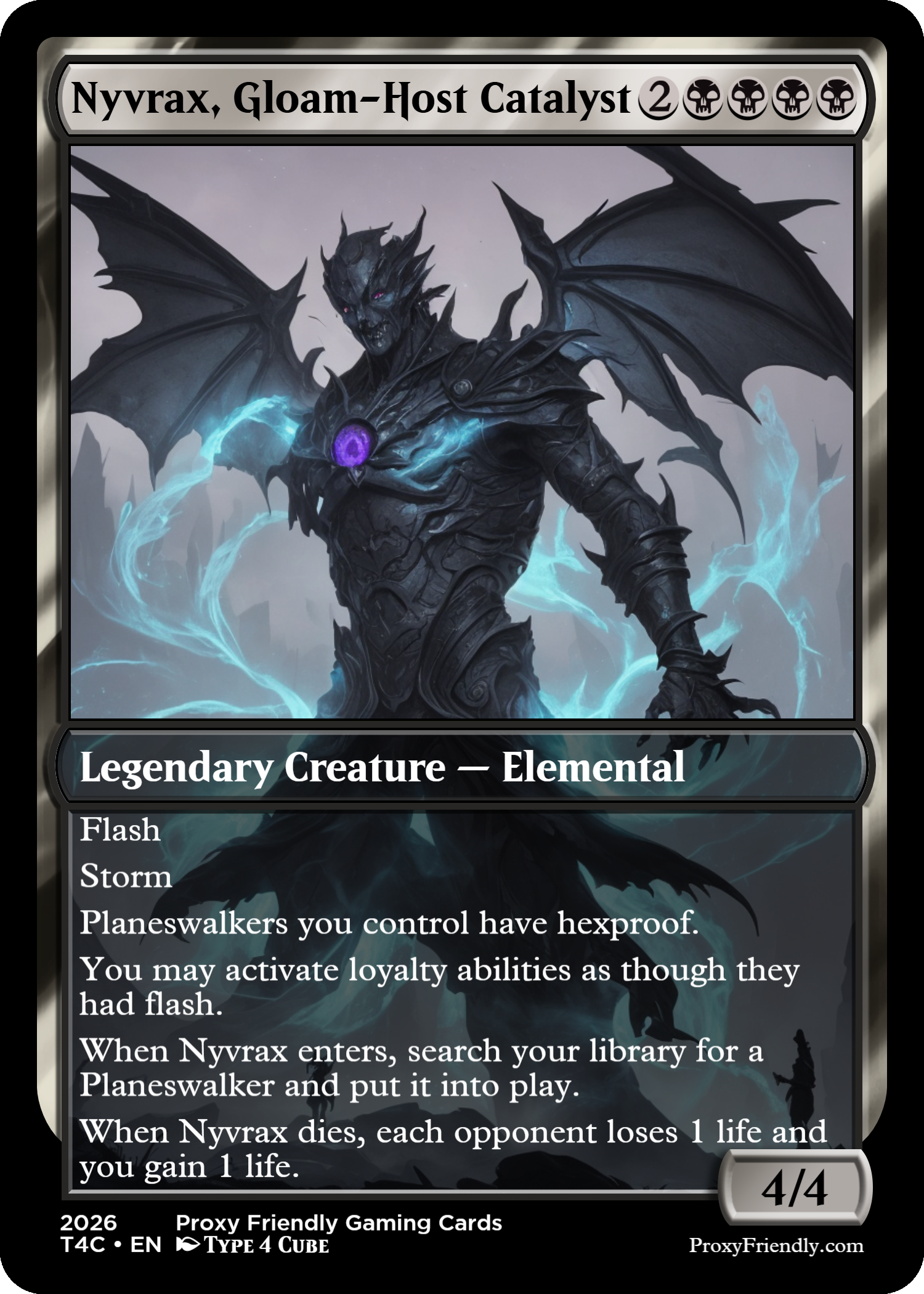
![A fantasy-style illustration of a dark, winged creature with glowing purple core in its chest, surrounded by blue magical energy, on a card titled 'Nyvrax, Gloam-Host Catalyst' from a trading card game.]()
3rd Triplets
-
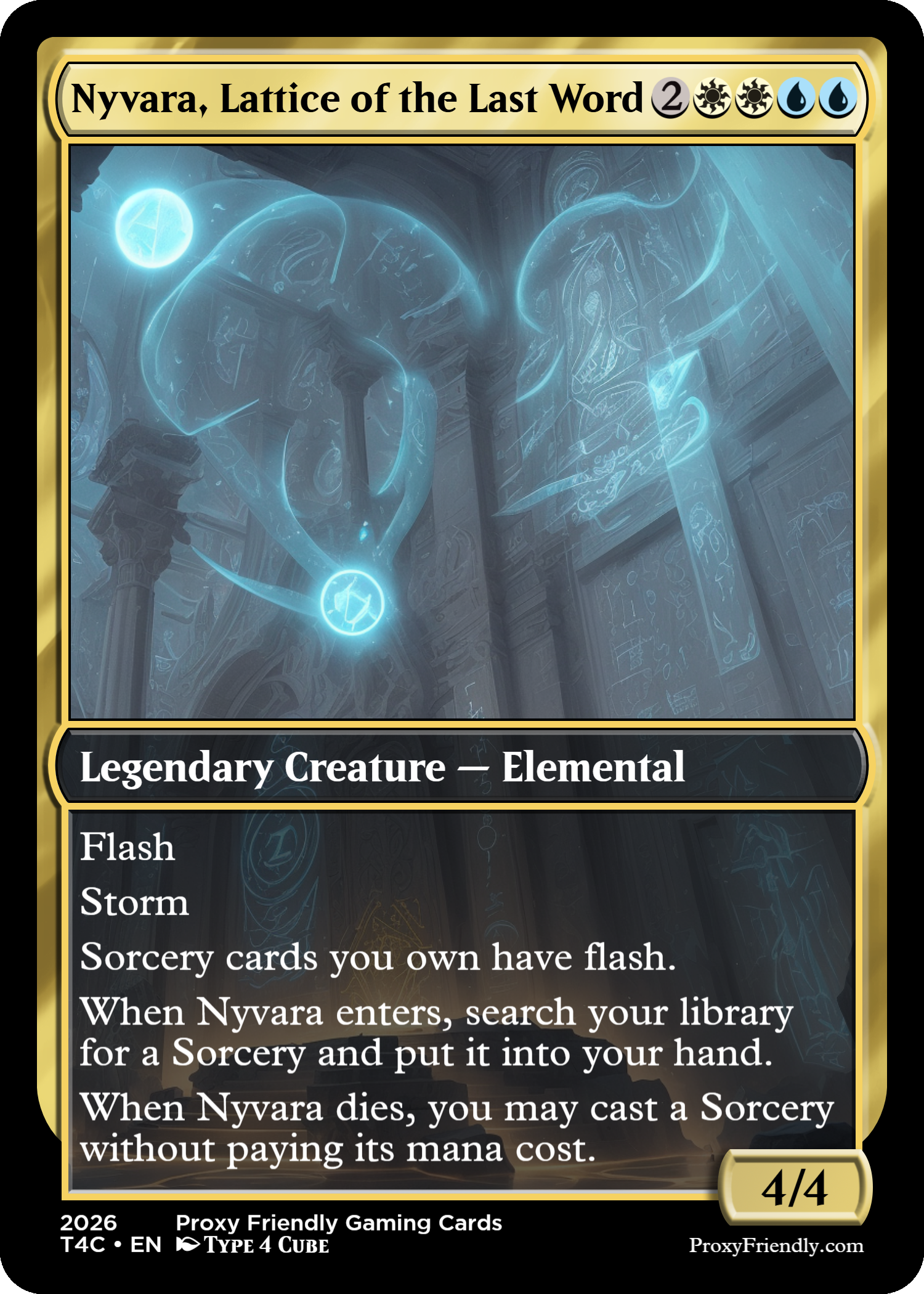
![A Magic: The Gathering card titled 'Nyyara, Lattice of the Last Word' with a blue and black border. The card's illustration depicts glowing blue orbs and ethereal energy within a mystical, ancient chamber with arcane symbols.]()
3rd Triplets
-
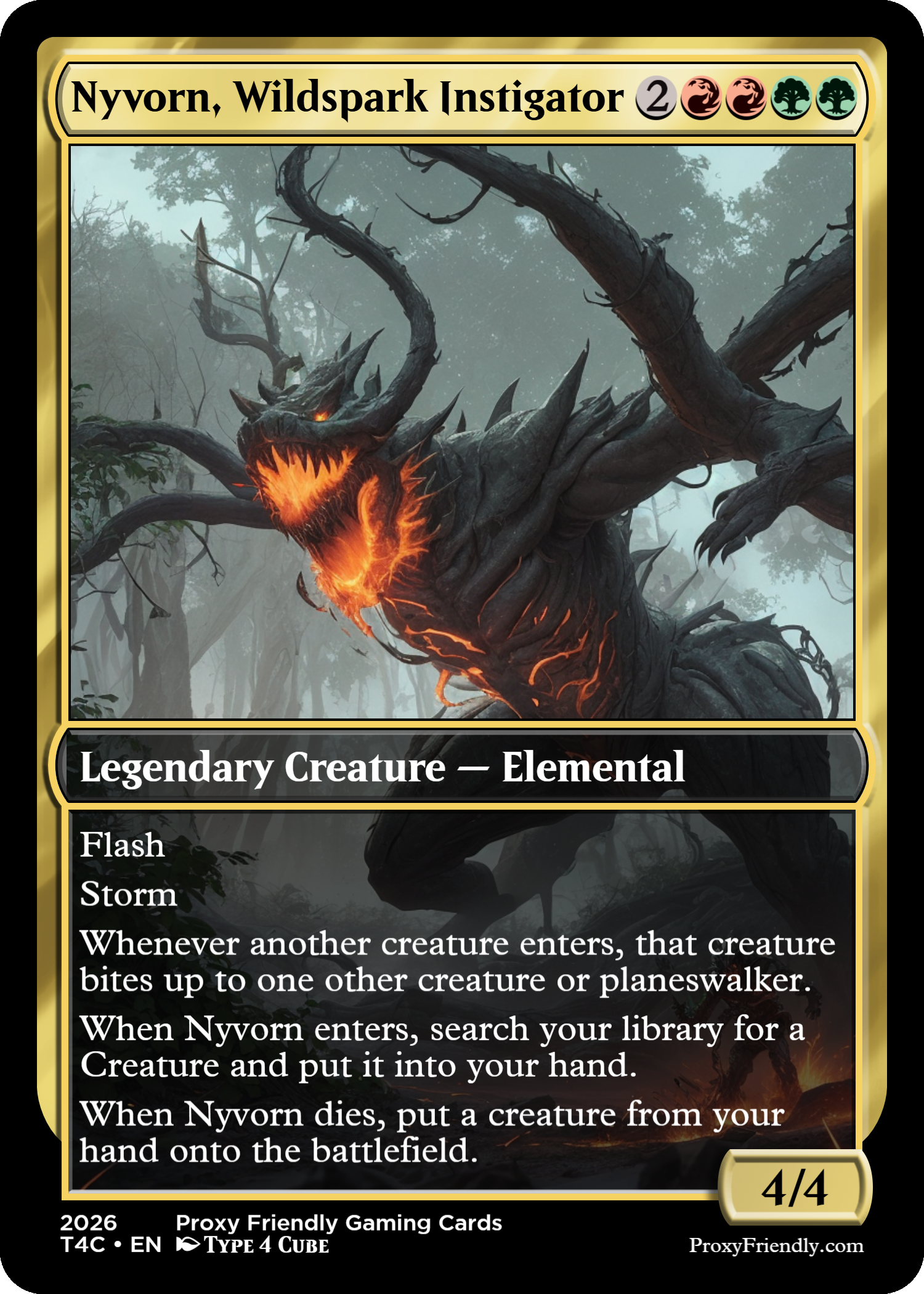
![A trading card titled Nyvorn, Wildspark Instigator featuring a dark, tree-like creature with glowing orange and fiery mouth in a foggy forest background.]()
3rd Triplets
-
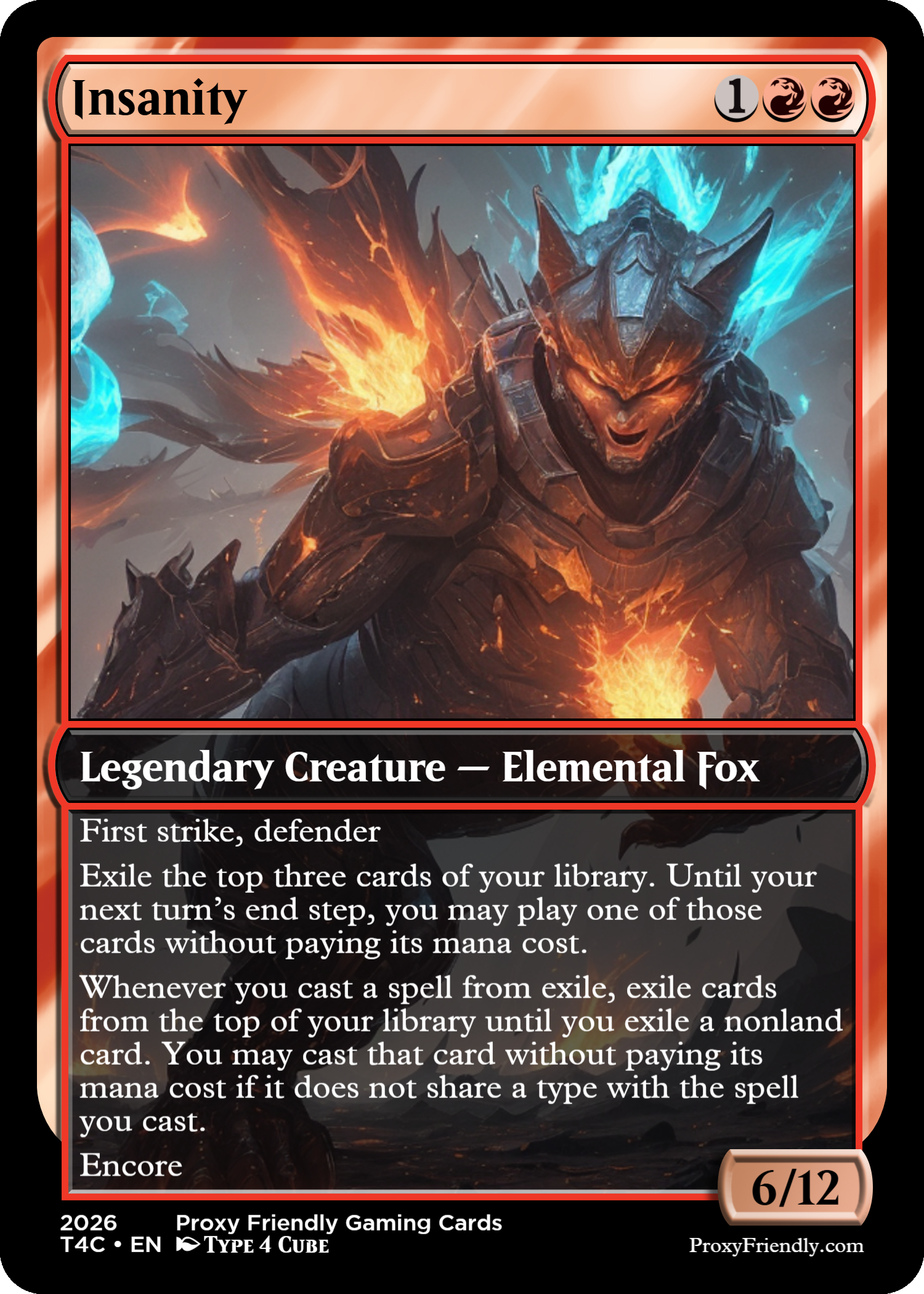
![A trading card titled 'Insanity' featuring an armored elemental fox with fiery and icy elements in the background.]()
4th Triplets
-
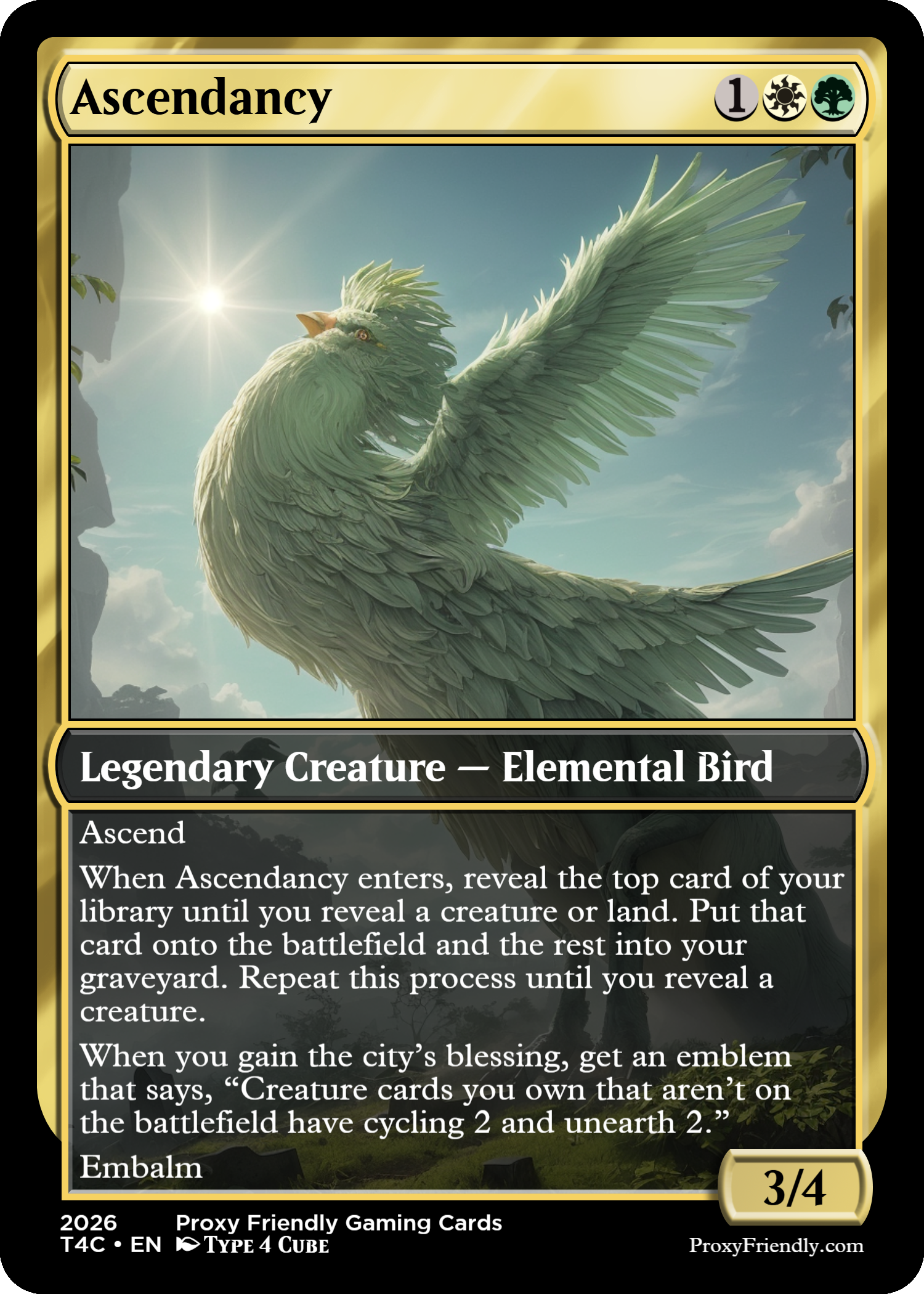
![A fantasy trading card named Ascendancy featuring a majestic green bird with large feathery wings, set against a bright sky with sunlight.]()
4th Triplets
-
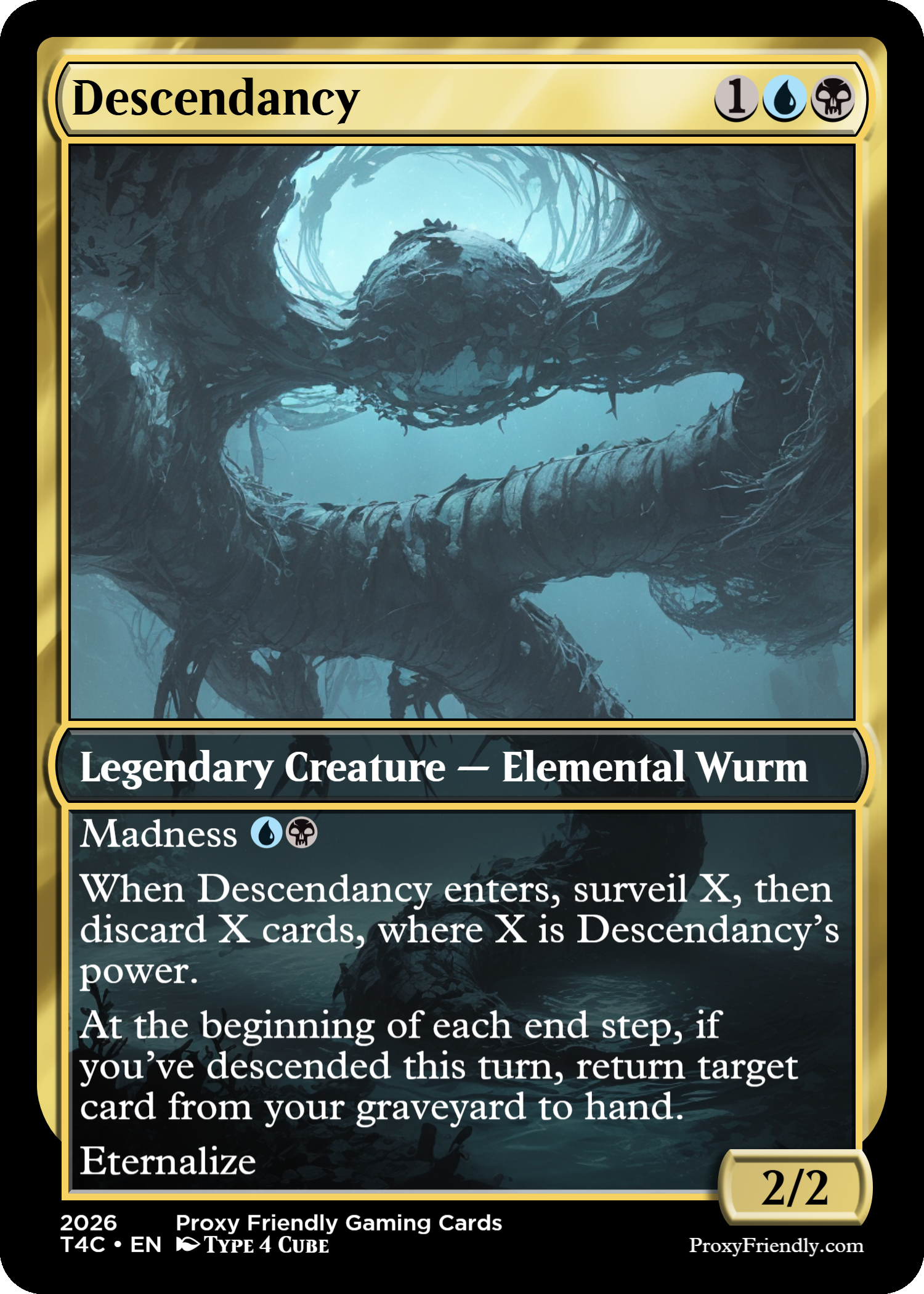
![A Magic: The Gathering card titled "Descendancy" with artwork depicting a deep, dark underground cavern with twisted roots and a glowing blue light overhead. The card is a Legendary Creature — Elemental Wurm with a power and toughness of 2/2, special abilities, and a gold border indicating it's a rare card.]()
4th Triplets
-
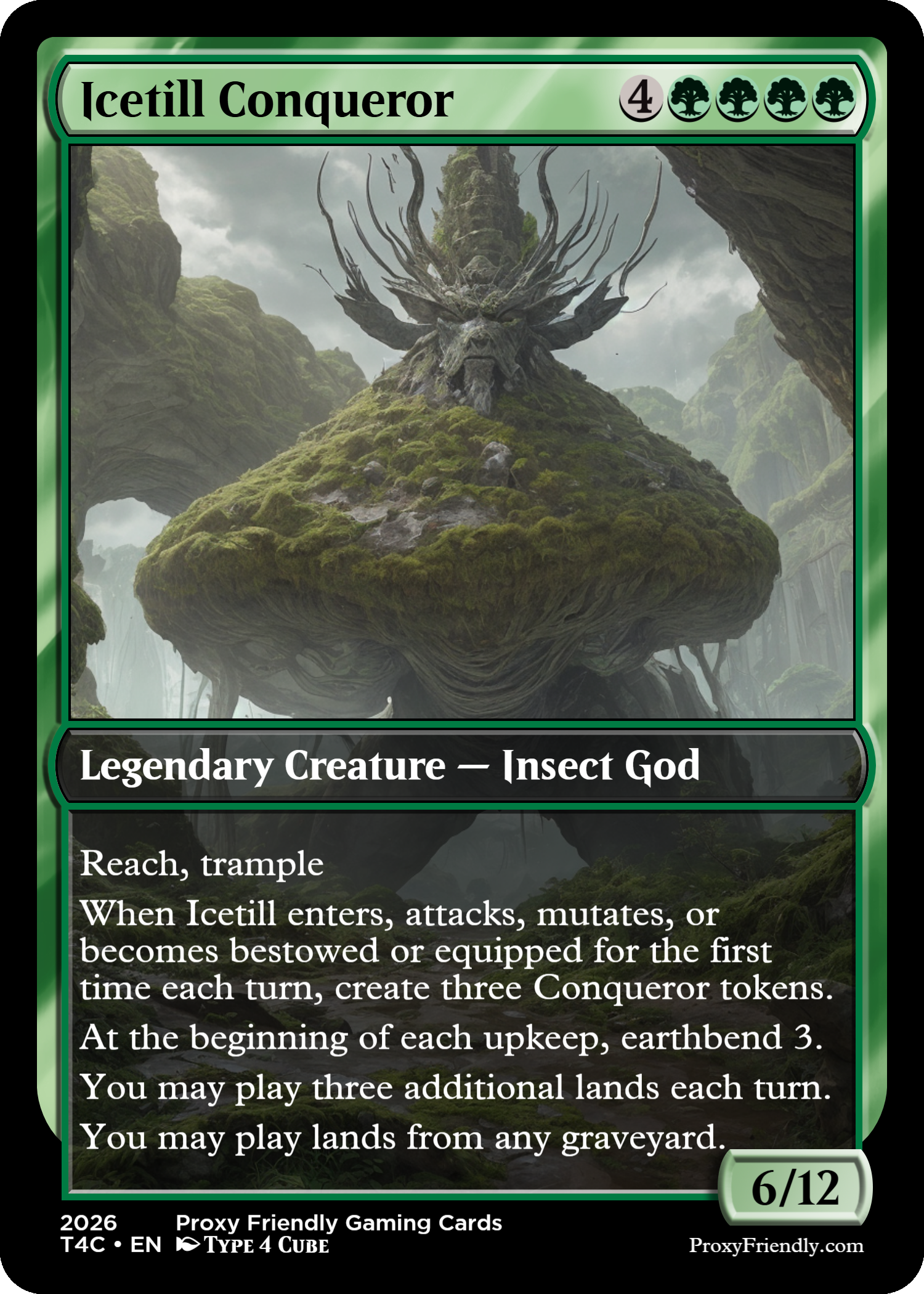
![A fantasy trading card titled 'Icetill Conqueror' featuring a large floating moss-covered island with a tree-like creature with branch-like antlers and a face on top of the island, set in a misty forest environment.]()
5th Triplets
-
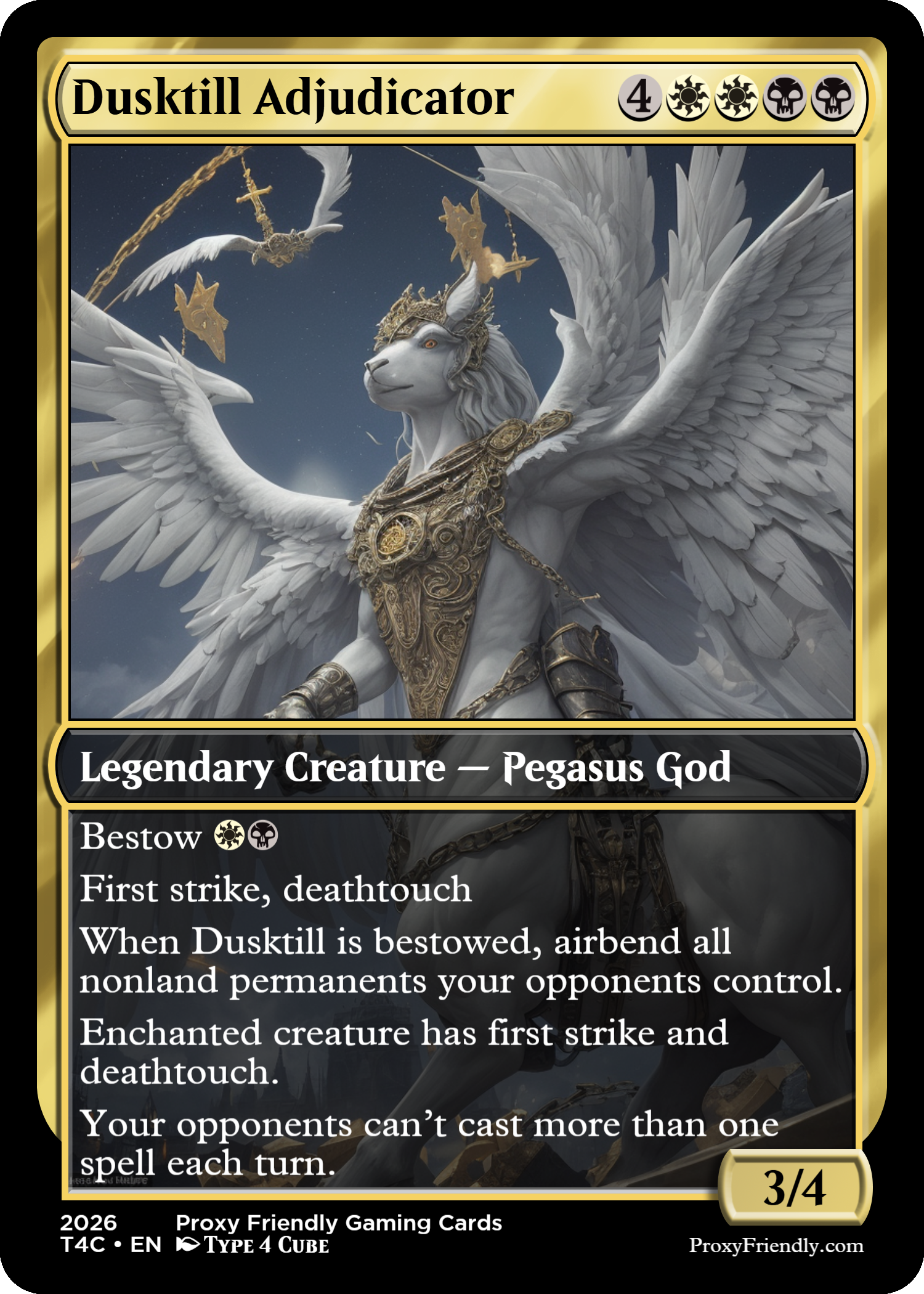
![A fantasy trading card titled "Dusktill Adjudicator" featuring a white winged lion with a golden crown and armor, flying against a starry sky, with smaller winged creatures around it.]()
5th Triplets
-
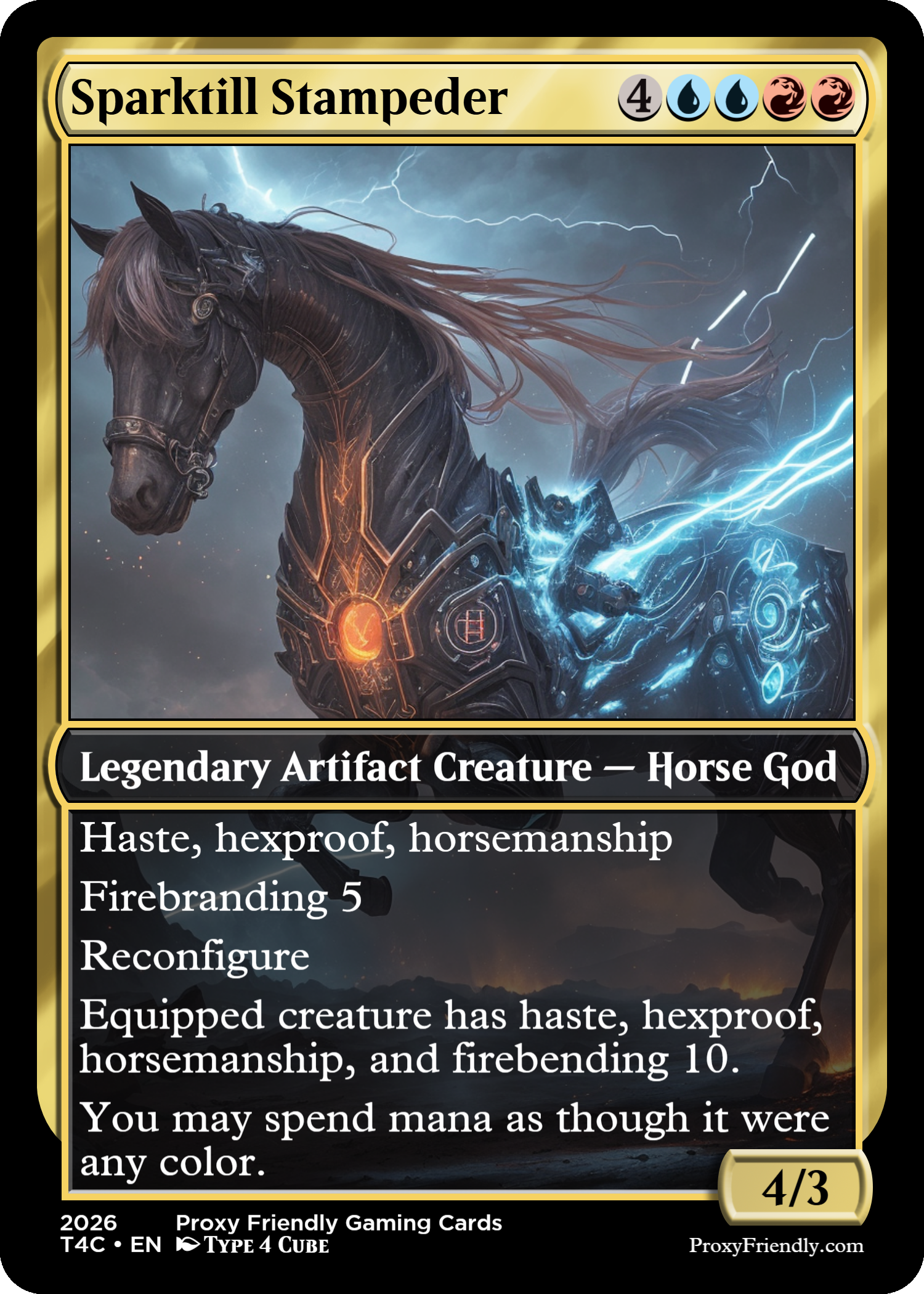
![A fantasy trading card titled 'Sparkkilt Stampeder' featuring a mechanical horse with lightning and fire effects, labeled as a legendary artifact creature - horse god, with various abilities and stats.]()
5th Triplets
-
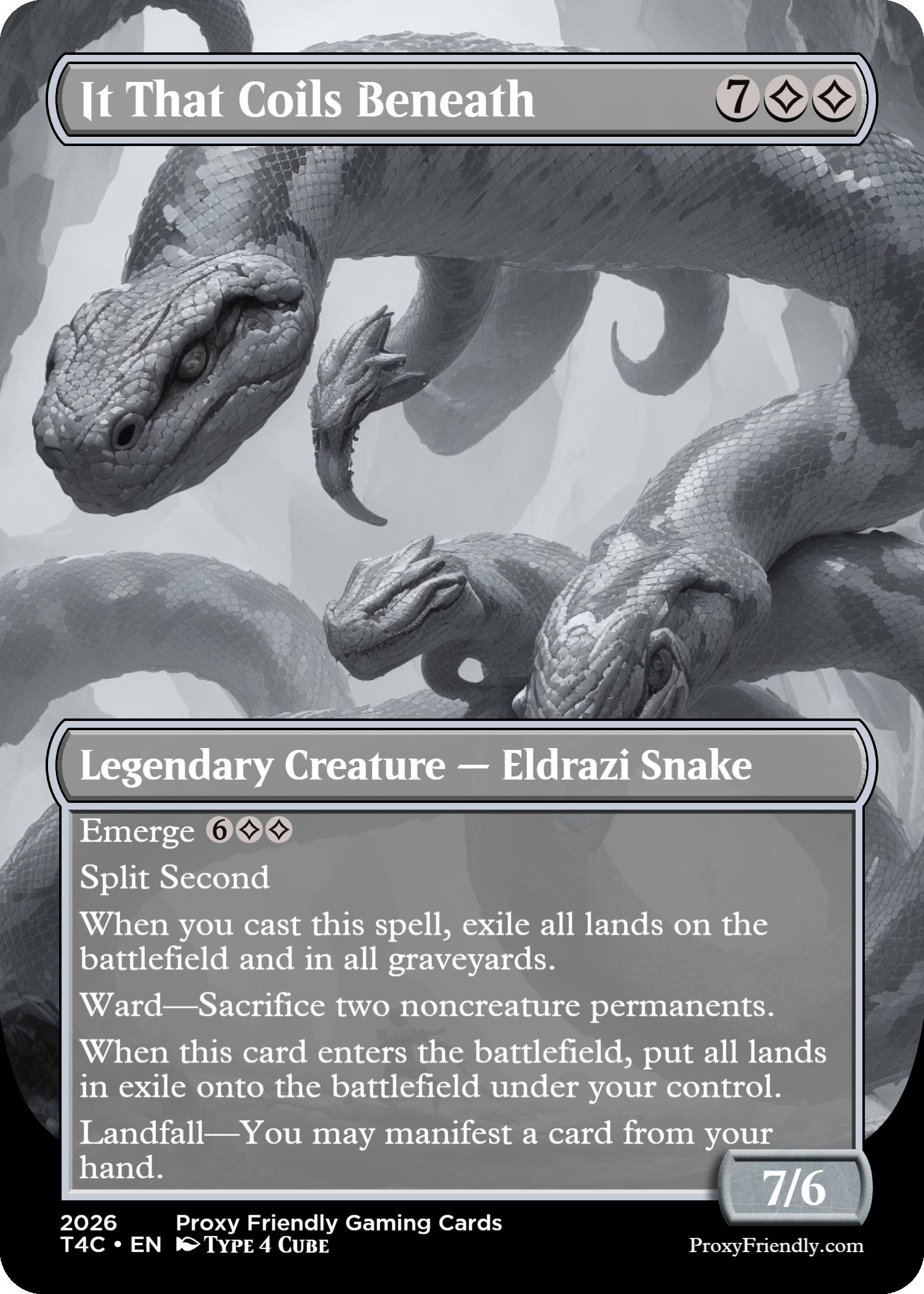
![A Magic: The Gathering card titled "It That Coils Beneath" featuring grayscale artwork of several coiled and intertwined Eldrazi snakes with detailed scales and ominous expressions.]()
Unique Legend
-
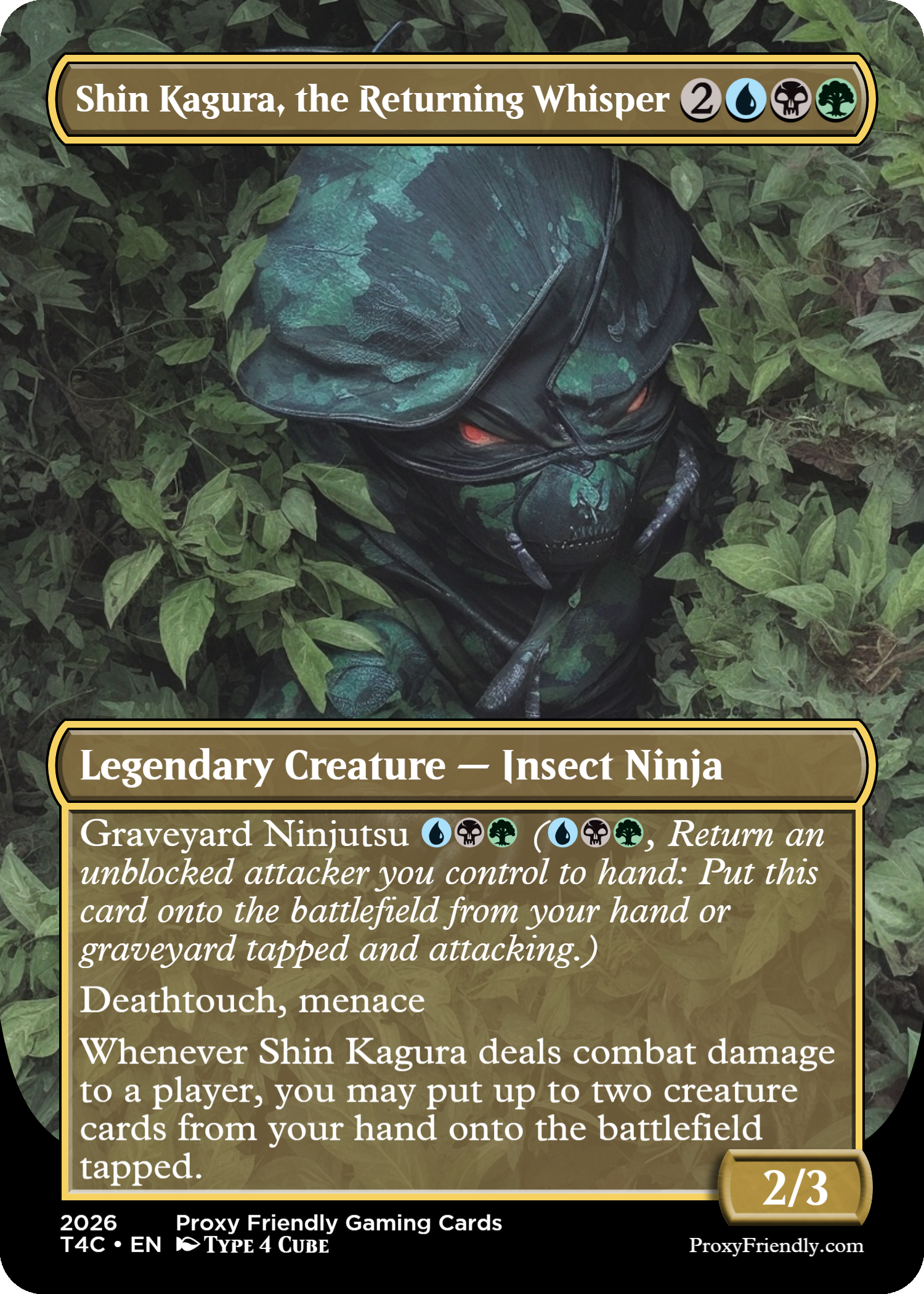
![A trading card titled 'Shin Kagura, the Returning Whisper'. The card features an illustration of a figure in a dark, insect-like ninja costume with glowing red eyes, surrounded by green leaves. The card describes a legendary creature that is an insect ninja, with abilities called Graveyard Ninjitsu and Deathtouch, menace. It has a mana cost of 2 colorless, 1 blue, 1 black, and 1 green mana, with power 2 and toughness 3.]()
Unique Legend
-
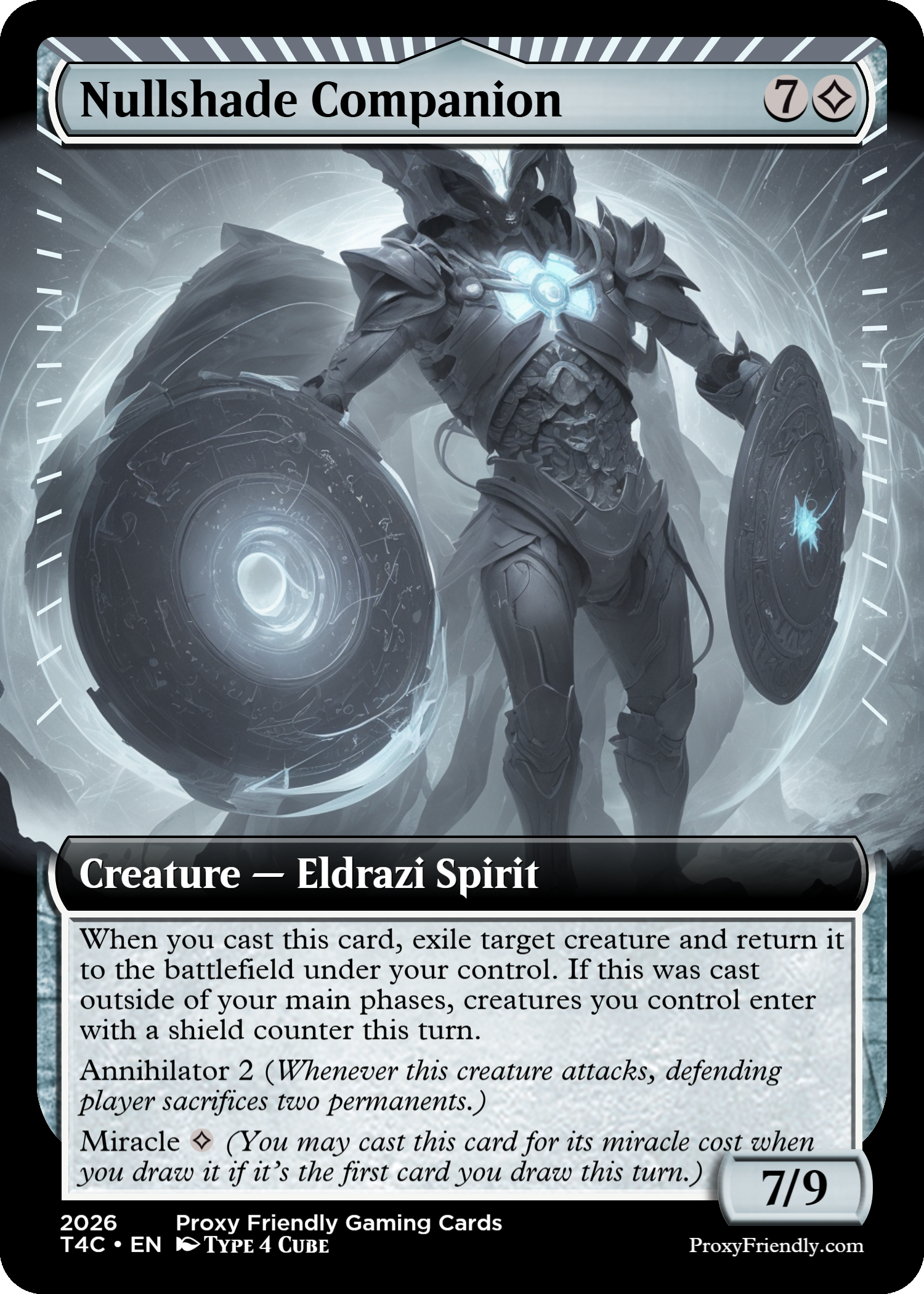
![A digital illustration of Nilshade Companion, a creature with a humanoid appearance, dark armor, glowing blue orbs, and large shields with glowing runes, set against a mystical, glowing background.]()
Eldrazi Miracle
-
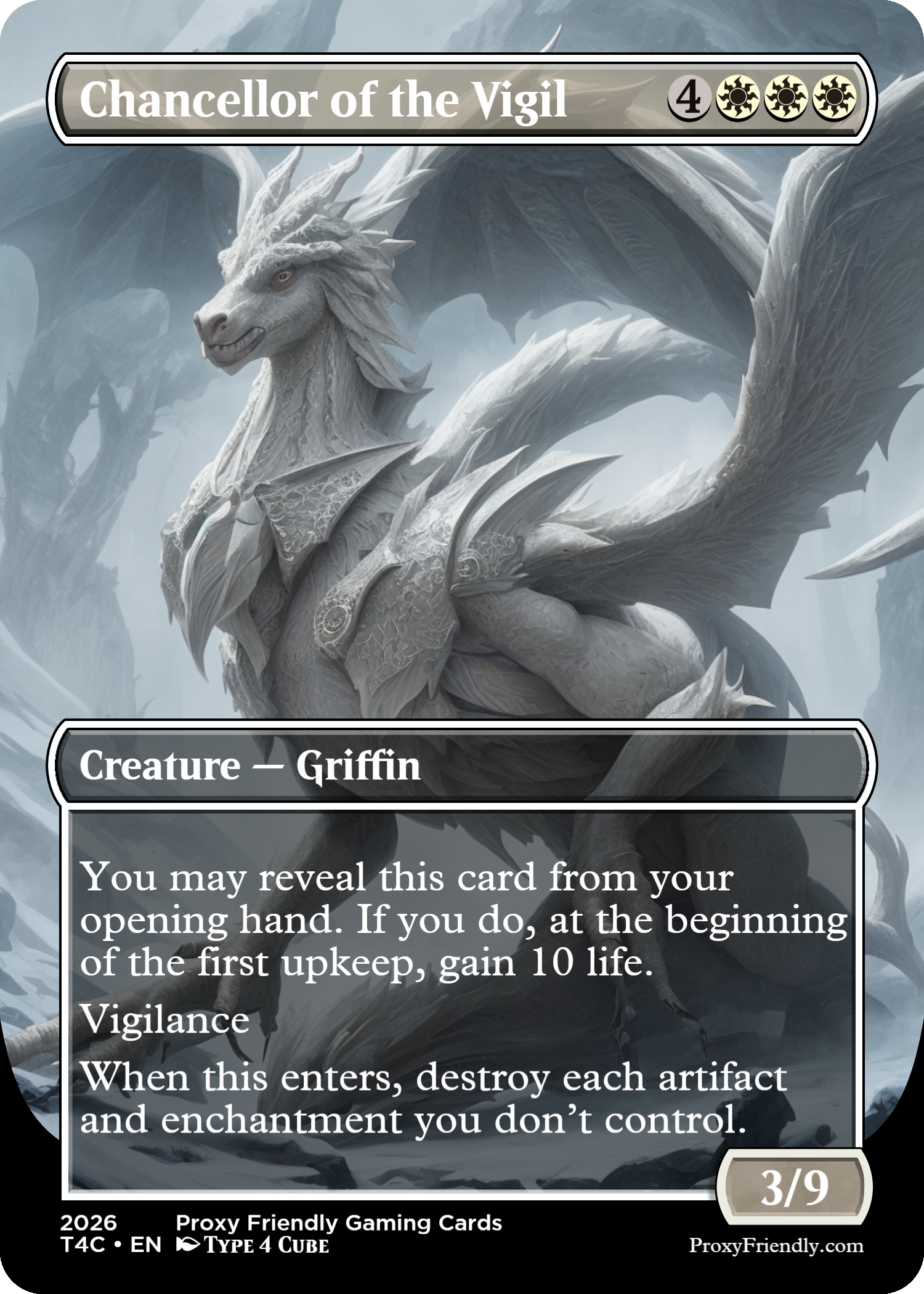
![A fantasy artwork of a white dragon with intricate scales and wings, standing in a misty, snow-covered forest.]()
Chancellor
-
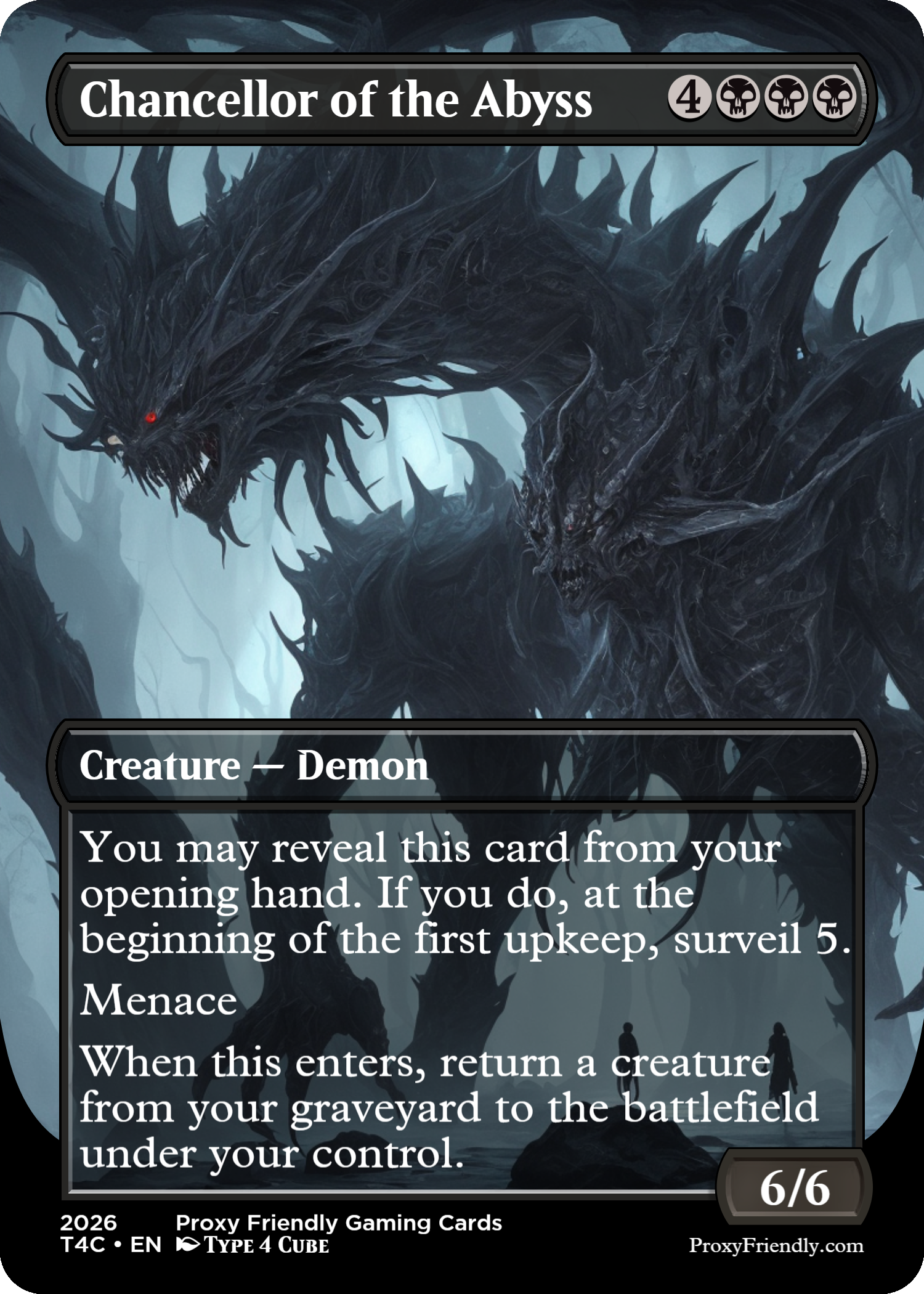
![A dark fantasy illustrated Magic: The Gathering card titled 'Chancellor of the Abyss,' featuring two massive black, demonic creatures with glowing red eyes and spiky, twisted bodies in a dark, ominous landscape with silhouettes of people at the bottom.]()
Chancellor
-
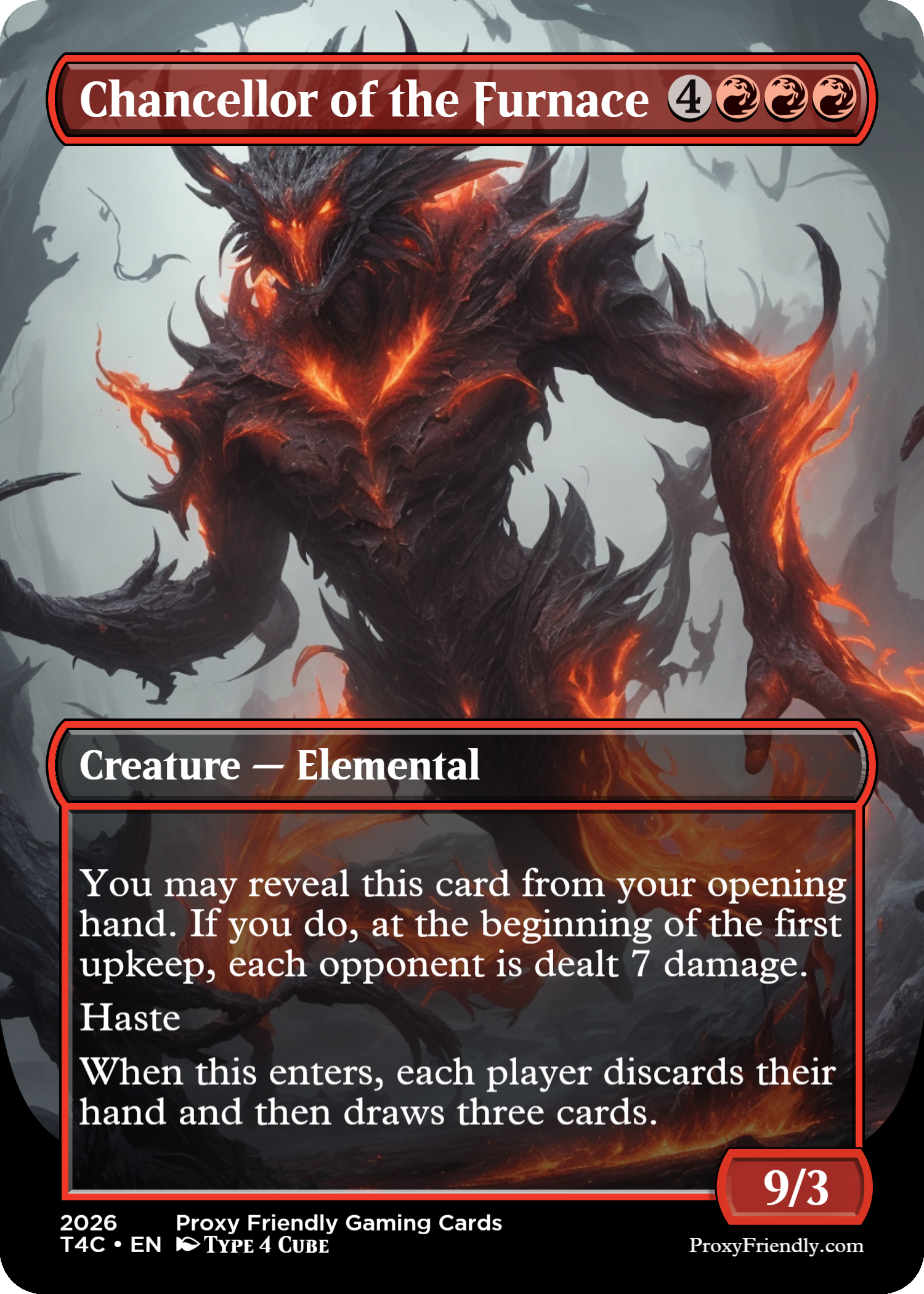
![A fantasy trading card titled "Chancellor of the Furnace" depicting a fiery, monstrous elemental creature with a dark, jagged body and glowing orange flames. The card has a red border, four black mana symbols, and a power/toughness of 9/3.]()
Chancellor
-
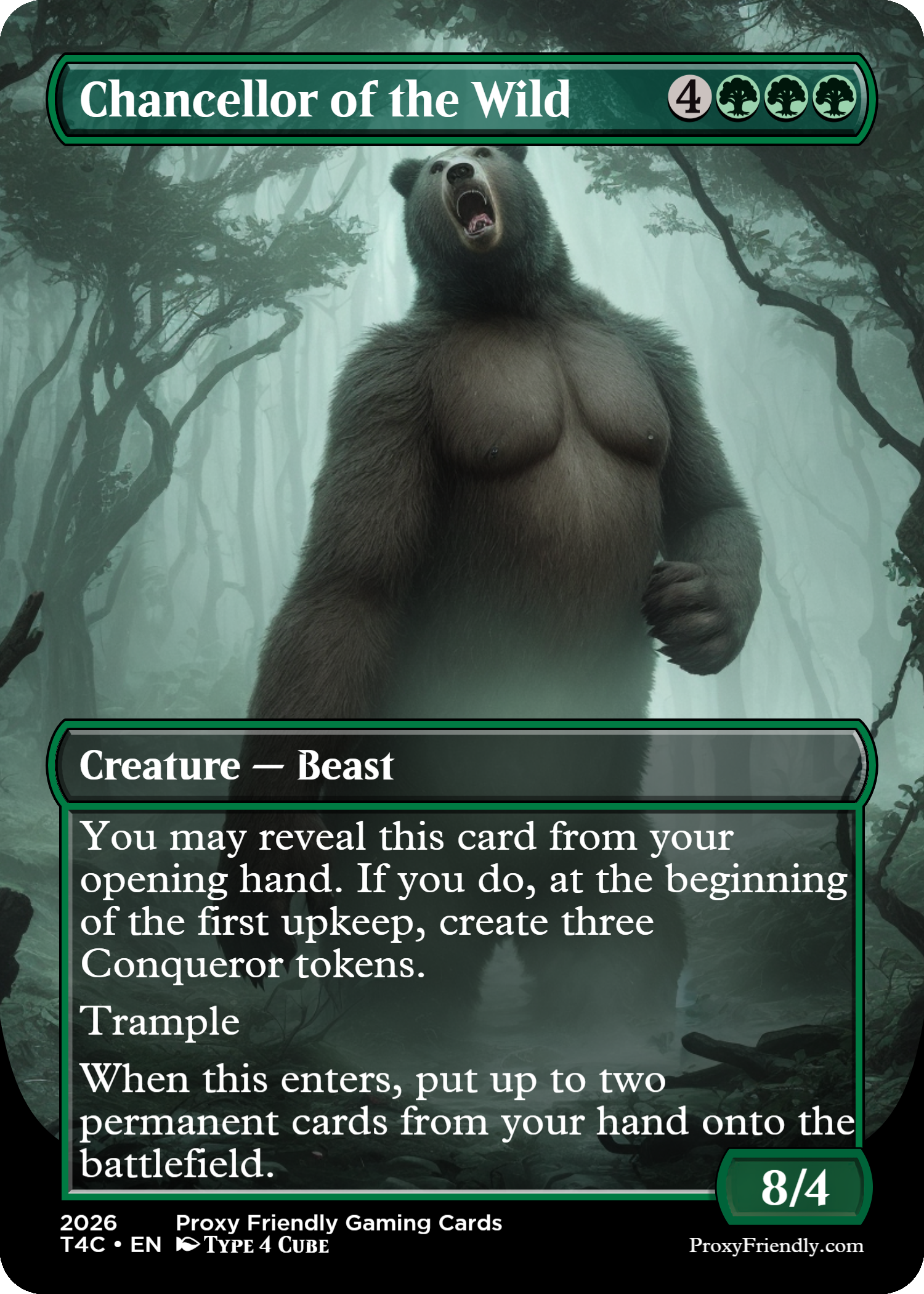
![A fantasy trading card titled "Chancellor of the Wild" featuring a bear with the body of a man, standing in a misty forest with trees. The card indicates it is a creature - beast, with a power and toughness of 8/4, and some game mechanics and text.]()
Chancellor
-
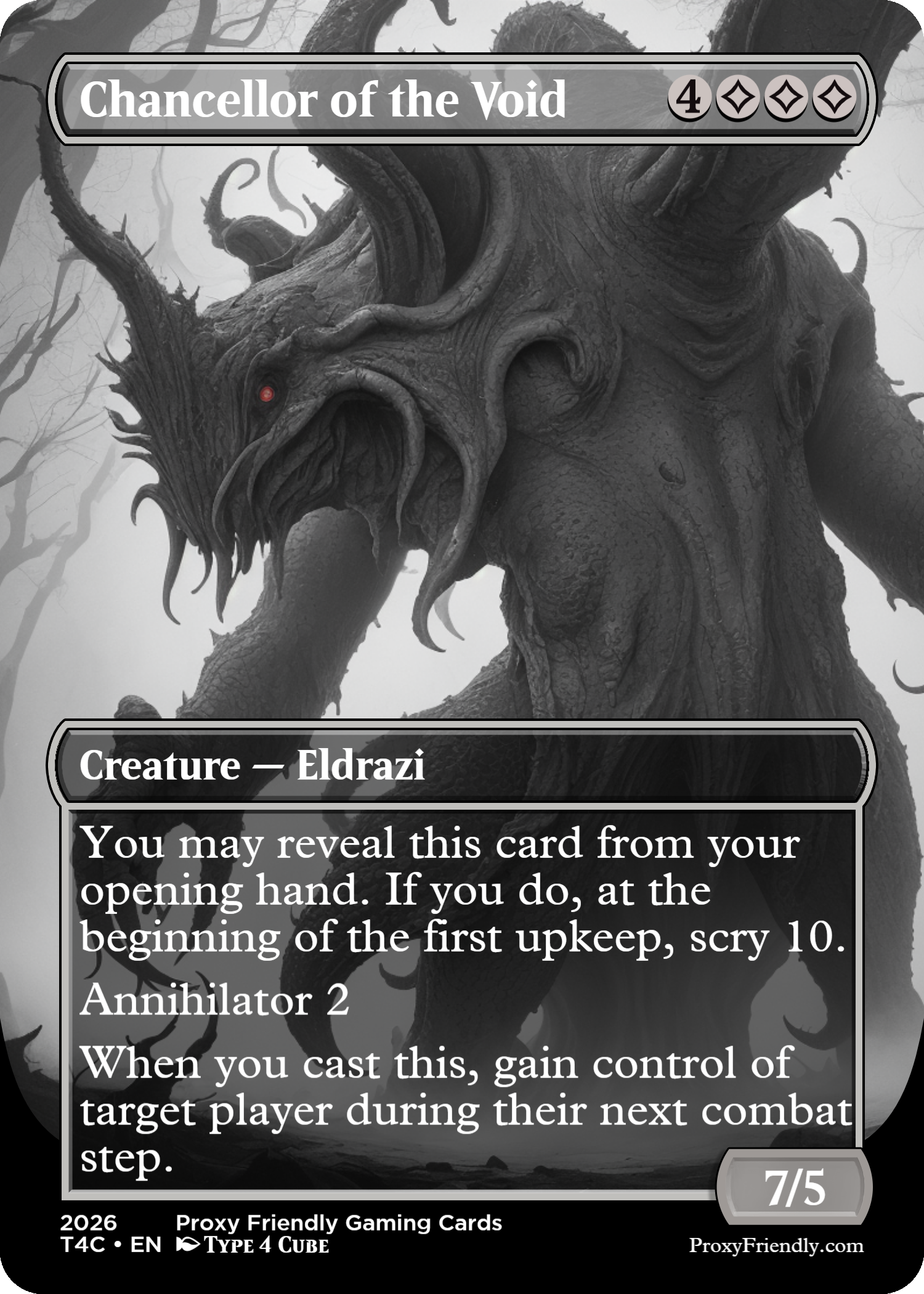
![A fantasy trading card titled "Chancellor of the Void" featuring a large, dark, tree-like creature with twisted, gnarled branches that resemble a monstrous face. The background is a grayscale forest with fog.]()
Chancellor
-
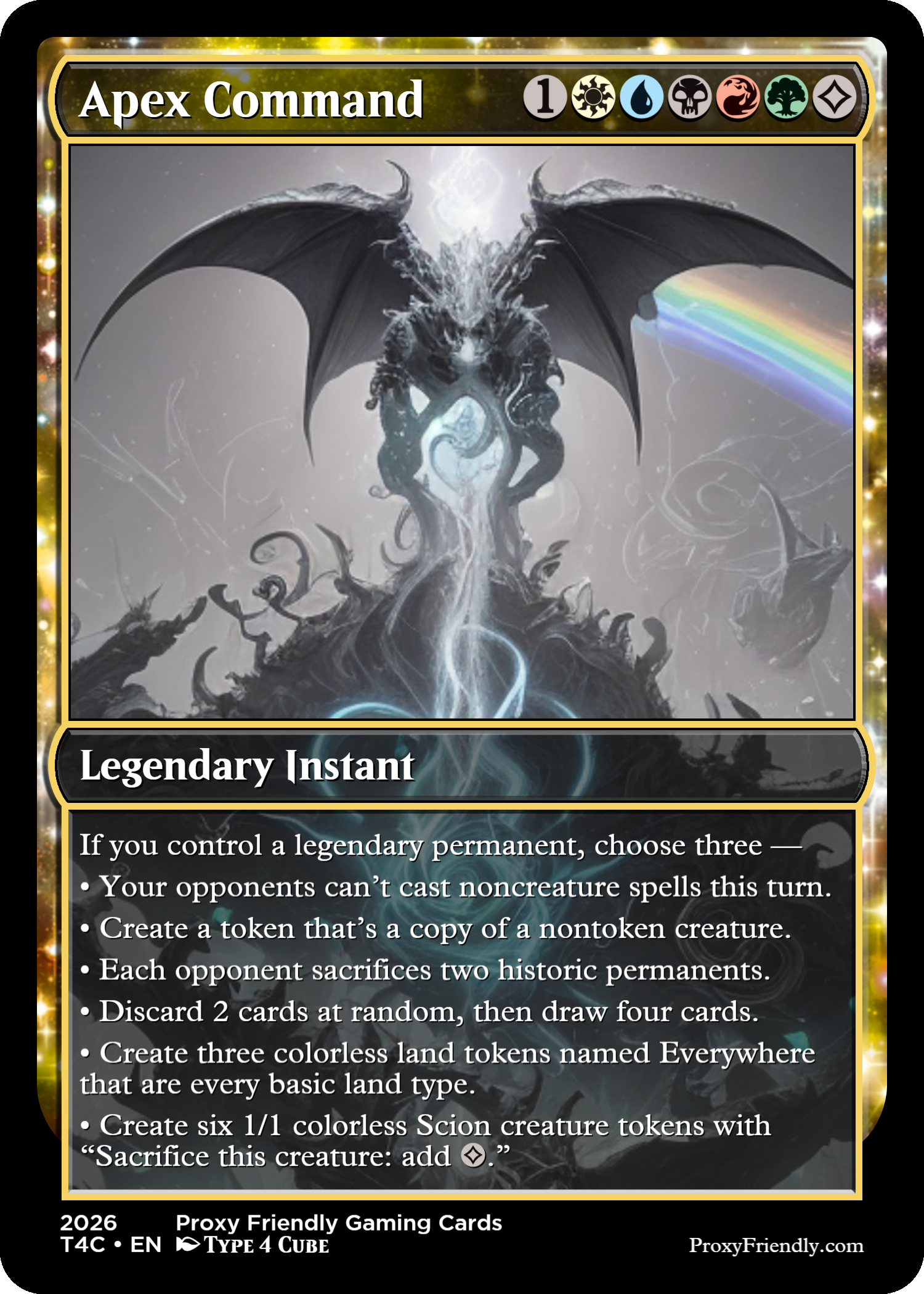
![A Magic: The Gathering card titled 'Apex Command' featuring a dark dragon with wings and glowing smoke emanating from its mouth, with a rainbow and a storm cloud in the background.]()
Command
-
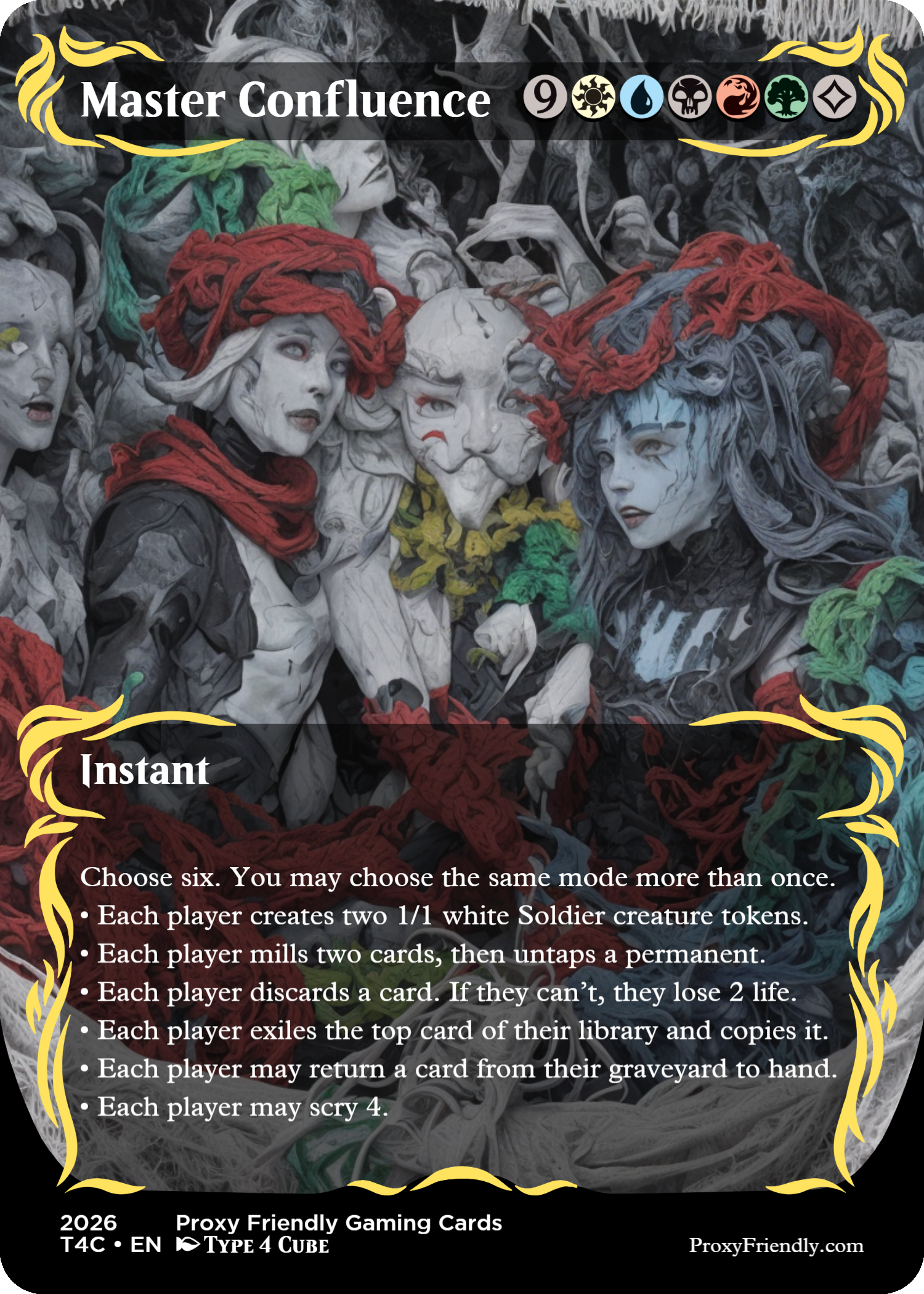
![A fantasy-themed artwork featuring elven and mythical characters with elaborate costumes and makeup, surrounded by a dark, mystical background, and overlaid with text describing a game card called 'Master Confluence.']()
Confluence
-
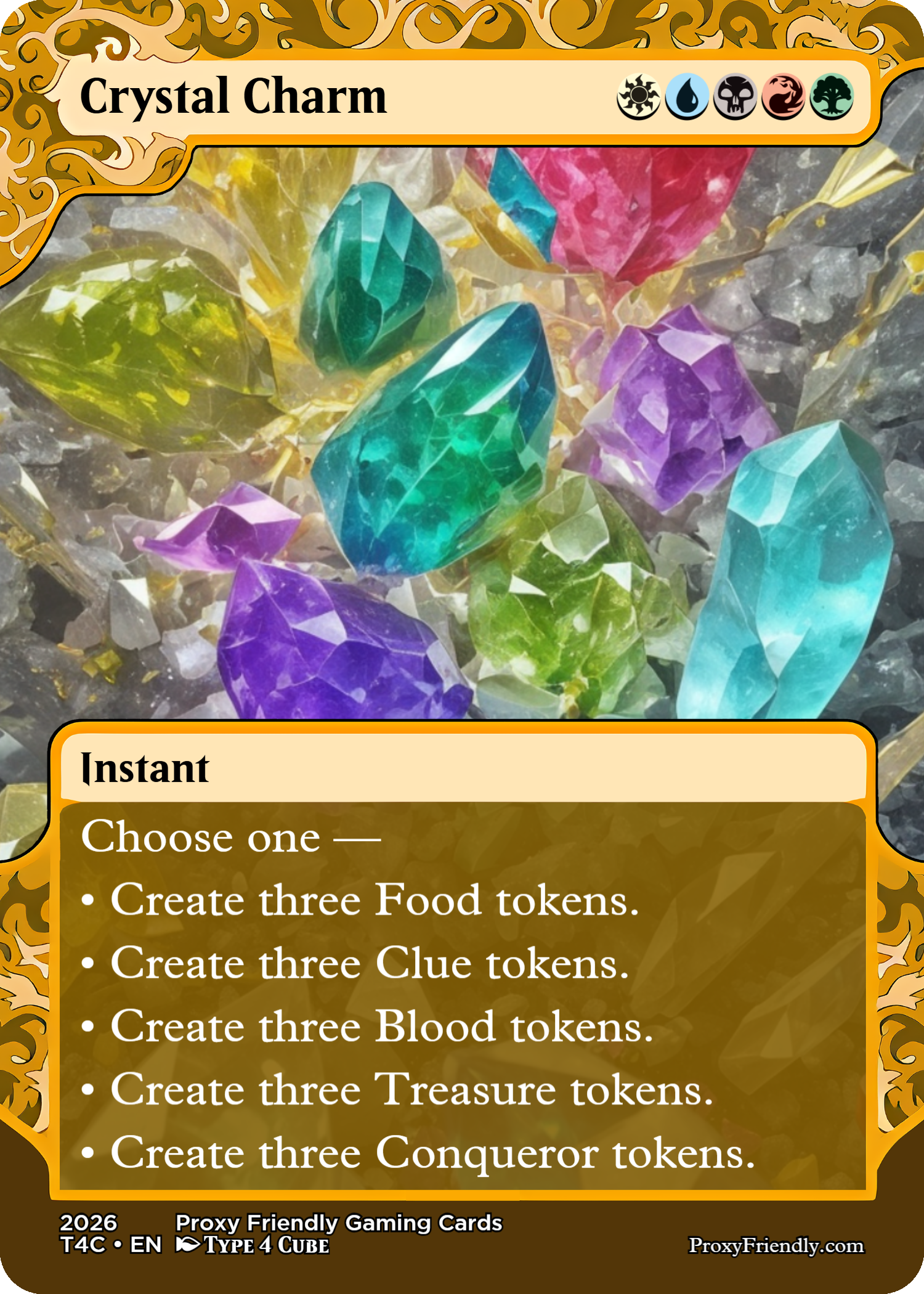
![Close-up of a colorful collection of faceted gemstone or crystal tokens in blue, green, purple, yellow, and pink, with some rocks and debris around them.]()
Charm
-
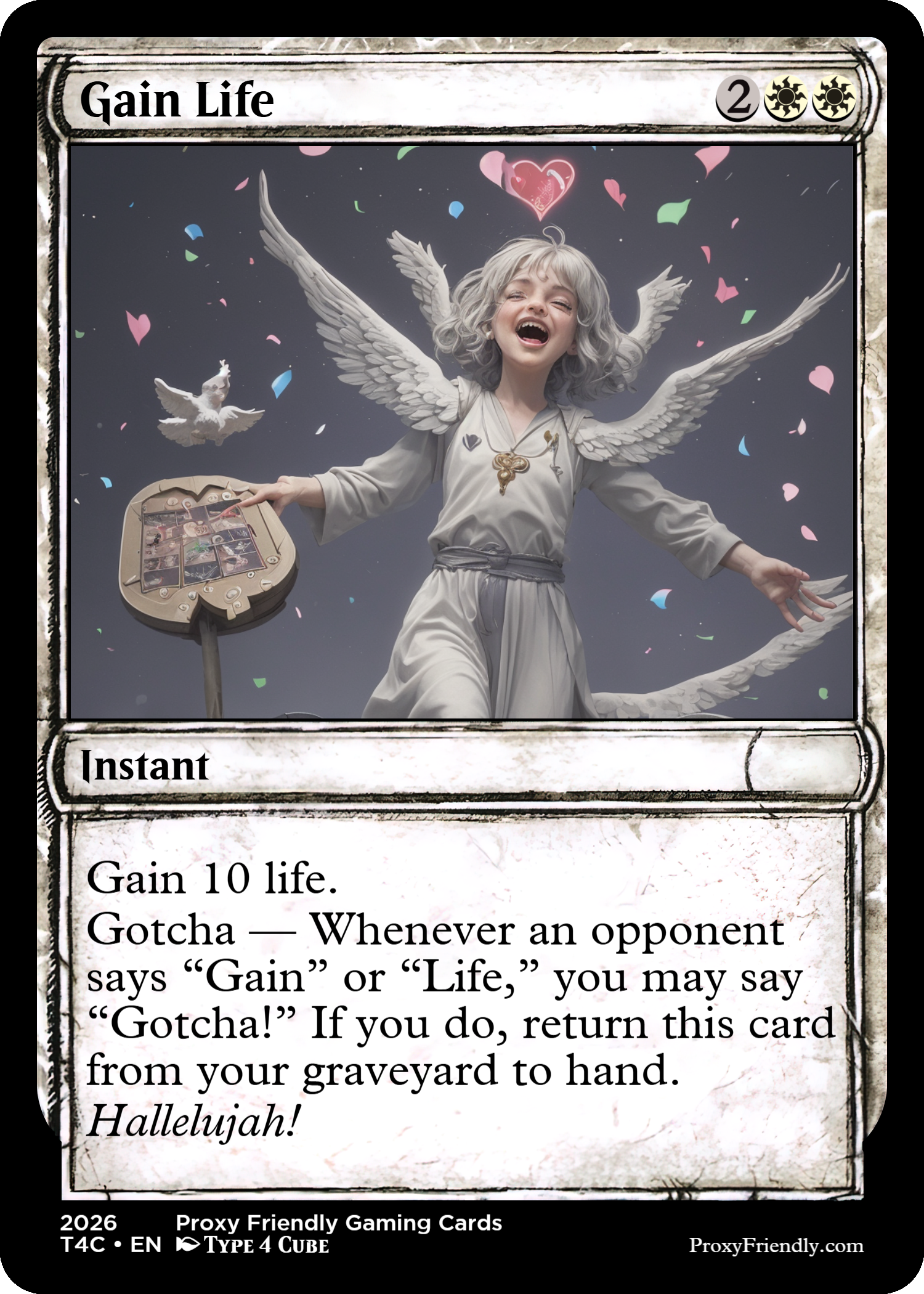
![A fantasy-style trading card titled "Gain Life" with a cartoonish image of a smiling woman with gray hair, angel wings, and a glowing heart above her head, surrounded by pink, blue, and green confetti and white doves.]()
Gotcha
-
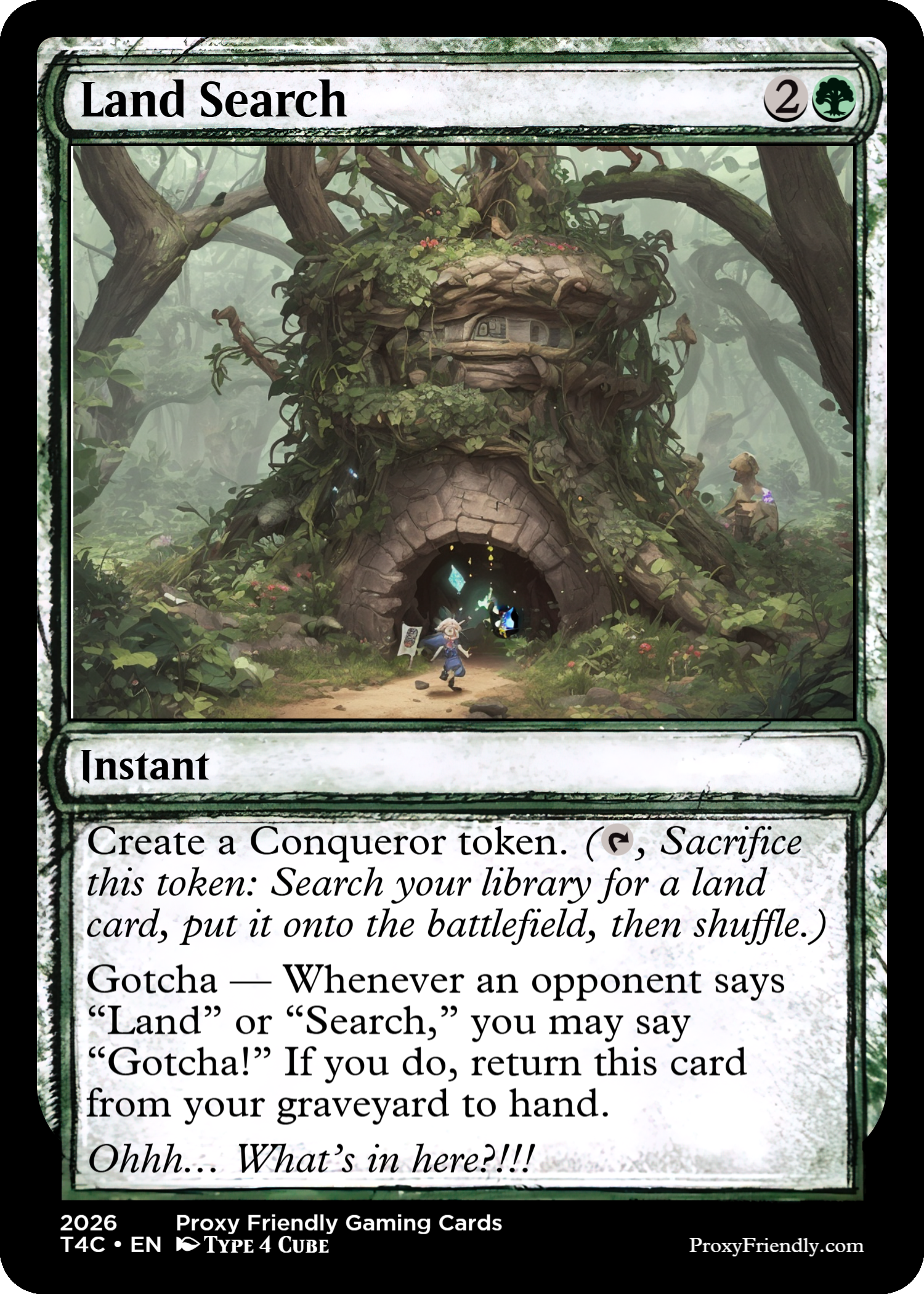
![A fantasy-themed land search card with an illustration of a large enchanted tree with a doorway at its base, surrounded by lush forest. A character stands in front of the tree, holding a staff or spear, with glowing magical effects near the entrance.]()
Gotcha
-
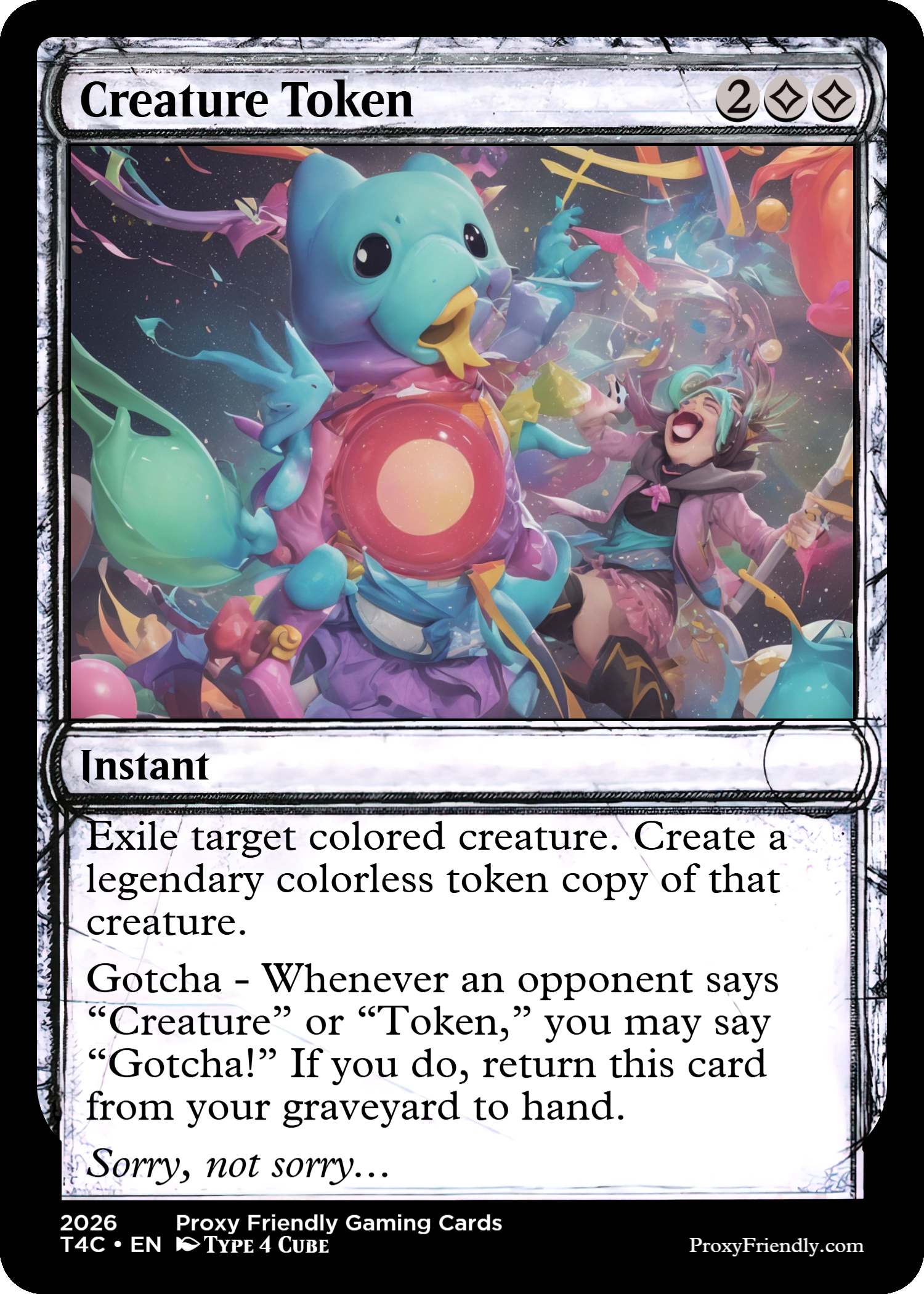
![Fantasy trading card titled 'Creature Token' with a colorful illustration of a fish-like creature with a blue head and pink body, surrounded by vibrant, swirling colors and a joyful woman with teal hair in the background.]()
Gotcha
-
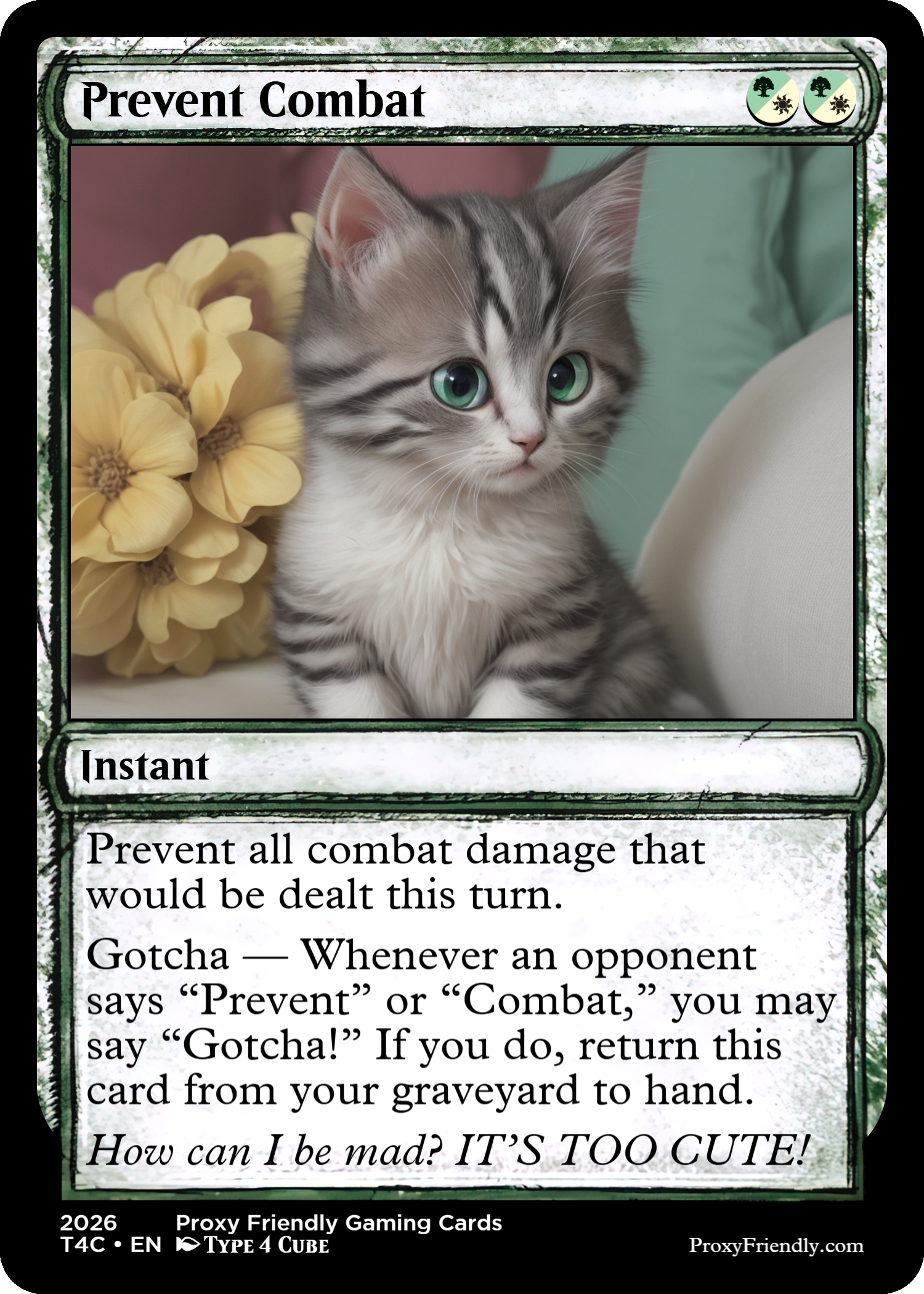
![A trading card titled 'Prevent Combat' featuring a cute gray and white kitten with green eyes sitting next to yellow flowers, with gaming symbols and text describing the card's effect and flavor text.]()
Gotcha
-
![A fantasy-themed card titled 'Enchanting Wish' featuring a young woman with long hair, wearing a crown and white robes, holding a glowing golden coin while standing with angelic wings behind her. The background includes celestial and architectural elements.]()
Wish
-
![Magic the Gathering card titled 'Artful Wish' featuring a female figure in dark armor with elaborate gold and blue details, wearing a gold and blue helmet, surrounded by icy or crystalline elements.]()
Wish
-
![A fantasy-themed Magic: The Gathering card titled 'Legacy Wish' featuring a dark, hooded female sorceress with a moonlit forest background. It is a blue-green card with the text 'Instant - Arcane' and offers a game mechanic involving opening a Type 4 Cube booster pack, adding a card to a player's hand, losing 5 life, and granting an additional benefit.]()
Wish
-
![Magic card titled 'Flamesmith's Wish' showing a dwarf blacksmith wielding a flaming torch in a forge.]()
Wish
-
![A fantasy-themed Magic: The Gathering card titled 'Growing Wish' depicting a large ancient tree with glowing blue energy within its trunk, a female elf with a bow standing beneath, and lush green forest background.]()
Wish
-
![A futuristic, robotic creature with a sleek, black design and glowing white eyes stands against a cosmic background with a bright, glowing celestial body. The card is titled 'Planar Wish' and features text describing an instant arcane spell from a science fiction-themed card game.]()
Wish
-
![A fantasy-themed trading card titled "Prismatic Wish" featuring a cosmic dragon with a shimmering, colorful body and swirling elemental energies around it.]()
Wish
-
![A fantasy-themed trading card titled "Betrayal of Mercy" with a misty cathedral scene in the background featuring a silhouette of a person near stained glass windows. The card has a decorative border made of intertwined vines and branches, and offers a choice of three effects: exile a target creature, make controlled creatures indestructible until end of turn, or sacrifice three lands.]()
Betrayal
-
![A fantasy-style card titled 'Betrayal of Secrets' with a dark border resembling twisted branches. The card is blue and features a glowing, circular, swirling vortex in the center with a misty mountain in the background. The card's text reads: 'Instant. Choose one — counter target spell; draw 3 cards; entwine — sacrifice three lands.' The bottom of the card lists the set as Proxy Friendly Gaming Cards, with a release year of 2026, a T4C symbol, and a Type 4 Cube designation.]()
Betrayal
-
![A fantasy-themed trading card titled "Betrayal of Restraint" with a dark, swirling vortex in the background. The card has an ornate, twisted border with fiery accents. It provides options for an instant spell, including dealing damage, discarding and drawing cards, or sacrificing lands, and is part of Proxy Friendly Gaming Cards, T4C, in 2026.]()
Betrayal
-
![A fantasy trading card titled 'Betrayal of Instinct' featuring a monstrous tree creature with a humanoid form, dark bark-like skin, and fierce facial expression, emerging from a foggy forest background.]()
Betrayal
-
![A fantasy game card titled 'Betrayal of Form' with a black and white background of layered, jagged rock formations, surrounded by a thorny, vine-like border. It has a gold sun icon in the top left corner and a number 5 in the top right corner, with a symbol next to it. The card's type is 'Instant,' and it has instructions: 'Choose one — Each opponent sacrifices a colored permanent; Create a token that’s a copy of target colorless permanent you control; Entwine—Sacrifice three lands.' The bottom includes the text '2026 Proxy Friendly Gaming Cards,' 'T4C • EN,' and 'TYPE 4 CUBE' along with a website link 'ProxyFriendly.com'.]()
Betrayal
-
![A fantasy trading card titled 'Betrayal of Reality' featuring a large, dark, ancient tree with twisted branches in a misty landscape. The card has icons representing different game resources at the top and options for game actions at the bottom, including 'Permanents you control phase out,' 'Exile all non-land permanents,' or 'Entwine—Sacrifice three lands.' The card is from 2026 by Proxy Friendly Gaming Cards.]()
Betrayal
-
![A fantasy-themed gaming card titled 'Sudden Excommunication' depicting a grand, Gothic cathedral with tall, arched windows and statues. The card is labeled as 'Instant' and has game instructions: 'Split second. Exile all nonland permanents target opponent controls.' It shows a black-and-white, illustrated scene with a Gothic architectural style.]()
Split Second
-
![]()
Split Second
-
![A cracked glass surface is depicted with bright light effects, alongside a gaming card titled 'Null Interval' from Proxy Friendly Gaming Cards, indicating it is an instant card with specific game effects.]()
Split Second
-
![A trading card named 'Irrevocable Convergence' with an artwork of a swirling multicolored vortex in space leading to a bright center, surrounded by stars and space debris.]()
Split Second
-
![A card from a game with the title "Severance of Absolution" at the top. The card features a dark, shadowed figure with a bald head and a light-colored cloak, standing in front of a large, ornate clock face. The card lists effects related to exiling creatures or planeswalkers, gaining life, and causing madness and outcast effects, with a website link "ProxyFriendly.com" at the bottom.]()
Outcast
-
![A card from a tabletop game titled "Severance of Blackmail" with game instructions and icons indicating game mechanics. The background shows various loose dollar bills and glass jars, one filled with lit or glowing blue wire.]()
Outcast
-
![A fantasy-themed card titled 'Severance of Reprisal' featuring a character with glowing red eyes, dark hair, and fiery elements, with gameplay details about dealing damage, losing lives, and spell effects.]()
Outcast
-
![Fantasy card titled 'Severance of Blightmark' depicting a dark forest with glowing green fungus on the ground, a large uprooted tree, and twisted trees in the background. The card includes game text and symbols indicating its effects and attributes.]()
Outcast
-
![Black and white game card with text about the 'Severance of Nullproof' spell, featuring a maze background and icons indicating game stats.]()
Outcast
-
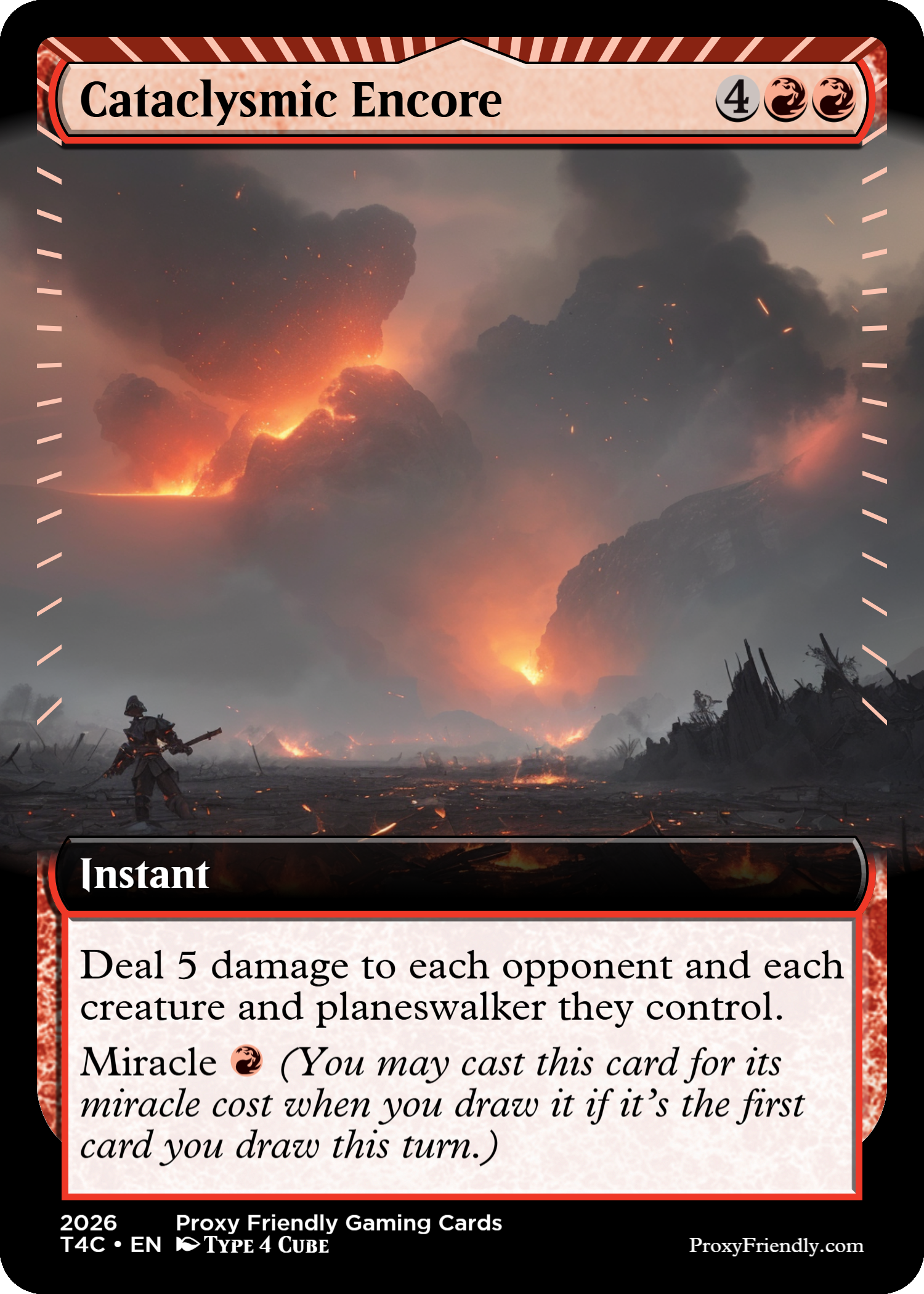
![A trading card titled 'Cataclysmic Encore' from Proxy Friendly Gaming Cards featuring a scene of erupting volcanoes with dark smoke and lava, and a soldier or warrior in the foreground.]()
Miracle
-
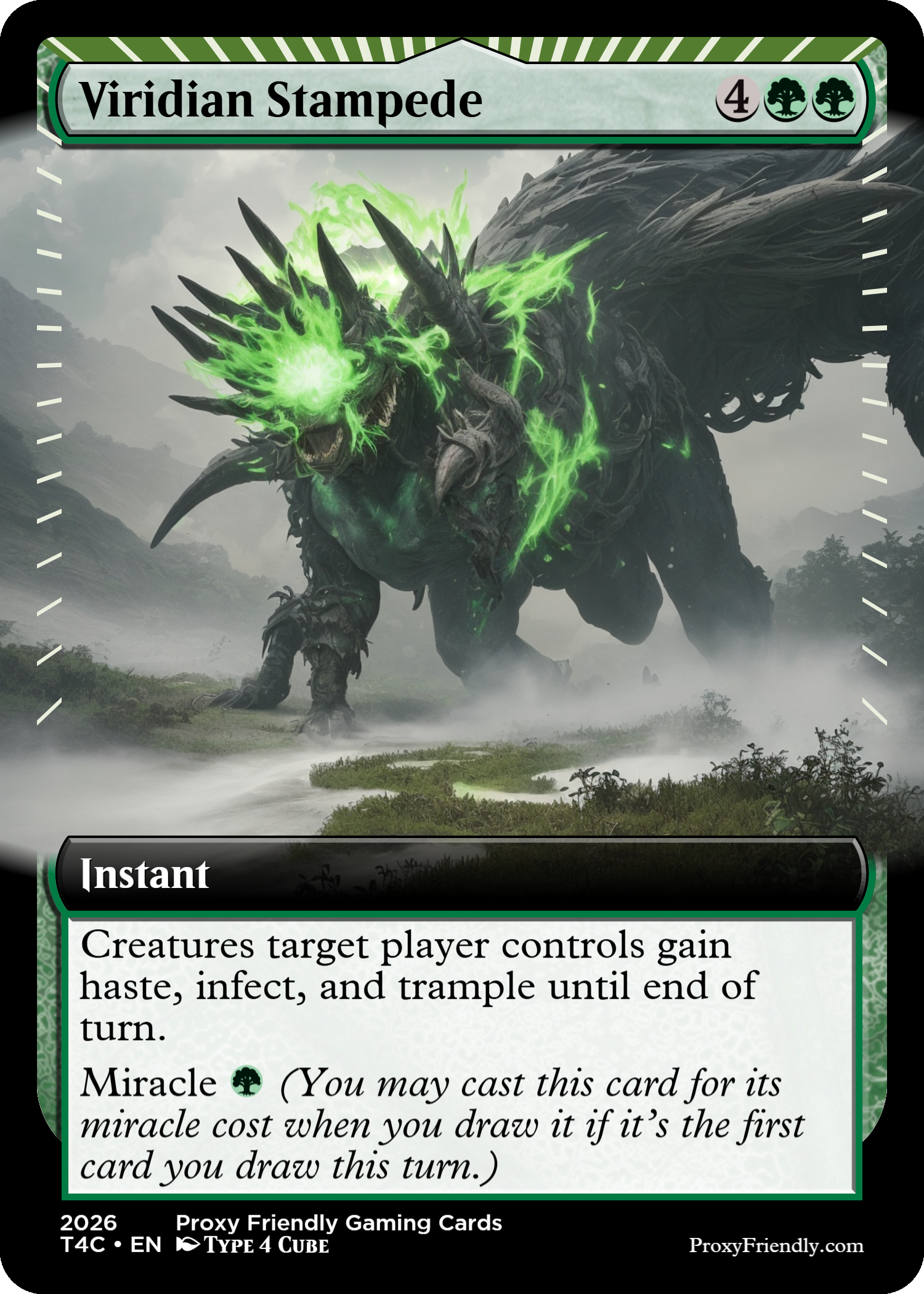
![A fantasy creature resembling a massive, black, wolf-like beast with glowing green eyes and green energy crackling on its face and back, walking through a foggy landscape.]()
Miracle
-
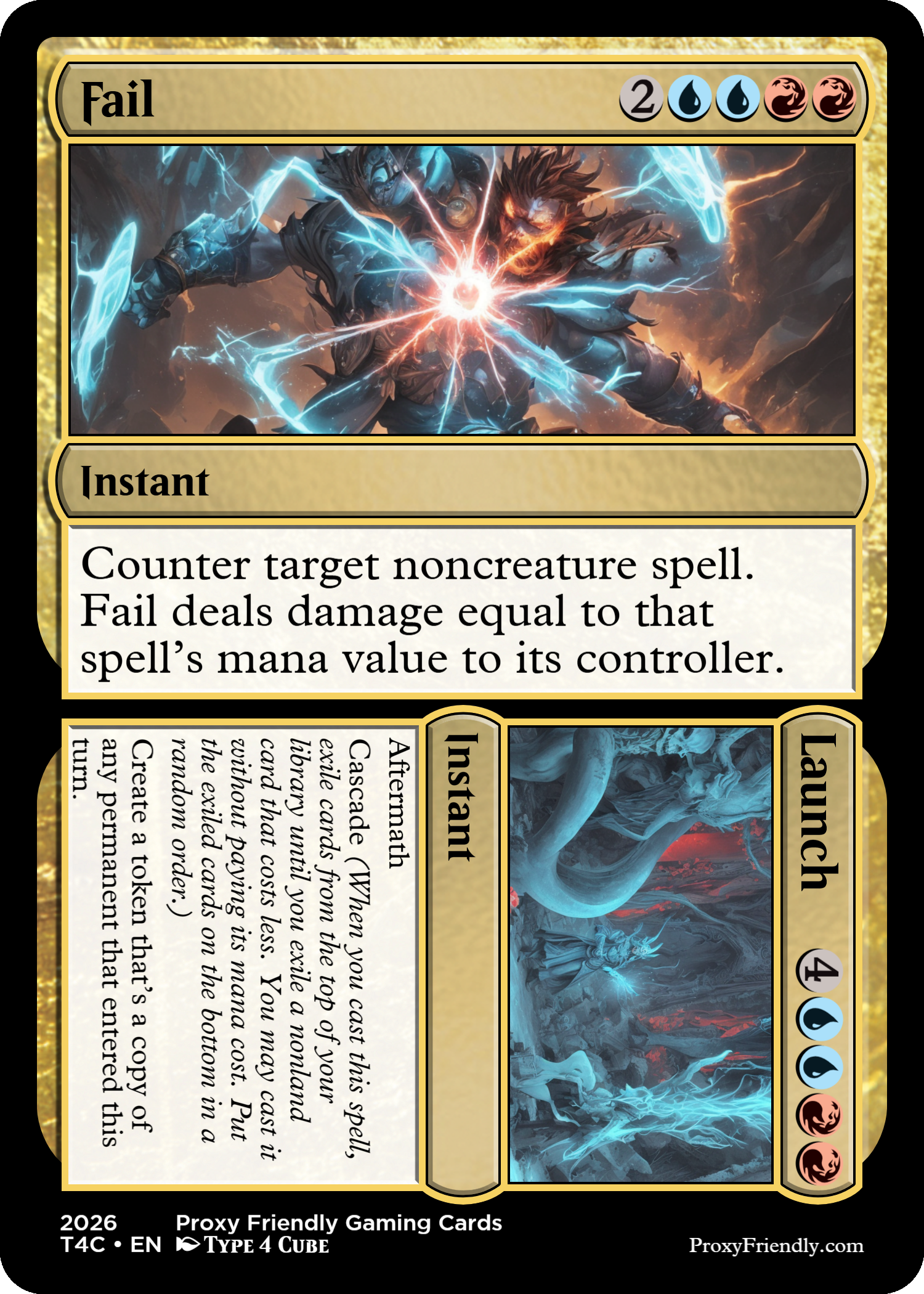
![A Magic: The Gathering card titled 'Fail' showing a fantasy scene with a character emitting lightning and engaged in battle, featuring text describing a spell effect.]()
Aftermatch
-
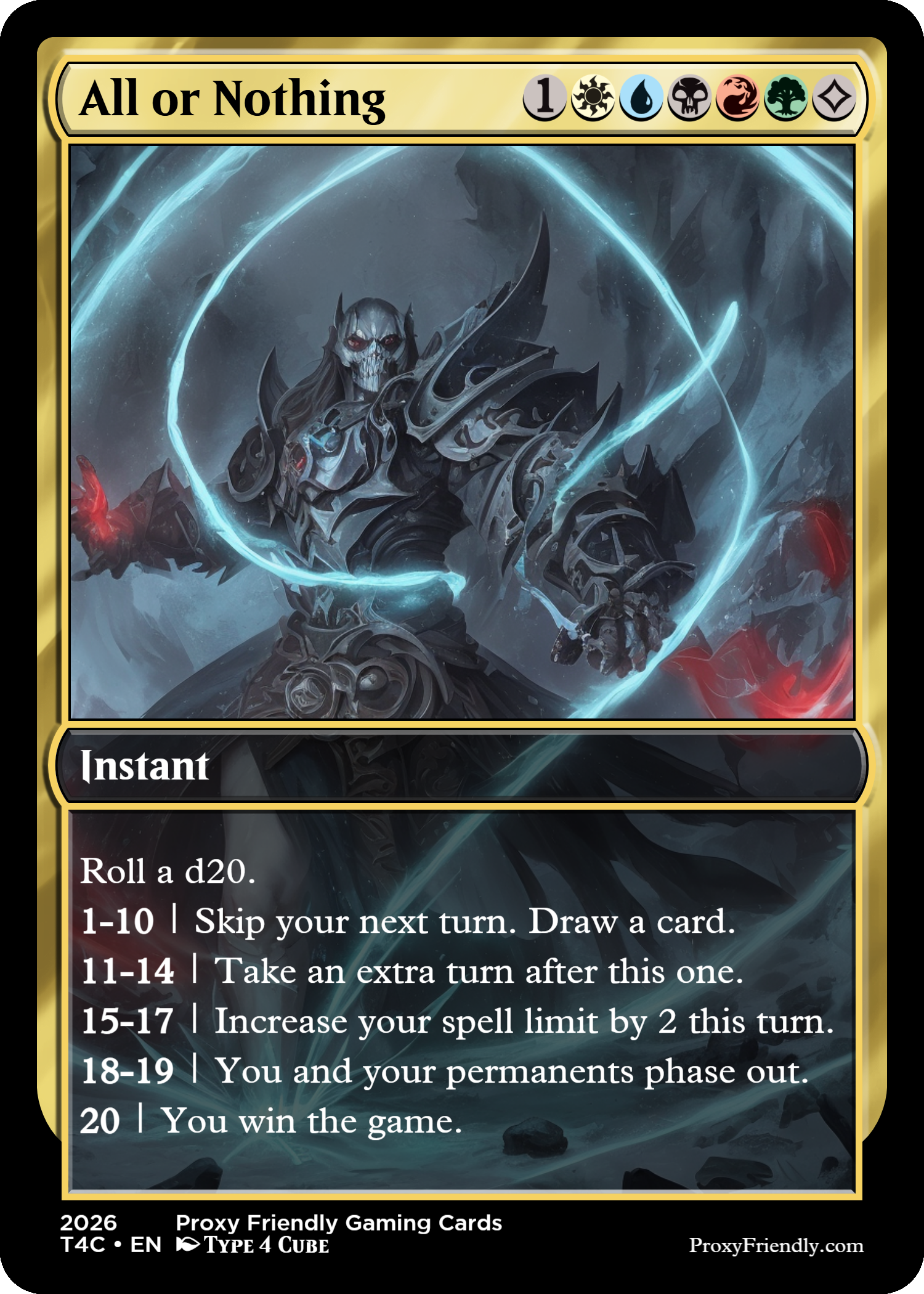
![A Magic: The Gathering card titled 'All or Nothing' featuring a skeleton-like armored warrior with glowing red eyes, surrounded by glowing blue energy.]()
Unique
-
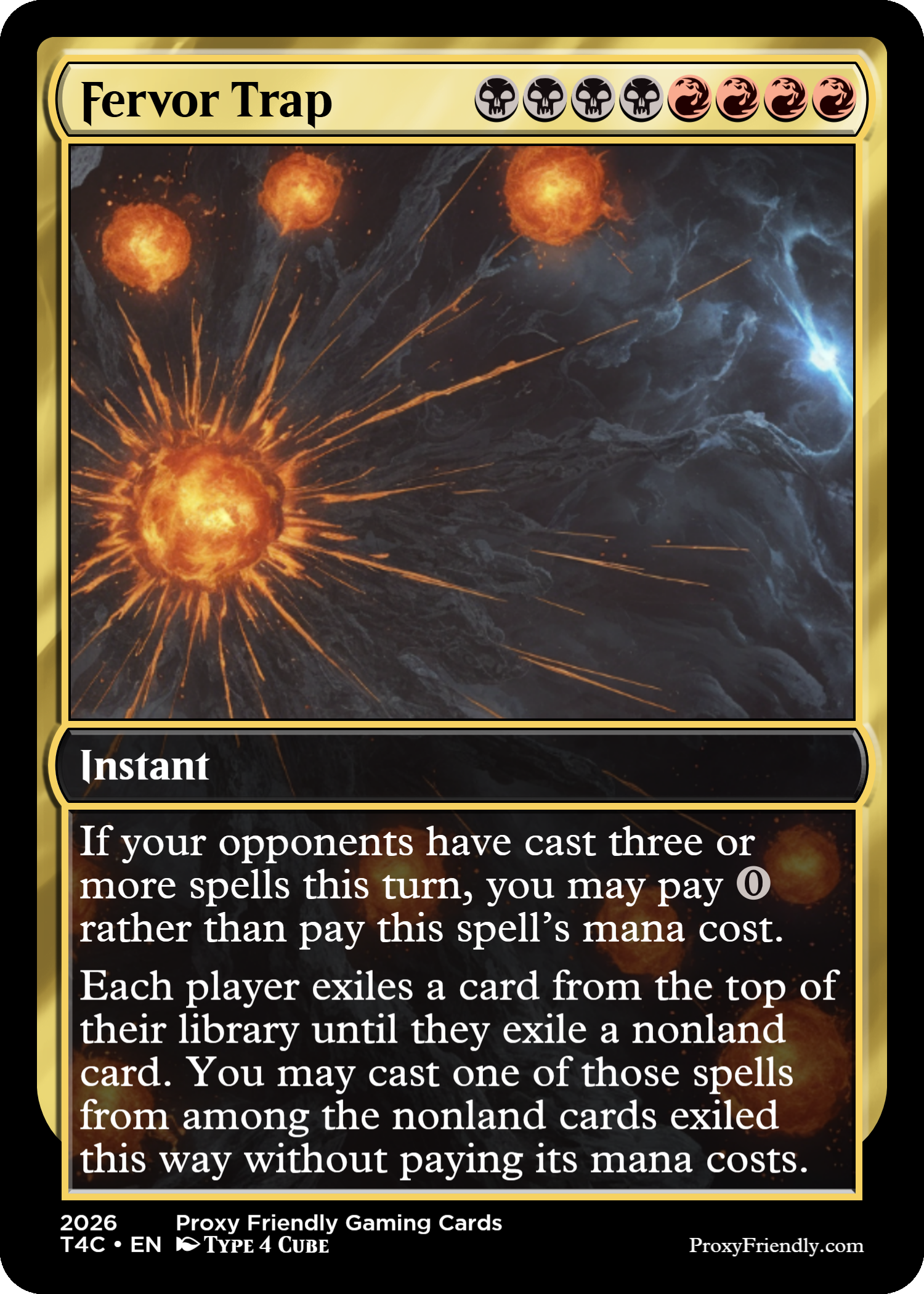
![A card titled 'Fervor Trap' from a trading card game, featuring an illustration of fiery explosions in a space-like background, with text describing the card's effects.]()
Unique
-
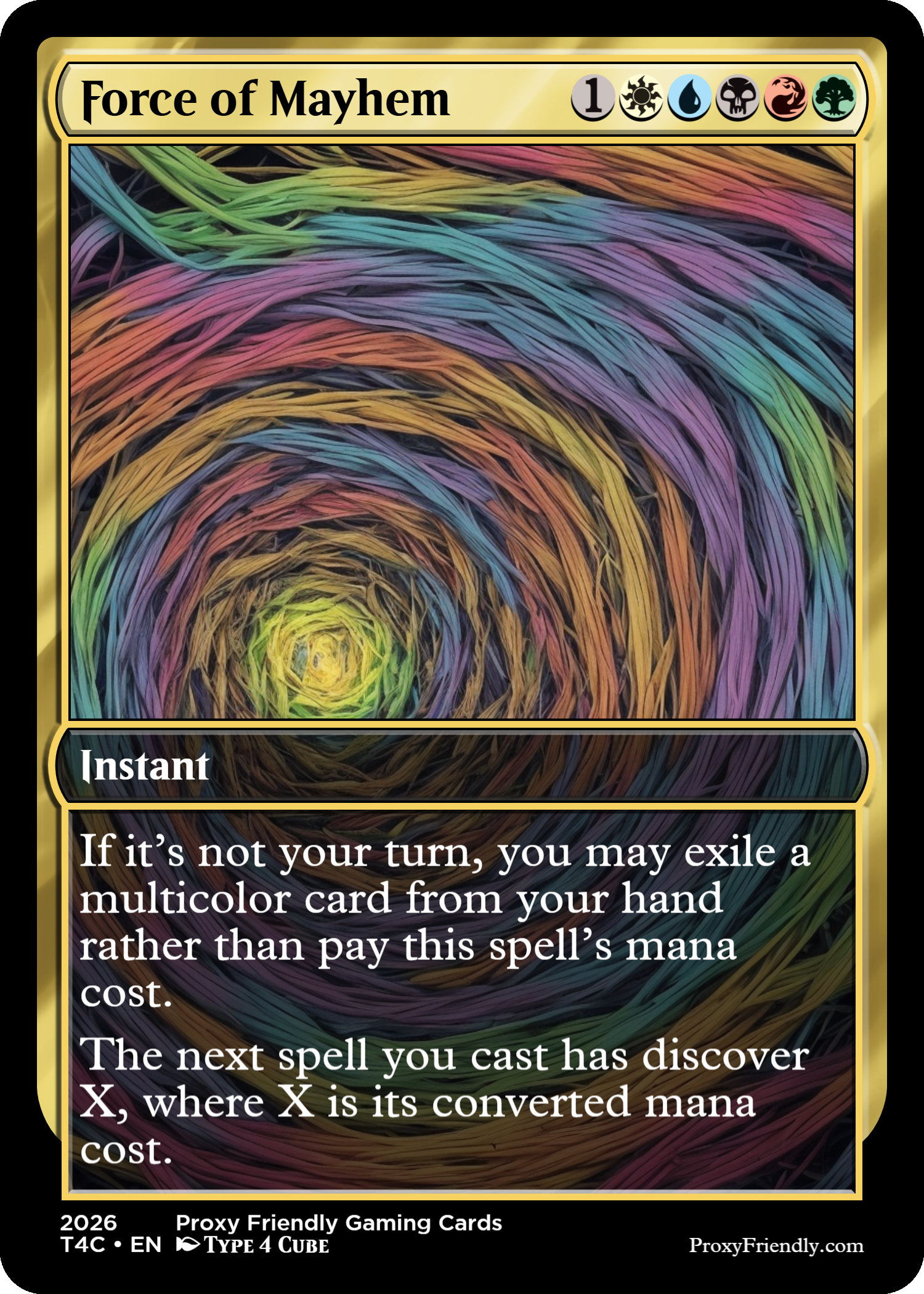
![A Magic: The Gathering card titled "Force of Mayhem" with a colorful swirl design in the artwork. The card includes mana symbols, the card type "Instant," and text describing its effects.]()
Unique
-
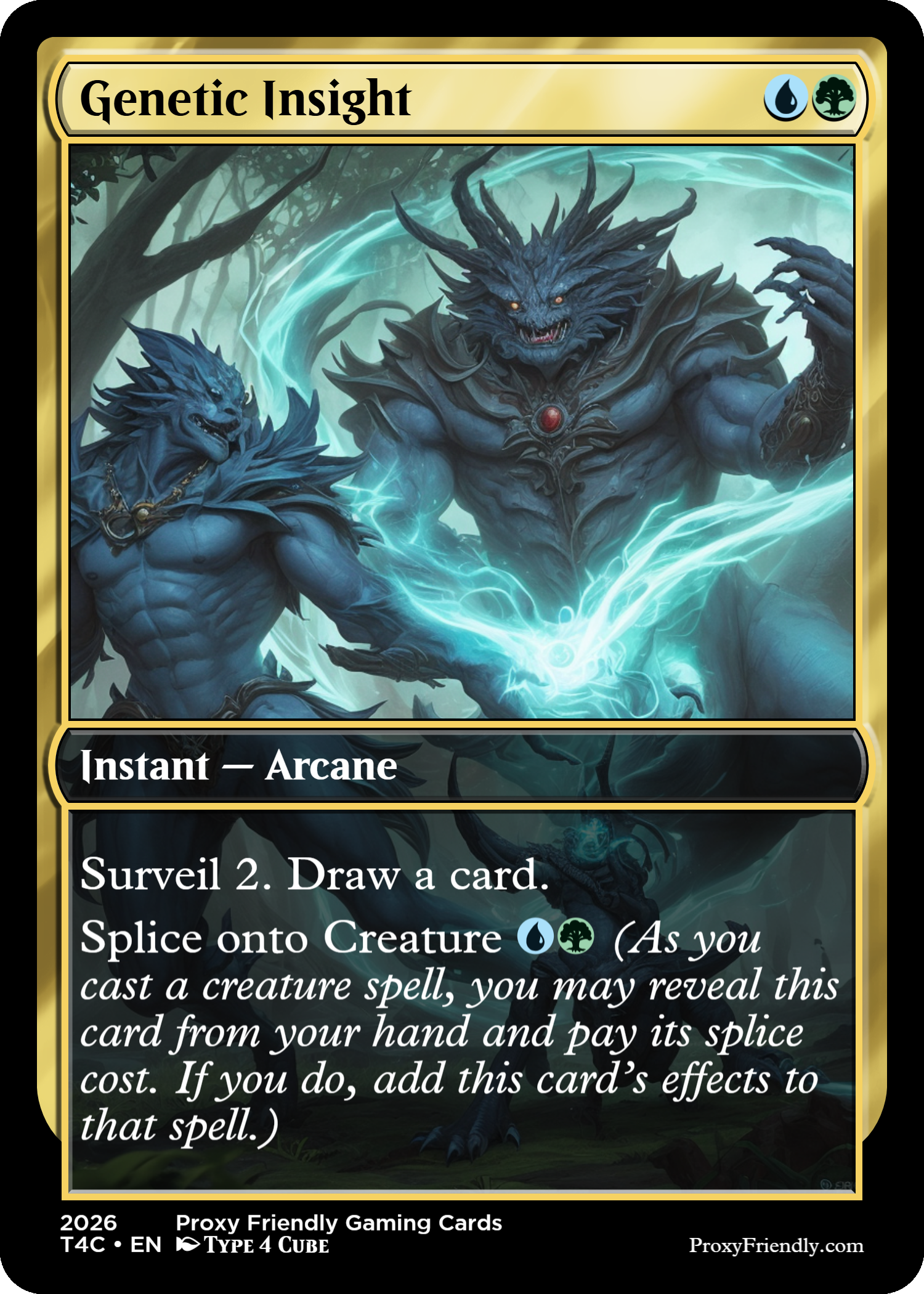
![A magic trading card titled 'Genetic Insight' featuring two blue, dragon-like humanoid creatures with dark spiky hair, one with glowing orange eyes and the other with glowing blue eyes, surrounded by swirling blue lightning in a forest setting.]()
Unique
-
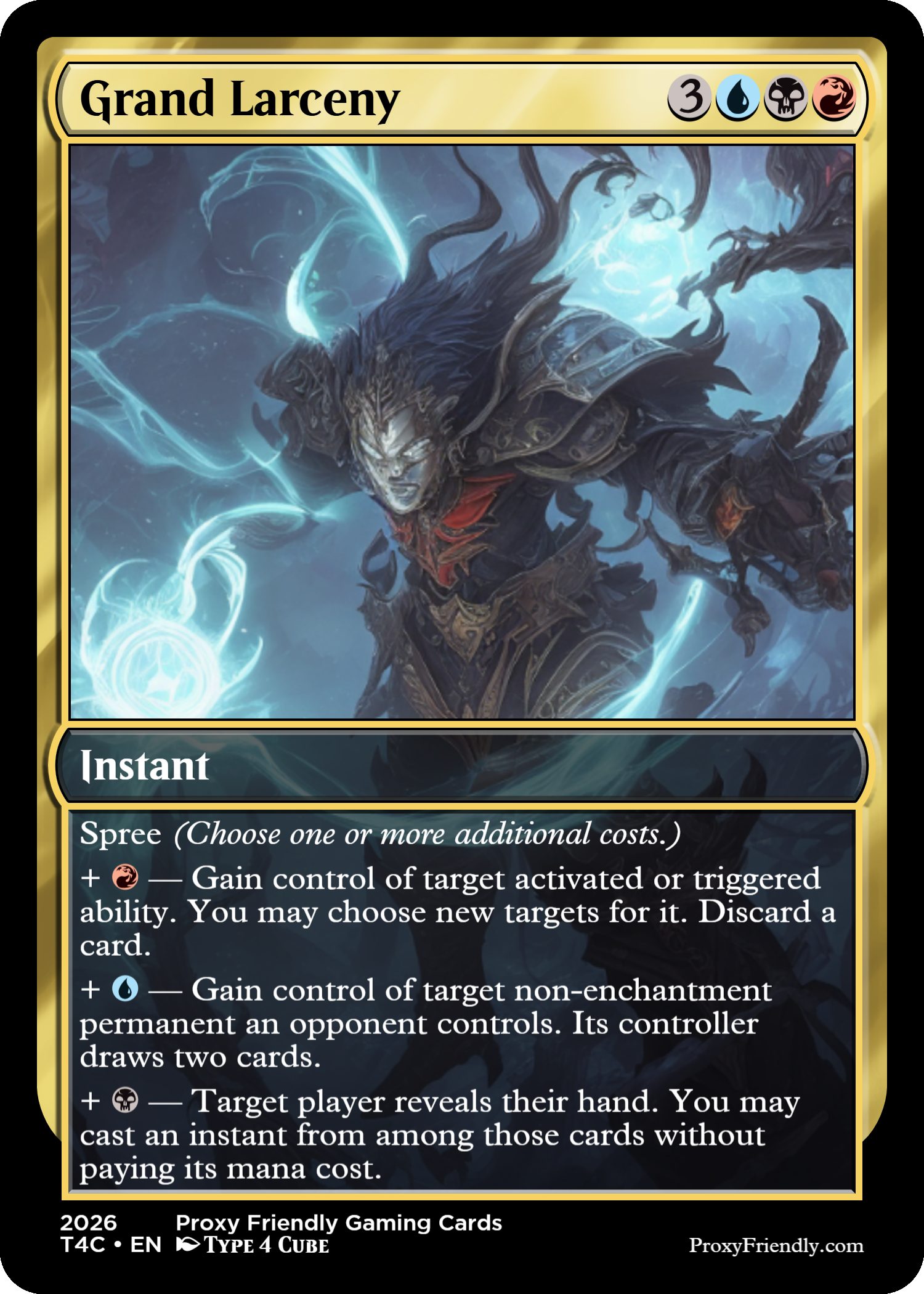
![A Magic: The Gathering card titled 'Grand Larceny' featuring a dark armored, monstrous figure wielding magical energy with blue and white hues, surrounded by swirling energy effects.]()
Unique
-
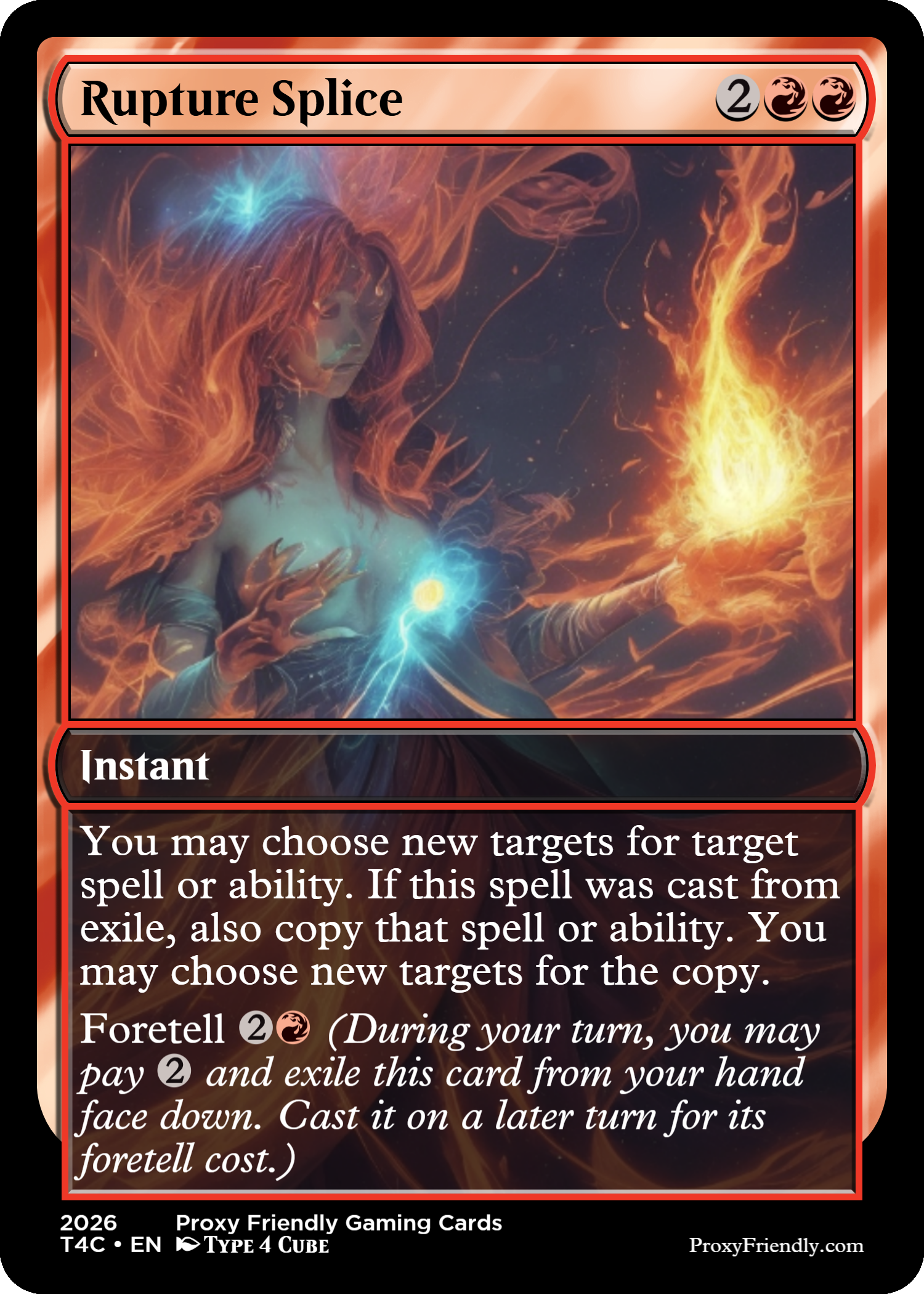
![A Magic: The Gathering card titled "Rapture Splice" with casting cost of two colorless and two red mana. The illustration features a woman with red hair conjuring fire and blue magic, with flames and magical energy swirling around her.]()
Unique
-
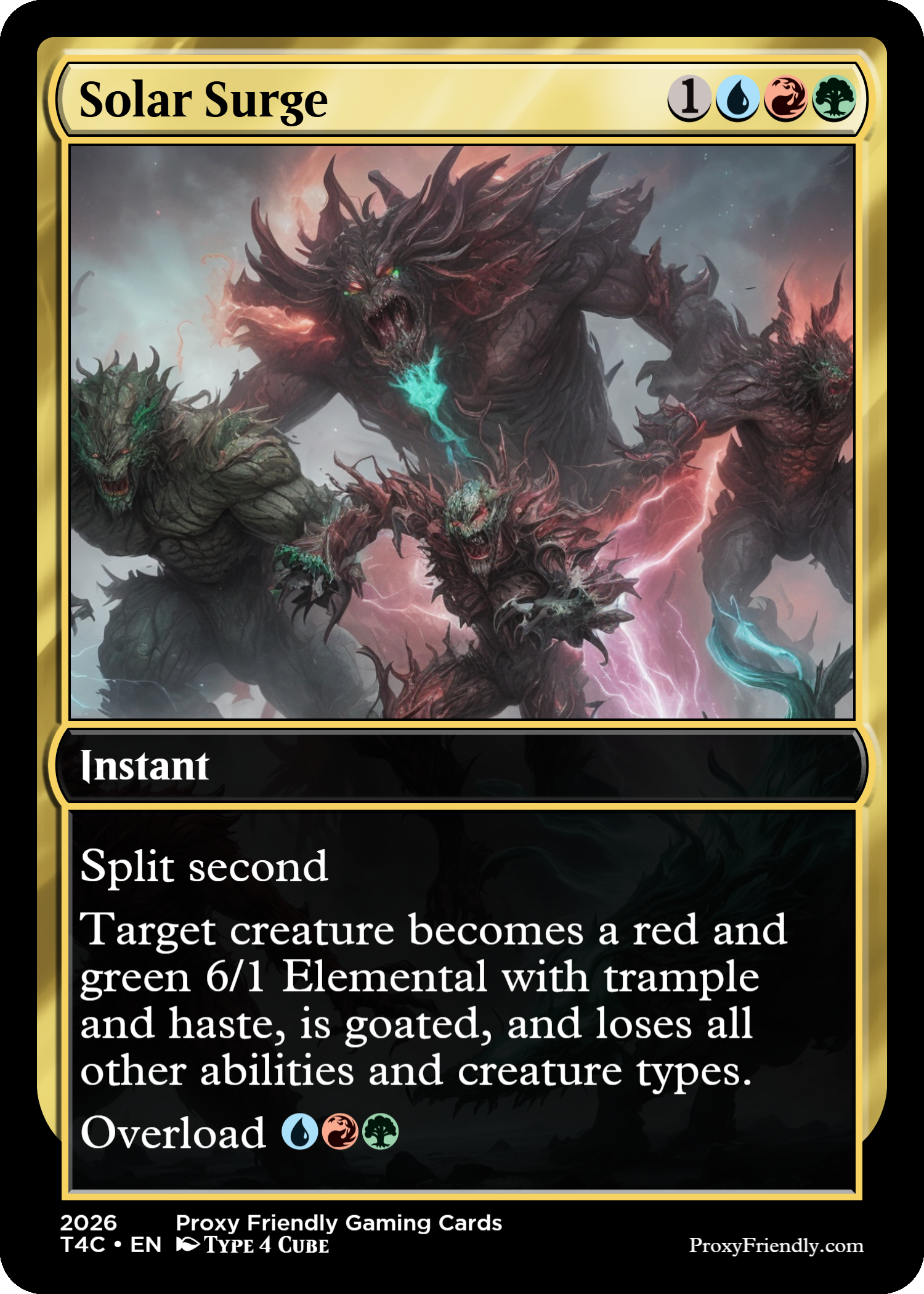
![A fantasy illustration of a large, monstrous creature with glowing green eyes and dark hair, surrounded by smaller similar creatures, set against a stormy sky with lightning.]()
Unique
-
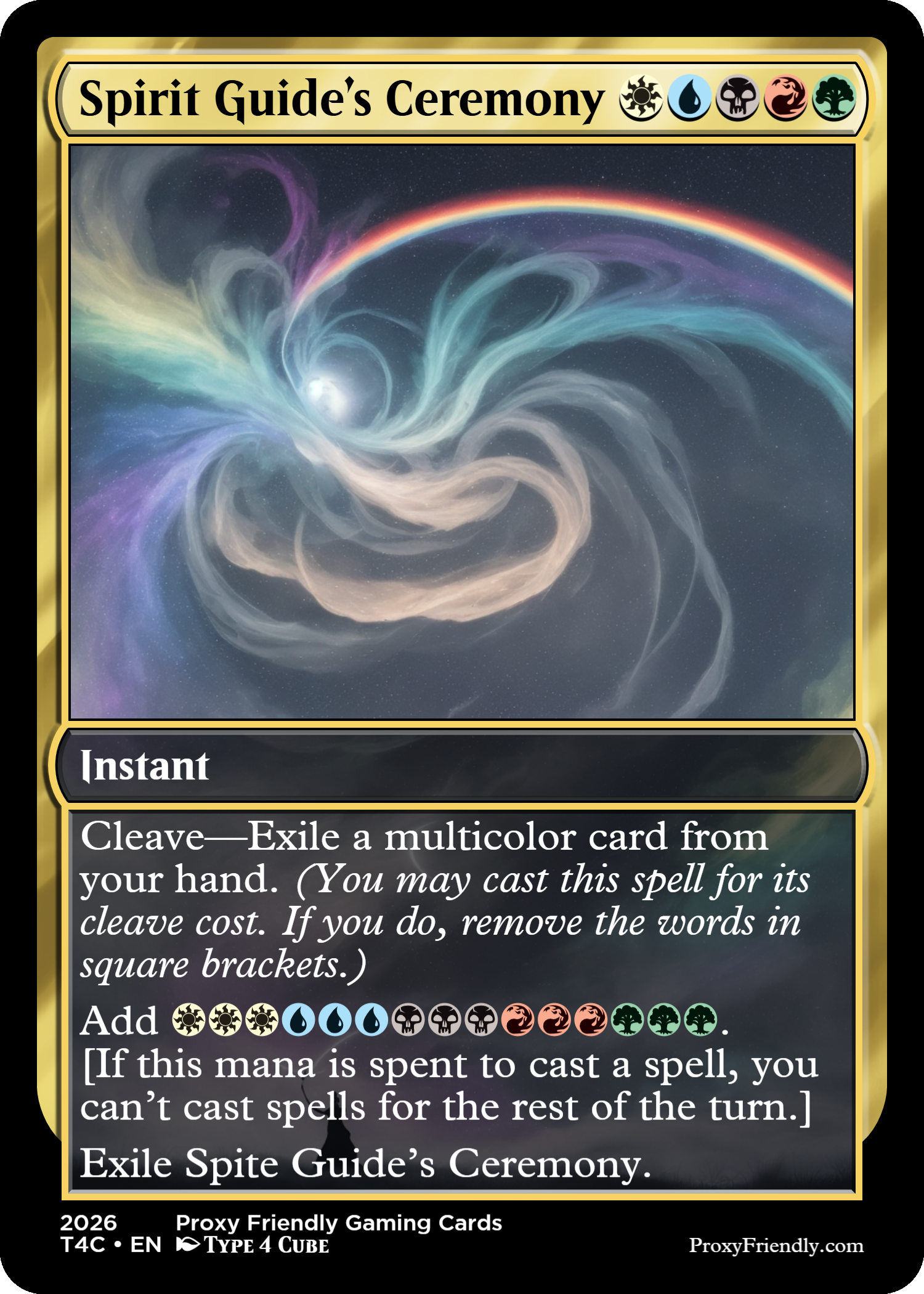
![A Magic: The Gathering card titled 'Spirit Guide's Ceremony' featuring swirling cosmic colors and a rainbow in space.]()
Unique
-
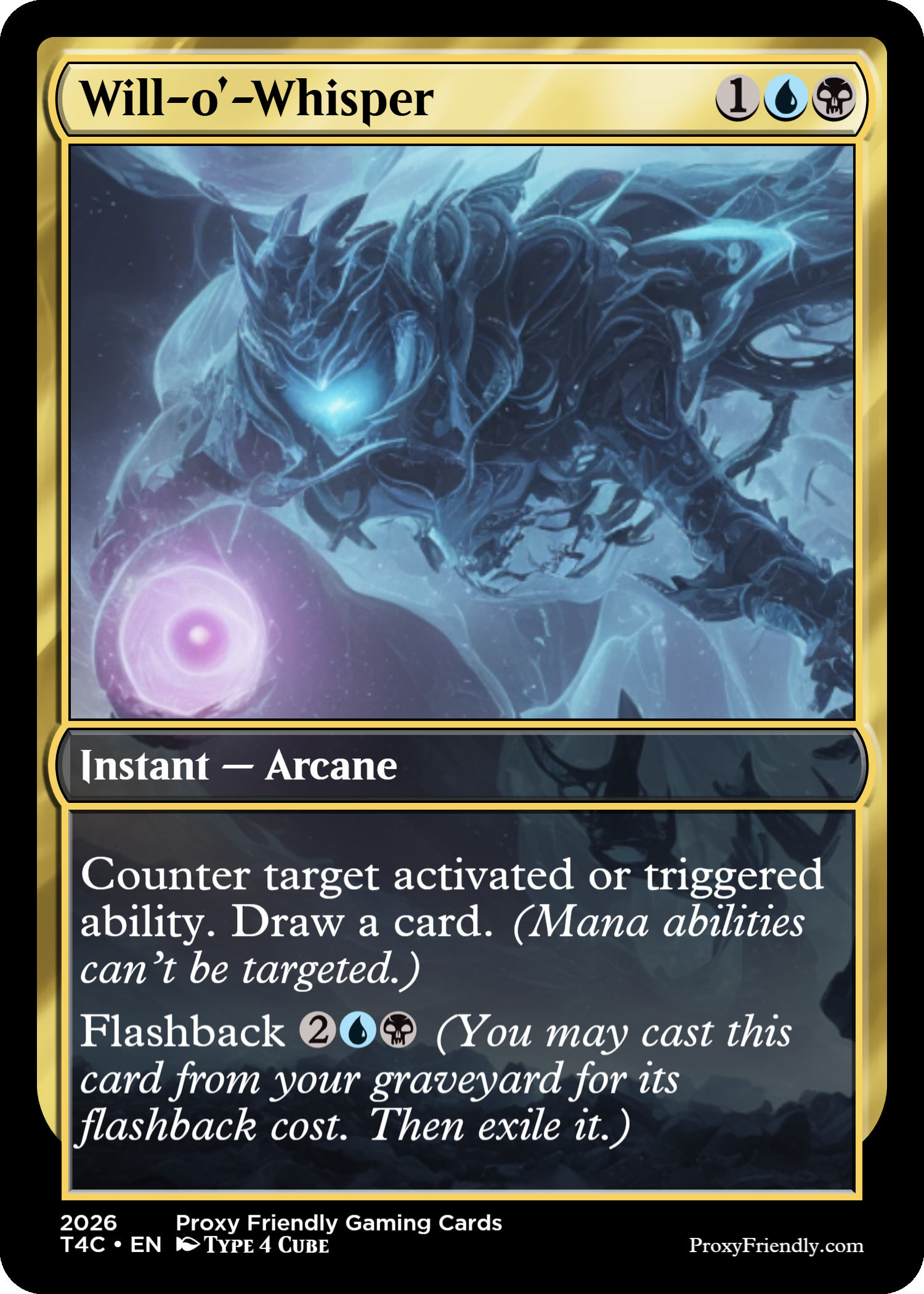
![A Magic: The Gathering card titled Will-o'-Whisper featuring a blue and black ghostly creature with glowing eyes and a swirling purple orb.]()
Unique
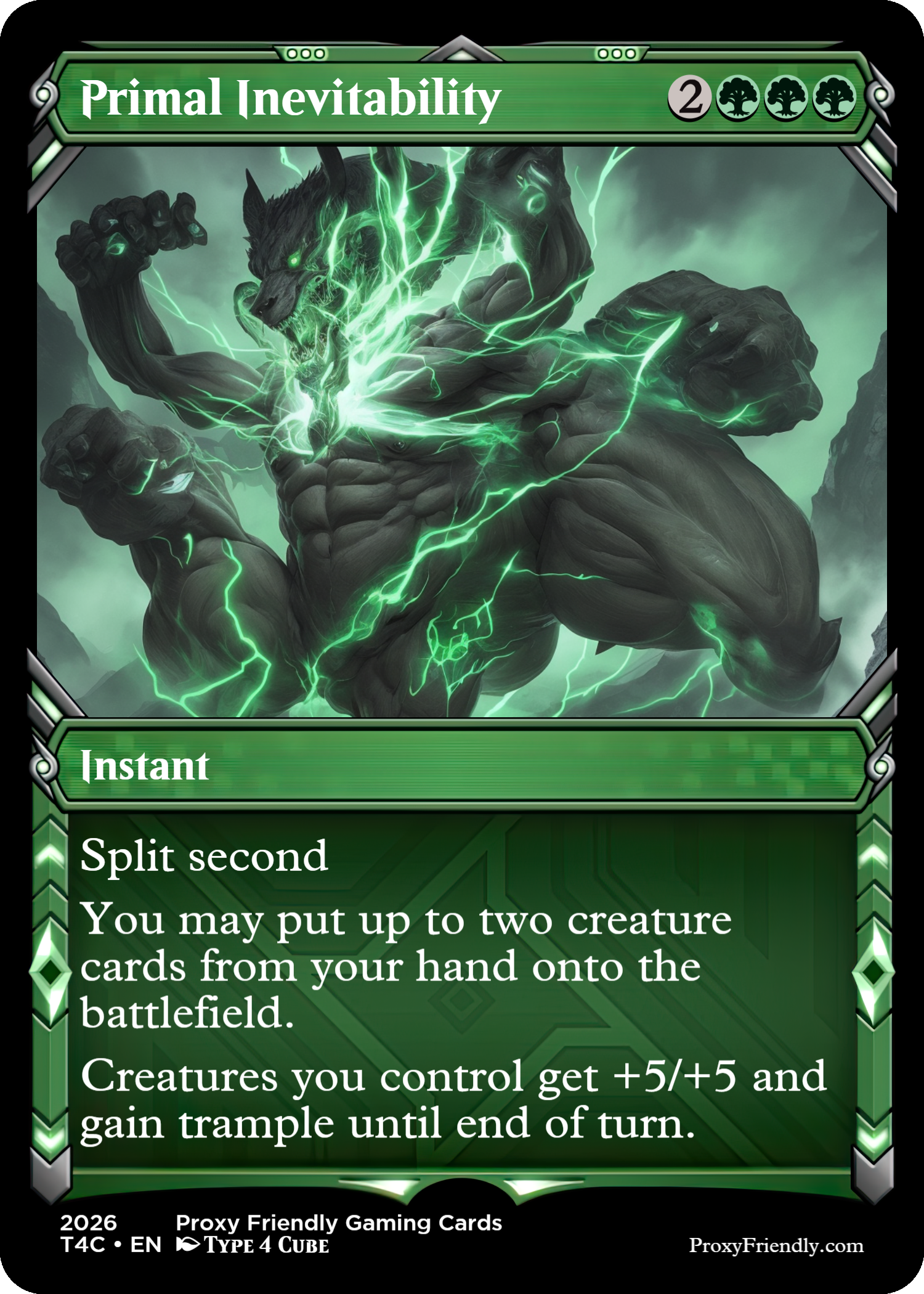
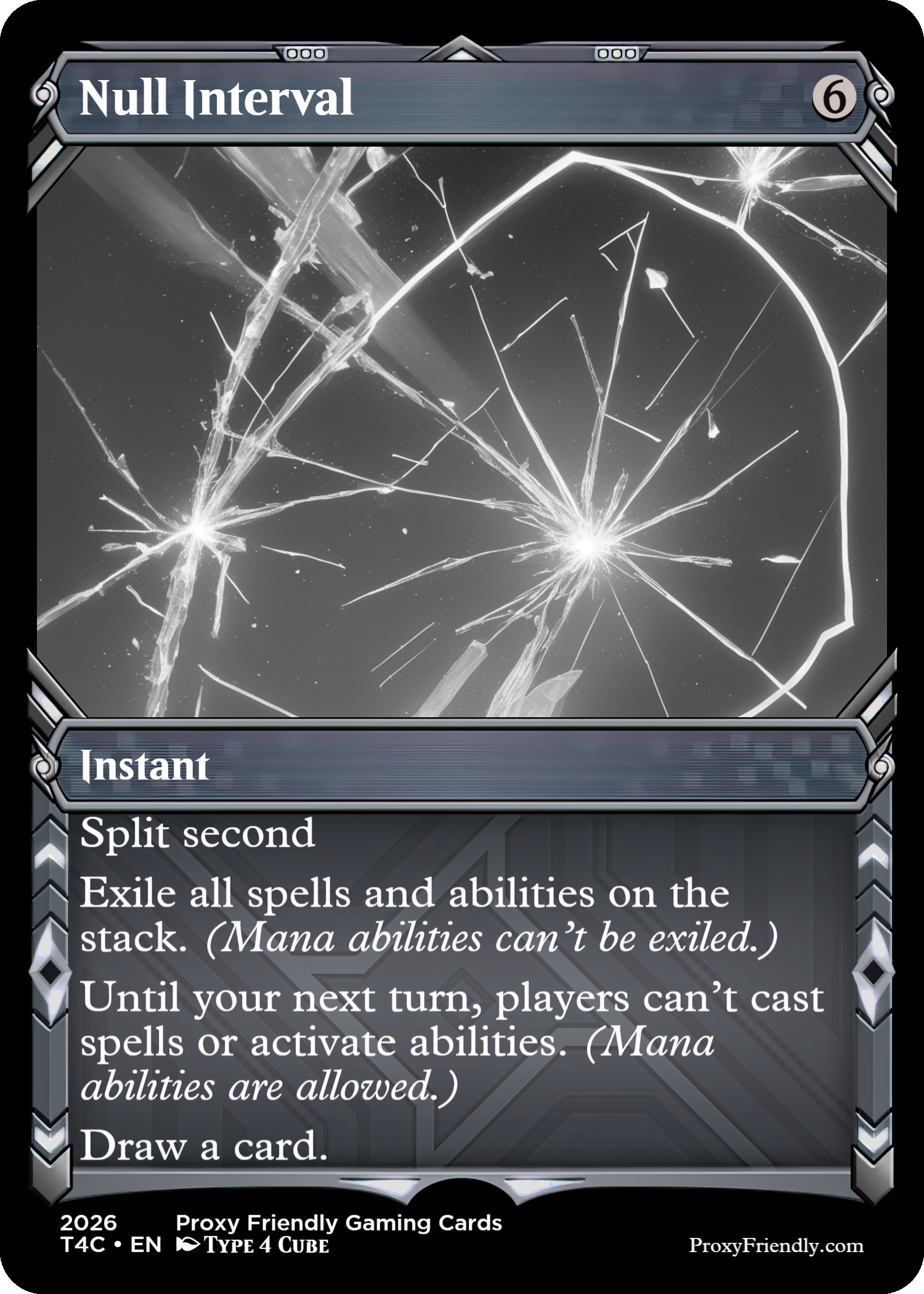
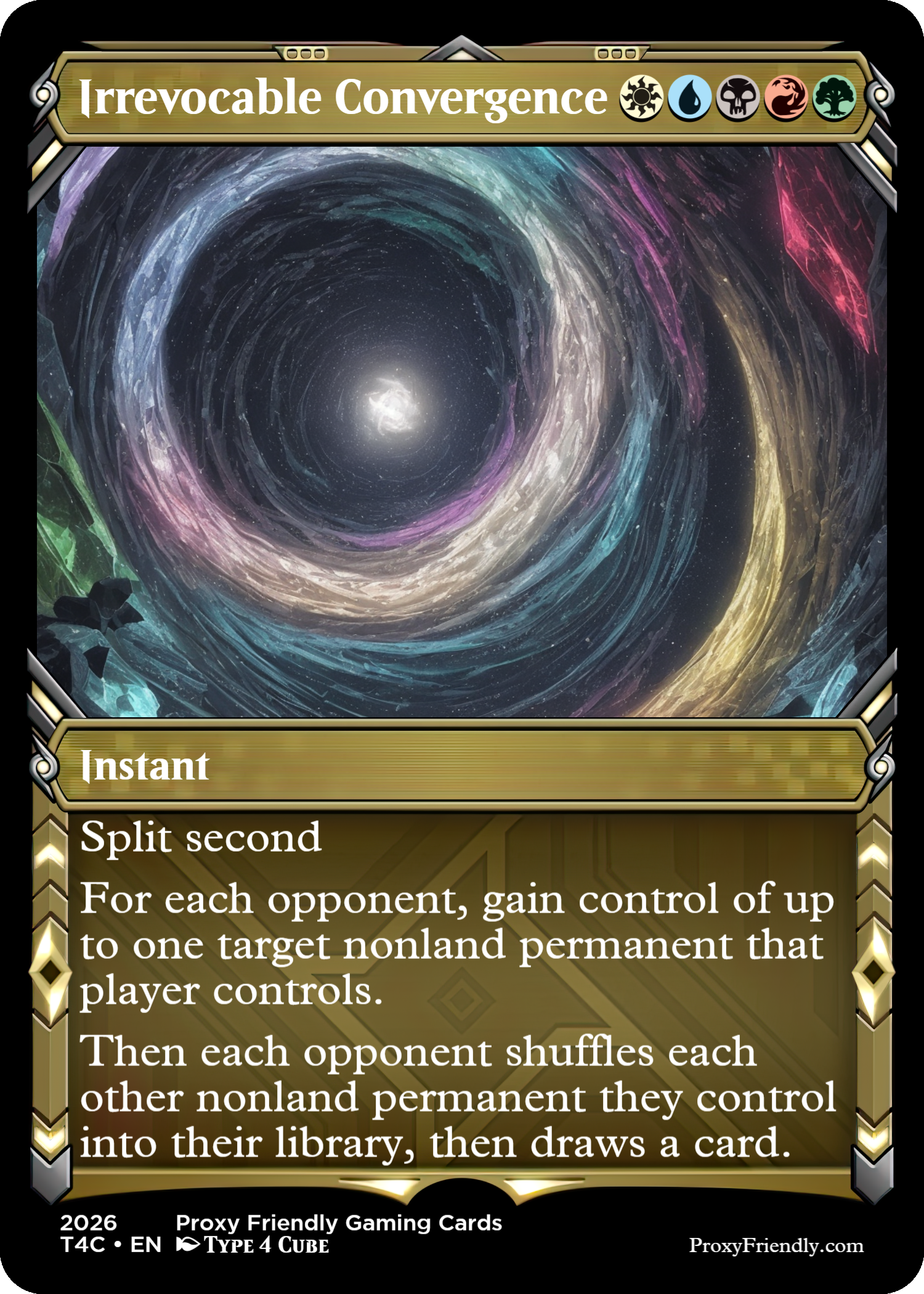
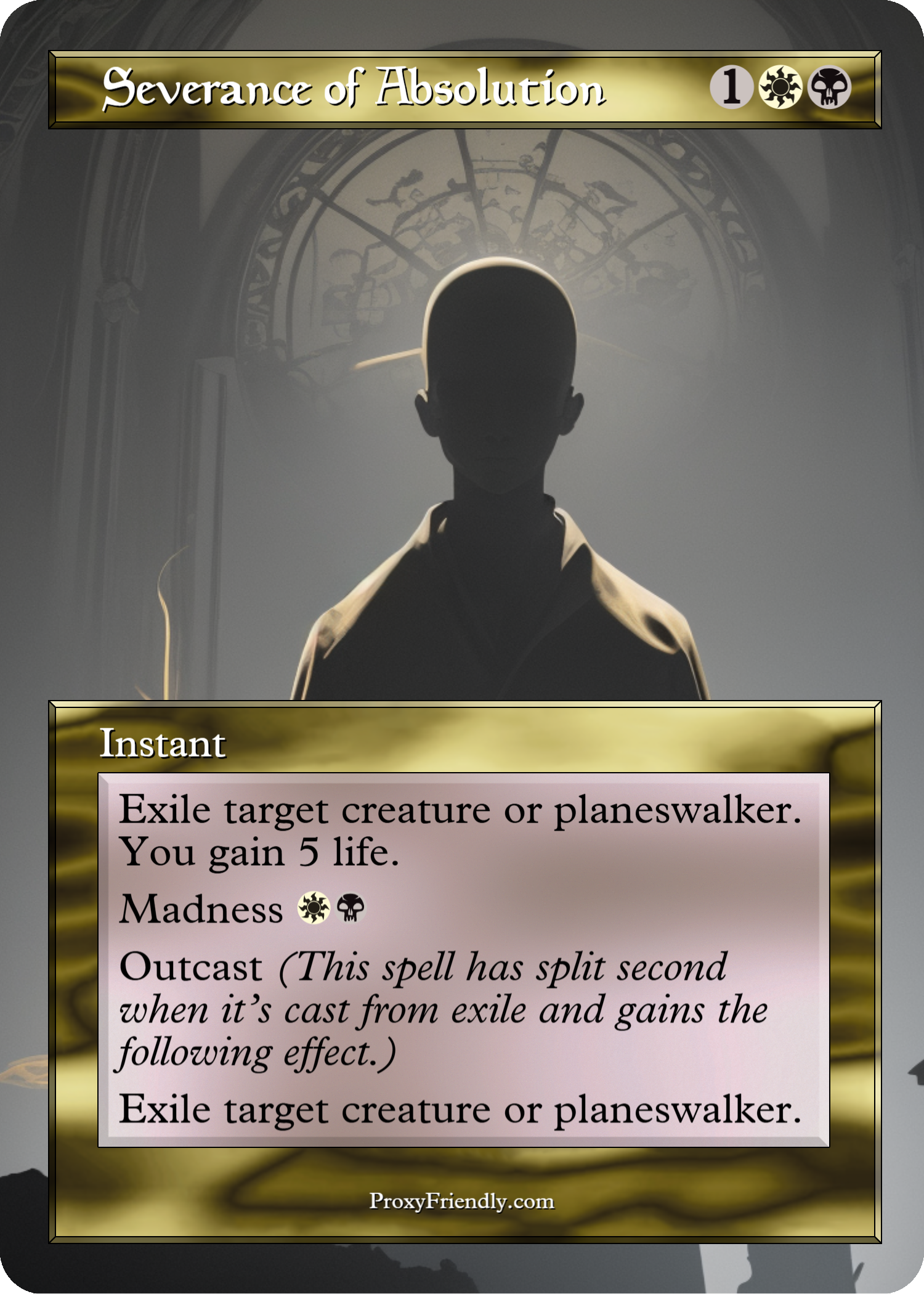
-
![A collectible gaming card titled "The Aegis Matrix" featuring futuristic, sci-fi artwork of a glowing, spiraling blue and purple vortex inside a golden frame. The card is labeled as a "Legendary Artifact" with description text about controlling other permanents with hexproof and indestructible properties, and a footer with details about the product and website.]()
Matrix
-
![A futuristic trading card titled "The Aethersurge Matrix" depicting a battle scene with glowing energy beams and mechanical elements. It is a legendary artifact card for a card game, featuring a detailed digital art illustration.]()
Matrix
-
![A fantasy trading card titled 'The Afterlife Matrix' showing a golden, mechanical, humanoid statue within a detailed, circular, gold frame. The card is labeled as a legendary artifact and includes game information at the bottom.]()
Matrix
-
![A fantasy-themed card titled 'The Delirium Matrix' features a dark, mountainous landscape with floating purple energy or portals. The card is labeled as a Legendary Artifact and includes gameplay instructions for discarding and returning cards.]()
Matrix
-
![A trading card titled "The Forcelbound Matrix" with a circular, colorful, and futuristic design. It is a legendary artifact card from Proxy Friendly Gaming Cards, with a description about an ability to exile nonland cards in certain conditions. The card is from set 2026, Type 4 Cube, with a black border and a dark background.]()
Matrix
-
![A fantasy-themed trading card titled "The Immutable Matrix" featuring a mystical landscape with a large sword embedded in a fortress-like structure, surrounded by towering rock formations and a stormy sky.]()
Matrix
-
![A game card titled "The Interdiction Matrix" with a futuristic, glowing blue design featuring a figure in a meditative pose overlooking a swirling cosmic scene. The card is labeled as a legendary artifact with descriptions about providing protection from all colors and preventing opponents from gaining life or damage.]()
Matrix
-
![A trading card titled 'The Lightspeed Matrix' featuring a digital artwork of a rainbow-colored light beam passing through a futuristic cityscape with glowing elements. The card is labeled as a 'Legendary Artifact' that spells you cast have split second, with additional game rules in smaller text. The card has a border with a metallic, ornate appearance.]()
Matrix
-
![A card titled 'The Mnemonic Matrix' featuring a glowing, intricate, magic-like geometric pattern in space with celestial elements, encased in a decorative golden border. The card is labeled as a 'Legendary Artifact' with text explaining its effect in a game.]()
Matrix
-
![A trading card titled 'The Paradox Matrix' with a dark, industrial background featuring a large, intricate mechanical structure or device inside a glass container, surrounded by a gold frame. The card is described as a 'Legendary Artifact' with specific game rules written on it.]()
Matrix
-
![A fantasy-themed gaming card titled 'The Reclamation Matrix' displaying a circular structure that looks like a deep, carved chasm or crater with glowing golden edges. The card is labeled as a "Legendary Artifact" and contains text describing its game effects.]()
Matrix
-
![A game card titled 'The Resonance Matrix'. It is a legendary artifact card with swirling white lines and patterns inside a round, ornate, gold and black frame. The card contains text about copying triggered abilities and choosing new targets. The bottom of the card shows it is from 2026, by Proxy Friendly Gaming Cards, and is a Type 4 Cube card in English.]()
Matrix
-
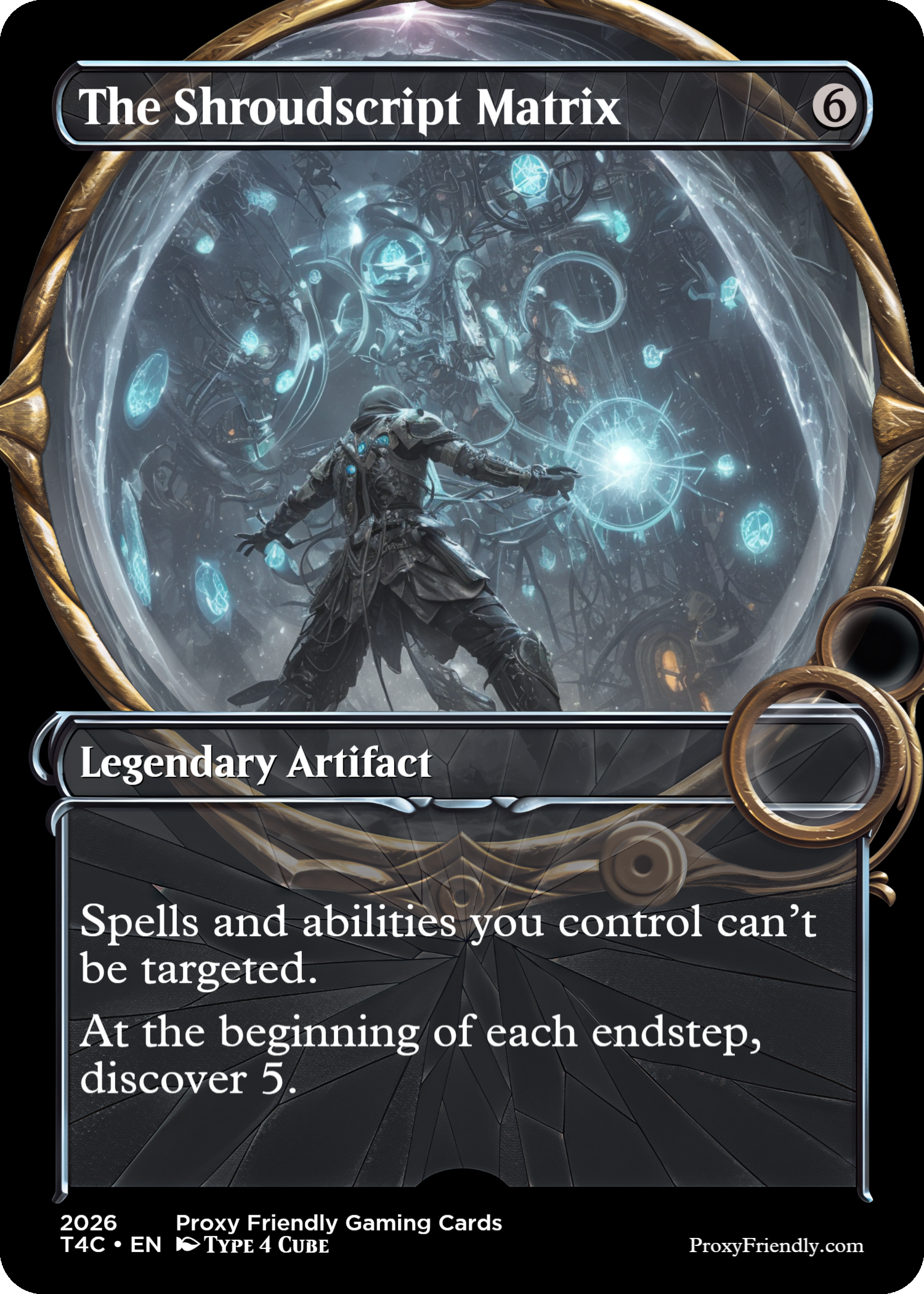
![A fantasy game card titled 'The Shroudscrypt Matrix' showing a figure in dark armor manipulating glowing blue orbs and symbols inside a crystalline sphere. The card is labeled as a legendary artifact and describes its abilities.]()
Matrix
-
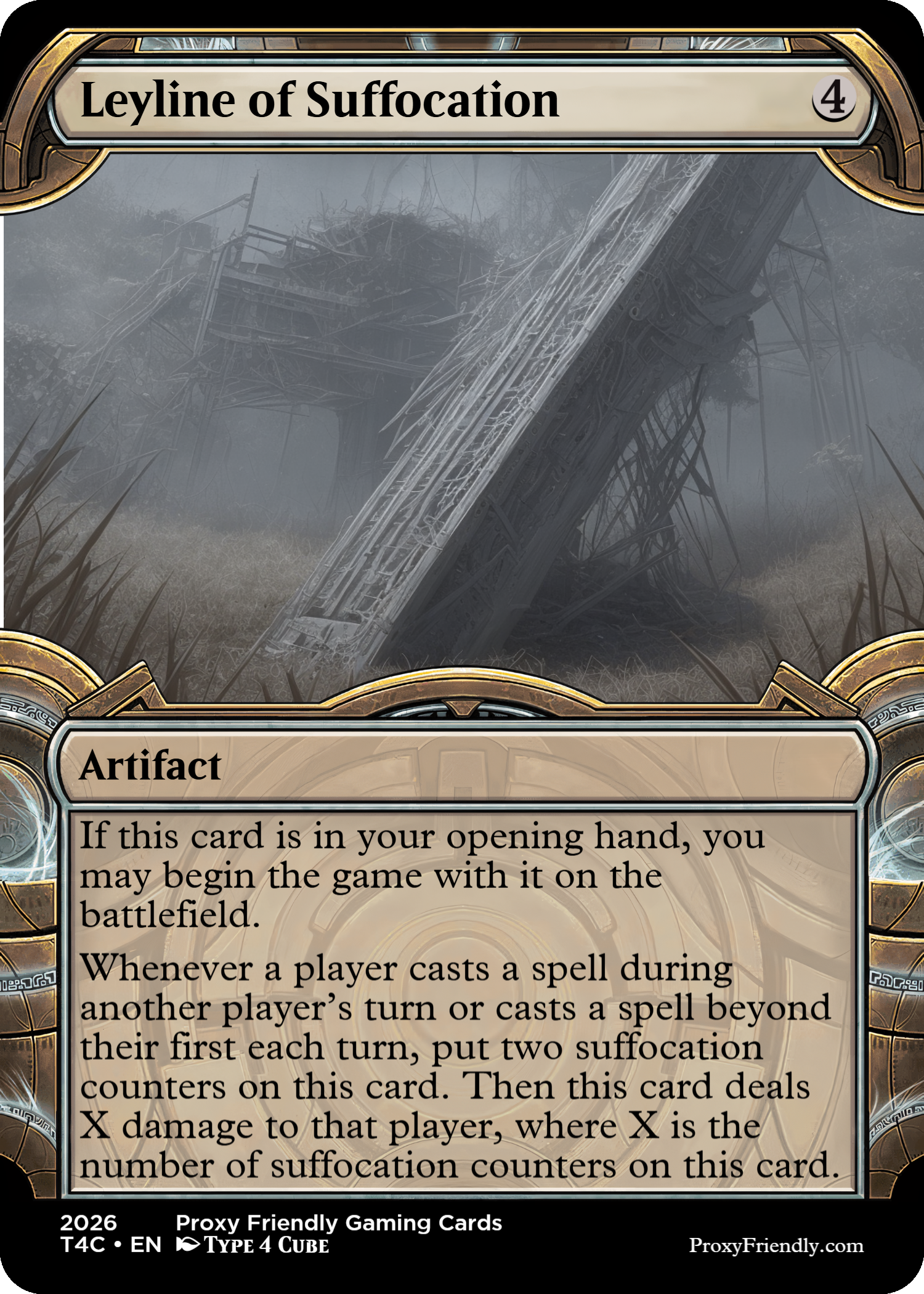
![A rejected, collapsed bridge with broken parts in a foggy, overgrown field.]()
Leyline
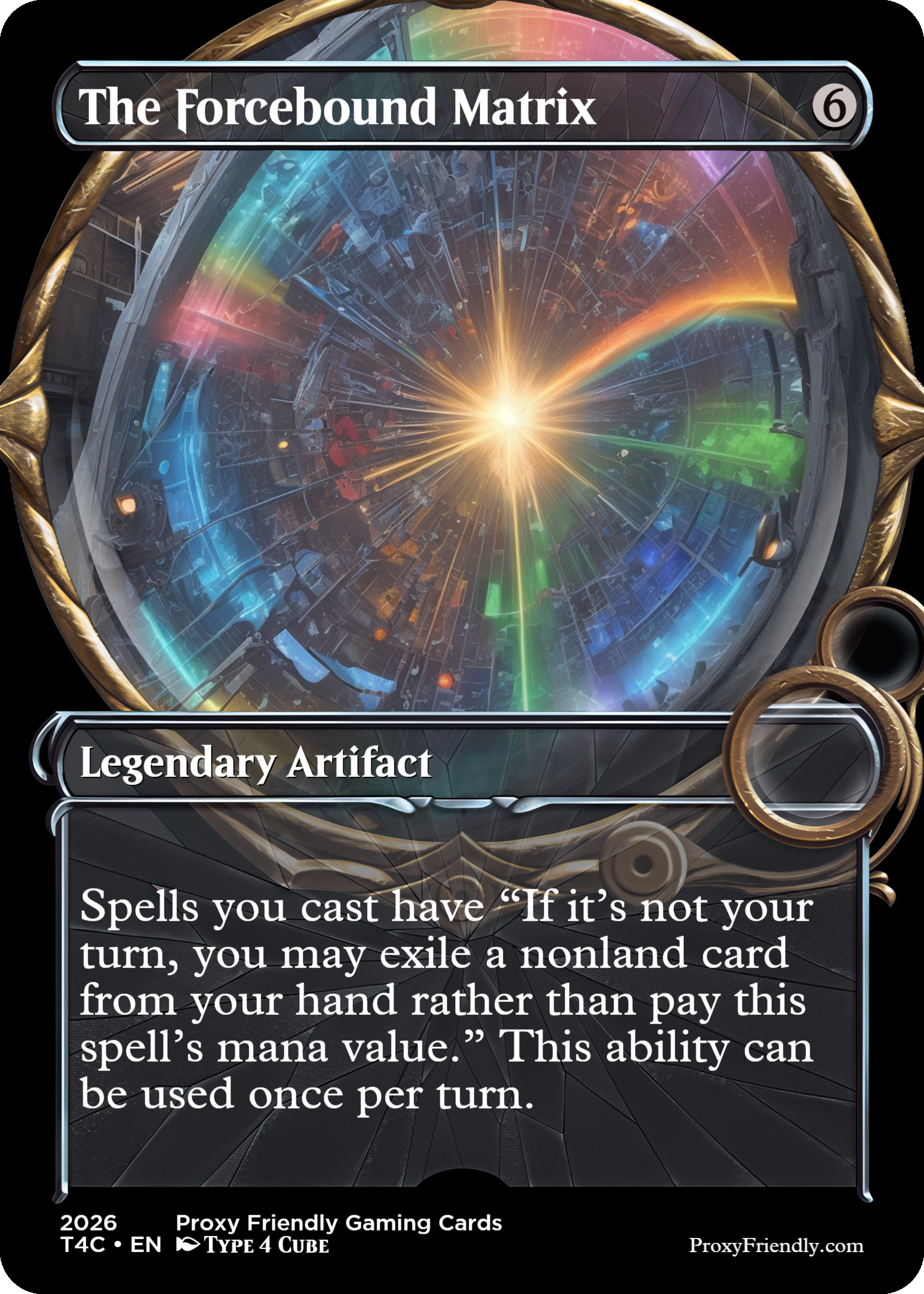
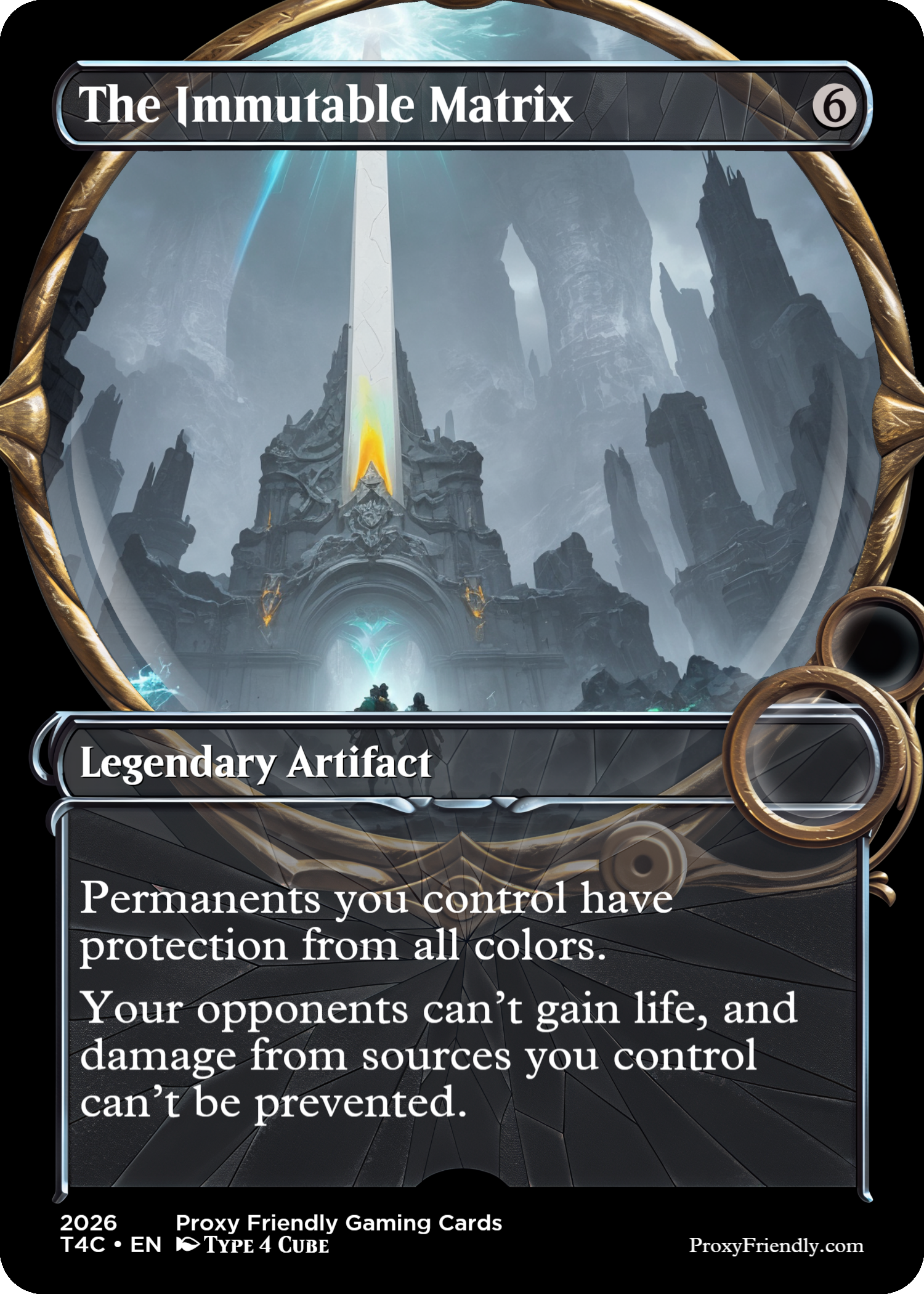
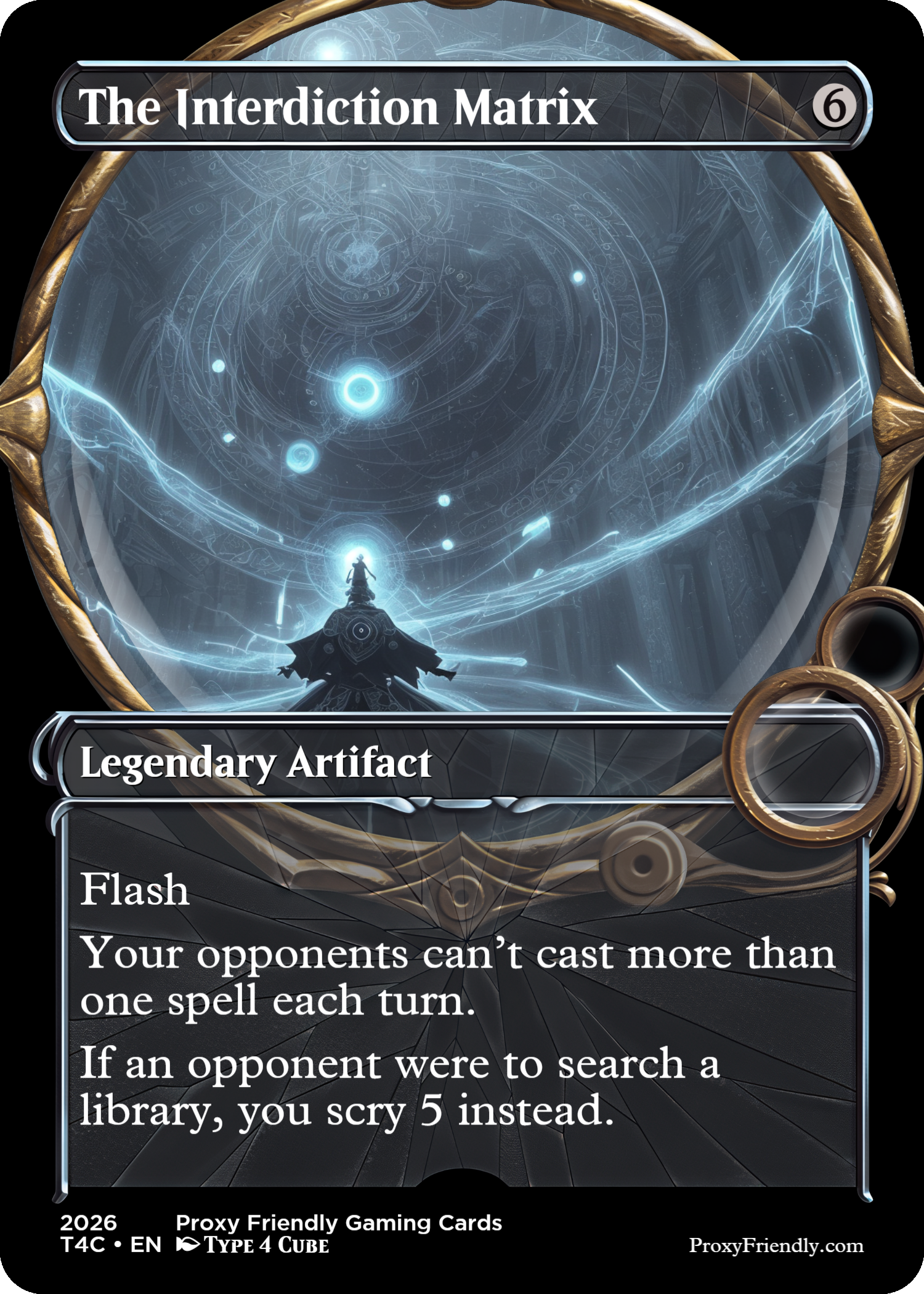
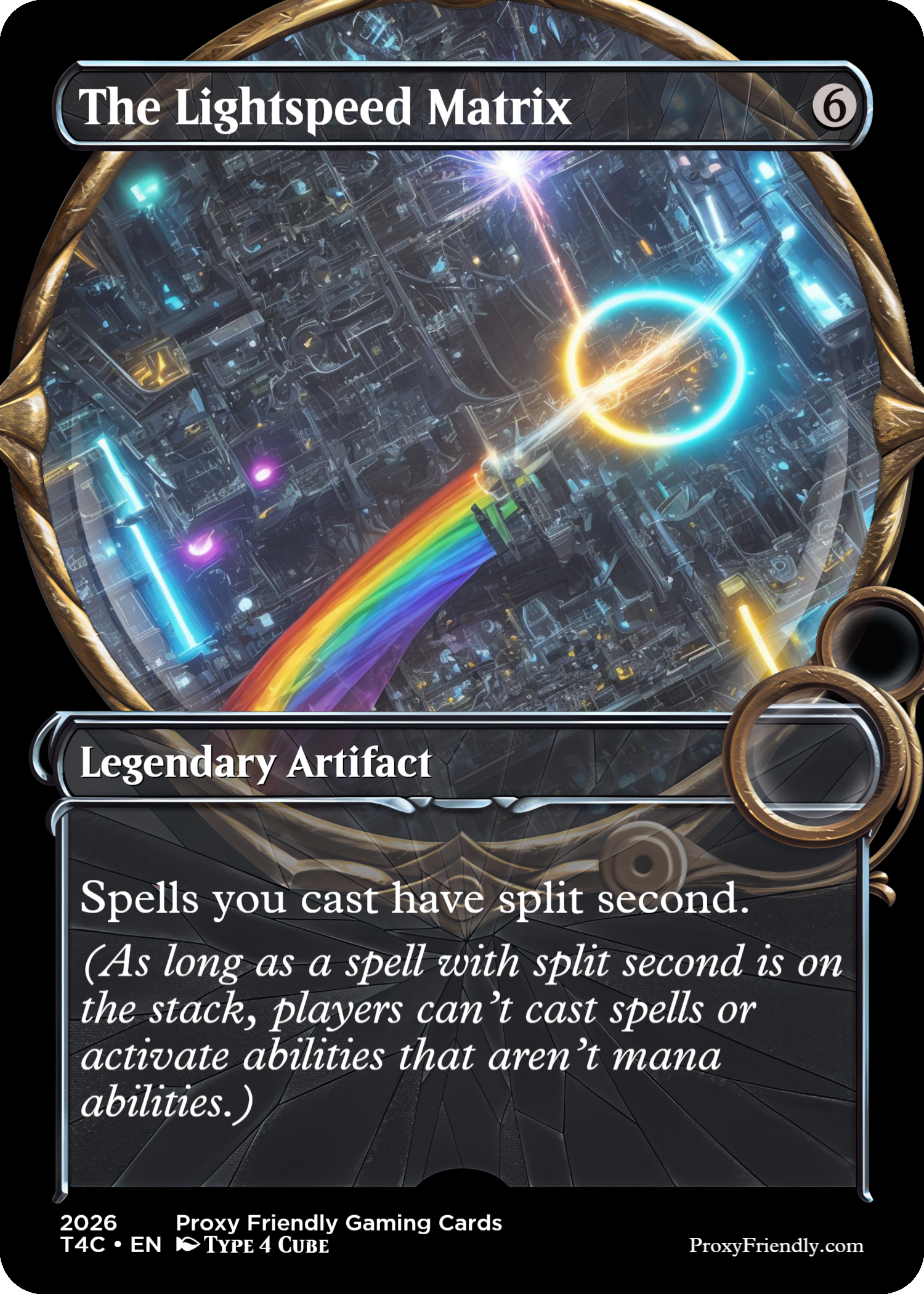
-
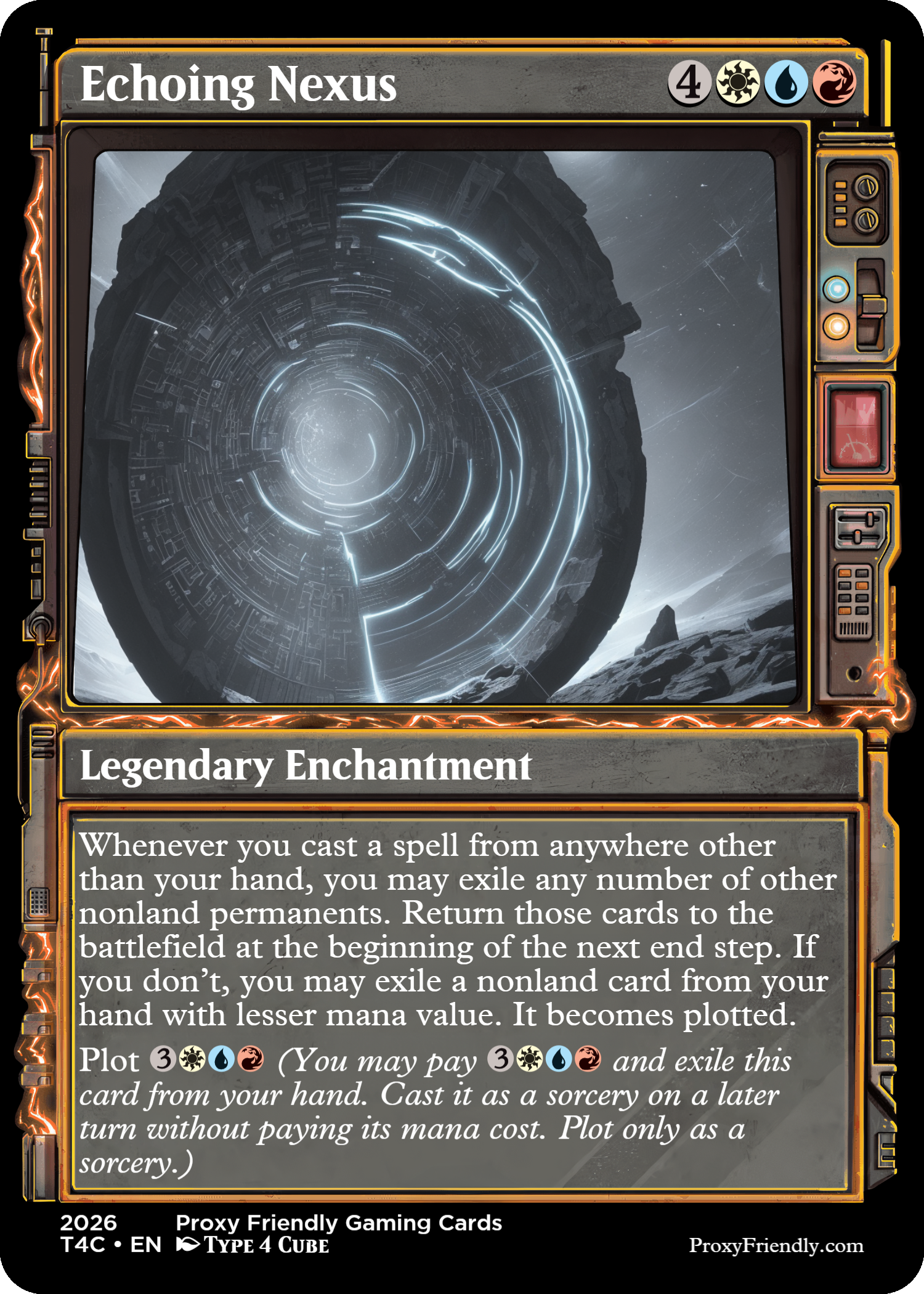
![A sci-fi themed trading card titled "Echoing Nexus" depicting a large circular structure with blue glowing lines and technological details, surrounded by a rugged landscape.]()
Nexus
-
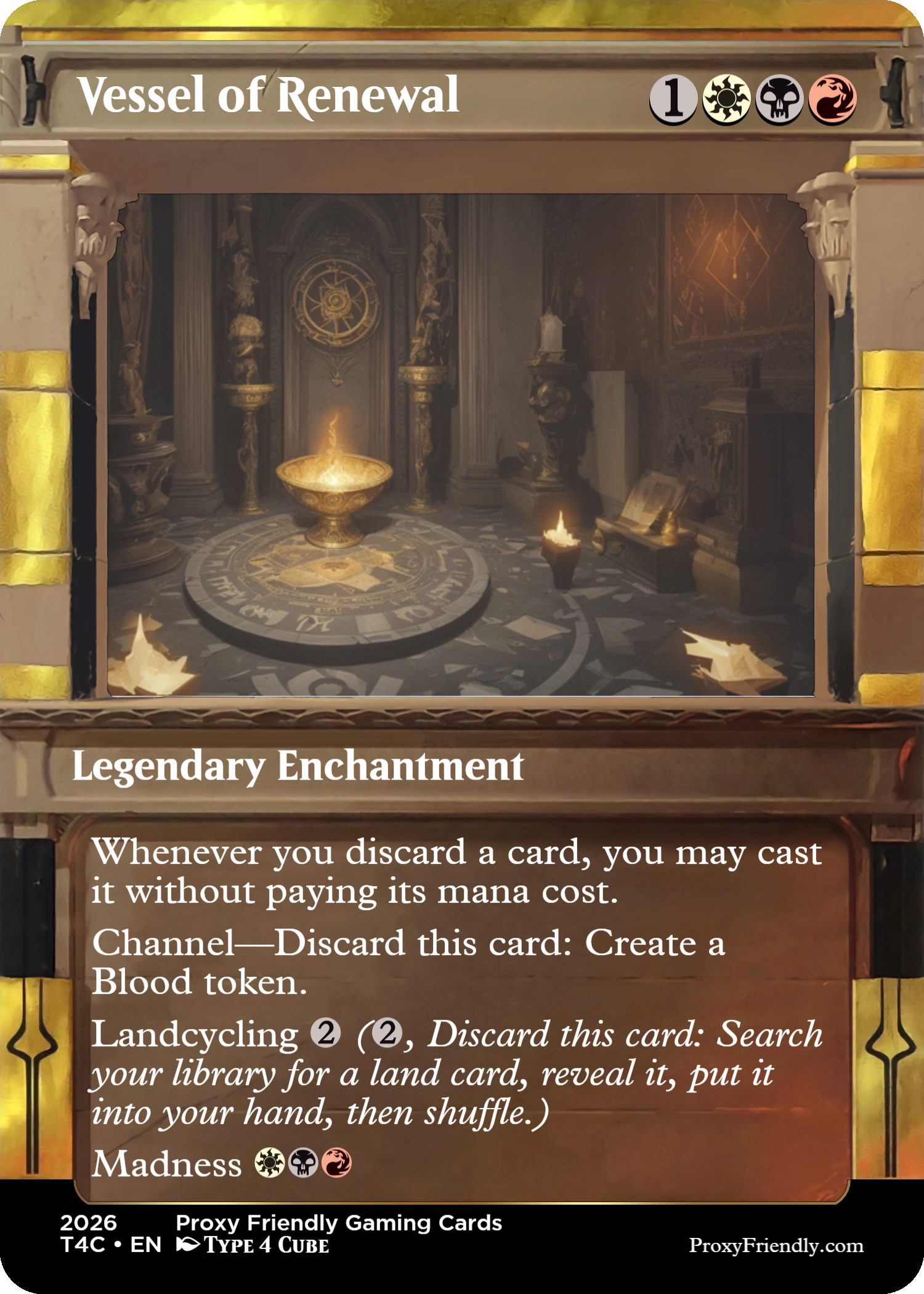
![A card named 'Vessel of Renewal' from a game by Proxy Friendly Gaming, featuring an ancient, mystical chamber with glowing symbols, a floating basin emitting light, and artifacts. The card details effects for discarding cards, creating tokens, and exile mechanics.]()
Vessel
-
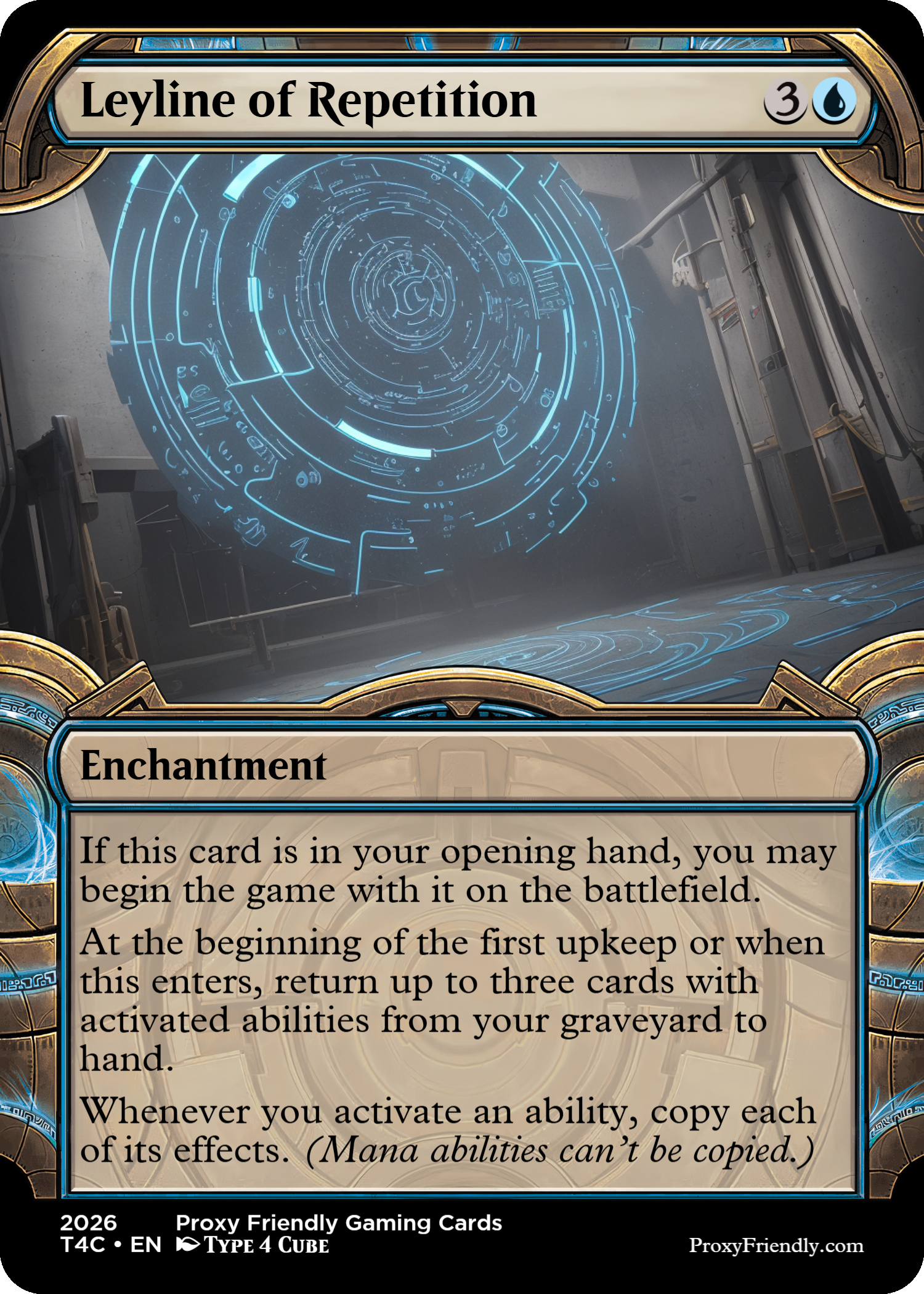
![A Magic: The Gathering card titled 'Leyline of Repetition', an enchantment card with a futuristic design showing a digital glowing blue circular pattern on a metallic surface background.]()
Leyline
-
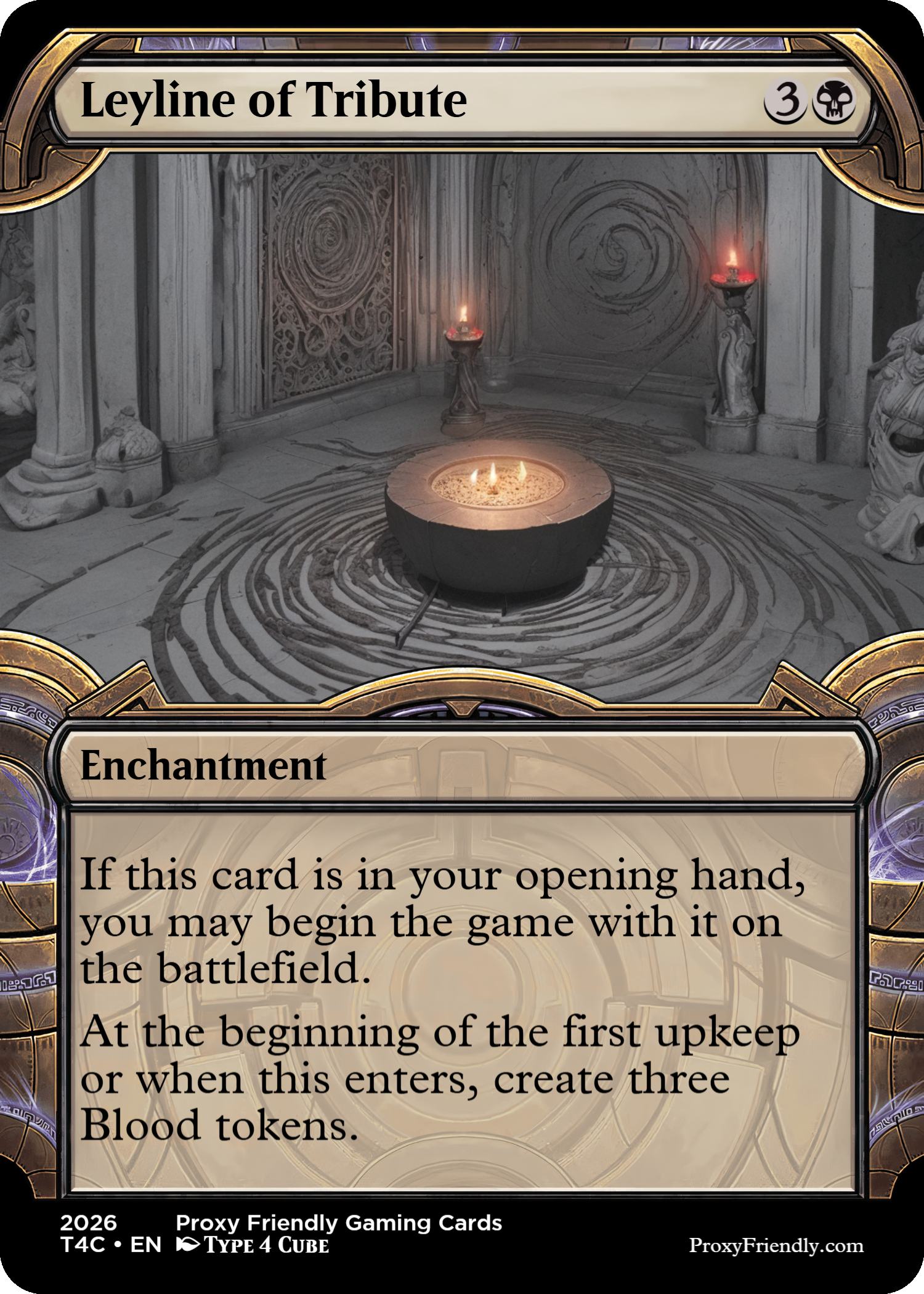
![A Magic: The Gathering card titled 'Leyline of Tribute' with artwork depicting a stone altar with glowing runes and three small flames. The background shows a stone chamber with candles on pedestals and carved walls featuring spiral patterns.]()
Leyline
-
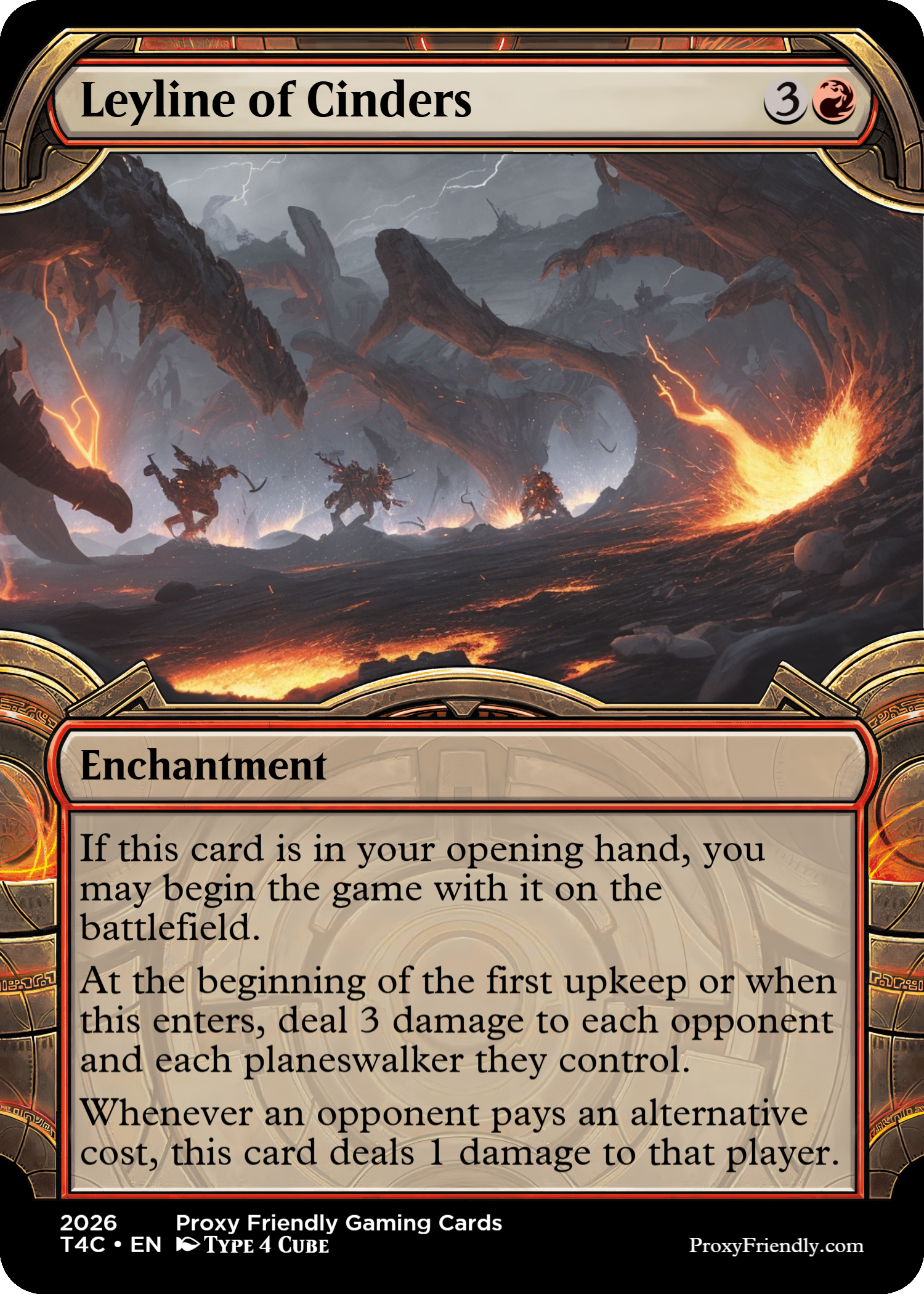
![A fantasy-themed trading card titled 'Leyline of Cinders' with a dark landscape featuring volcanoes, lightning, and creatures. The card's effect describes dealing damage and the possibility to begin the game with it on the battlefield.]()
Leyline
-
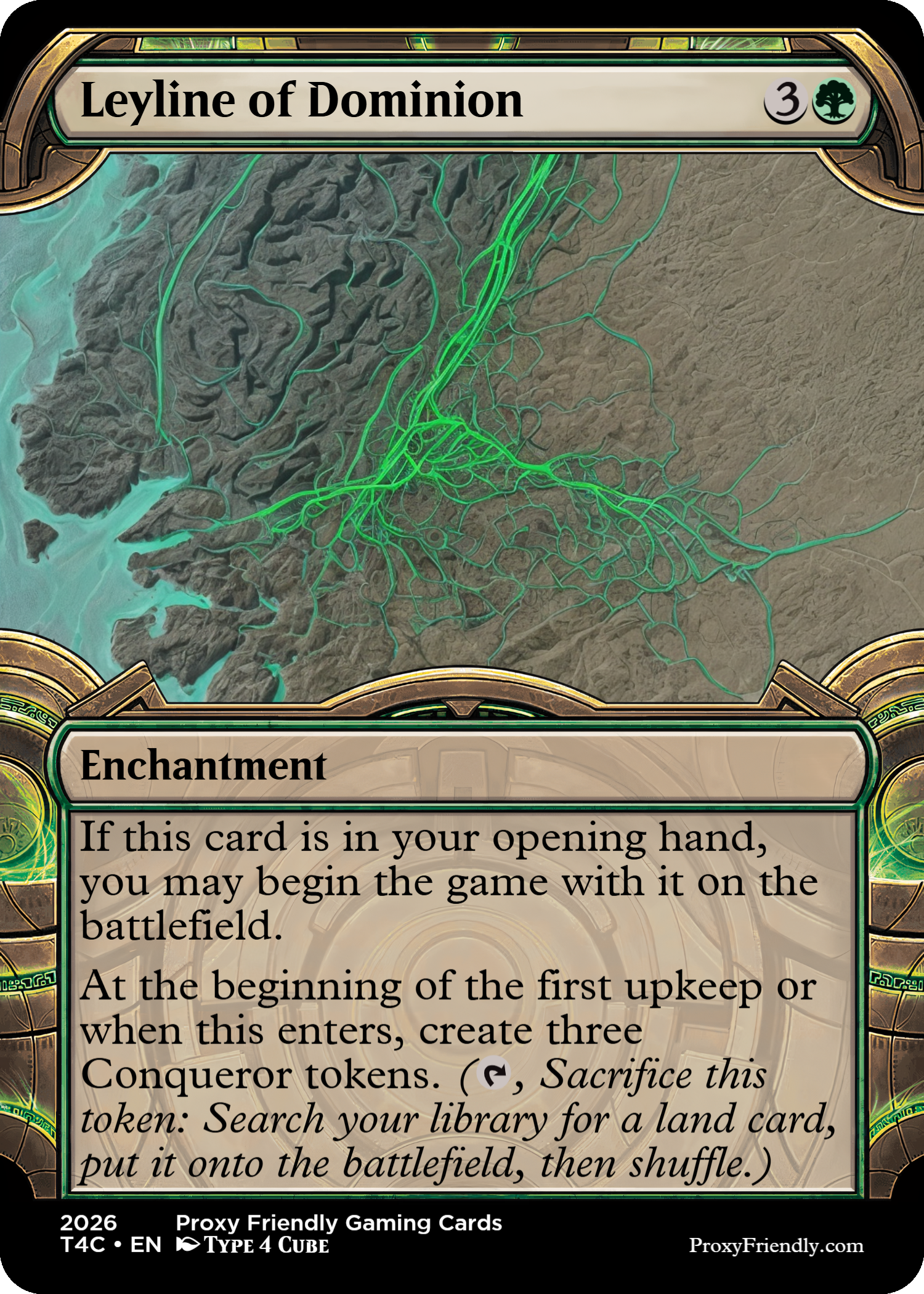
![A Magic: The Gathering card called Leyline of Dominion, showing a map with green glowing roots or veins spreading across a rocky and water landscape.]()
Leyline
-
![A mystical figure shrouded in fog with ghostly faces behind, depicted on a fantasy trading card titled "Leyline of the Veil" from the game Magic: The Gathering.]()
Leyline
-
![A fantasy-themed Magic: The Gathering card titled 'Leyline of Opportunity' with a background of a mystical forest and floating magical energy and lightning.]()
Leyline
-
![Close-up view of a gaming card with text about game rules and effects, including 'Sudden Death', 'Emblem - Overtime', 'No Draws', 'No Time', 'No Escape', and 'No Mercy'. The card has a black border and a silver background with black text.]()
Overtime
-
![A game card titled "Blood" featuring a horror-themed illustration of a child with blood and black makeup, blood dripping from her mouth and eyes, with blood splatters and drops around her face.]()
Artifact
-
![A game card titled 'Clue' with a circular, spiral design in the center, resembling an ancient or scientific device, under the heading 'Token Artifact – Clue'.]()
Artifact
-
![Fantasy artwork depicting a large, floating ruined structure in a stormy sky with lightning, people on a bridge, and a person with a backpack in the water.]()
Artifact
-
![A virtual trading card titled 'Food' featuring an array of various cooked dishes including meats, salads, and side dishes, with game instructions at the bottom.]()
Artifact
-
![A luxurious palace interior with golden chandeliers, ornate gold furniture, and a Christmas tree in the background, seen through a card titled 'Treasure' from Proxy Friendly Gaming Cards.]()
Artifact
-
![]()
Creature
-
![Magic card titled 'Flamesmith's Wish' showing a dwarf blacksmith wielding a flaming torch in a forge.]()
Creature
-
![A fantasy-themed Magic: The Gathering card titled 'Growing Wish' depicting a large ancient tree with glowing blue energy within its trunk, a female elf with a bow standing beneath, and lush green forest background.]()
Creature
-
![A fantasy-themed trading card titled "Prismatic Wish" featuring a cosmic dragon with a shimmering, colorful body and swirling elemental energies around it.]()
Creature
-
![A fantasy-themed trading card titled "Betrayal of Mercy" with a misty cathedral scene in the background featuring a silhouette of a person near stained glass windows. The card has a decorative border made of intertwined vines and branches, and offers a choice of three effects: exile a target creature, make controlled creatures indestructible until end of turn, or sacrifice three lands.]()
Creature
-
![]()
Creature
-
![A fantasy-style card titled 'Betrayal of Secrets' with a dark border resembling twisted branches. The card is blue and features a glowing, circular, swirling vortex in the center with a misty mountain in the background. The card's text reads: 'Instant. Choose one — counter target spell; draw 3 cards; entwine — sacrifice three lands.' The bottom of the card lists the set as Proxy Friendly Gaming Cards, with a release year of 2026, a T4C symbol, and a Type 4 Cube designation.]()
Creature
-
![A fantasy trading card titled 'Betrayal of Instinct' featuring a monstrous tree creature with a humanoid form, dark bark-like skin, and fierce facial expression, emerging from a foggy forest background.]()
Creature
-
![A fantasy trading card titled 'Betrayal of Reality' featuring a large, dark, ancient tree with twisted branches in a misty landscape. The card has icons representing different game resources at the top and options for game actions at the bottom, including 'Permanents you control phase out,' 'Exile all non-land permanents,' or 'Entwine—Sacrifice three lands.' The card is from 2026 by Proxy Friendly Gaming Cards.]()
Creature
-
![A fantasy-themed gaming card titled 'Sudden Excommunication' depicting a grand, Gothic cathedral with tall, arched windows and statues. The card is labeled as 'Instant' and has game instructions: 'Split second. Exile all nonland permanents target opponent controls.' It shows a black-and-white, illustrated scene with a Gothic architectural style.]()
Creature
-
![A fantasy trading card titled Primal Inevitability showing a large, muscular wolf-like creature surrounded by green lightning, with a dark and stormy background.]()
Creature
-
![A Magic: The Gathering card titled 'Apex Command' featuring a dark dragon with wings and glowing smoke emanating from its mouth, with a rainbow and a storm cloud in the background.]()
Emblem
-
![A fantasy-themed artwork featuring elven and mythical characters with elaborate costumes and makeup, surrounded by a dark, mystical background, and overlaid with text describing a game card called 'Master Confluence.']()
Emblem
-
![A fantasy-themed character with platinum blonde hair wearing a white and gold ornate outfit, a golden crown with a globe-like centerpiece. The background is celestial with stars and blue lightning. The bottom text reads, 'You can't lose the game as long as you control a nonland permanent.' The card is labeled 'Emblem - Erisa' and is from a set called 'Proxy Friendly Gaming Cards 2026' with specifications for a Type 4 cube.]()
Emblem
-
![A fantasy-style trading card titled "Gain Life" with a cartoonish image of a smiling woman with gray hair, angel wings, and a glowing heart above her head, surrounded by pink, blue, and green confetti and white doves.]()
Emblem
-
![A fantasy-themed land search card with an illustration of a large enchanted tree with a doorway at its base, surrounded by lush forest. A character stands in front of the tree, holding a staff or spear, with glowing magical effects near the entrance.]()
Emblem
-
![Fantasy trading card titled 'Creature Token' with a colorful illustration of a fish-like creature with a blue head and pink body, surrounded by vibrant, swirling colors and a joyful woman with teal hair in the background.]()
Emblem
-
![A trading card titled 'Prevent Combat' featuring a cute gray and white kitten with green eyes sitting next to yellow flowers, with gaming symbols and text describing the card's effect and flavor text.]()
Emblem
-
![A cracked glass surface is depicted with bright light effects, alongside a gaming card titled 'Null Interval' from Proxy Friendly Gaming Cards, indicating it is an instant card with specific game effects.]()
Emblem
-
![A trading card titled 'Cataclysmic Encore' from Proxy Friendly Gaming Cards featuring a scene of erupting volcanoes with dark smoke and lava, and a soldier or warrior in the foreground.]()
Land
-
![A trading card named 'Irrevocable Convergence' with an artwork of a swirling multicolored vortex in space leading to a bright center, surrounded by stars and space debris.]()
Other
-
![]()
Super Epic
-
![]()
Super Epic
-
![]()
Super Epic
-
![]()
Super Epic
-
![]()
Super Epic
-
![]()
Super Epic
-
![]()
Super Epic
-
![Magic trading card titled "Sephiroth, Bizarre Apocalypse" featuring a fantasy illustration of a woman with long white hair, dragon wings, and armor, surrounded by storm and lightning. The card has various abilities and statistics listed on the left.]()
Boss/Front
-
![A fantasy art card depicting Sephiroth, a one-winged angel with long, flowing white hair and wings, wielding a massive dark sword. The background features a patterned circular design and a red sunburst.]()
Boss/Back
-
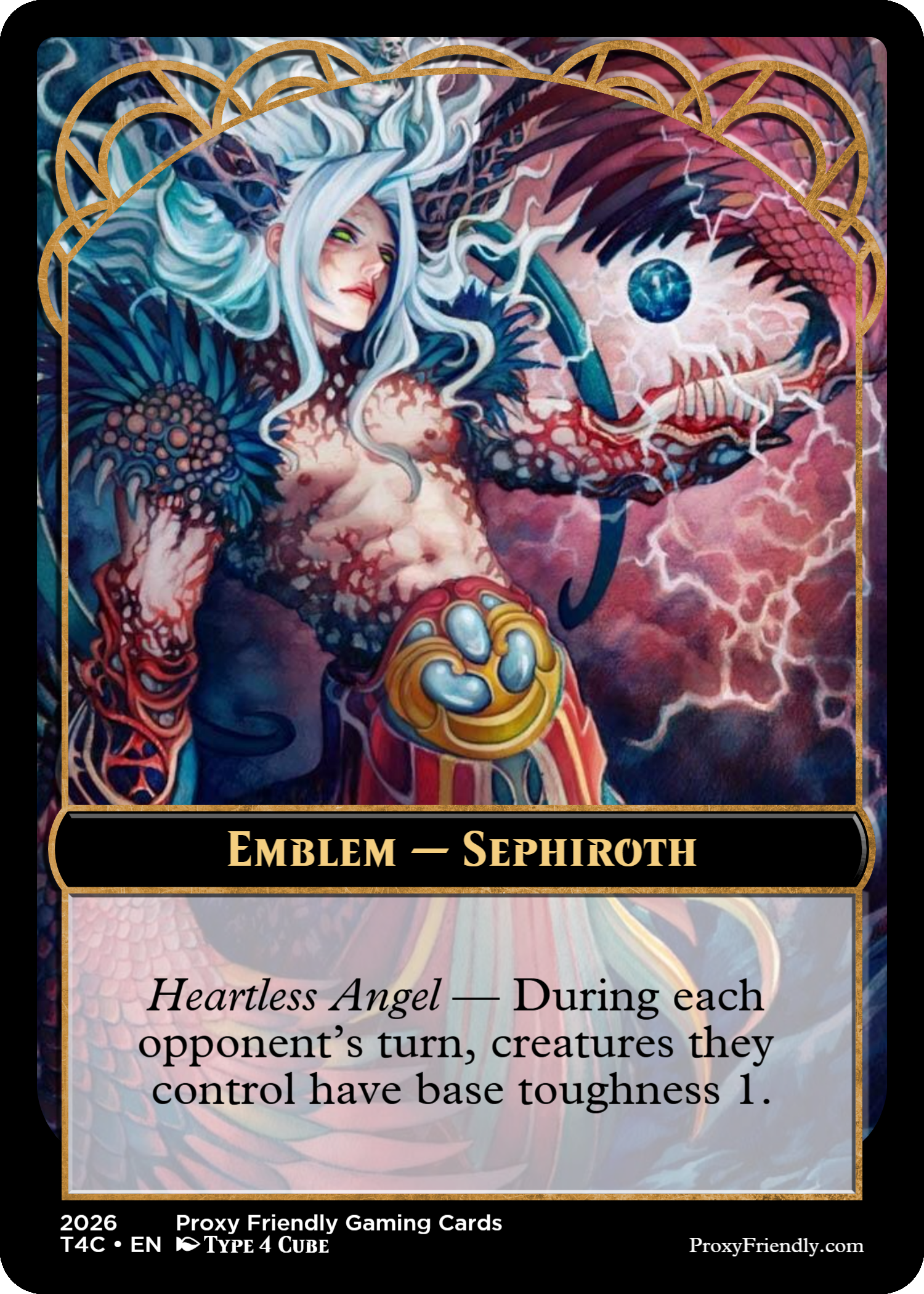
![Digital artwork of a mythological female figure with flowing white hair, green eyes, and intricate armor, holding a dragon skull with a glowing blue orb inside. The background features lightning and volcanic landscapes, with the card labeled 'Emblem – Sephiroth' and description text about a Heartless Angel ability.]()
Token
-
![A Magic: The Gathering card titled "Emerald Weapon, Guardian of the Deep" with a gold border. The card features a picture of a deep sea creature with green glowing eyes against an ocean blue background. The card has four abilities with text descriptions and includes the keywords "Legendary Enchantment - Boss," with flavor text indicating "Split second, indestructible, shroud." The bottom shows the set information "2026 Proxy Friendly Gaming Cards," set code "T4C," language "EN," and card type "Type 4 Cube."]()
Boss/Front
-
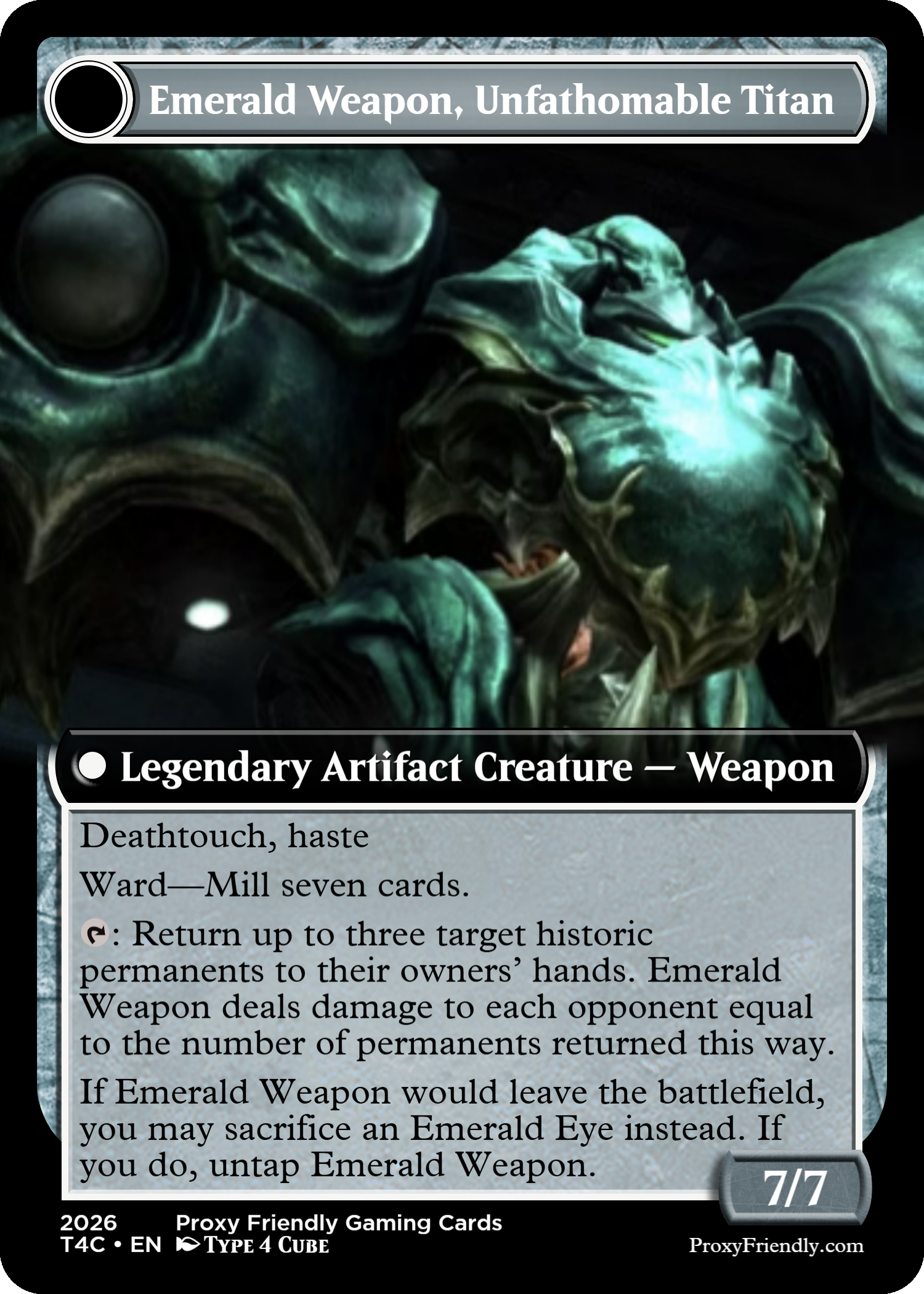
![A gaming card titled 'Emerald Weapon, Unfathomable Titan' showing a close-up of a monstrous creature with greenish skin, sharp teeth, and armored features.]()
Boss/Back
-
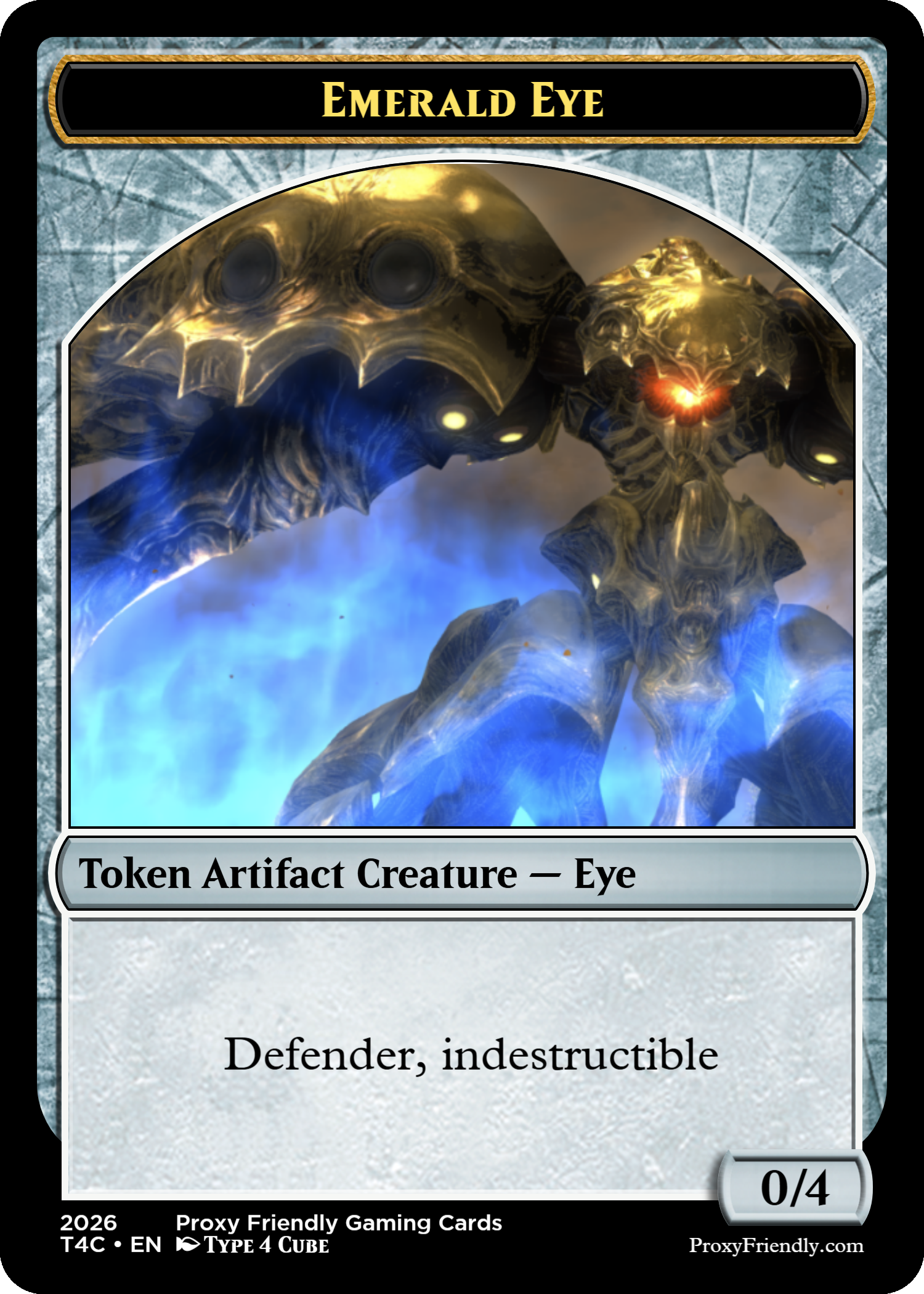
![A gaming card featuring a detailed digital illustration of an emerald-colored eye creature with a glowing red eye, sharp metallic features, and a dark background. The card is labeled "Token Artifact Creature - Eye" and includes additional text indicating its traits and attributes.]()
Token
-
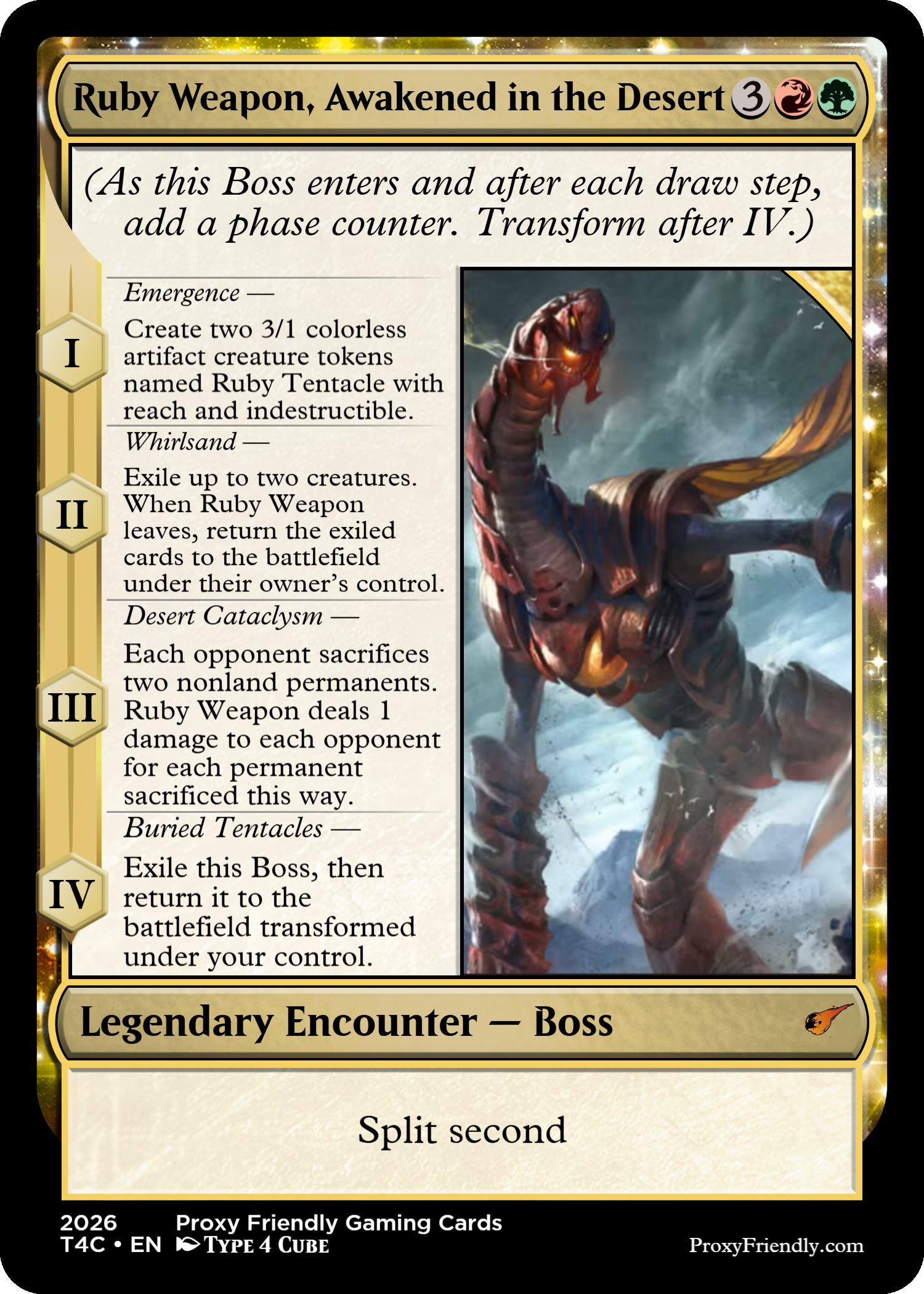
![A trading card titled "Ruby Weapon, Awakened in the Desert" featuring an illustration of a large, serpent-like creature with glowing eyes. The card has a gold border and includes game instructions and effects on the left side.]()
Boss/Front
-
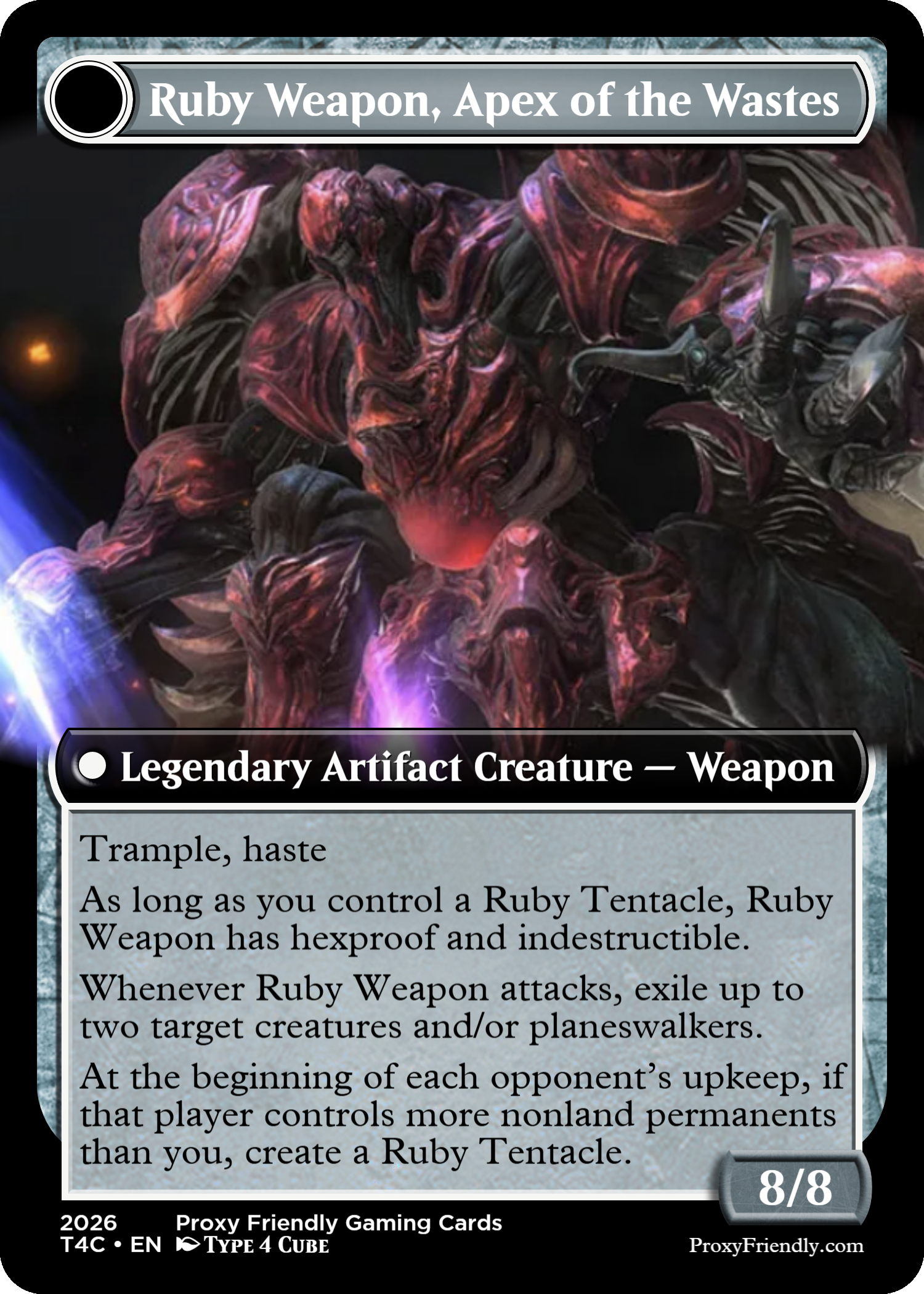
![A gaming card titled 'Ruby Weapon, Apex of the Wastes' featuring an image of a large, grotesque creature with twisted appendages and dark, reddish textures. The card is labeled as a legendary artifact creature—weapon, with the text describing its abilities involving Ruby Tentacles, hexproof, indestructibility, and causing exiled creatures or planeswalkers to be created when it attacks. The card is marked as 8 out of 8 and is from Proxy Friendly Gaming Cards, 2026, T4C, Type 4 Cube, with a website link at the bottom.]()
Boss/Back
-
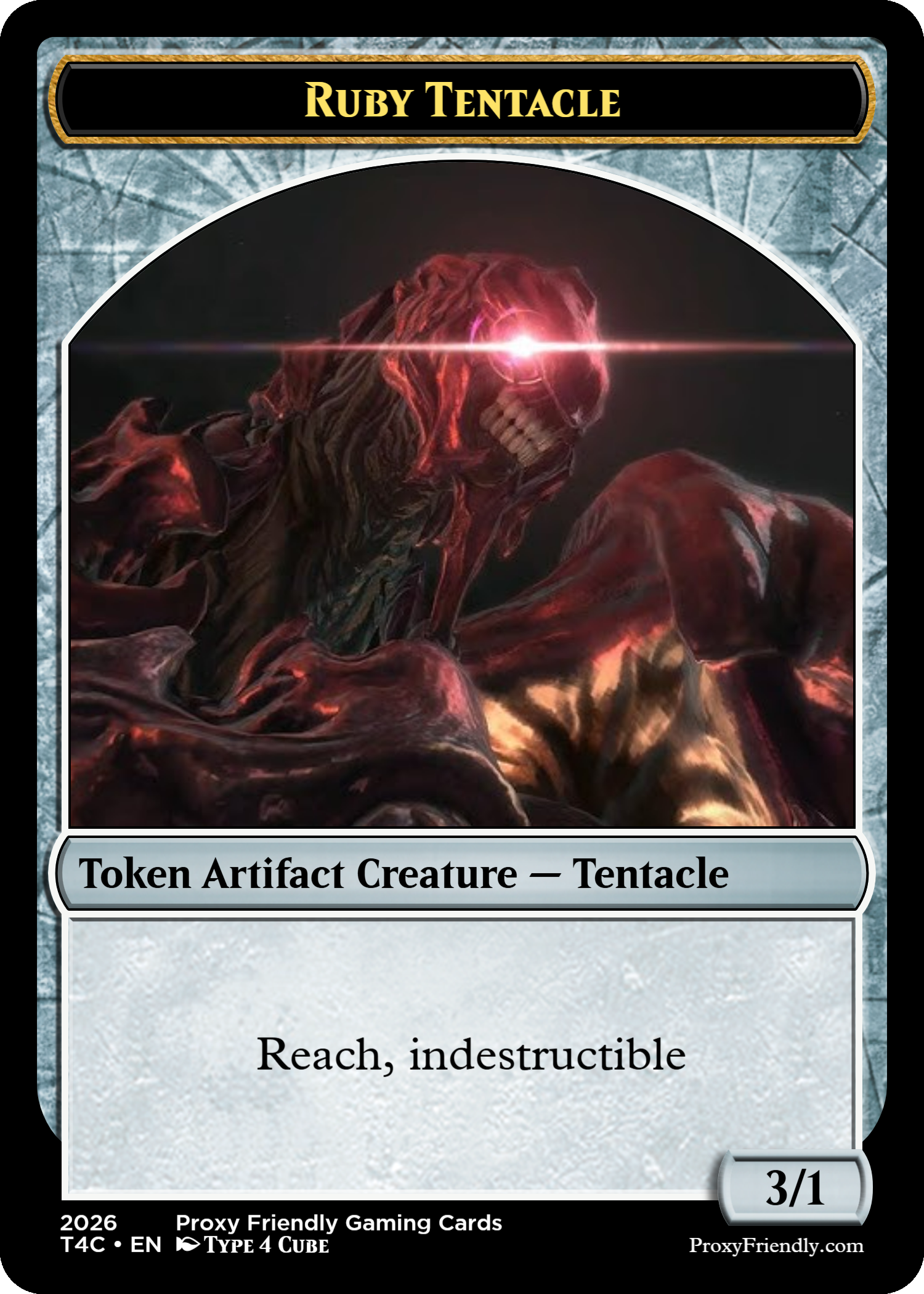
![A digital illustration of a tentacle creature with glowing red eyes and sharp teeth, positioned on a gaming card titled "Ruby Tentacle," which is part of a proxy-friendly gaming card series, numbered 3 out of 1, with a marbled background and game details at the bottom.]()
Token
-
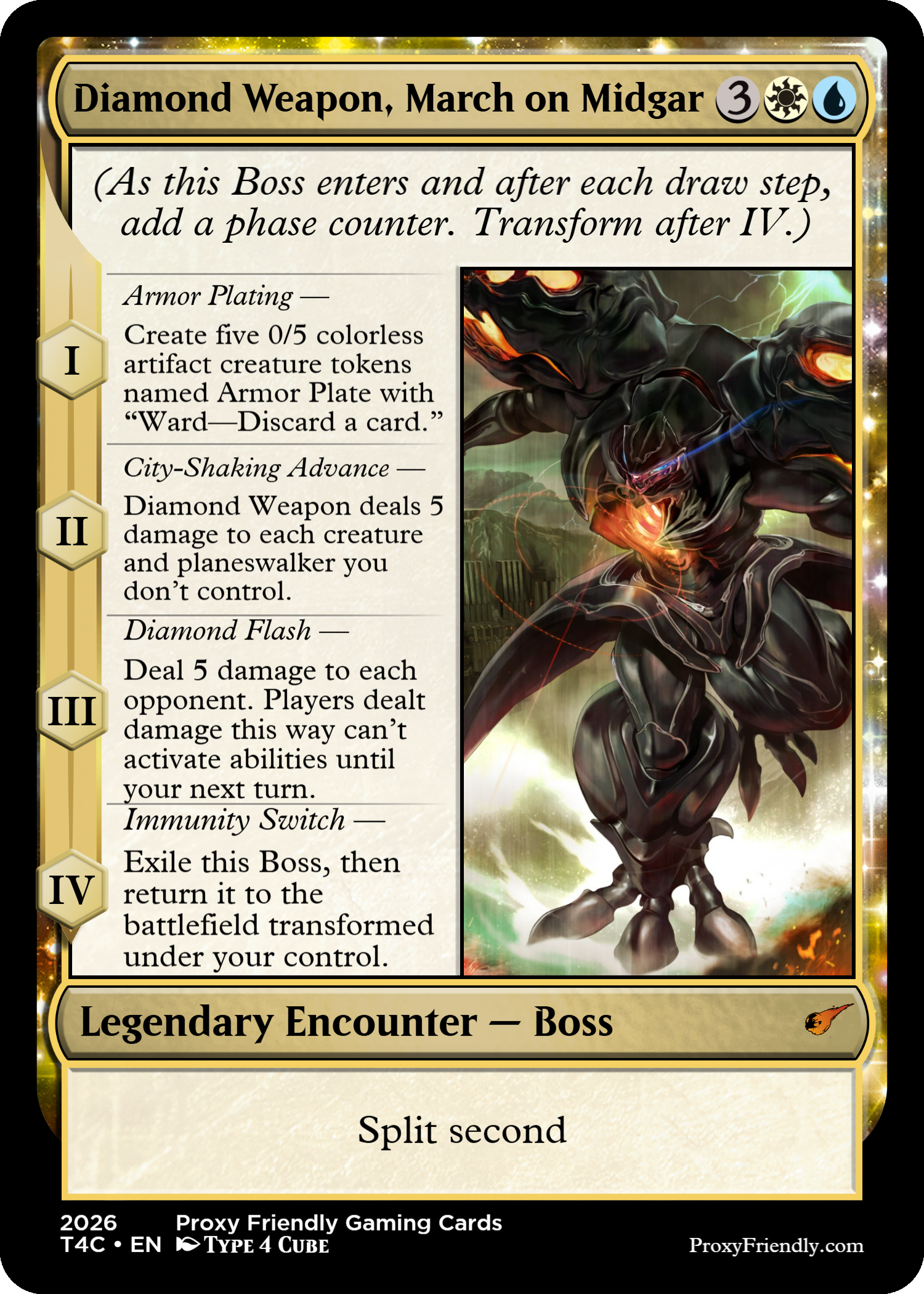
![A collectible Magic: The Gathering card titled 'Diamond Weapon, March on Midgar' with a gold border, showing a black armored enemy wielding a sword, and game rules text on the left side.]()
Boss/Front
-
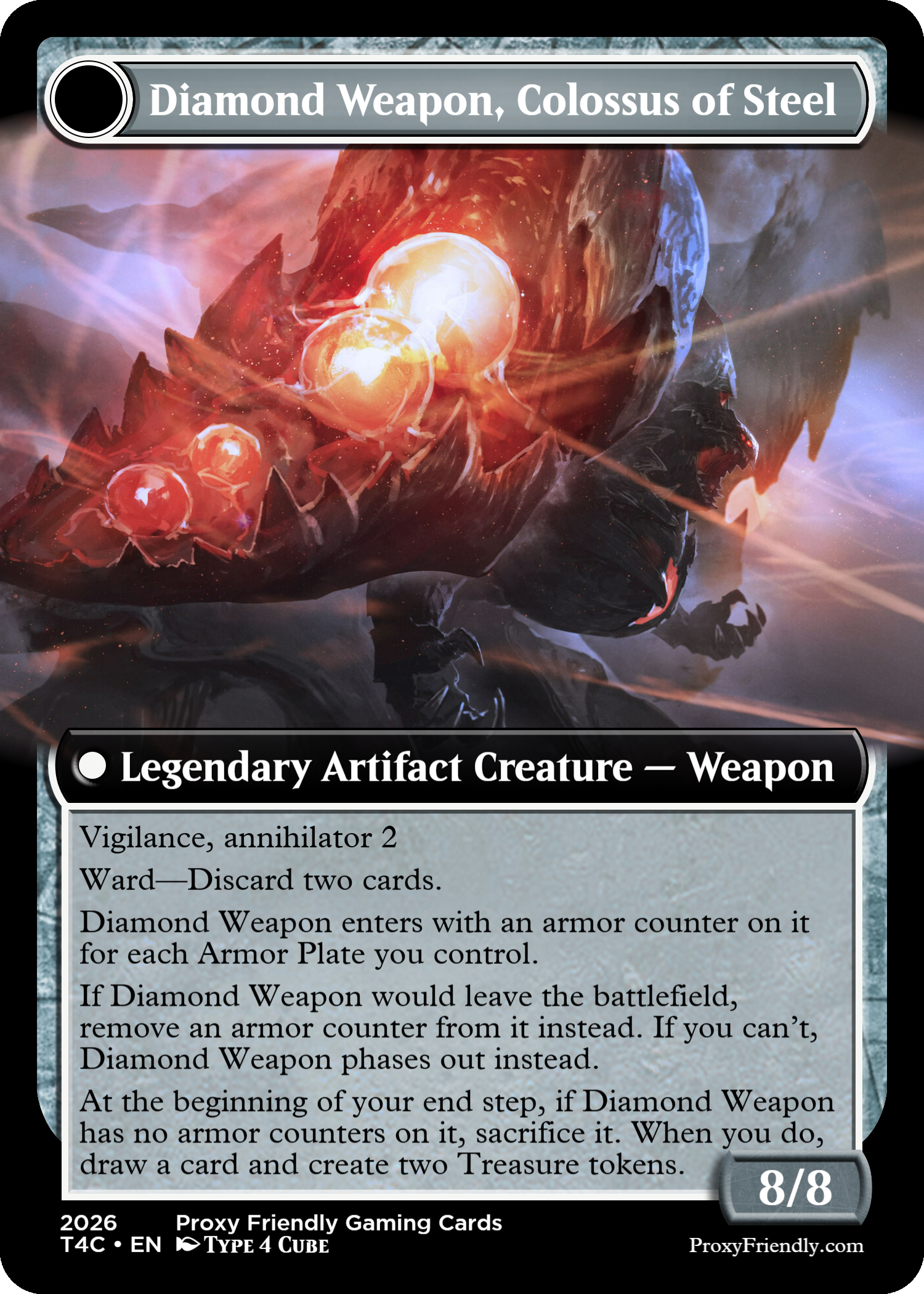
![A game card titled 'Weapon, Colossus of Steel' features a dark, armored dragon-like creature with glowing red eyes, surrounded by an abstract cosmic background with a bright star or explosion and shards of metal or ice. The card contains game rules and statistics, including its type as a legendary artifact creature - weapon, with an 8/8 power and toughness, and details about its abilities and interactions in gameplay.]()
Boss/Back
-
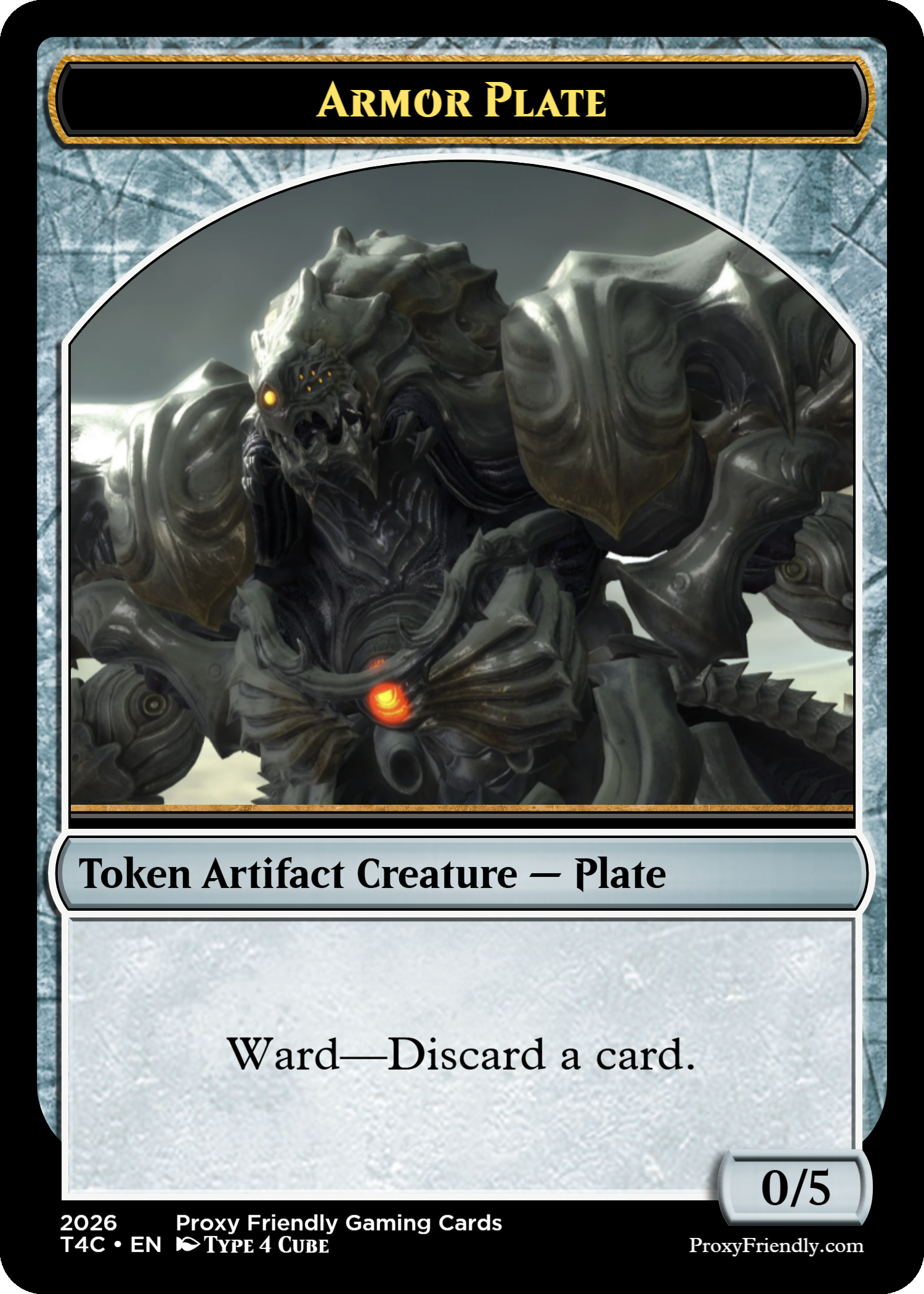
![A digital card featuring a creature with a robotic, armored appearance, glowing yellow eyes, and a menacing expression. The card is labeled "Armor Plate" and has instructions to discard the card in the ward. The bottom of the card has text indicating it is a 2026 Proxy Friendly Gaming Card, Type 4 Cube, and includes the website ProxyFriendly.com.]()
Token
-
![A Magic: The Gathering card titled 'Proud Clod, Shinra's Final Weapon.' It features a large, armored boss creature wielding a weapon, with a snowy, battle scene background. The card text describes its abilities, including creating soldier tokens, dealing damage, sacrificing permanents, and transforming after exile. The card is a legendary enchantment with artwork and flavor text, and licensed by Proxy Friendly Gaming Cards.]()
Boss/Front
-
![A virtual game card titled "Proud Cloud, Executive War Machine" featuring artwork of a large, menacing robot with a skull-like face and glowing eyes, standing behind a person facing it, in a sci-fi setting. The card has details describing the robot as a Legendary Artifact Creature — Construct, with abilities and game effects, and includes game stats and legal information at the bottom.]()
Boss/Back
-
![A group of soldiers wearing high-tech armor and helmets, standing at attention while saluting in a city street. A person in futuristic armor is in the foreground, pointing or saluting towards them.]()
Token
-
![A gaming card titled "Rufus Shinra, President's Heir" with a picture of a blond man in a beige military-style uniform, crossed arms, and a serious expression, with a starry decorative frame, and game-related text and symbols.]()
Boss/Front
-
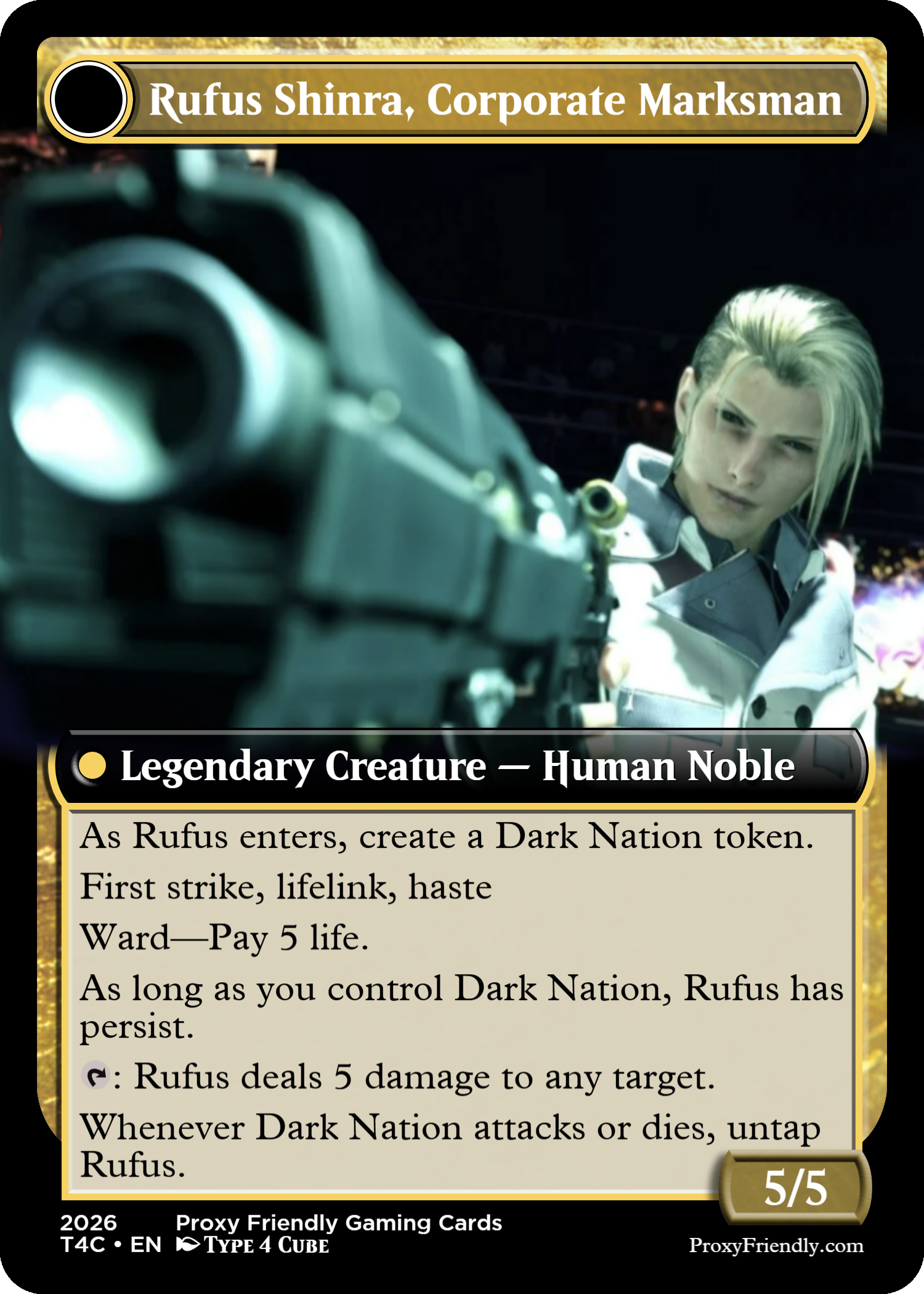
![A trading card from a game featuring a character named Rufus Shinra, a corporate marksman. The card has a dark background with a close-up of the character aiming a gun, showcasing platinum blonde hair and a serious expression. The card includes text describing Rufus's abilities and game mechanics, with a gold and black border, and states it is a 2026 Proxy Friendly Gaming Card, Type 4 Cube, and 5 out of 5 in the series.]()
Boss/Back
-
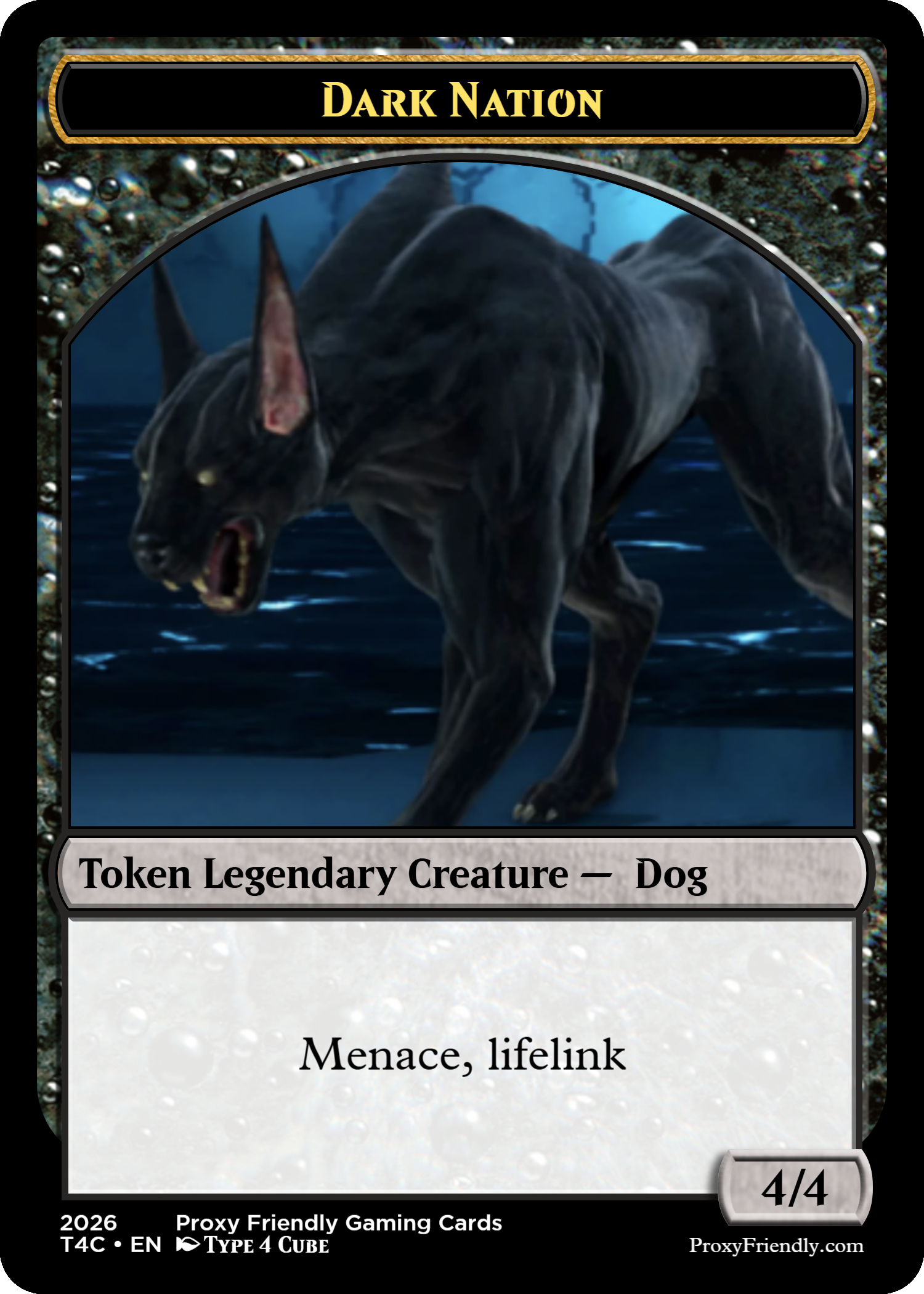
![A dark-themed gaming card titled "Dark Nation" featuring a black dog with upright ears standing in water with a dark, cloudy sky in the background. The card is labeled as a legendary creature and token. It has a metallic border with bubble-like details, and the bottom includes text indicating it’s from 2026, proxy friendly, T4C, EN, Type 4 Cube, and a website link, with a card number 4/4.]()
Token
-
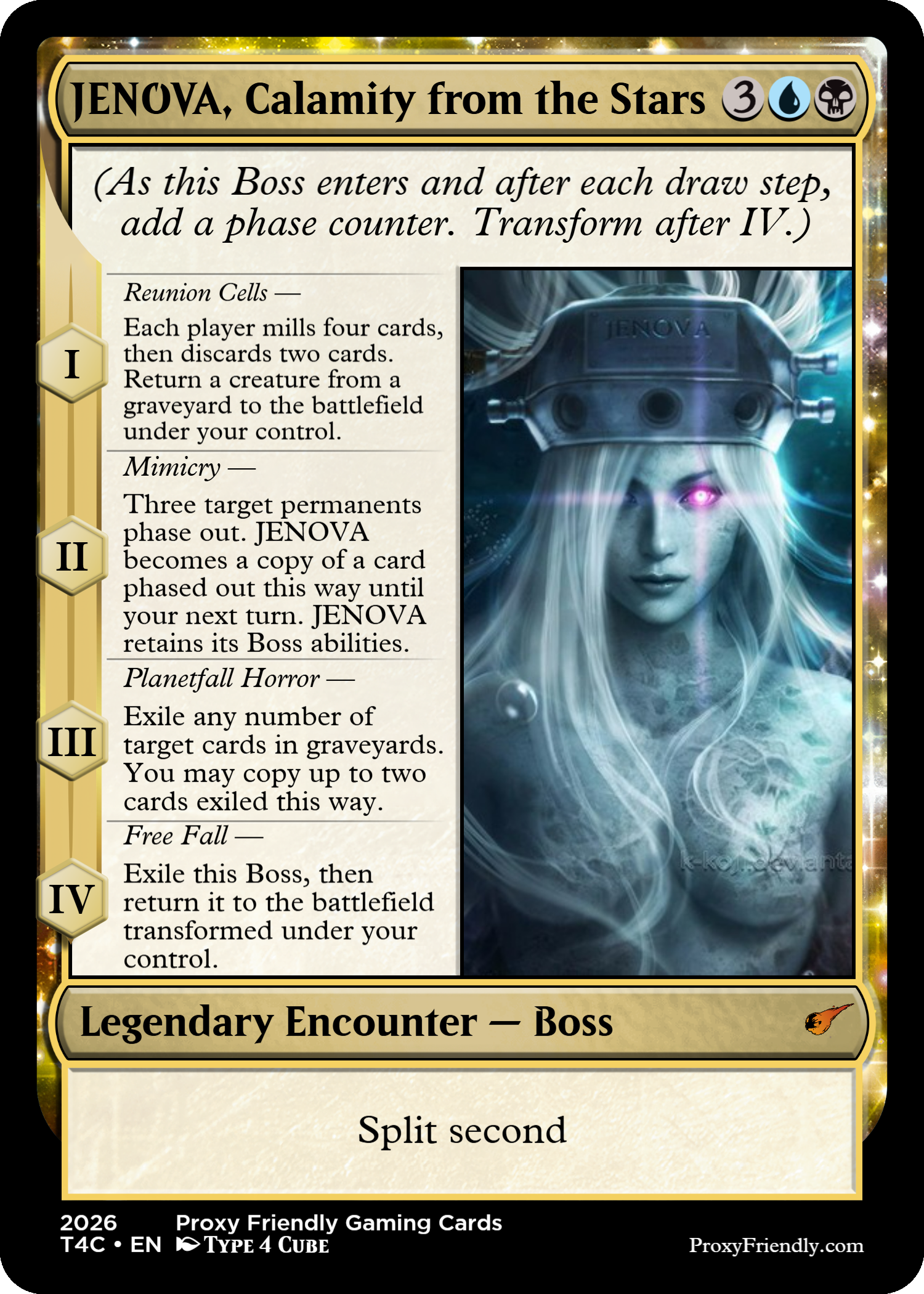
![A Magic: The Gathering card titled "JENOVA, Calamity from the Stars." It features a female figure with a helmet and a glowing purple eye, surrounded by swirling energy. The card has a gold border and four mana symbols at the top right. Text on the card describes its abilities and flavor text. The bottom mentions it as a legendary enchantment – boss, with additional details and copyright information.]()
Boss/Front
-
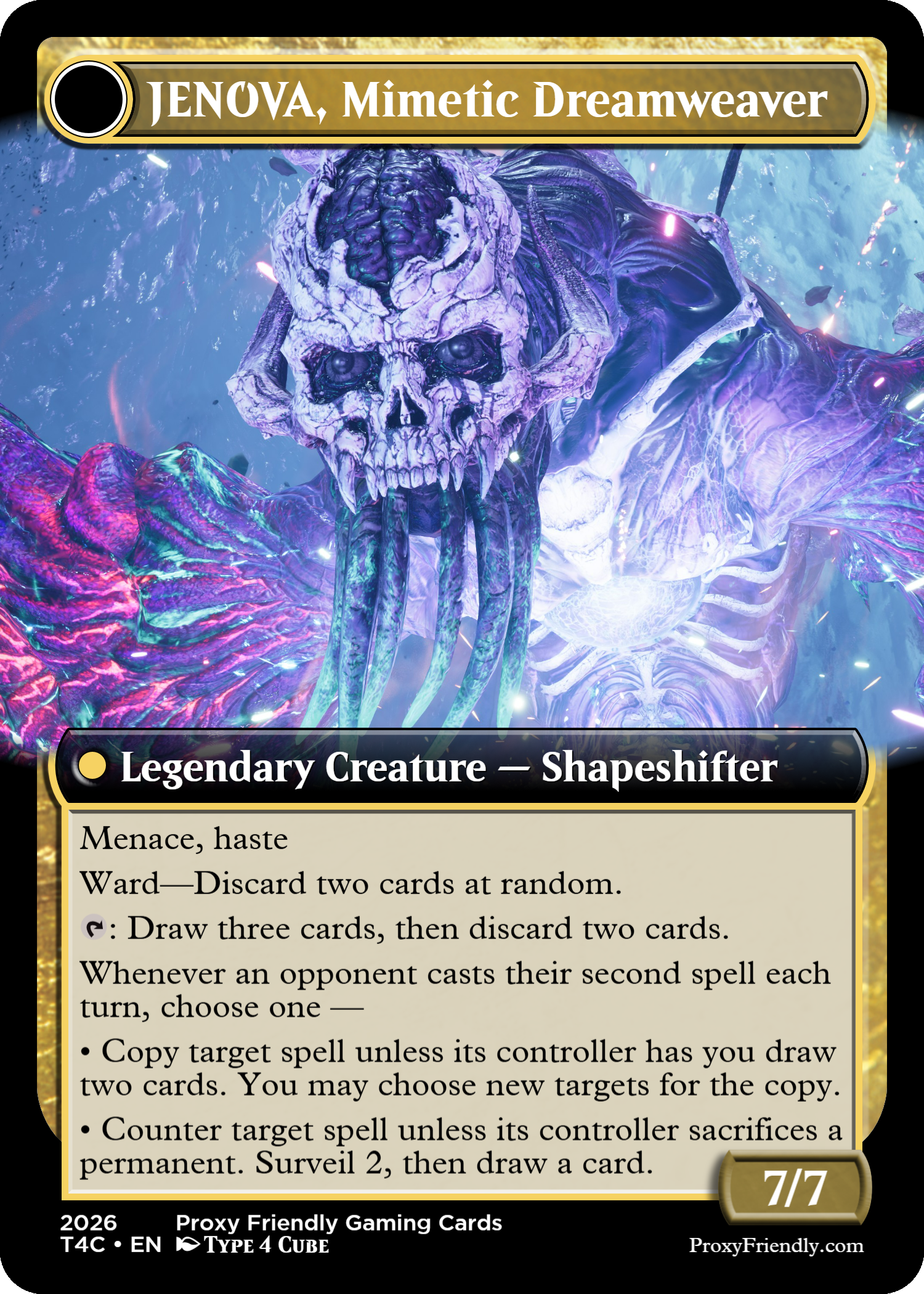
![A fantasy game card titled 'JENOVA, Mimetic Dreamweaver', featuring a large skeletal entity with a skull-like face, dark purple and white coloring, horns, and glowing eyes, set against a vibrant, cosmic background.]()
Boss/Back
-
![A collectible trading card titled 'Guard Scorpion, Reactor Sentinel'. The card features an illustration of a large robot scorpion with glowing green lights, facing a person in a dark urban environment. The card contains game instructions and characteristics such as 'Legendary Enchantment - Boss' and abilities like 'Reactor Lockdown', 'Attack while its tail's up!', 'Tail Laser', and 'Auto Repair'. The card has a golden border and other design elements, with a small fire icon at the bottom right corner.]()
Boss/Front
-
![A trading card from Proxy Friendly Gaming Cards featuring the Guard Scorpion, a tail-laser prototype. The card shows an armored robot with a scorpion motif emitting lightning, and includes descriptions of its abilities and stats.]()
Boss/Back
-
![A trading card titled "Motor Ball, Highway Executioner" from a collectible card game, featuring a futuristic armored vehicle at high speed, with text describing its abilities and effects.]()
Boss/Front
-
![A trading card from a game depicting a large mechanical motorized sphere with thrusters and a human figure attacking it, with explosions and a dark sky background.]()
Boss/Back
-
![A Magic: The Gathering card titled "Materia Keeper, Guardian of Nibel" featuring a blue and green dragon with glowing red eyes, with four ability descriptions on the left side and gold border with sparkles.]()
Boss/Front
-
![A fantasy trading card titled "Materia Keeper, Nibel Colossus" depicting a dragon-like creature with teal and dark green scales, red eyes, sharp teeth, and a long tongue, set in a dark, rocky environment.]()
Boss/Back
-
![A Magic: The Gathering card titled 'Gi Nattak, Soulflame of Cosmo Canyon' featuring artwork of a shamanistic figure wearing a bone mask and tribal attire, surrounded by flames and dark, mystical elements.]()
Boss/Front
-
![A trading card titled 'Gi Nattak, Flamebound Revenant' features artwork of a fierce, fiery-skinned creature with glowing eyes and a skull-like face. The card includes game text about its abilities, such as causing opponents to exile cards or sacrifice creatures, with the stats 8/8 and indicating it is a legendary spirit creature.]()
Boss/Back